
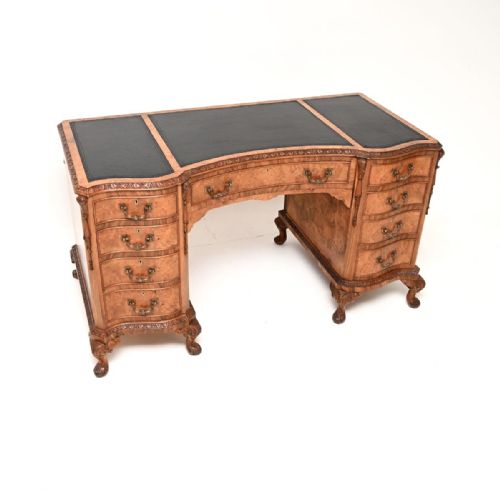
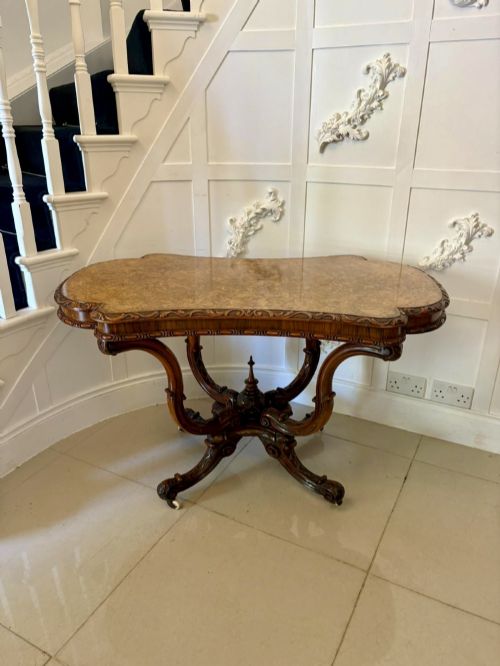
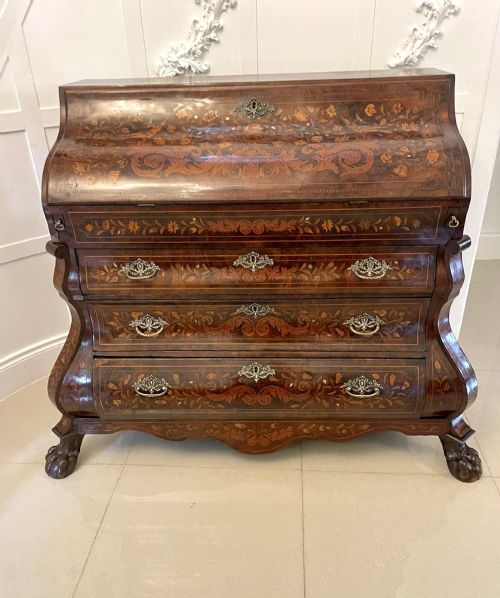
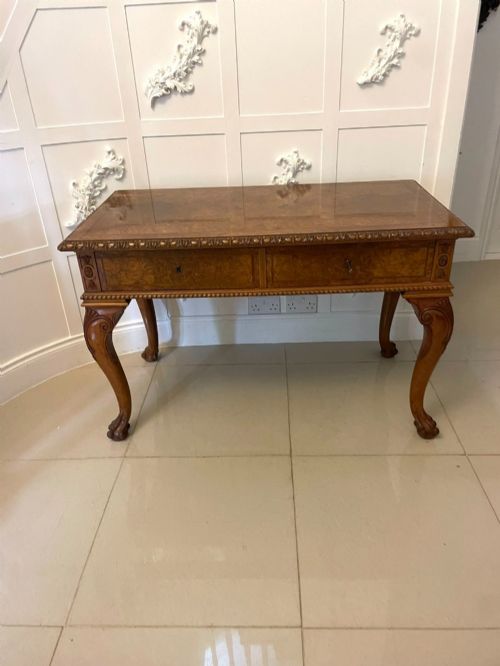
Carved Burr Walnut
Carved burr walnut furniture showcases extraordinary natural grain patterns paired with solid timber framework, offering a sophisticated centrepiece for traditional and modern interiors alike.
Carved Burr Walnut
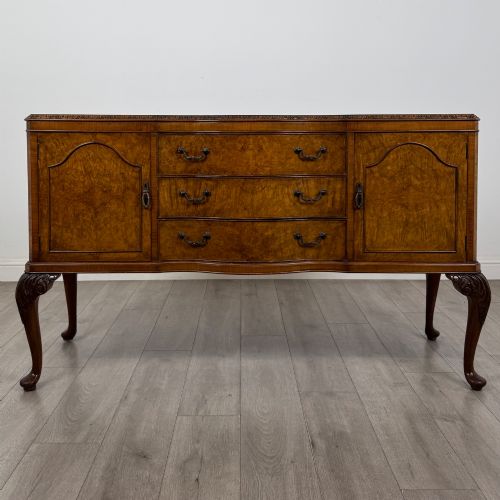
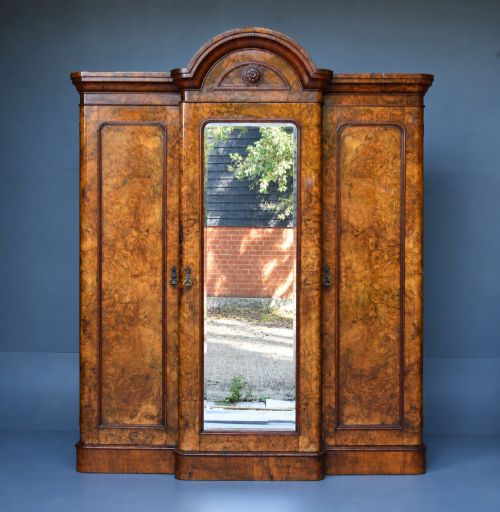
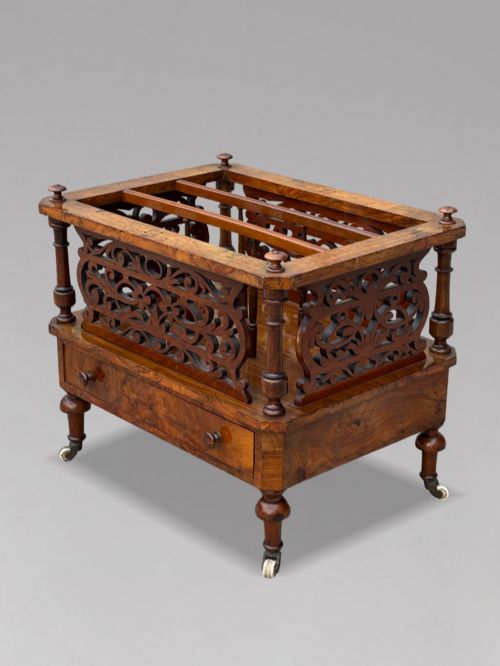
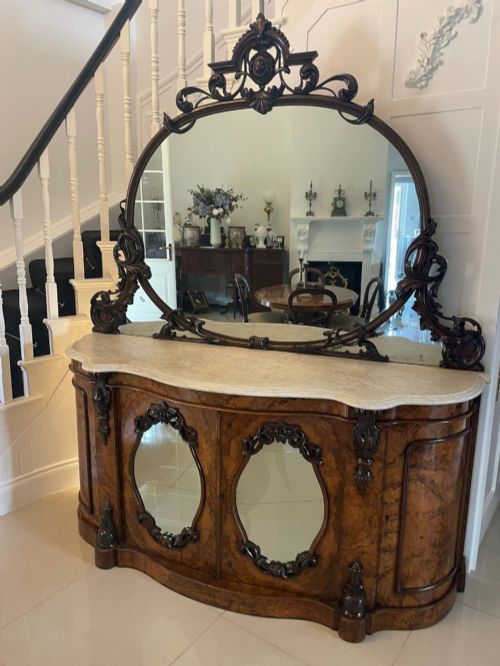
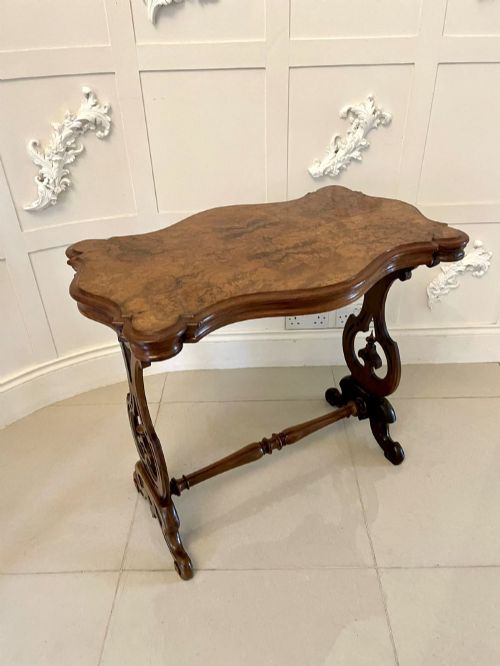
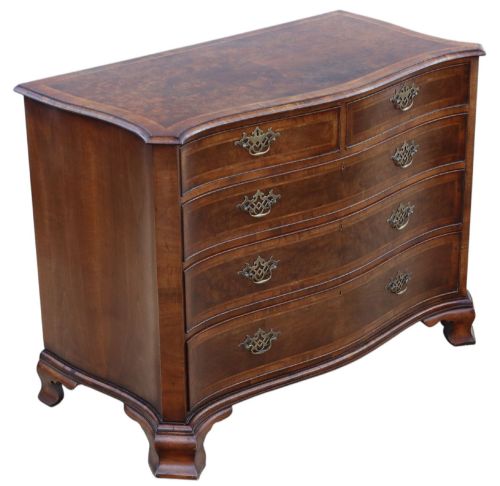
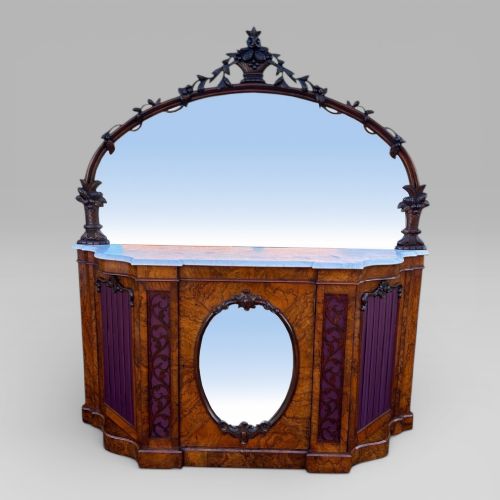
Carved burr walnut items comprise a diverse selection of furniture spanning the Victorian, Edwardian, and Art Deco eras, ranging from large wardrobes and credenzas to smaller occasional tables and canterburys.
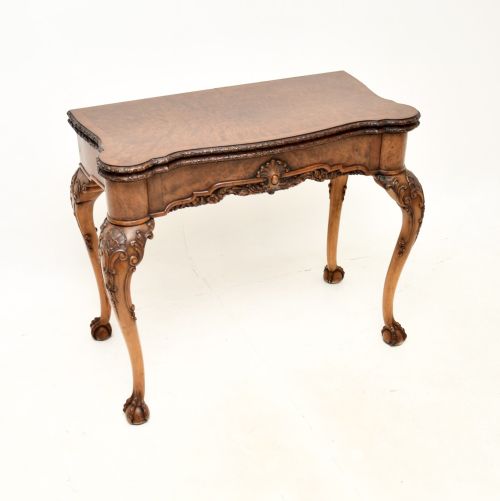
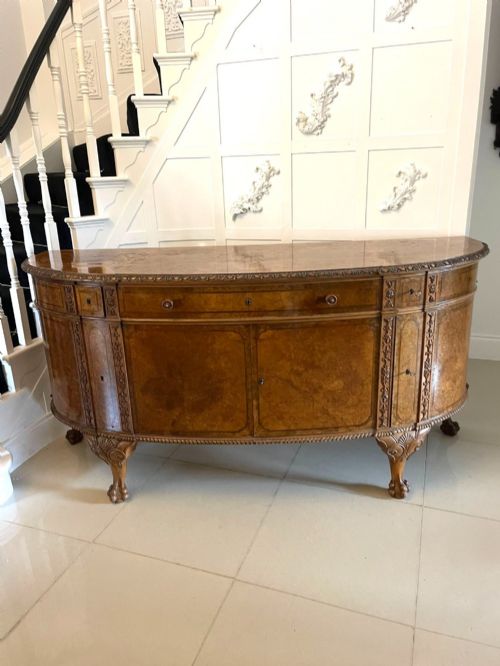
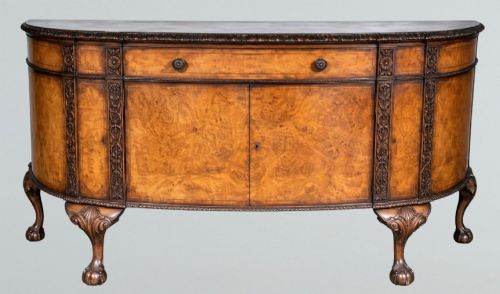
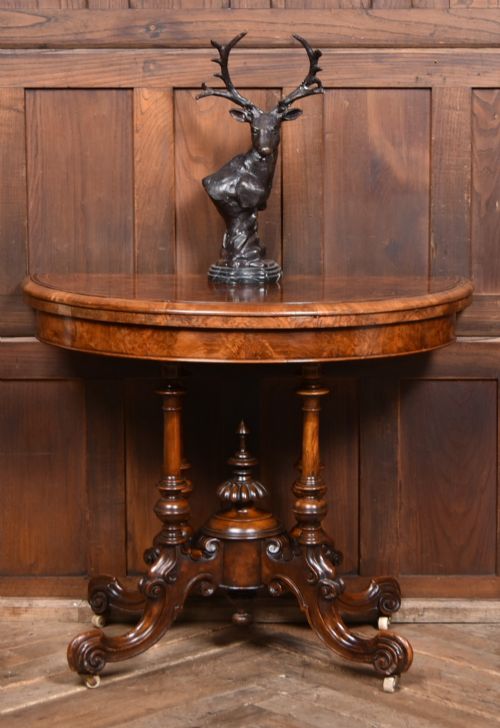
The most prevalent forms on this page include centre tables, sideboards, and games tables, predominantly originating from the nineteenth and early twentieth centuries.
Makers utilised the distinctive swelling growths of the walnut tree to create highly decorative veneered surfaces on functional household forms.
How they were made
Craftsmen applied thin slices of burr walnut veneer over solid hardwood carcasses, arranging the grain patterns symmetrically to produce striking optical effects.
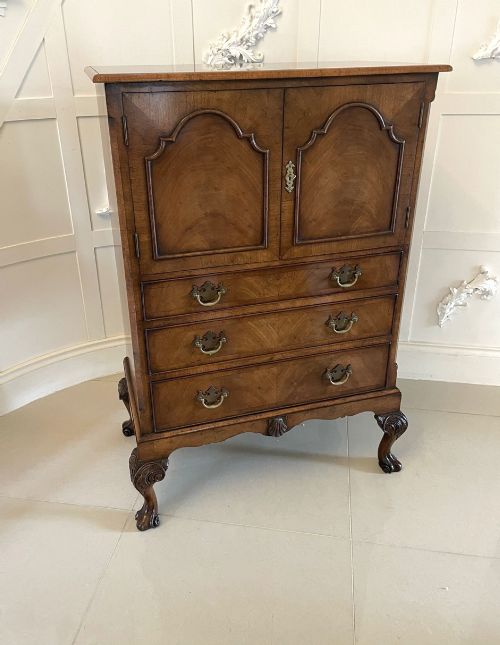
Carved structural elements, such as cabriole legs and mirror backs, were fashioned from solid walnut to complement the figured veneer surfaces.
Secondary timbers like mahogany or pine provided stable internal framing, while details such as boxwood inlay, brass hardware, and leather writing inserts completed the construction.
Listings feature numerous Victorian centre tables and Edwardian wardrobes constructed from figured walnut with applied boxwood inlay.
What varies in quality
The density, symmetry, and liveliness of the burr walnut grain dictate the visual impact of the piece, with tightly swirled patterns commanding greater admiration.
The crispness and depth of the hand-carving on structural supports and mirror frames separate standard production items from exhibition-grade examples.
The precision of the cabinetmaking, including the tightness of veneer joints and the retention of original brass fittings or leather tops, determines overall desirability.
Maple and Co·Charles Tozer
The Carved Burr Walnut Glossary
- Burr walnut
- A veneer taken from the wart-like growths on walnut trees, prized for its swirling, highly figured grain patterns. It requires expert application to prevent lifting over time.
- Canterbury
- A small multi-compartment stand originally designed for holding sheet music, folios, or newspapers. Victorian examples often incorporate turned spindles and drawers.
- Credenza
- A low sideboard or cabinet featuring mirrored backs and glazed cupboards, popular during the mid-nineteenth century for display purposes. They frequently showcase elaborate carved mounts.
- Loo table
- A large round or oval table designed for Victorian card games, featuring a tilt-top mechanism for convenient storage against a wall. The pedestals typically display heavy carving.
- Marquetry
- The art of applying decorative pieces of veneer to a structure to form intricate floral or geometric designs. Craftsmen select contrasting woods to achieve tonal depth.
Carved Burr Walnut: Frequently Asked Questions
How do I care for burr walnut furniture?
Keep wooden pieces away from direct sunlight and strong heat sources to prevent the delicate veneer from drying out or splitting. Dust regularly with a dry cloth and apply occasional specialist wax to nourish the timber.
Avoid using silicone-based polishes or damp cloths, as moisture can penetrate old veneer joints and cause the surface to lift or cloud over time.
What is the difference between walnut and burr walnut?
Standard walnut timber comes from the straight-grained trunk of the tree, offering a uniform and rich brown tone. Burr walnut utilises specialised excrescences that produce erratic, swirling patterns.
Because burr growths are scarce and difficult to cut into usable sheets, craftsmen reserved the material for the most prominent display surfaces of high-status furniture.
How can I date a carved burr walnut table?
Examine the construction methods underneath and inside the piece, looking at drawer linings, screw types, and timber thickness. Victorian pieces from the mid-nineteenth century often display heavy pedestals and elaborate hand-carving.
Later Edwardian and Art Deco iterations tend to feature cleaner lines or distinct revival styles, such as Queen Anne influences with cabriole legs.