

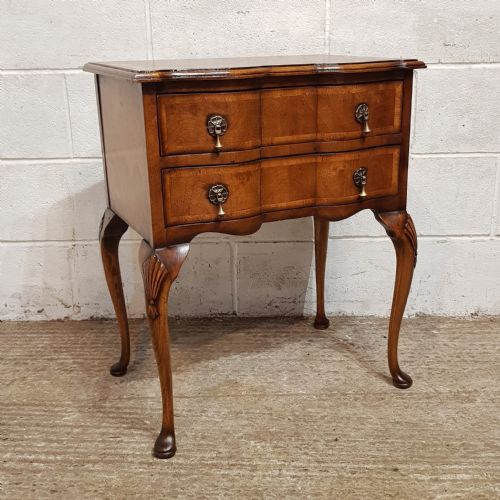


Carved Burr Walnut Nightstands
Carved burr walnut nightstands bring rich grain patterns and classical revival silhouettes directly to the bedside.
Carved Burr Walnut Nightstands
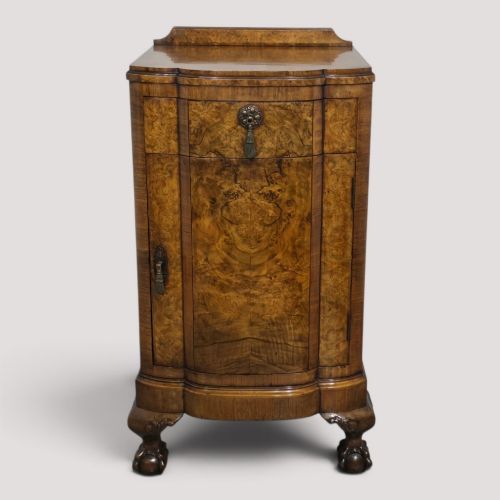
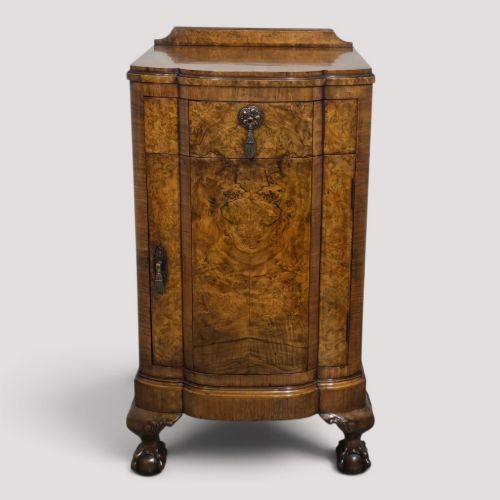
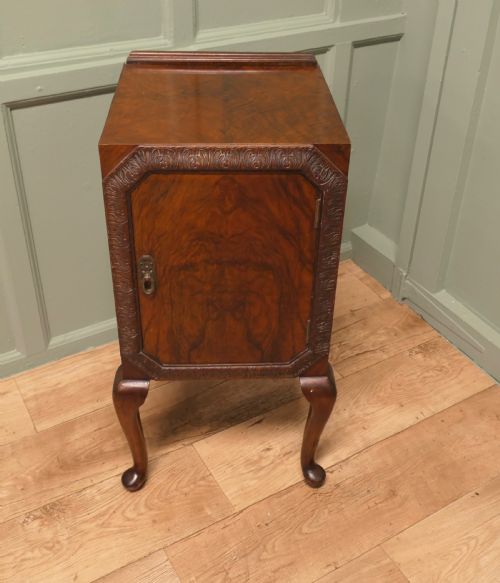
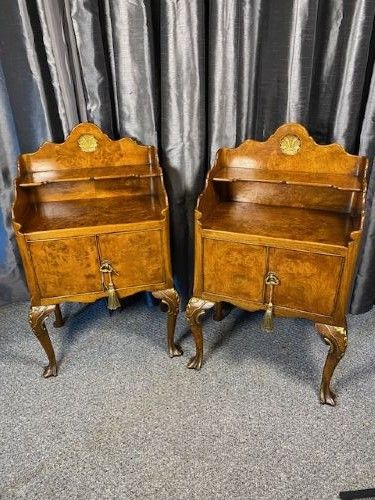
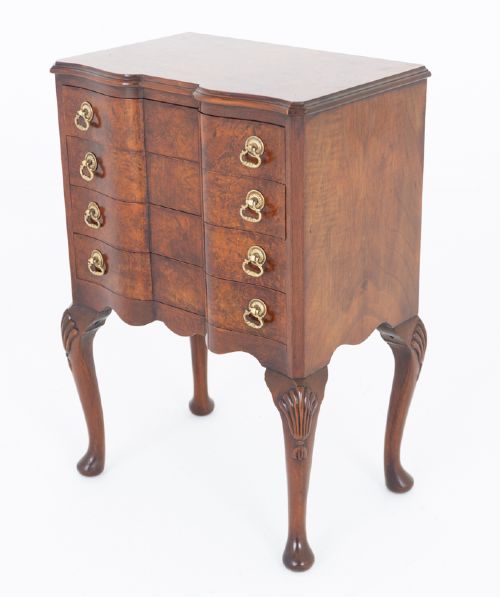
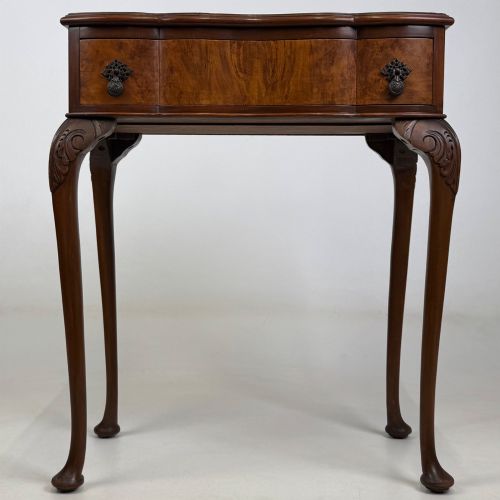
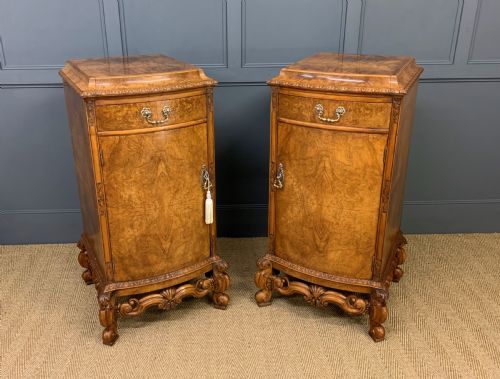
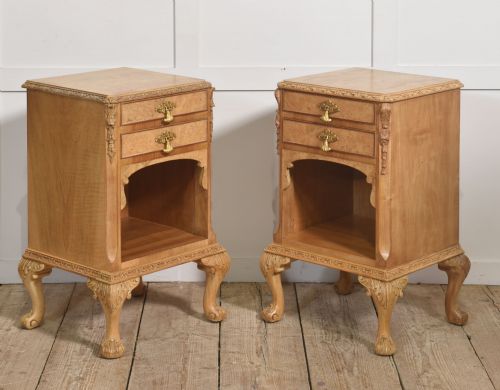
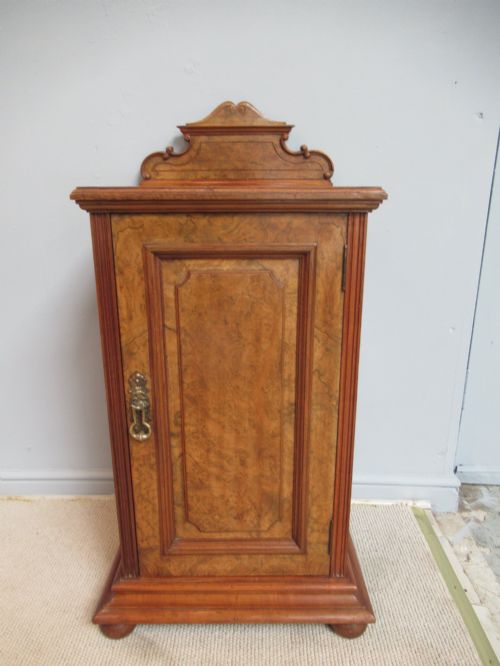
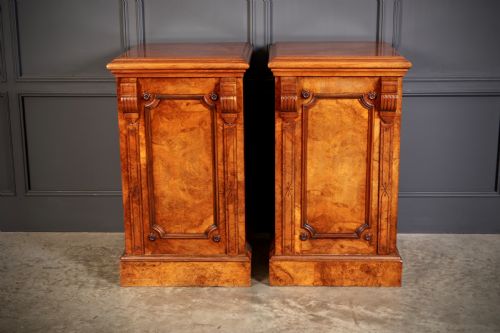
Carved burr walnut nightstands encompass bedside cabinets, pedestal cupboards, and lamp chests produced across the Victorian, Edwardian, and early twentieth-century periods. These pieces frequently draw upon Queen Anne style influences, featuring shaped fronts and cabriole legs alongside distinct figuring in the timber.
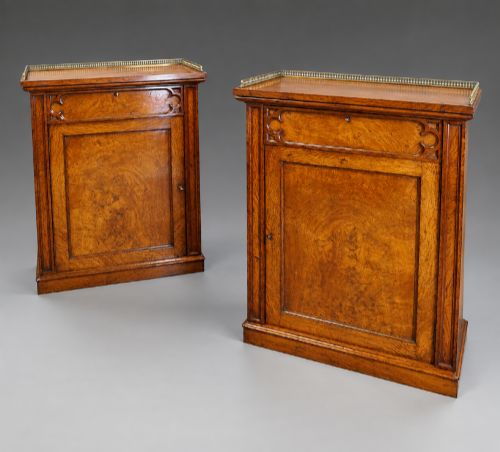
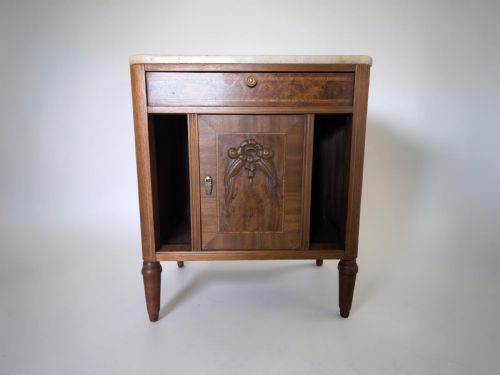
Makers of this era employed various forms to suit domestic spaces, ranging from tall pedestal cupboards to serpentine fronted side tables and bowfront lockers. Pairs appear frequently across the listings, often matching bedsides with marble tops or intricate wood inlay.
Materials and construction
Cabinet makers utilised solid walnut and burr walnut veneer applied over secondary timbers like oak to achieve complex grain patterns. Surfaces often incorporate brass hardware, giltwood accents, and inset marble tops.
Joinery methods reflect traditional cabinet making, with specific stylistic revivals determining whether a piece received heavy carving, classical mouldings, or smooth bombe curves.
Listings span multiple decades, incorporating Victorian, Edwardian, and 1930s pieces alongside specific revival movements like Gothic Revival and Louis XVI.
Factors determining quality
The choice of veneer defines visual appeal, with dense, highly figured burr walnut commanding attention over plain walnut boards. Symmetry in the grain arrangement across drawer fronts and cupboard doors indicates careful selection by the maker.
Subtlety and crispness in carved details distinguish finer examples, particularly where Queen Anne style cabriole legs or giltwood enrichment meet the main body of the cabinet.
The Carved Burr Walnut Nightstands Glossary
- Burr walnut
- A specialised wood veneer taken from the warted growths on walnut trees, prized for its swirling, mottled grain patterns. It provides a highly decorative surface on nineteenth and twentieth-century cabinet furniture.
- Queen Anne style
- A design movement characterised by pad feet, cabriole legs, and understated double-domed or curved outlines. This aesthetic experienced significant revivals during the Victorian and Edwardian eras.
- Bombe
- A swollen or bulging contour found on the sides and fronts of commodes, chests, and bedside cabinets. This profile originates from continental European cabinet making traditions.
- Pedestal cupboard
- A tall, single-door cabinet designed to stand beside a bed or in a corner for storage. These items often feature internal shelving and compact footprints.
Carved Burr Walnut Nightstands: Frequently Asked Questions
Are these nightstands usually found in pairs?
Many examples survive as matched pairs intended to flank a bed, while others appear as single side tables or lamp stands. Pairs often exhibit mirrored grain patterns across their burr walnut drawer fronts.
Single cabinets frequently served alternative domestic uses such as music cabinets or small side cupboards.
What maintenance does burr walnut require?
Keep polished wooden surfaces away from direct sunlight and excessive moisture to protect the delicate veneer and underlying timbers. Regular dusting with a soft, dry cloth preserves the natural lustre of the polish.
Avoid placing damp items directly onto marble tops without protective coasters.
How do I date a walnut bedside chest?
Examine the hardware, internal secondary timbers like oak, and overall stylistic markers such as serpentine fronts or giltwood details. Pieces span from the late nineteenth century through to the 1930s.
Construction techniques and revival styles often provide the clearest clues to a piece's exact decade of manufacture.