
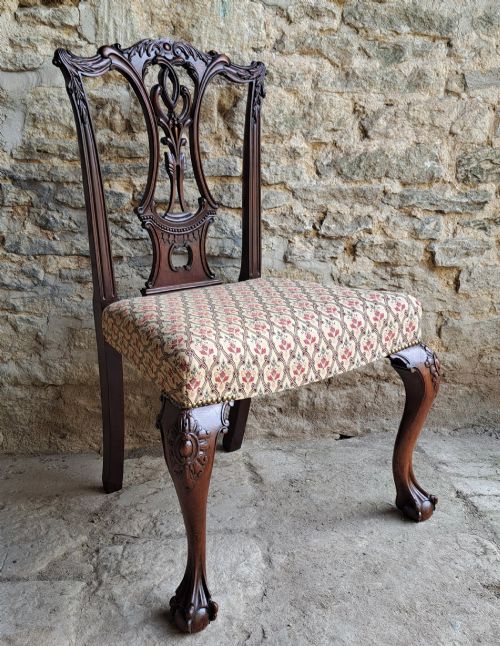
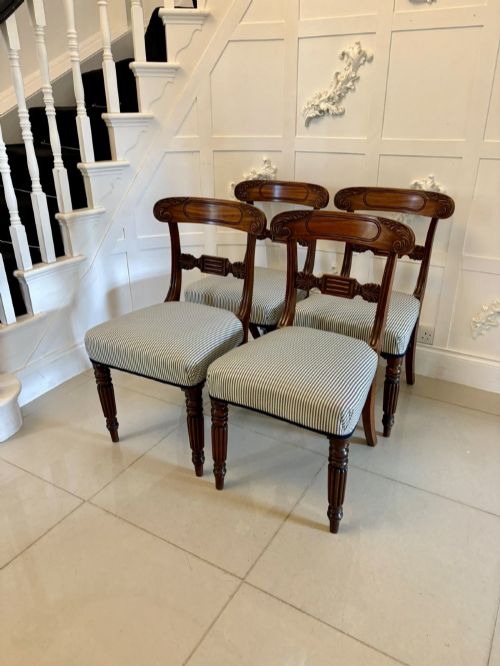
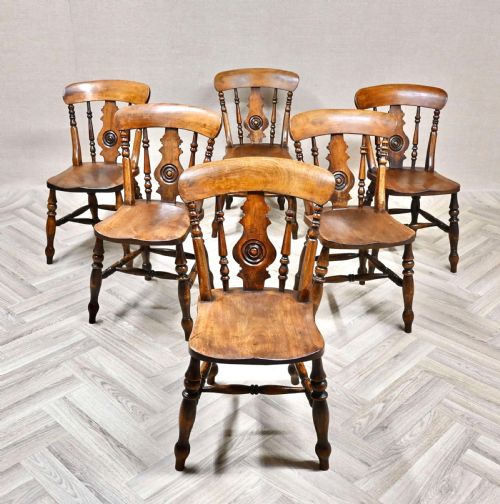
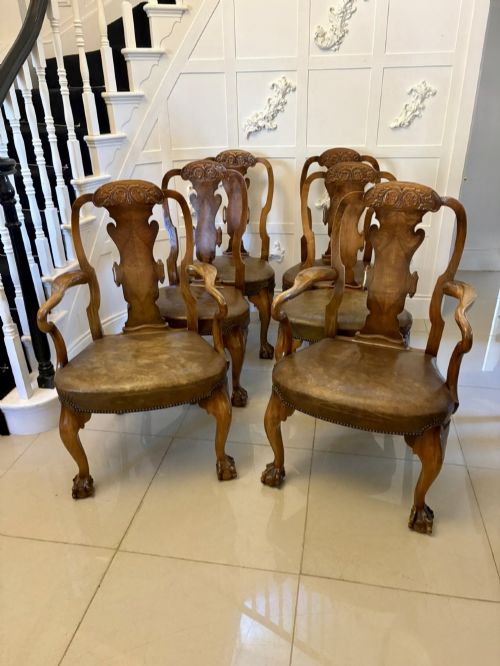


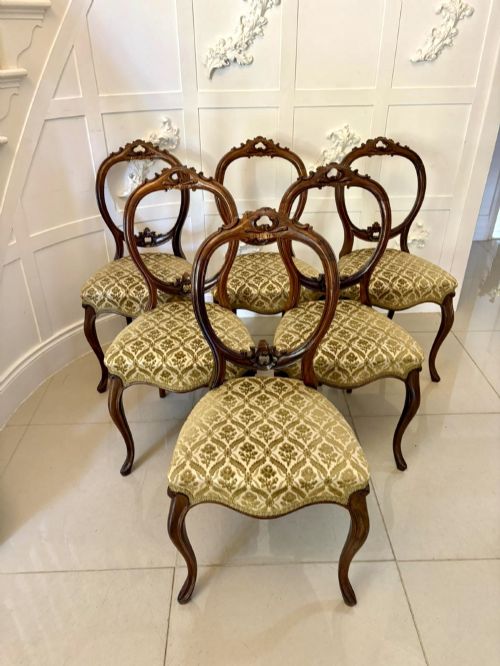
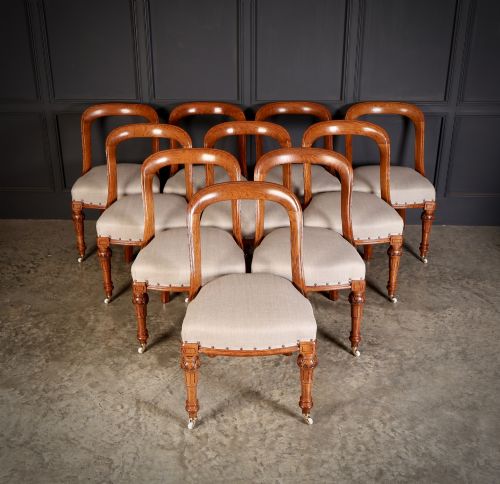
Carved Brown Side Chair
A carved brown side chair brings solidity and proportion to a room, offering functional seating shaped from timber and upholstery.
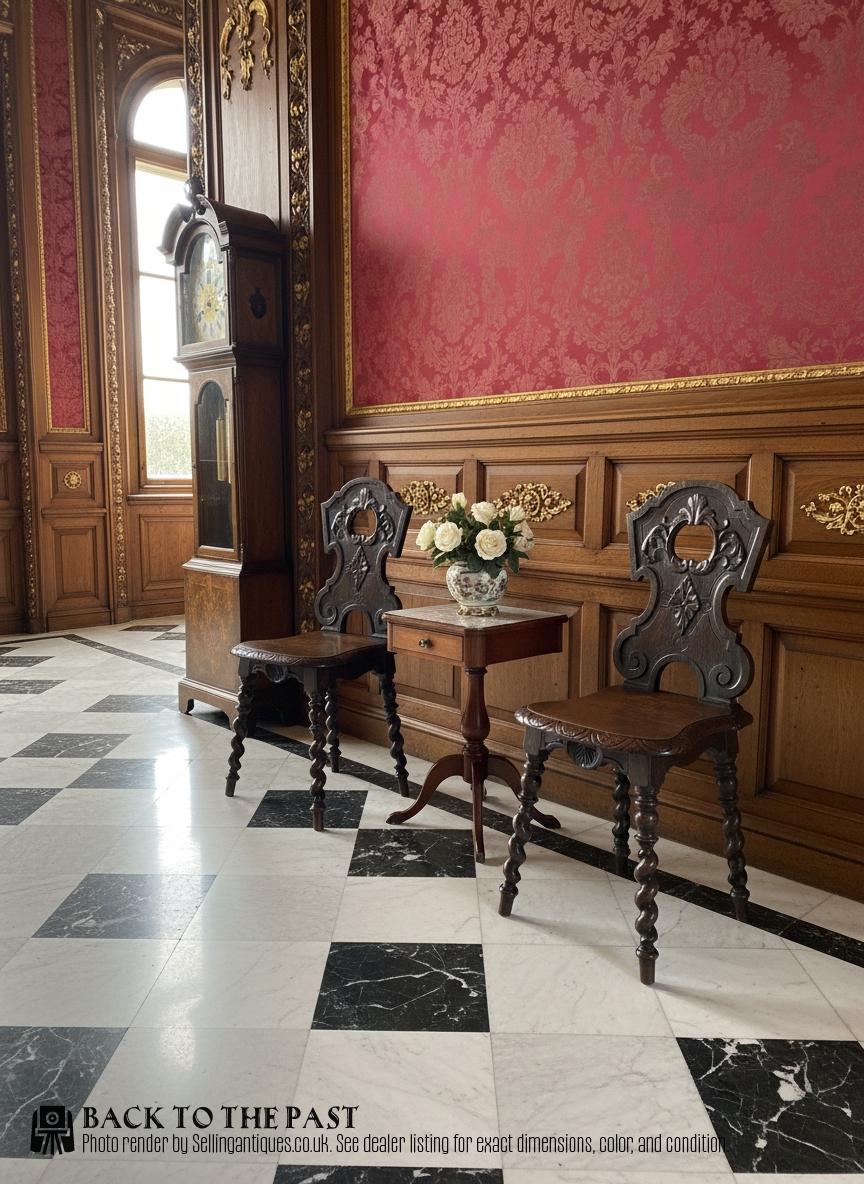
Carved Brown Side Chair
When you search for a carved brown side chair, you encounter wooden seating forms shaped across the eighteenth, nineteenth, and early twentieth centuries. These pieces appear primarily as dining chairs, hall chairs, and side chairs spanning periods from the Georgian era through to the Edwardian years.
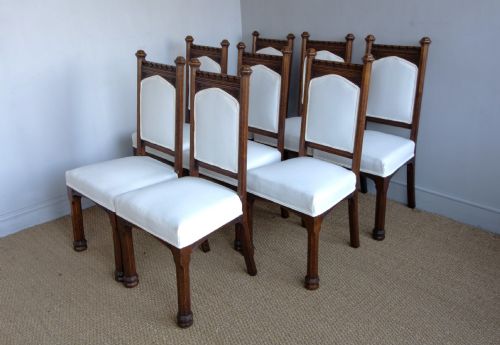
The materials you meet are predominantly brown hardwoods such as mahogany, oak, and walnut, frequently paired with fabric, leather, or brass elements. Styles range from Regency and Victorian to Gothic Revival and Jacobean Revival, reflecting the decorative preferences of their respective decades.
How they were made
Cabinet makers utilised dense brown timbers including mahogany, oak, and walnut, selecting each board for its grain and structural strength. Carving was executed by hand directly into the solid wood frames of the chairs.
Joinery techniques relied on traditional mortise and tenon joints to secure the seat rails and legs. Upholstered versions incorporated stuffing and textiles or leather secured with tacks to the wooden foundations.
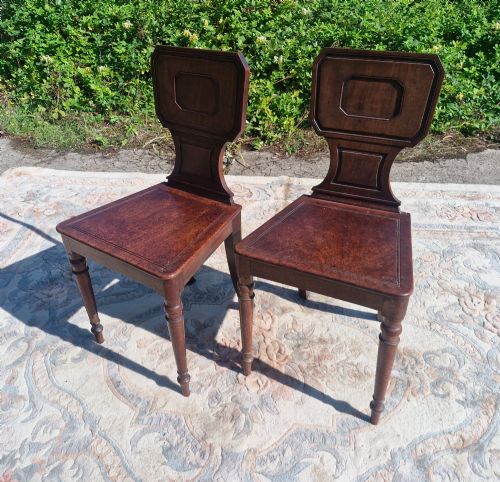
Some nineteenth-century hall chairs feature carved concave seats designed specifically to accommodate the expansive crinoline skirts worn at the time.
What varies in quality
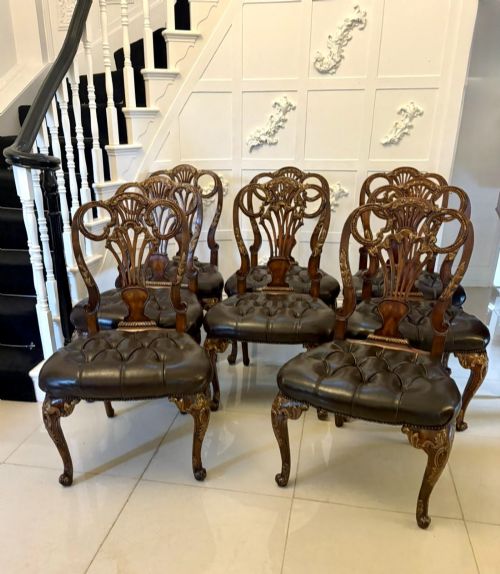
The depth and crispness of the timber carving dictate the visual refinement of the frame, distinguishing deeply hand-modelled ornamentation from shallow machine work. Timber selection matters profoundly, with figured walnut or dense mahogany carrying greater visual weight than plain secondary woods.
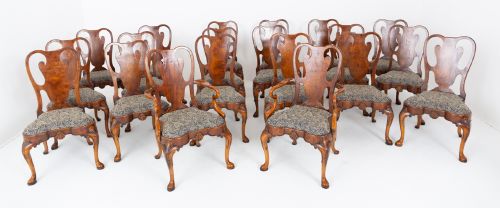
Structural integrity depends on the tightness of the original joints and the preservation of the timber beneath any surface finish. Complete sets maintain higher coherence than assembled groups where individual chairs differ subtly in proportion or wood tone.
Warings
The Carved Brown Side Chair Glossary
- Side chair
- A chair without arms, designed originally for dining rooms or reception spaces. These forms provide upright seating without the wider footprint of an armchair.
- Balloon back
- A rounded, curved backrest shaped like a balloon, popular during the Victorian period in walnut and mahogany. This design offers ergonomic support through its flowing timber curves.
- Hall chair
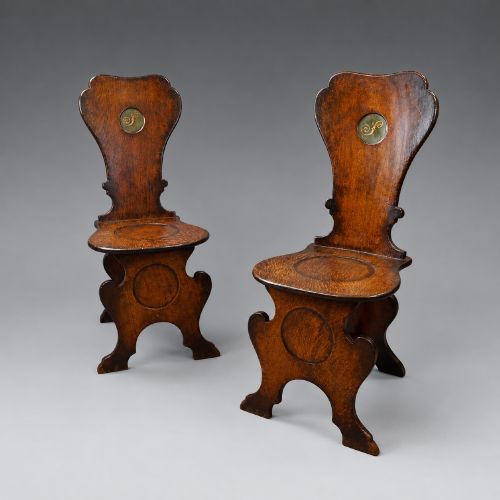
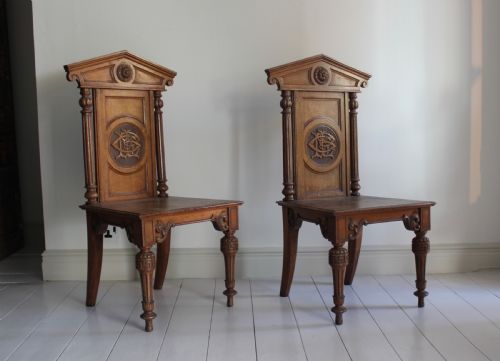
- A rigid wooden seat placed in entrance halls, often featuring a solid carved back and timber seat rather than upholstery. They frequently display painted or carved family crests.
- Bar back
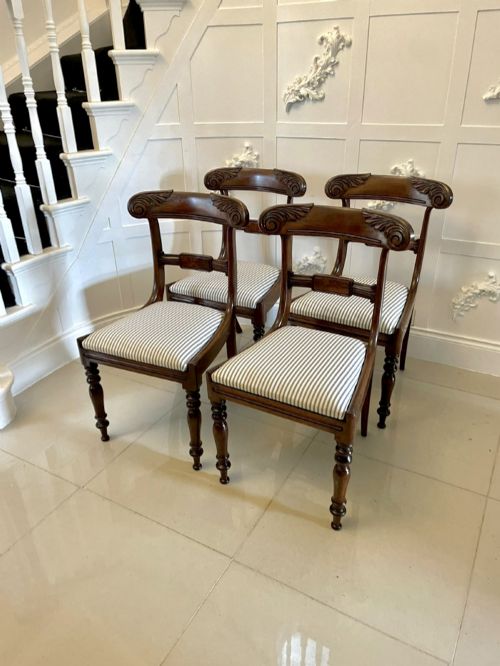
- A chair featuring a horizontal crossbar across the upper backrest, common in nineteenth-century dining sets. The bar often incorporates carved central splats or roundels.
- Shield back
- A chair back shaped in the outline of a shield, associated with eighteenth-century Georgian design and later revivals. This silhouette often encloses pierced carved splats.
Carved Brown Side Chair: Frequently Asked Questions
Where were these chairs used?
These chairs served primarily around dining tables or stood against walls in grand hallways and reception rooms. Hall chairs occupied entrance spaces for brief seating, while dining chairs gathered in sets for formal meals.
Private parlours and morning rooms also utilised smaller side chairs and nursing chairs for daily leisure. Their placement depended entirely on the domestic architecture of the period.
How do I care for antique wood?
Maintain timber surfaces by applying appropriate wax polishes sparingly and buffing gently with a soft cloth. Keep chairs away from direct heat sources and dramatic humidity fluctuations to prevent wood splitting.
Avoid commercial liquid sprays containing silicone, which can penetrate and damage historic polished finishes over time. Regular gentle dusting preserves the natural lustre of the brown hardwoods.
How do I distinguish Victorian from Georgian styles?
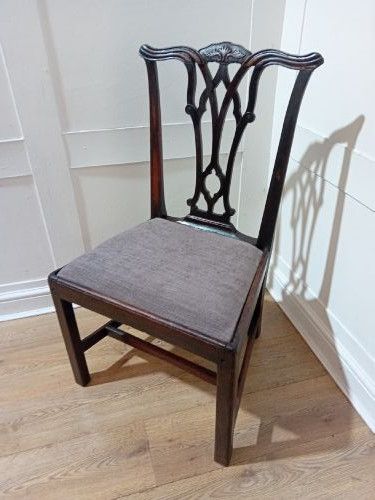
Georgian pieces from the eighteenth century typically exhibit restrained classical proportions, lighter mahogany frames, and precise hand-carved details like ribbon ties or acanthus leaves. Their lines remain elegant and structurally disciplined.
Victorian designs from the nineteenth century often display heavier proportions, darker walnut or oak timbers, and exuberant ornamentation such as balloon backs or Gothic Revival tracery. The carving becomes bolder and more deeply undercut.