



Carved Bone and Wood
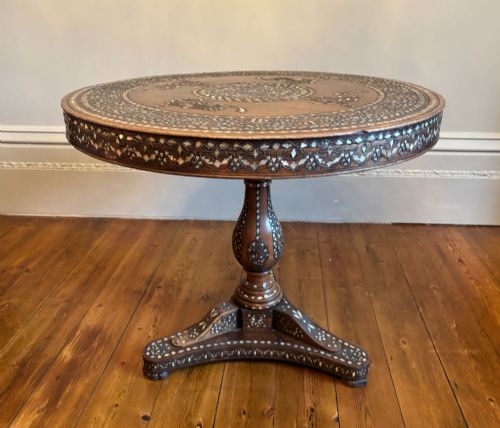
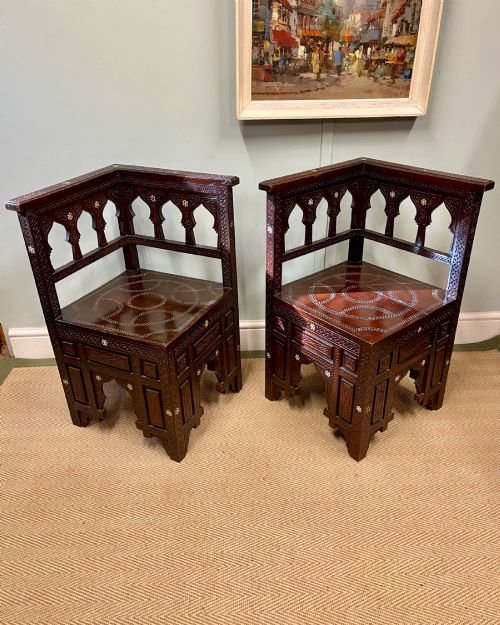
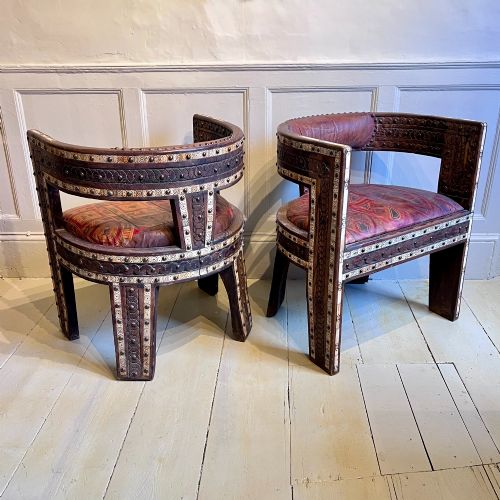
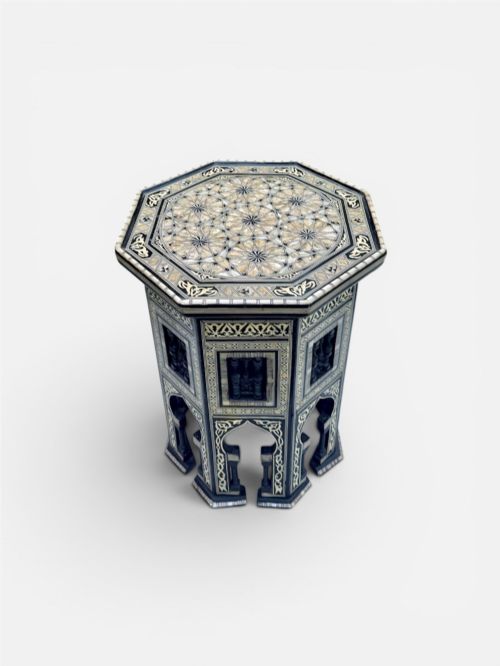
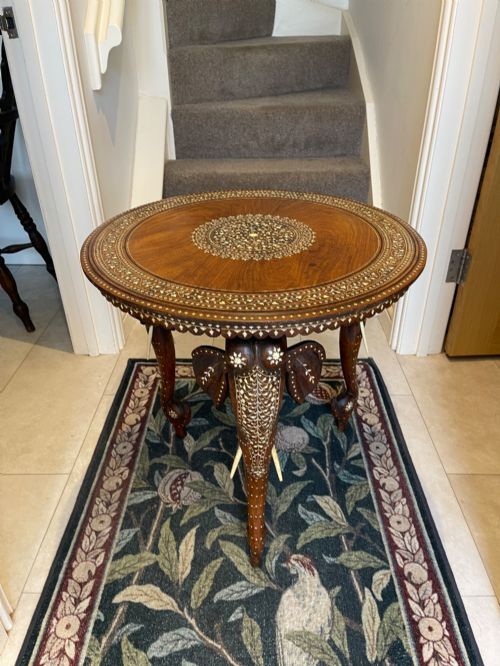
These carved bone and wood pieces combine intricate organic inlay with dense timbers, ranging from Anglo-Indian occasional tables to Syrian chairs.
Carved Bone and Wood
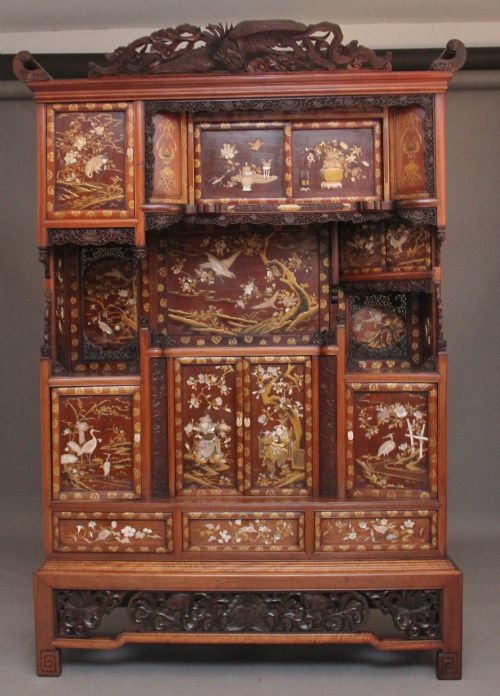
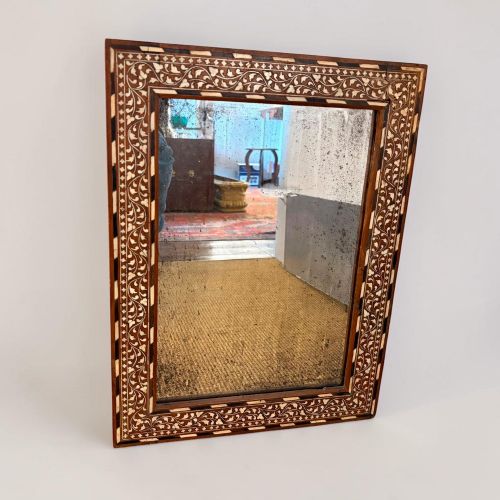
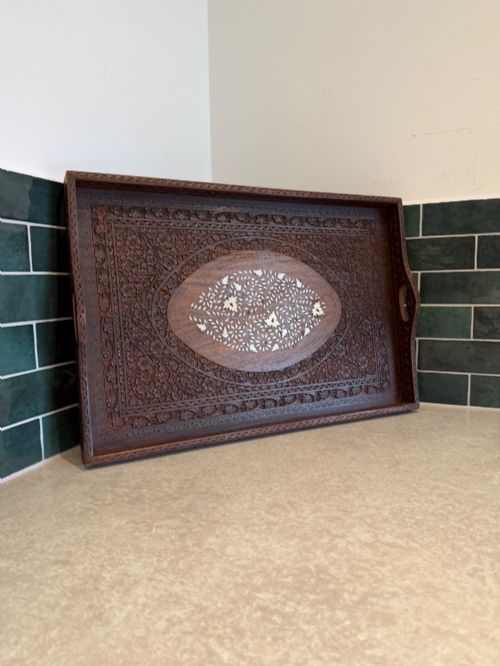
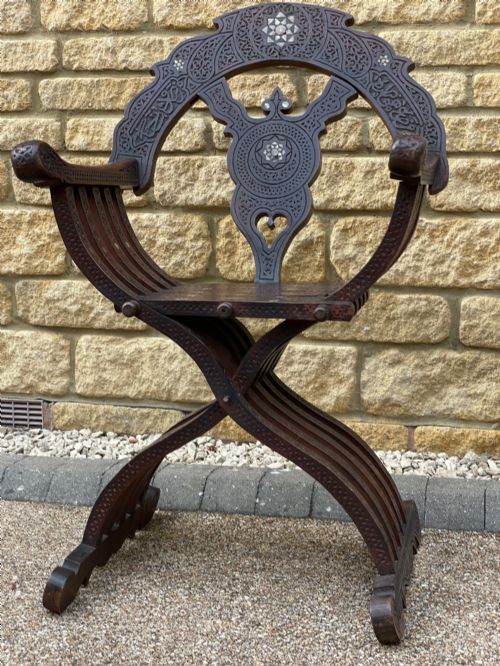
When you search for carved bone and wood, you encounter a diverse range of domestic furniture and decorative objects originating from regions such as India, Syria, Japan, and Africa. Tables, cabinets, and chairs dominate the selection, often taking octagonal or folding forms intended for occasional use in principal rooms.
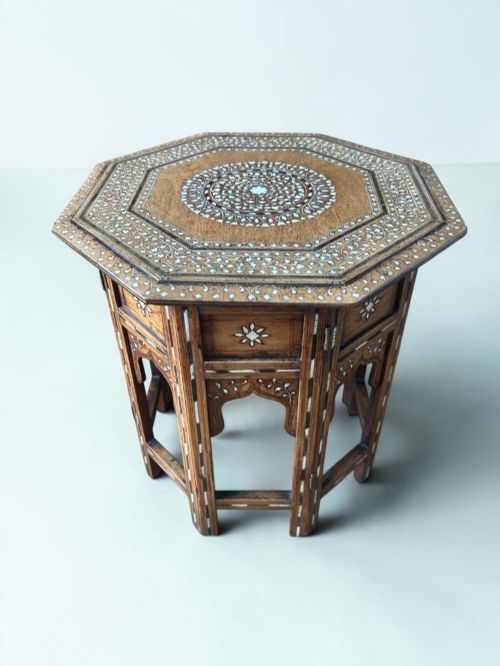
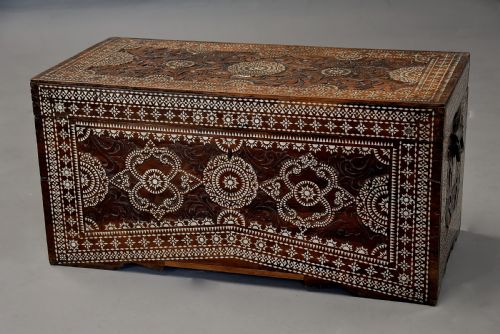
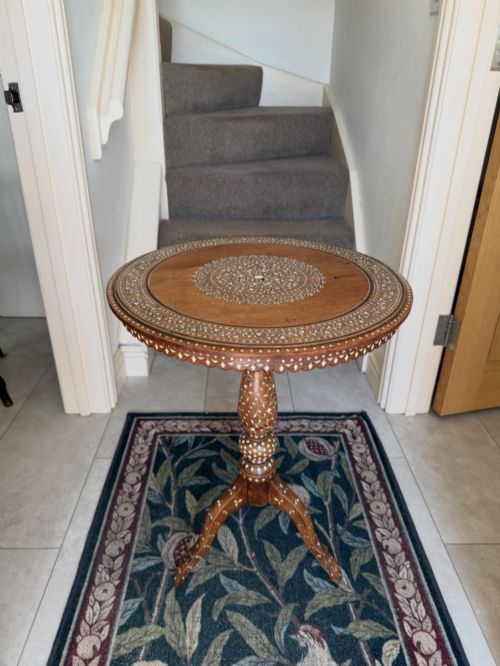
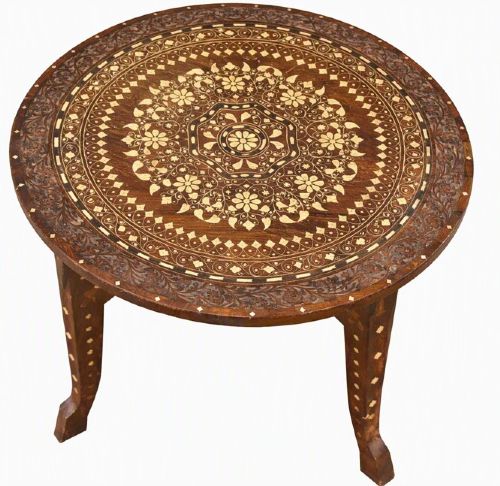
Octagonal side tables from Hoshiarpur and Syrian inlaid trunks represent the most common manifestations of this tradition on this page. These items typically combine dense hardwoods like walnut, teak, or ebonised timber with contrasting pale bone or mother-of-pearl inserts.
Judging Quality
The standard of execution in carved bone and wood depends heavily on the precision of the inlay work and the depth of the carving. Superior examples exhibit tight joints where bone and mother-of-pearl segments sit flush with the surrounding timber without excessive filler.
The complexity of the design also dictates the tier of the piece, moving from simple linear borders to dense, multi-layered vegetal motifs covering entire surfaces. The integrity of the underlying hardwood structure ensures longevity and stability.
Carved Bone and Wood Retail Price Guide 2026
Typical asking prices for carved bone and wood among the pieces listed under this phrase on Sellingantiques today, from the lower quarter to the upper quarter. They describe what is for sale here now, not the wider market.
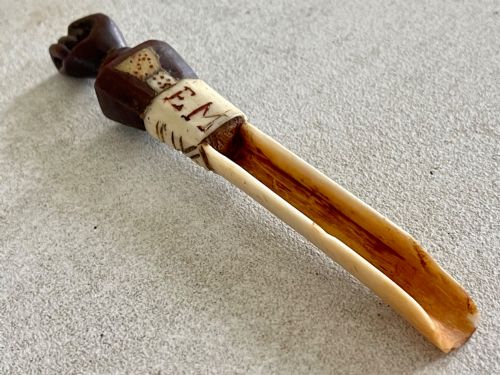
An adventurous Victorian sailor created a bone and wood bottle whimsy, proving that patience applies equally to the high seas.
Liberty and Co
The Carved Bone and Wood Glossary
- Mashrabiya
- A decorative wooden lattice formed of turned bobbins fitted together without nails. This technique frequently appears in Middle Eastern screens, chair backs, and mirror frames.
- Bone Inlay
- The practice of embedding thin, shaped pieces of animal bone into carved recesses within a wooden substrate. It creates high-contrast geometric or floral patterns against dark timbers.
- Hoshiarpur
- A region in northern India renowned for intricate woodwork. Pieces originating from here typically feature dense, overall bone and wire inlay on octagonal or folding tables.
- Nacre-shell
- The iridescent inner layer of mollusc shells, commonly referred to as mother-of-pearl. It provides shimmering contrast when set alongside bone and dark hardwoods.
Carved Bone and Wood: Frequently Asked Questions
What are carved bone and wood items?
These are functional furnishings and decorative objects ornamented with contrasting organic inlay and carved wooden surfaces. They span several continents and incorporate traditional regional woodworking methods.
Common forms include occasional tables, folding screens, storage chests, and seating designed with distinct regional motifs from India, the Middle East, and beyond.
How were these pieces used?
Owners utilised them as display surfaces, seating, and storage within nineteenth and early twentieth-century domestic interiors. Many smaller tables and folding items allowed for flexible placement in reception rooms.
Larger furniture like cabinets and trunks served both a practical storage function and a decorative purpose, displaying the owner's taste for exotic craftsmanship.
How do I care for inlaid wood?
Maintain stable indoor humidity levels to prevent the timber from warping and causing the bone inlay to loosen. Avoid placing items near direct heat sources or in strong sunlight.
Dust gently with a dry, soft cloth and refrain from applying harsh liquid polishes that might seep beneath the inlaid sections or discolour the bone.
How are different regional styles told apart?
Regional styles reveal themselves through specific material combinations and carving motifs. Indian pieces frequently employ dense overall floral bone inlay on octagonal tables, while Middle Eastern items often integrate mother-of-pearl and turned mashrabiya panels.
Far Eastern examples on this page tend to feature deep-carved bone figures on folding screens or cabinetry rather than flat geometric inlay.