
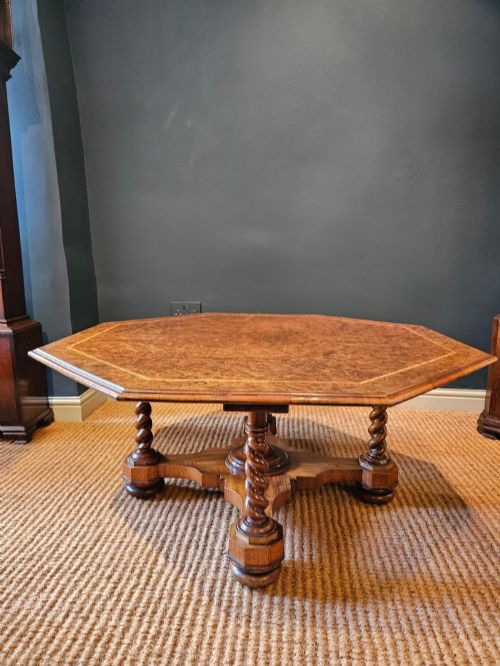
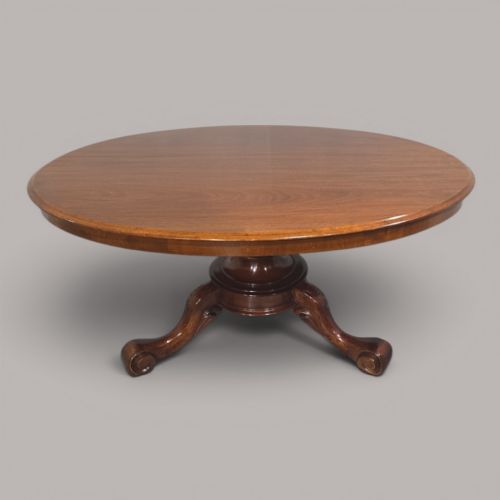


Carved Base Coffee Table
A carved base coffee table anchors a room with solid presence, bringing tactile warmth and historic character through detailed timber or metalwork.
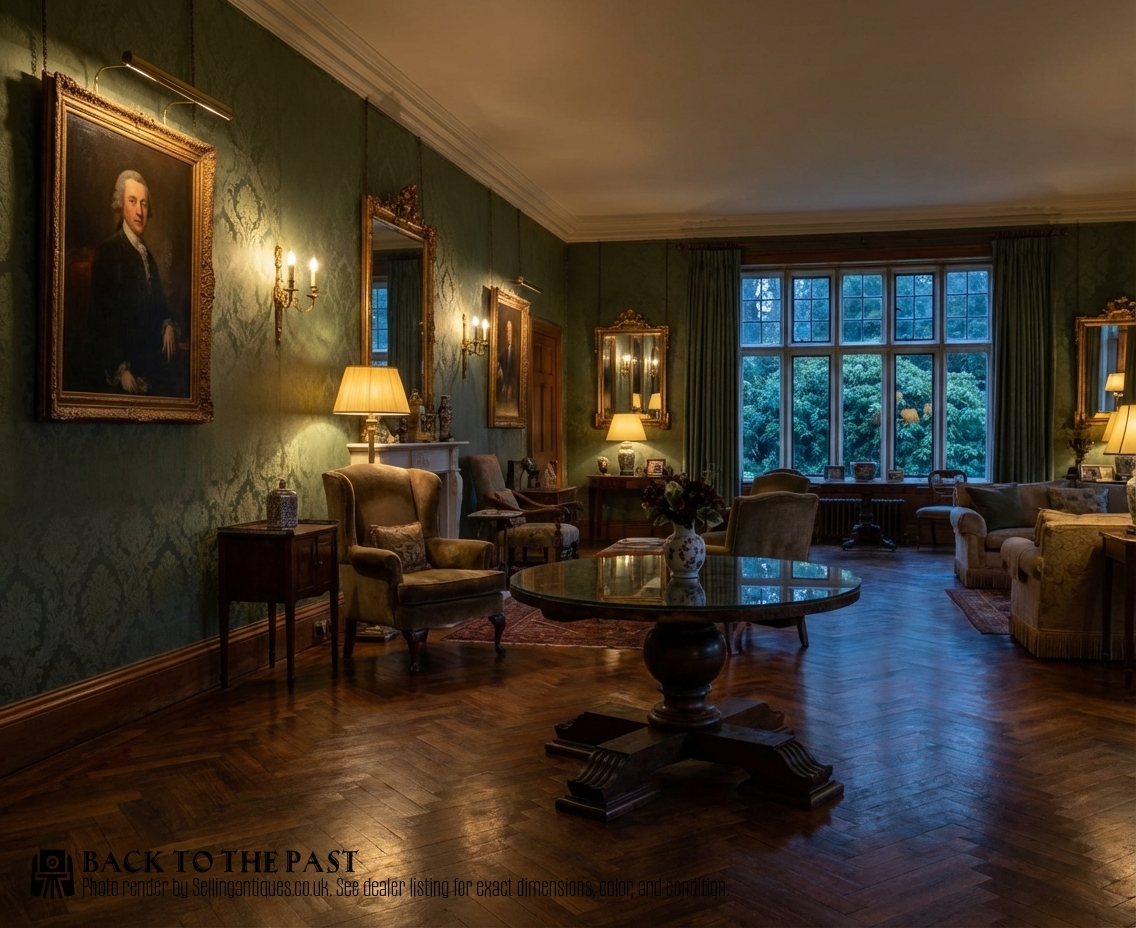
Carved Base Coffee Table
A carved base coffee table brings substantial presence to a room, drawing the eye down to intricate woodwork or structural detail beneath the surface. When searching for a carved base coffee table, you encounter diverse forms ranging from traditional Victorian and Edwardian examples to exotic styles.
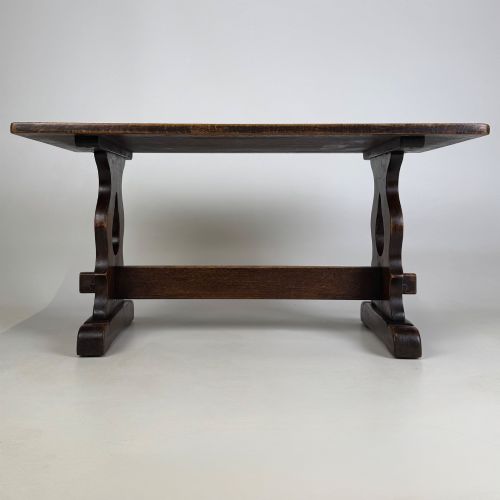
The pieces listed here span the nineteenth century and the early twentieth century, incorporating styles such as Victorian, Jacobean Revival, Arts and Crafts, and Anglo-Indian. Forms include coffee tables, centre tables, occasional tables, and refectory tables adapted for modern living.
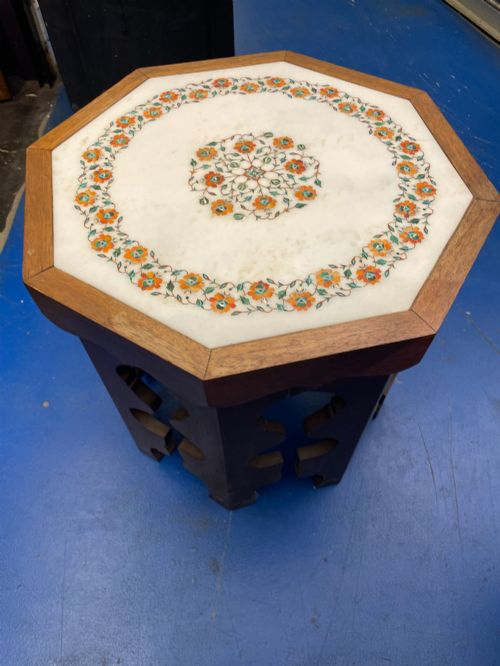
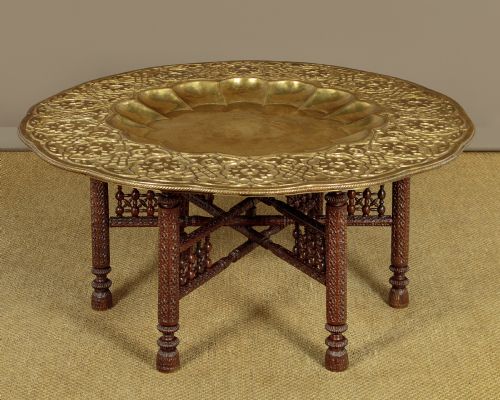
You are most likely to meet walnut and burr walnut timbers alongside oak, teak, hardwood, and brass. Many pieces utilise contrasting materials, pairing carved wooden bases with marble tops or brass trays.
How they were made
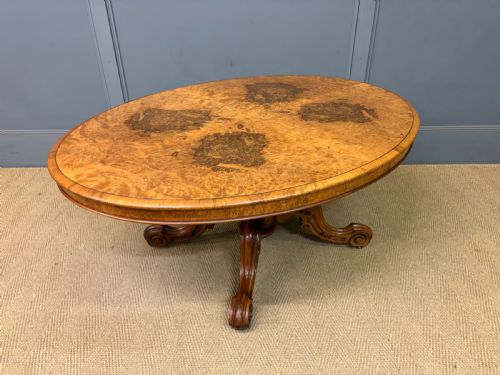
Cabinet makers utilised dense hardwoods such as walnut, burr walnut, oak, and mahogany to construct sturdy frames capable of supporting heavy stone or metal tops. Timber was selected for its grain pattern, with burr walnut chosen for its complex, swirling figures.
Decoration relied on hand-carving directly into the solid wood bases, alongside marquetry inlay using contrasting veneers. Metal elements include cast brass trays and gilt metal mounts, while stone tops utilise fitted marble.
What varies in quality
The distinction between ordinary and exceptional work lies in the depth and crispness of the hand-carving on the base. Sharp undercutting and fluid lines demonstrate superior craftsmanship compared to shallow, mechanical shaping.
Material selection dictates value, particularly the choice of richly figured burr walnut veneers or thick slabs of marble. The integration of the top with the carved base shows thoughtful proportion and secure construction.
The Carved Base Coffee Table Glossary
- Burr walnut
- A wood veneer taken from the growth growths of a walnut tree. It provides a highly decorative swirling grain pattern.
- Marquetry
- The art of applying pieces of veneer to a structure to form decorative patterns. Craftsmen use varied woods to achieve pictorial designs.
- Refectory table
- A long dining or serving table traditionally used in monasteries. Adapted versions appear among low tables.
- Gilt metal
- Metal coated with a thin layer of gold or gold-coloured finish. It provides metallic gleam without solid gold weight.
Carved Base Coffee Table: Frequently Asked Questions
What is a carved base coffee table?
A carved base coffee table is a low surface featuring decorative woodworking on its legs or support structure. These pieces repurpose historic furniture types like centre tables or occasional tables for modern living.
They bring tactile historic character into a seating area while providing a functional surface. The carved elements elevate the furniture from a simple utility piece to a focal point.
How do I date a carved base coffee table?
Dating relies on observing the timber, construction methods, and stylistic cues present in the piece. Victorian examples often display heavy walnut and intricate marquetry inlay.
Twentieth-century iterations may reflect Arts and Crafts simplicity or Edwardian revival styles. Comparing the joinery and materials against known periods helps narrow down the decade of creation.
Are marble top tables heavy?
Tables featuring marble slabs or stone inserts carry significant weight due to the density of the material. The carved wooden bases are constructed robustly to support this downward load.
Positioning the table requires care, and moving it usually demands two people to lift the top and base safely. The weight ensures stability during everyday use.
How do I maintain wood and brass tables?
Wooden surfaces benefit from occasional waxing to nourish the grain and protect the finish from moisture. Brass tray tops require gentle cleaning to manage tarnish without stripping the aged patina.
Avoiding direct sunlight and excessive heat prevents timber from splitting or warping over time. Simple dusting keeps the carved details clear of debris.