

Carved Ball and Claw
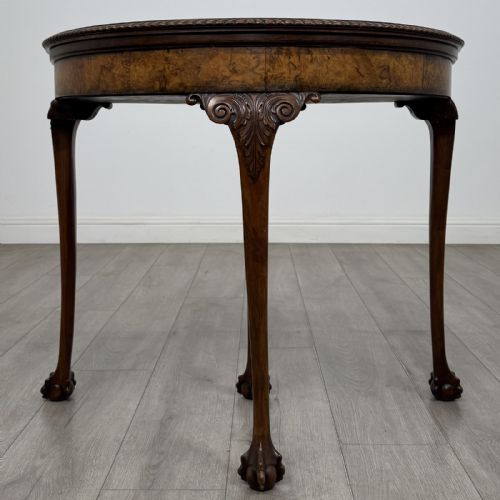
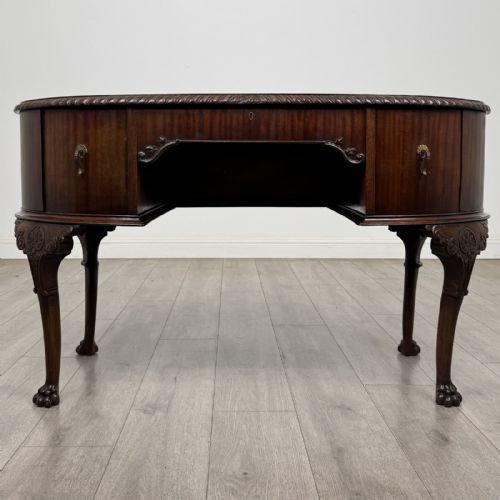
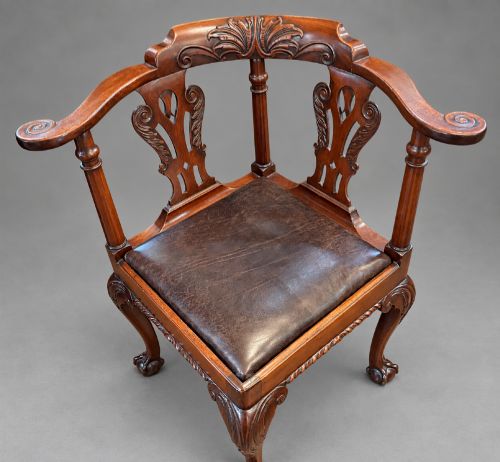
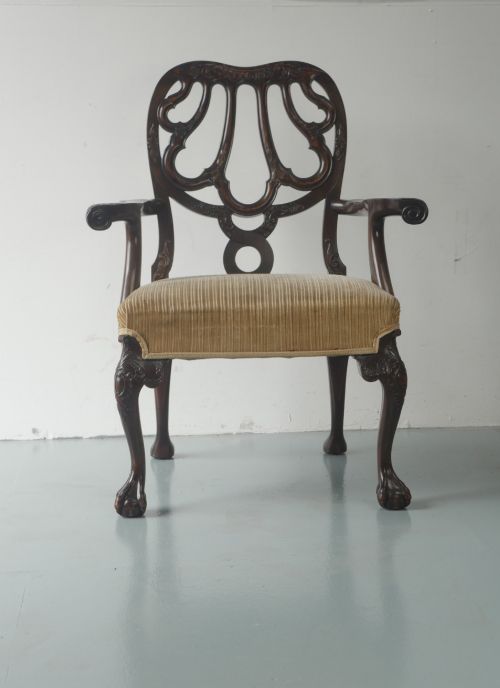
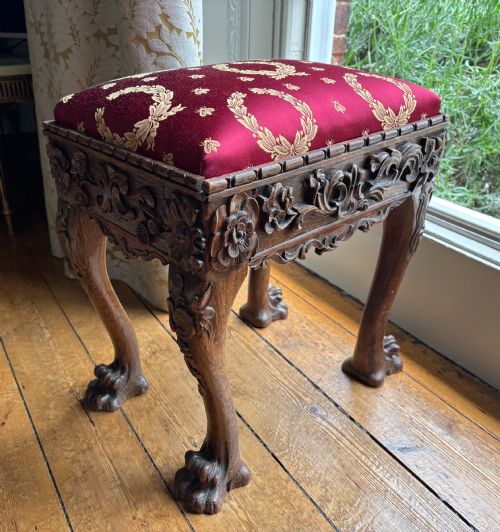
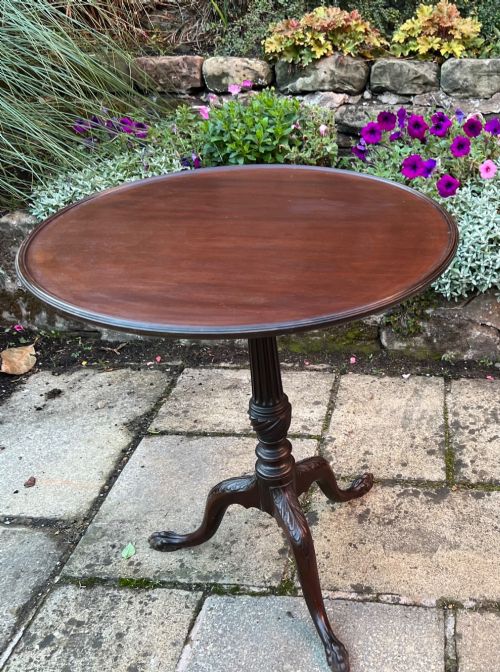
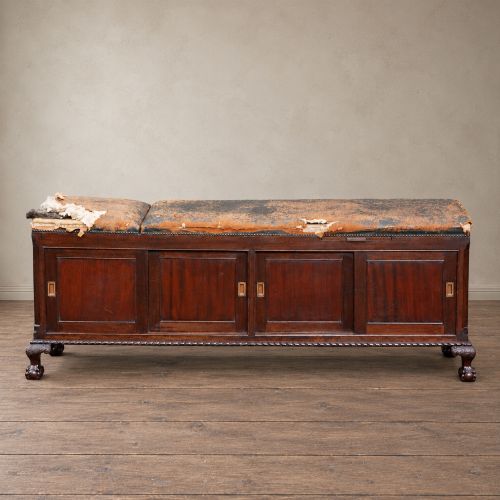
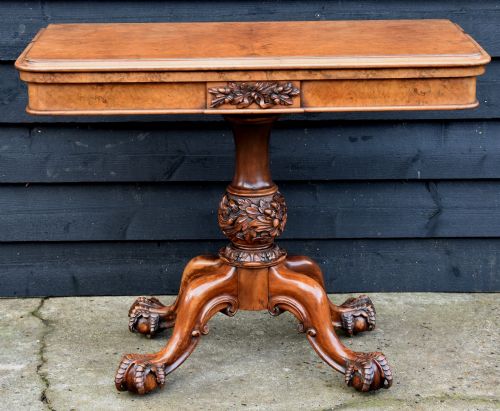
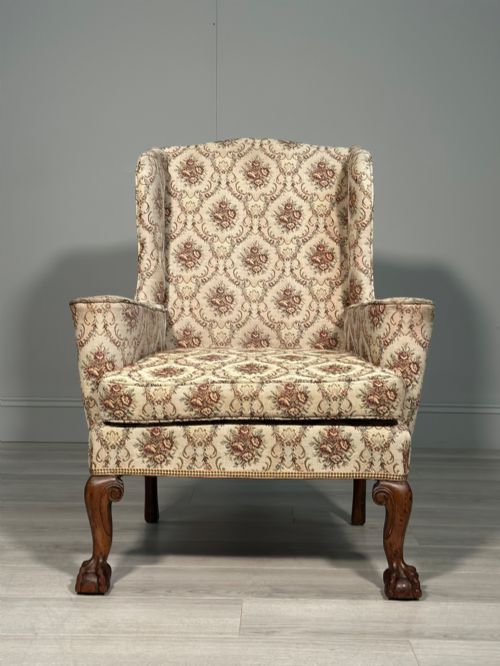
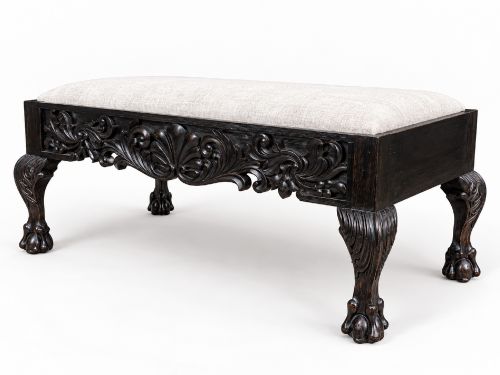
When you search for carved ball and claw, you are looking at substantial wooden furniture supported by bird or beast talons clutching a sphere.
Carved Ball and Claw
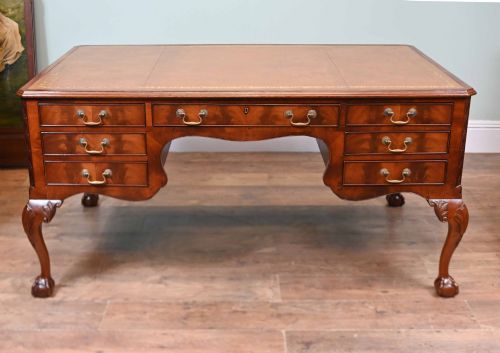
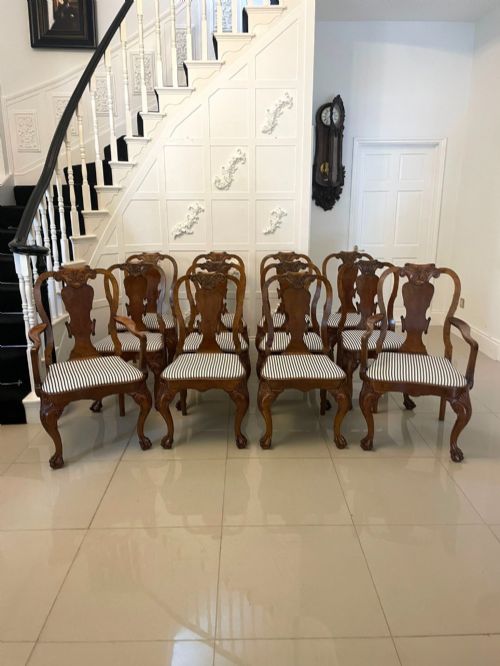
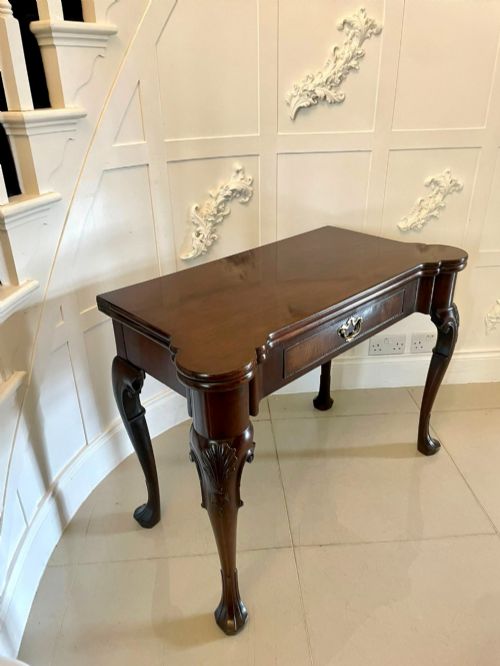
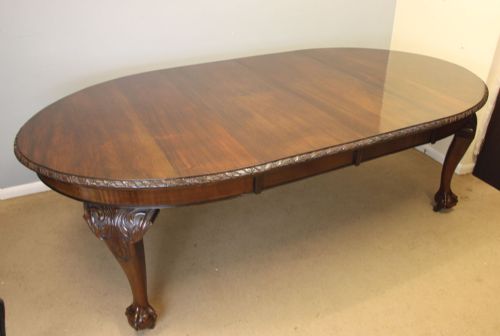
Pieces bearing carved ball and claw terminals span several centuries, with particular concentrations from the eighteenth century through to the Edwardian period and the early decades of the twentieth century. The forms encountered most frequently on this page include dining chairs, armchairs, and occasional tables, alongside desks and card tables constructed to functional and decorative standards.
Originating in classical and far Eastern motifs before being adopted by British cabinet makers, the design most commonly supports the legs of seating, tables, and case furniture. Surviving examples range from Georgian originals to later revival pieces produced in the Victorian and Edwardian eras under the influence of Chippendale and George II styles.
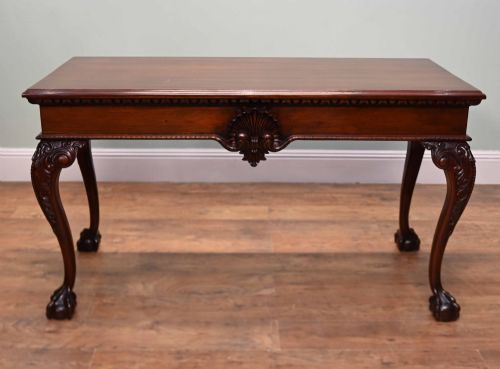
The selection encompasses both formal dining room furnishings and smaller household items such as stools, side tables, and writing desks. Mahogany and walnut serve as the predominant woods, often complemented by secondary timbers and detailed carving to the knees and feet.
How they were made
Construction relies heavily on dense timbers such as mahogany and walnut, frequently selected for their stability and capacity to hold intricate hand-carved detail. Cabinet makers shaped the legs from solid wood blocks integrated into the frame, allowing the talon and sphere motif to be chiselled directly from the material of the leg itself.
Surface finishes include polish and wax applied to accentuate the grain of the timber, whilst specialised seating incorporates leather inserts, upholstery fabric, and cane work. Joints are typically joined using traditional mortise and tenon methods, ensuring structural integrity beneath the decorative elements.
Carved Ball and Claw Retail Price Guide 2026
Typical asking prices for carved ball and claw among the pieces listed under this phrase on Sellingantiques today, from the lower quarter to the upper quarter. They describe what is for sale here now, not the wider market.
Materials recorded across the inventory include mahogany, walnut, burr walnut, brass, leather, and various upholstery fabrics.
What varies in quality
The distinction between tiers of craftsmanship rests upon the depth, proportion, and undercut precision of the carving on the foot and knee. Superior pieces display naturalistic tension in the talons and a cleanly rounded sphere, whereas simpler versions exhibit shallow, blocky execution with minimal detailing.
Selection of timber also dictates standard, with figured mahogany and burr walnut commanding greater visual presence than plain hardwoods. The integration of the leg joint to the seat rail or table skirt reveals the underlying structural ambition of the workshop.
Warings
The Carved Ball and Claw Glossary
- Ball and claw
- A furniture foot motif depicting a bird's talon or animal paw grasping a spherical ball. This form appeared extensively on eighteenth-century seating and reappeared during later revival periods.
- Chippendale
- A furniture style derived from the designs of Thomas Chippendale and his contemporaries. It is characterised by ornate carving, cabriole legs, and robust proportions.
- Cabriole leg
- A furniture leg that curves out and then in, resembling the leg of an animal. It typically terminates in a ball and claw or pad foot.
- Pie crust
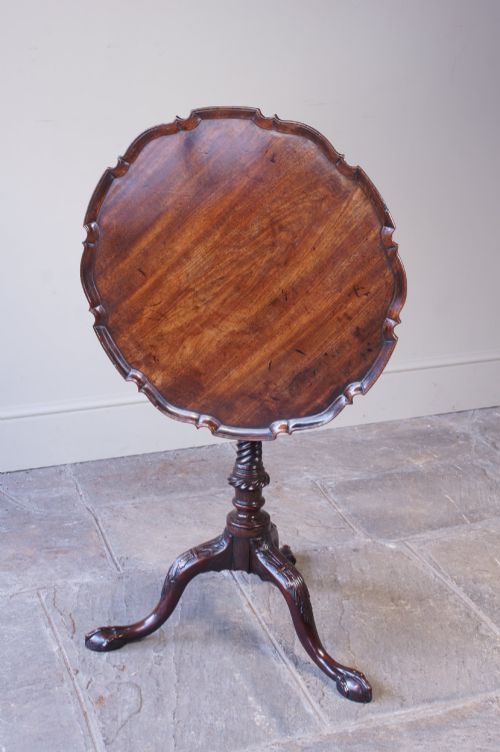
- A raised, carved decorative moulding around the edge of a circular tabletop. This technique creates a scalloped profile resembling pastry work.
- Tilt top
- A table mechanism allowing the top to pivot and lock vertically when not in use. This design saved space in smaller domestic interiors.
Carved Ball and Claw: Frequently Asked Questions
What is a ball and claw foot?
A ball and claw foot is a carved furniture terminal depicting a bird or beast's foot grasping a spherical ball. It appears widely on the legs of eighteenth-century and revival seating and tables.
The motif draws on earlier decorative traditions before becoming a hallmark of Georgian cabinet making. Carvers shaped the foot from the solid wood of the leg.
How do I date these pieces?
Dating relies on timber selection, construction methods, and stylistic cues present in the carving. Eighteenth-century pieces differ in patina and joinery from Edwardian or later revival items.
Examining secondary woods and internal framing provides further clues to the period of manufacture. Revival pieces often combine older stylistic proportions with nineteenth or twentieth-century tool marks.
Where were these pieces used?
These items served formal and domestic functions in dining rooms, libraries, and drawing rooms. Tables accommodated card games, writing, and dining, while chairs furnished principal rooms.
Their robust construction suited daily household use. Wealthy households favoured matching suites of chairs and tables featuring coordinated leg carvings.
Are these pieces made of solid wood?
Most primary surfaces and structural elements utilise solid hardwoods such as mahogany and walnut. Secondary timbers may appear in drawer linings and internal framing.
Cabinet makers selected dense woods to support the weight of the furniture and permit detailed carving. Veneers also appear on tabletops and desk surfaces, particularly in Burr walnut examples.