
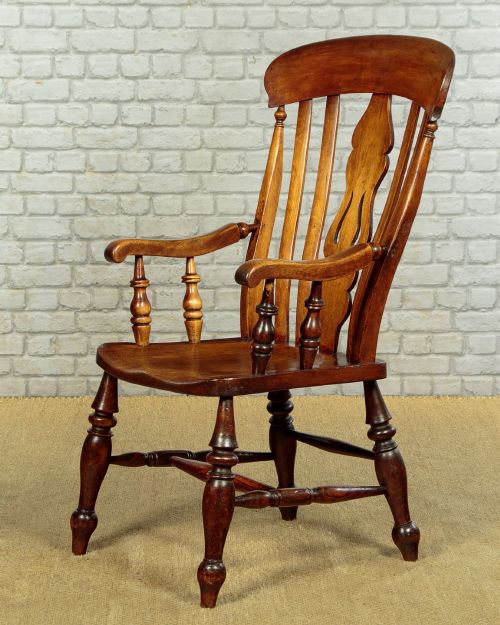
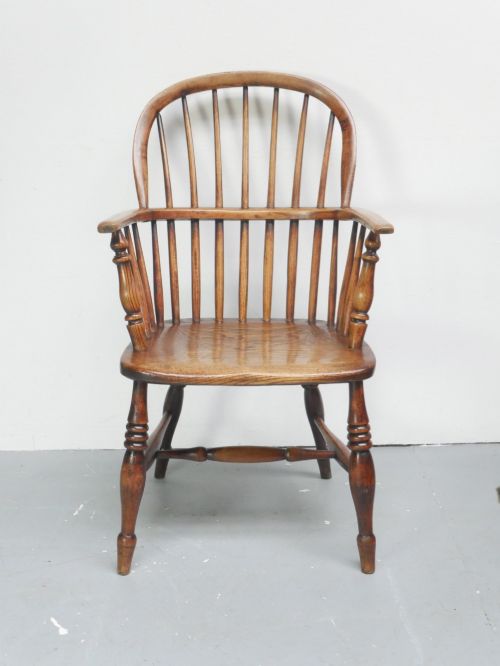
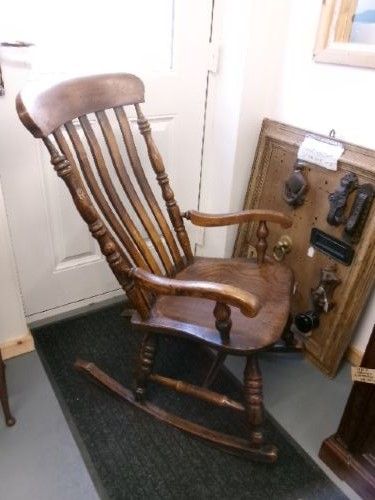
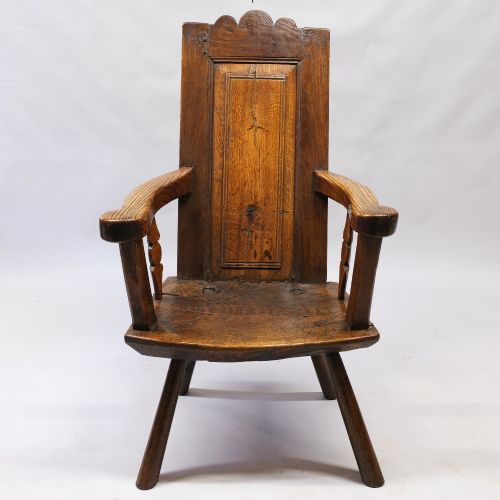
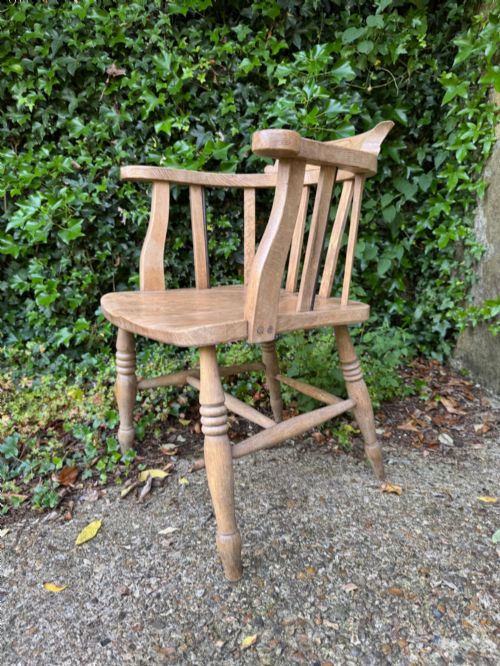
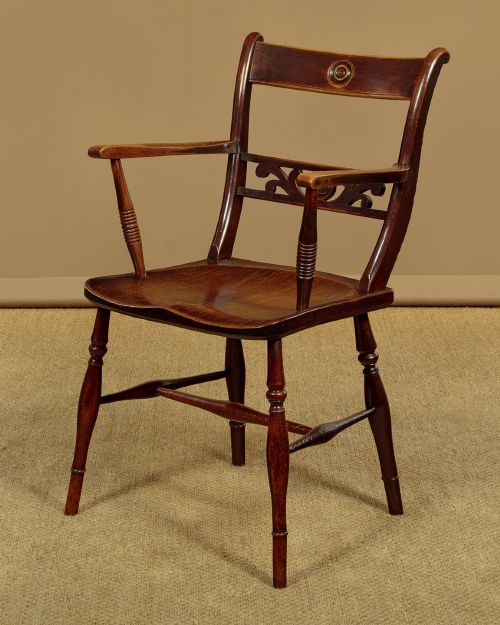
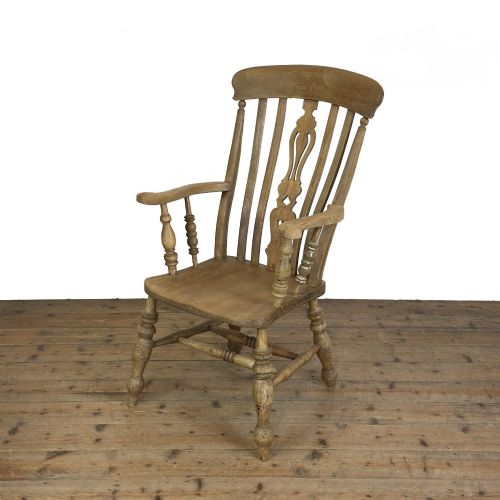
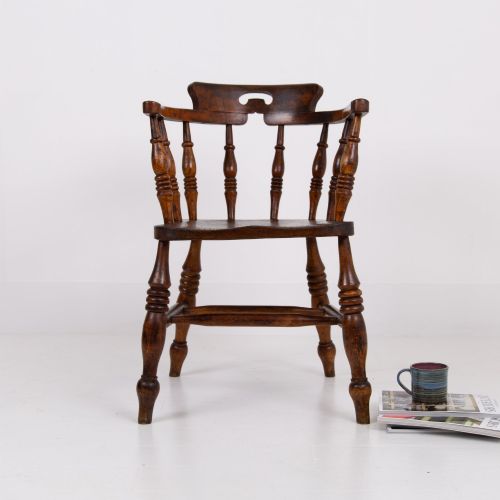
Carved Back Windsor Chairs
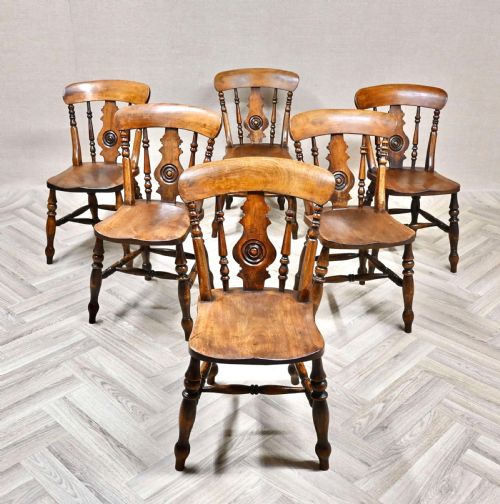
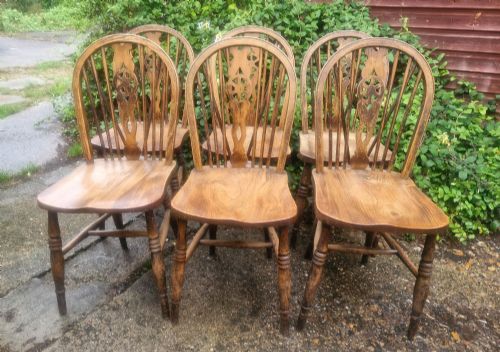
These carved back windsor chairs combine vernacular tradition with solid timber construction, offering a sturdy seating option for country kitchens and parlours alike.
Carved Back Windsor Chairs
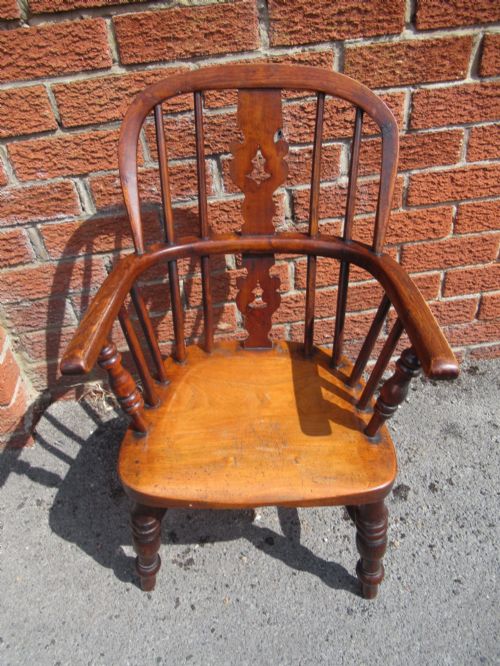
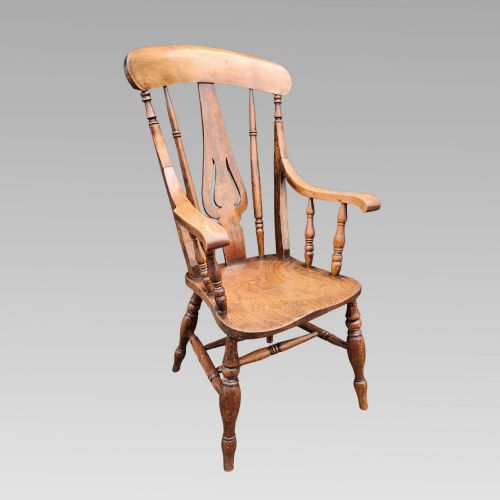
Carved back windsor chairs span several centuries of vernacular furniture making, originating in Georgian workshops and extending through the Victorian era into the twentieth century. You will frequently encounter nineteenth-century examples alongside earlier eighteenth-century forms on this page.
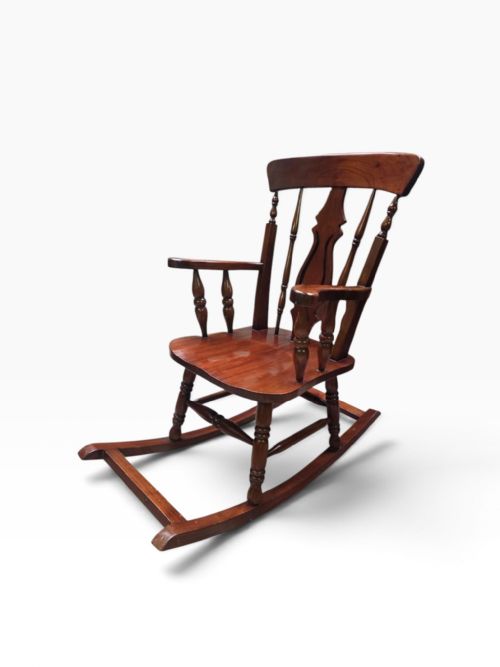
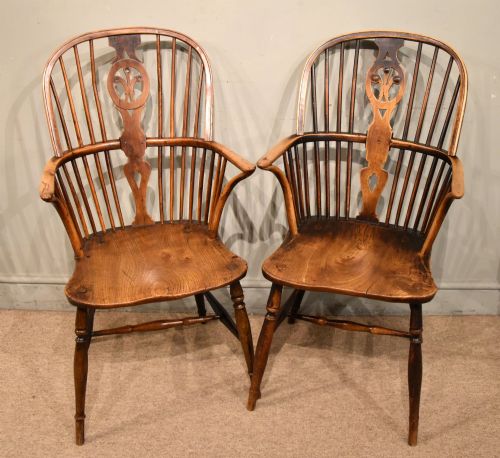
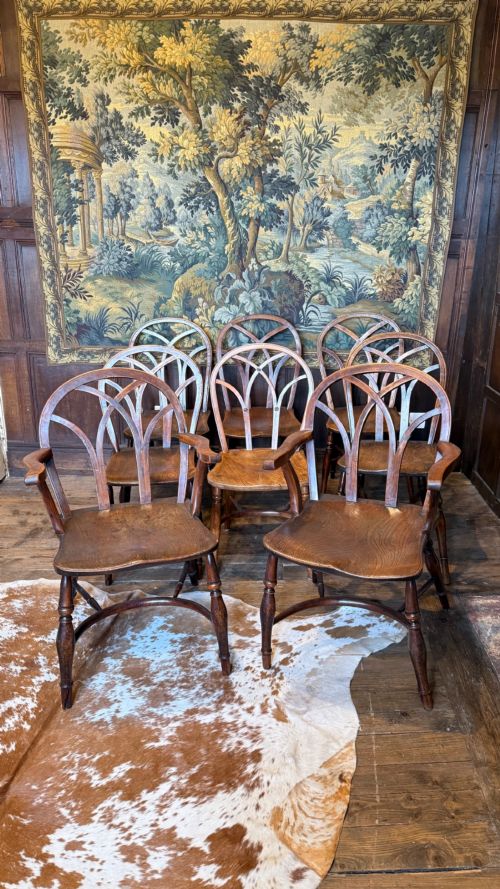
The selection encompasses various regional forms including low backs, high backs, armchairs, rocking chairs, and matching sets intended for dining rooms and kitchens. These pieces reflect the traditional domestic seating requirements of British rural homes.
Timber and Construction
Traditional makers built these chairs using a combination of native timbers, typically pairing solid elm for comfortable saddled seats with ash, beech, or fruitwood for the bentwood hoops and spindles. Yew and mahogany also appear in regionally distinct examples.
The construction relies on socketed joints where legs and spindles are wedged directly into the thick wooden seat slab. This stick-built method produces a robust frame without requiring complex joinery.
Makers utilised diverse native woods, frequently combining elm seats with beech, ash, fruitwood, and yew.
Gradation in Quality
Quality rests upon the selection of timber and the harmony of the proportions, particularly the graceful sweep of the bow and the depth of the carved splat. Finer examples display carefully turned spindles and well-figured wood grain across the seat.
Regional attribution also influences the character of the piece, with Thames Valley yew wood chairs and welsh high backs often demonstrating superior turning and more ambitious structural design.
The Carved Back Windsor Chairs Glossary
- Windsor chair
- A chair built with a heavy solid wooden seat into which the legs and back spindles are independently tenoned. This construction method creates a durable stick-built frame.
- Comb back
- A Windsor chair design where the central vertical spindles extend upward to support a horizontal headrest, resembling the teeth of a comb.
- Smokers bow
- A low-backed armchair featuring a continuous curved arm rail supported by turned spindles above the seat. These were common in nineteenth-century inns and farmhouses.
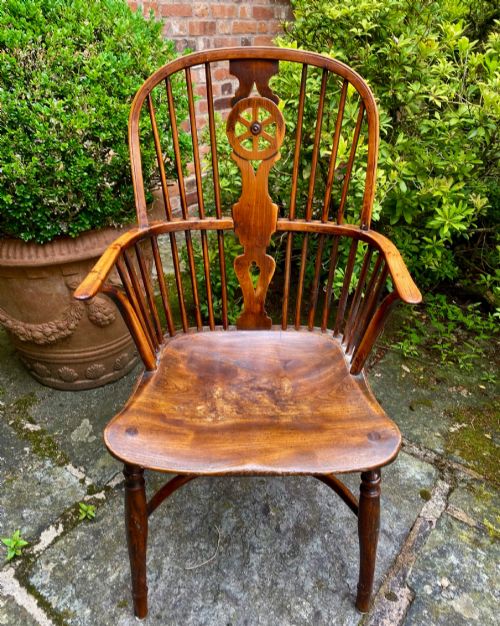
- Wheel back
- A chair back featuring a pierced wooden splat carved in the shape of a spoked carriage wheel. This decorative motif became popular during the Victorian period.
- Saddled seat
- A wooden seat base carved with smooth hollows to fit the human body. This shaping provides comfort despite the lack of upholstery.
Carved Back Windsor Chairs: Frequently Asked Questions
What is a windsor chair?
A windsor chair is a seat constructed by inserting individual legs and back spindles directly into a thick wooden slab seat.
Unlike framed chairs, this stick-built method relies on wedged joints to hold the structure firm.
Were these chairs used outdoors?
These pieces were designed for domestic interior use in farmhouses, cottages, and kitchens.
Their robust timber construction suited heavy daily use around the household rather than garden environments.
What timber is best for a windsor chair?
Elm is traditionally prized for the seat because its interlocking grain resists splitting when carved into a saddle shape.
Ash and yew provide the necessary tensile strength and flexibility for the bentwood hoops and slender spindles.