
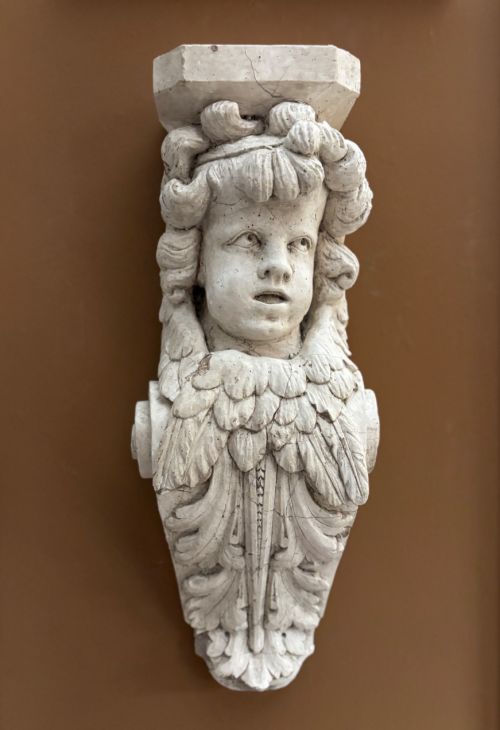
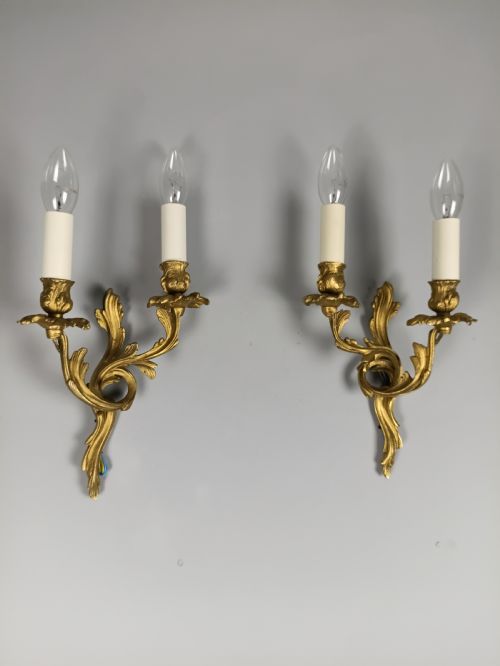
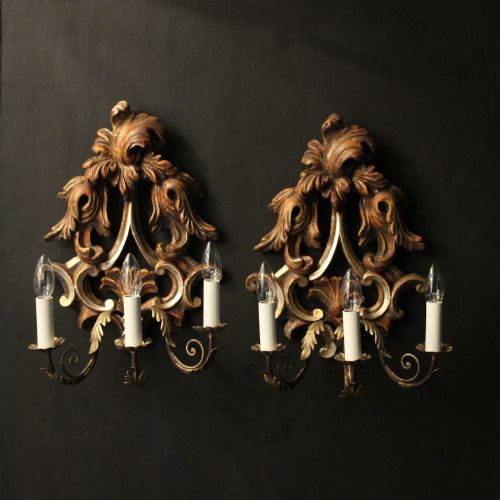

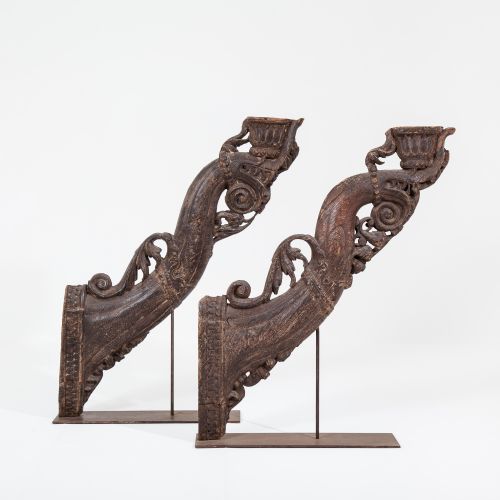

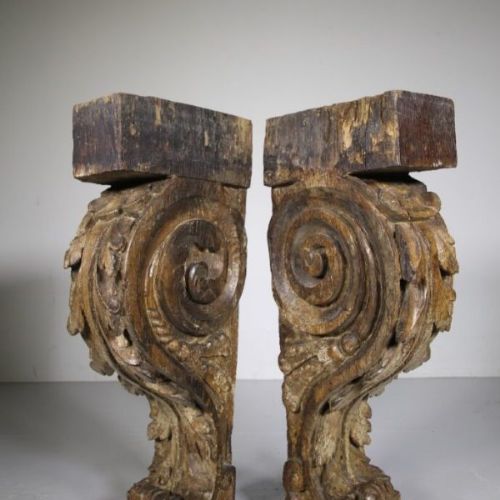


Carved Acanthus Leaf Brackets
Carved acanthus leaf brackets are architectural ornaments bringing classical foliage into interior spaces through timber, gesso and giltwood.
Carved Acanthus Leaf Brackets
Carved acanthus leaf brackets emerge across eighteenth and nineteenth century interiors as architectural salvage, wall brackets, and corbels designed to support shelves, busts or lighting. These pieces take various forms, from single wooden supports to paired sconces and capitals rooted in neoclassical and rococo traditions.
Buyers frequently encounter nineteenth century examples alongside eighteenth century pieces, often finished in giltwood, paint, or gesso over carved wood. French, Italian, and English workshops shaped these architectural elements to project classical foliage directly from the wall.
How they were made
Makers shaped these supports primarily from carved wood, oak, or stone, applying layers of gesso, gold leaf, and paint to finish the surface. Artisans built up complex relief work using composition or plaster on specific examples to achieve the curling lobes of the acanthus foliage.
Carvers executed the scrolling leaves by hand, defining the deep undercut channels of the classical motif with gouges and chisels. Gilders then applied thin gold leaf over bole and gesso layers, burnishing the high points while leaving recessed areas matte.
Listings span the eighteenth and nineteenth centuries, featuring materials from carved wood and giltwood to plaster, metal, and stone.
What varies in quality
The depth and crispness of the carving separate standard architectural supports from exceptional pieces. Superior examples display sharp, undercut leaf tips and confident scrolling that follows classical proportions without mechanical stiffness.
Surface treatment dictates visual impact, with original giltwood and undisturbed painted finishes retaining greater integrity than later regilding. The weight and density of the underlying timber or plaster core also influence the structural presence of each bracket.
The Carved Acanthus Leaf Brackets Glossary
- Acanthus
- A classical ornamental motif derived from the Mediterranean plant of the same name, featuring deeply lobed, spiky leaves. This design forms the primary decorative vocabulary for Corinthian capitals and classical brackets.
- Corbel
- A structural or decorative projection from a wall designed to support a weight above it. In interior decoration, these elements often double as ornate wall brackets.
- Giltwood
- Timber that has been coated with fine gold leaf over a prepared gesso and bole ground. This finish was widely utilised on eighteenth and nineteenth century decorative brackets and sconces.
- Gesso
- A plaster mixture applied to wood surfaces as a smooth base for gilding and painting. Carvers used this material to build up crisp detail before applying gold leaf.
- Capital
- The uppermost member of a column or pilaster, often carved in the Corinthian style with acanthus foliage. These architectural elements frequently appear adapted as wall-mounted supports.
Carved Acanthus Leaf Brackets: Frequently Asked Questions
How were carved acanthus leaf brackets originally used?
These pieces functioned primarily as structural supports for heavy shelves, heavy busts, or architectural projections within formal rooms. Many examples also incorporated sconce arms to hold candles or lighting.
Over time, homeowners repurposed these architectural elements as standalone decorative wall ornaments or paired consoles to display smaller decorative objects.
How do I clean and maintain giltwood brackets?
Giltwood surfaces require gentle dusting with a soft, dry brush to prevent accumulation in the carved recesses. Moisture and modern cleaning chemicals damage the delicate gold leaf and underlying gesso layers.
Keep these brackets away from direct sunlight and damp environments to preserve the original finish and prevent timber movement.
How can I tell an eighteenth century bracket from a nineteenth century copy?
Eighteenth century pieces generally display hand-carving with tool marks appropriate to the period, combined with dense timber and traditional gesso formulations. The sharpness of the acanthus undercut and the patina of the gold leaf offer strong indicators of age.
Nineteenth century revivals often utilise softer composition ornament over timber, showing more uniform machine-assisted preparation in the recessed areas.
Can these wall brackets support heavy loads?
While originally engineered to bear structural weight, antique brackets must be assessed individually based on their material integrity and wall fixings. Many surviving pieces have sustained losses to their gesso or timber core over the centuries.
Consult a professional restorer or structural specialist before placing significant weight on antique wall supports.