
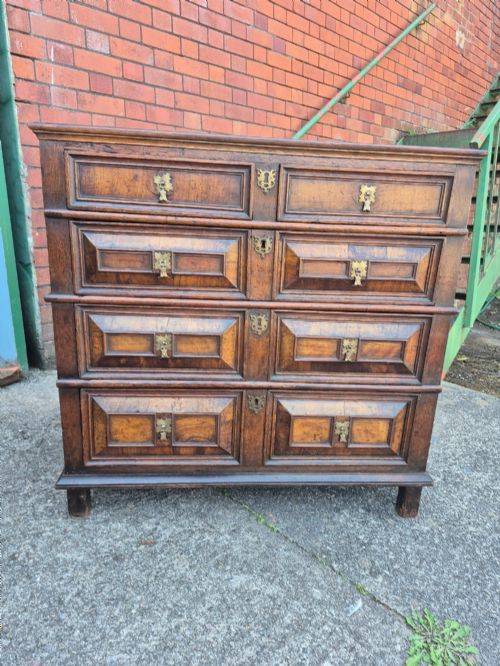

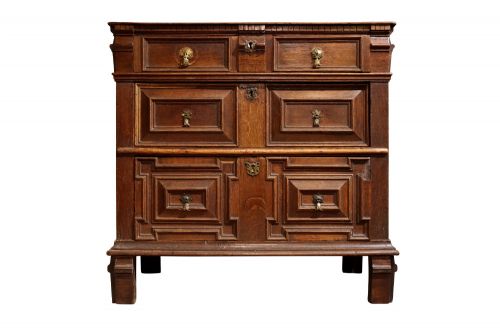
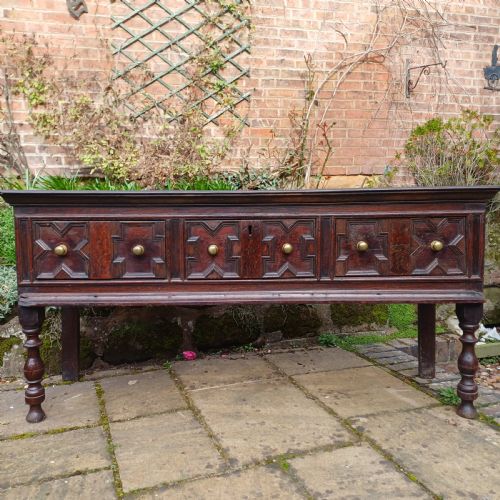


Carolean Geometric Oak Dresser
A carolean geometric oak dresser brings substantial seventeenth-century presence into a room, offering sturdy storage formed through intricate timber moulding.
Carolean Geometric Oak Dresser
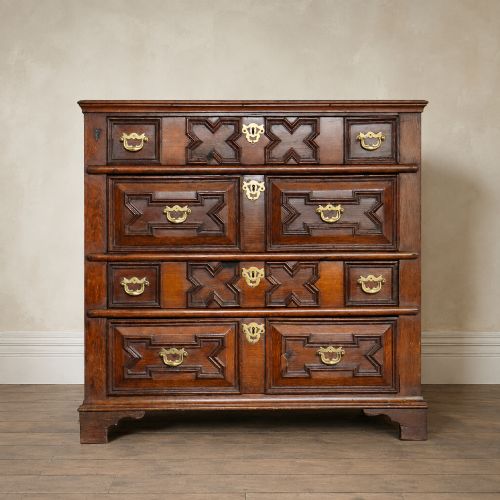
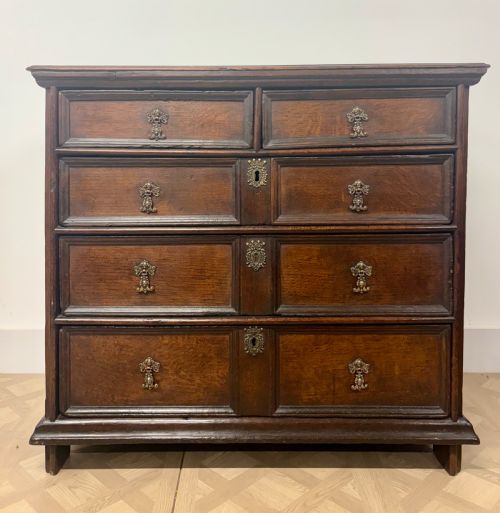
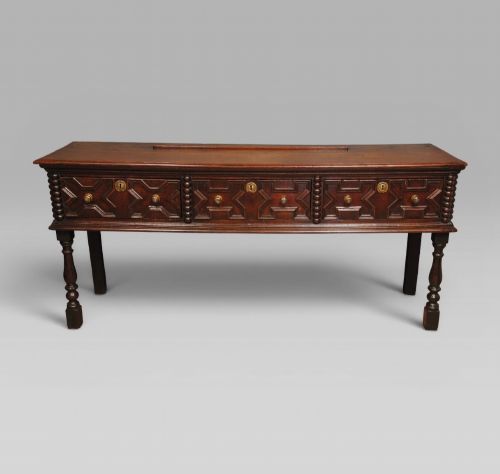
When searching for a carolean geometric oak dresser, buyers encounter sturdy seventeenth-century furniture forms including low dressers, server bases, and geometrically moulded chests of drawers. Most examples date from the late seventeenth century, specifically around sixteen-eighty during the Charles II period.
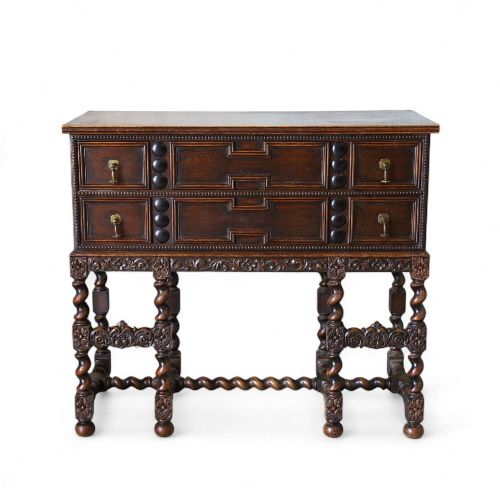
The selection frequently includes dresser bases and chests featuring distinctive panelled or moulded drawer fronts. Alongside these period pieces, occasional twentieth-century revival items appear, specifically from the nineteen-thirties with carved barley-twist supports.
Makers utilised primary timbers of oak supplemented by walnut, painted oak, oyster veneer, snakewood, and fruitwood. These pieces served practical domestic storage functions while displaying prominent decorative fronts that define the style.
Quality variations
The distinction between standard examples and superior pieces rests upon the complexity and execution of the geometric mouldings on the drawer fronts. Finer specimens display crisp timber profiling and careful grain matching across the primary surfaces.
Makers sliced small branches across the grain to create oyster veneer, giving flat drawer fronts the curious appearance of scattered wooden barnacles.
The Carolean Geometric Oak Dresser Glossary
- Geometric moulding
- Raised wooden profiling applied in repeating rectangular or octagonal patterns across drawer fronts. This technique defines the visual texture of seventeenth-century case furniture.
- Oyster veneer
- Thin circular slices of branchwood laid side by side to create patterned wooden surfaces resembling oyster shells. Cabinet makers employed this on high-status seventeenth-century pieces.
- Dresser base
- A low side table or cabinet featuring drawers and sometimes a lower shelf, designed for domestic storage and serving. These forms frequently lack the upper plate rack of a full dresser.
- Carolean revival
- A nineteenth and twentieth-century decorative movement that copied the bold carved styles of the Charles II reign. Items from this era often feature exaggerated twist turnings.
- Barley-twist
- A spiralling turned wooden support column resembling a twisted barley stalk. This form appears frequently on seventeenth-century furniture legs and later revival pieces.
Carolean Geometric Oak Dresser: Frequently Asked Questions
What is a carolean geometric oak dresser?
A carolean geometric oak dresser is a heavy timber storage piece originating from the late seventeenth century under Charles II. These items feature low profiles with drawers decorated by applied geometric wooden mouldings.
They combine robust oak construction with intricate surface patterning, often utilising contrasting woods like walnut and fruitwood. Buyers use them as sideboards, servers, or low chests.
How do I date a carolean piece?
Dating relies on examining the construction methods, timber choice, and the style of the mouldings. Seventeenth-century examples display hand-cut joinery and authentic period wear to the oak.
Later nineteenth or twentieth-century revivals often show machine-cut elements or different wood preparation. Comparing the hardware fixings and secondary timbers also helps establish the correct period.
Where were these pieces used?
These pieces originated in domestic English households of the seventeenth century for storing dining linens, tableware, and provisions. Their sturdy tops provided a surface for serving food or displaying household goods.
Today, they function well in dining rooms, hallways, or living spaces as substantial sideboards. Their historical presence anchors modern interior schemes while offering practical deep storage.
How do I care for antique oak?
Antique oak benefits from stable indoor humidity and protection from direct sunlight to prevent timber movement. Applying a light coat of traditional beeswax helps nourish the old wood finish without building up heavy residues.
Avoid using modern silicone-based polishes which can penetrate open oak grains and damage the patina. Regular gentle dusting with a soft dry cloth maintains the surface condition.