

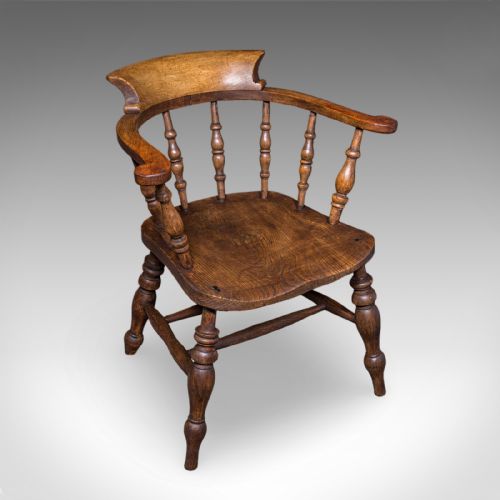
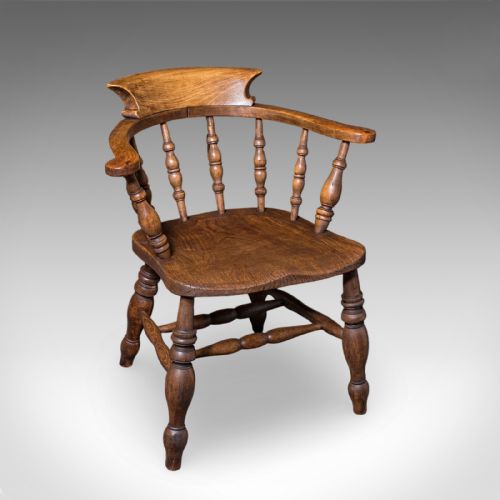
Captains Desk Oak
When you search for a captains desk oak, you are looking at sturdy revolving and stationary armchairs built for long hours of study or office work.
Captains Desk Oak
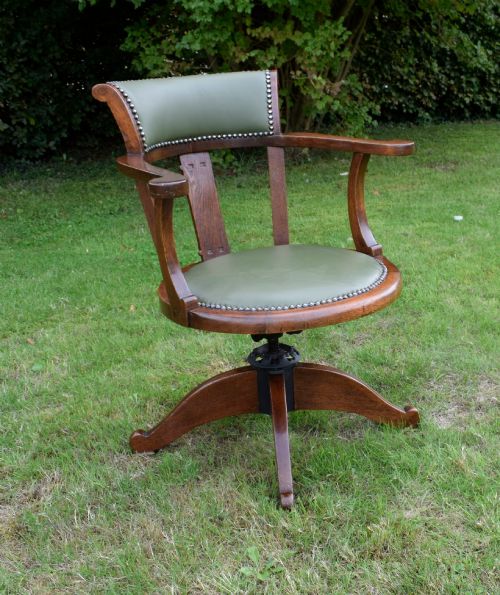
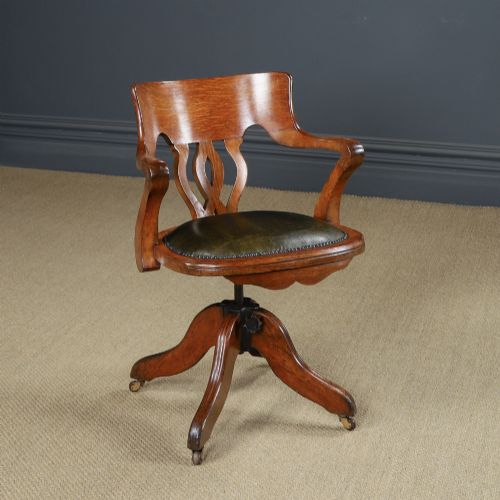
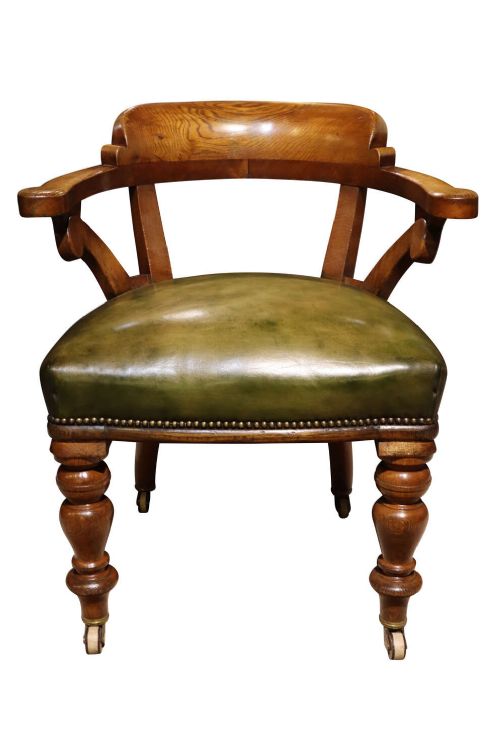
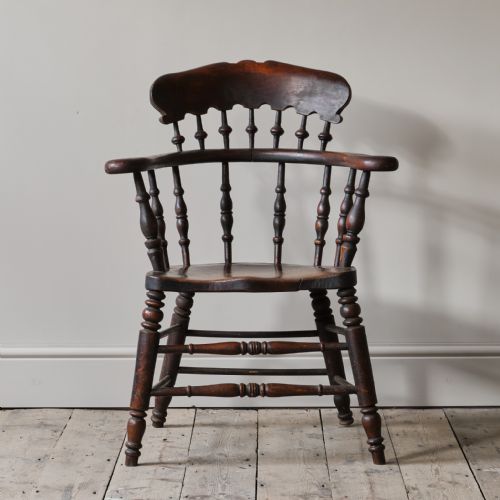
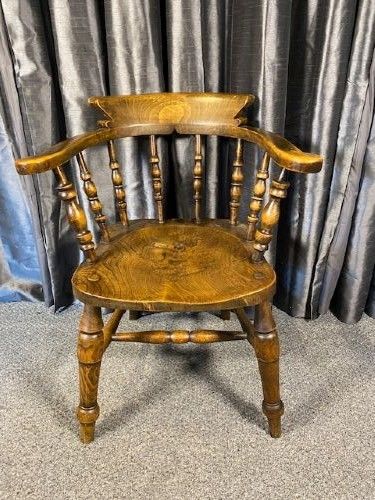
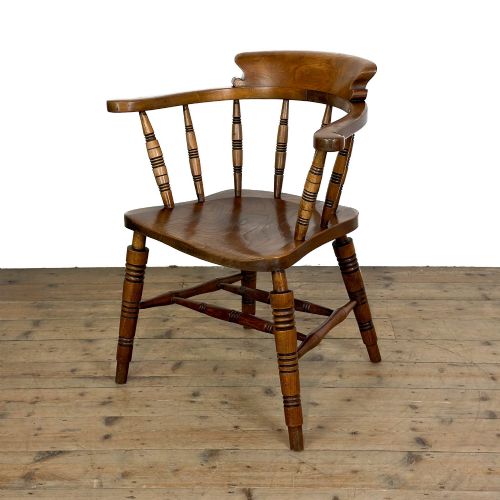
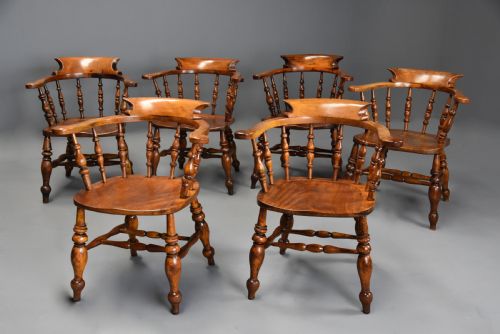
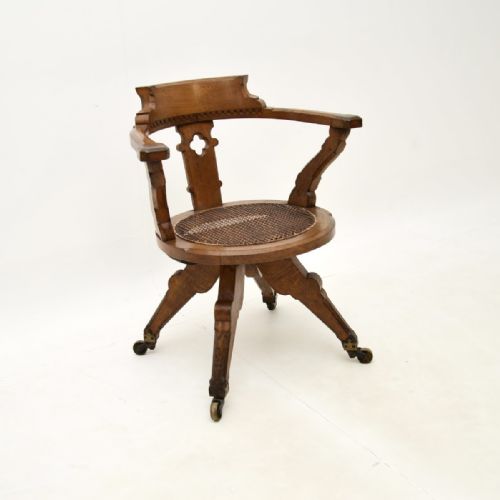
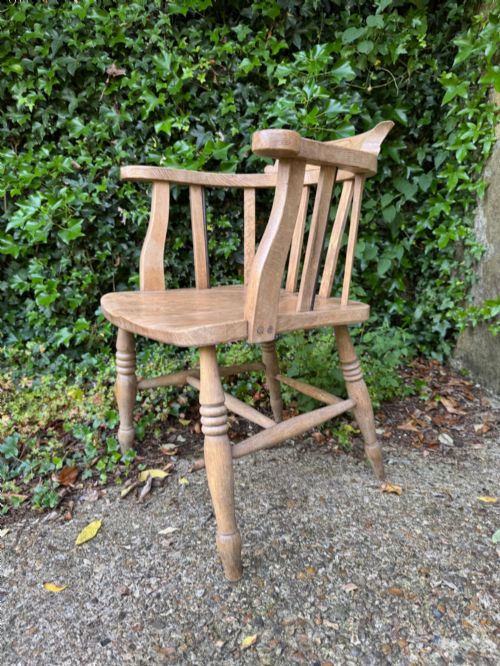
A captains desk oak search brings up robust seating designed for libraries, studies, and offices during the Victorian and Edwardian periods. The selection on this page focuses heavily on swivel desk chairs and low-backed elbow seating often referred to as smoker's bows.
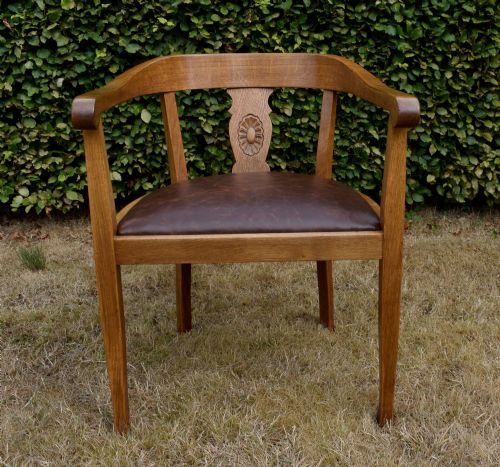
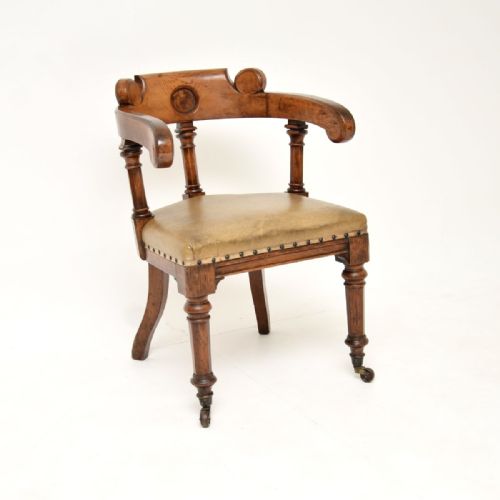
Makers adapted traditional Windsor forms into office furniture by mounting solid timber seats on swivel mechanisms and iron bases. You will also find library armchairs upholstered in leather alongside heavy oak framed seating from the late nineteenth and early twentieth centuries.
Construction and materials
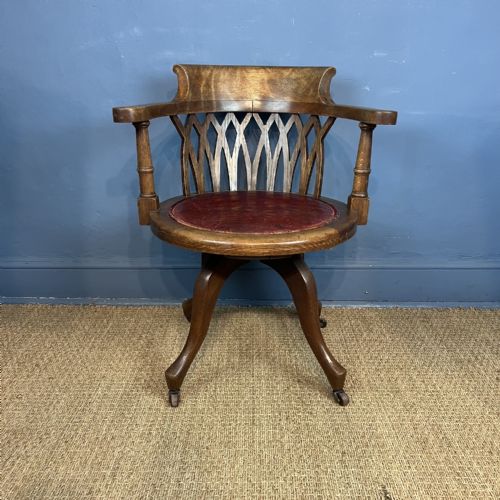
Carpenters utilised solid oak for the primary frames, spindles, and curved arm rails, occasionally pairing it with secondary woods like beech or elm. Many examples incorporate turned wooden spindles and steam-bent backrests joined firmly to round saddle-shaped timber seats.
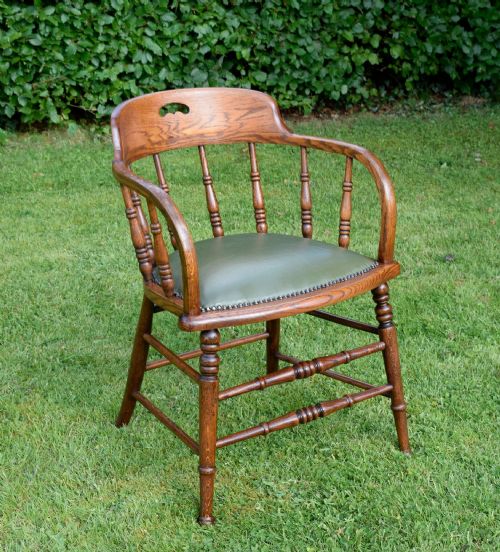
Leather upholstery appears frequently on padded seats and backrests, fastened with brass studs. Iron and cast iron mechanisms enable the swivel and tilt functions seen on the later office variants.
Listings feature oak, leather, and cast iron across Victorian and Edwardian periods.
Judging the construction
Quality rests in the weight of the timber and the complexity of the joinery in the curved arm rail. Superior examples show careful shaping of the solid oak seat and robust mechanical action in the revolving bases.
Carved detailing, heavier gauge iron undercarriages, and thicker leather hides distinguish the finest library chairs from simpler utility office seating.
S&H Jewell·Alfred Allen Furnishing Expert·Shannon Company of London·P & O ships
The Captains Desk Oak Glossary
- Smoker's Bow
- A low-backed Windsor armchair with a continuous curved rail forming the arms and back. This traditional country form served as the baseline for many office designs.
- Revolving
- Fitted with an undercarriage allowing the seat to turn through a full circle. This movement relies on a central iron spindle and wooden or cast iron spider base.
- Gothic Revival
- A nineteenth-century style drawing on medieval architectural motifs. Chairs in this manner feature pointed arches, heavy chamfering, and solemn carved details.
- Windsor
- A chair built with stick-construction where individual spindles are tenoned directly into a solid wooden seat. These chairs provide robust support through interlocking turned members.
Captains Desk Oak: Frequently Asked Questions
What is a captains desk oak chair?
These are sturdy wooden armchairs designed for office and library use, typically featuring low curved backrests and solid timber seats. Many examples include swivel mechanisms for movement at a desk.
The form evolved from traditional Windsor and smoker's bow chairs into specialised office seating during the Victorian and Edwardian eras.
How were these chairs used originally?
Clerks, scholars, and ship captains utilised them for extended periods of writing and administrative work. The revolving bases allowed workers to reach different parts of a large desk or map table without standing.
Their robust construction suited busy commercial offices, private studies, and ship cabins alike.
How do I identify a Victorian example?
Victorian pieces generally display heavier solid oak construction, hand-carved details, and pegged joinery. They often feature dark patination accumulated over decades of office use.
Later Edwardian versions frequently introduce more complex iron swivel and tilt mechanisms alongside lighter frames.
How do I care for leather upholstered seats?
Keep leather conditioned with appropriate balms to prevent drying and cracking over time. Avoid placing the chairs near direct heat sources or strong sunlight.
Regular dusting with a dry cloth protects the timber finish and the surrounding brass upholstery tacks.