
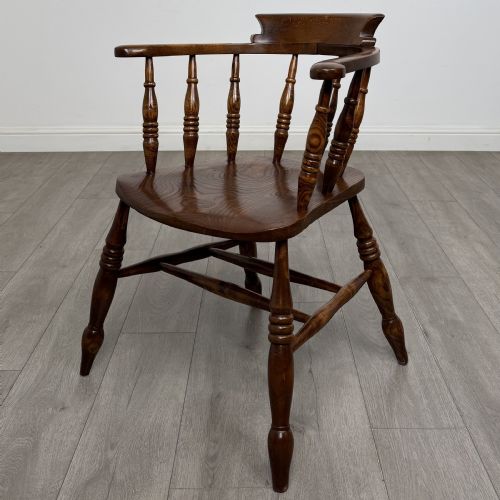
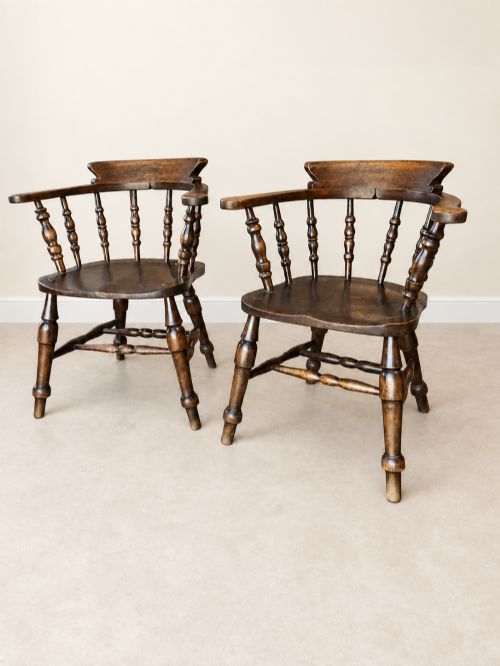
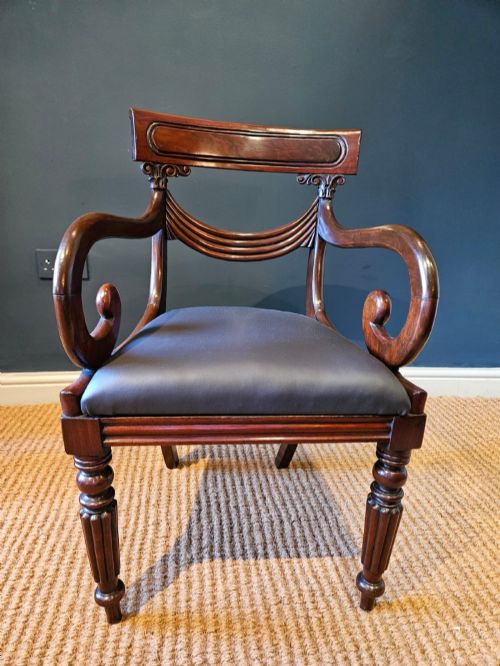
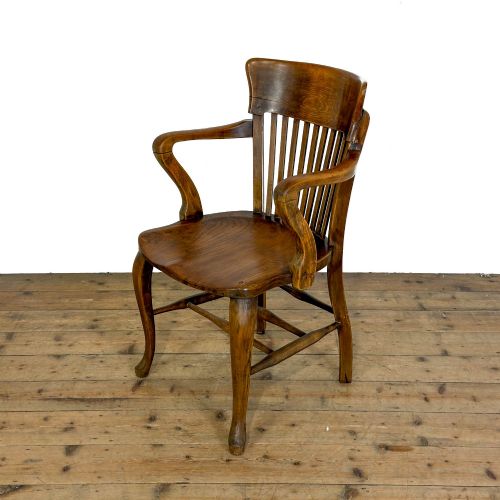
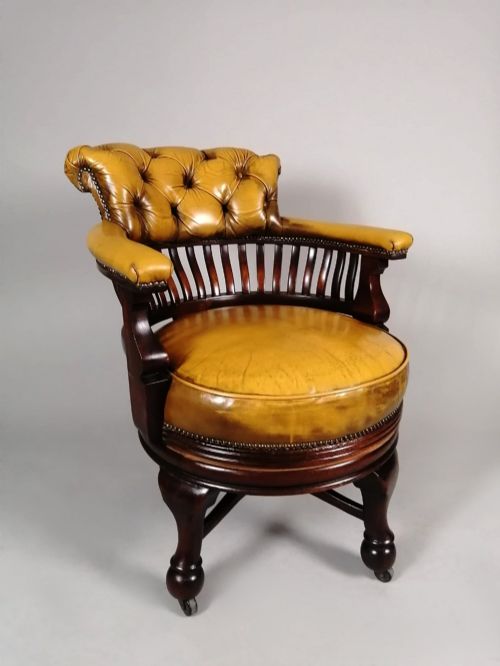

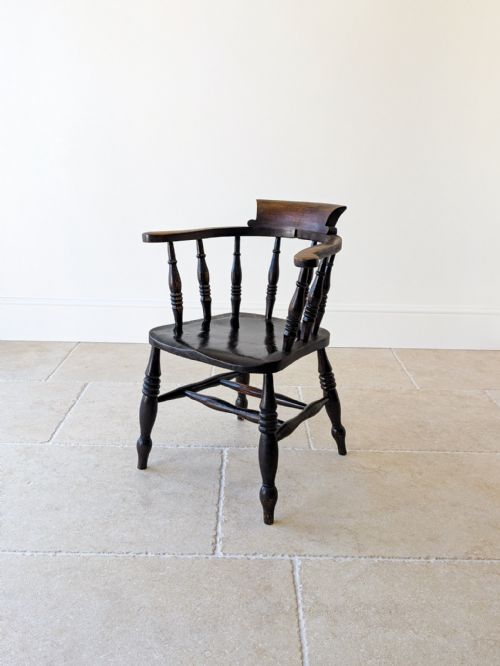
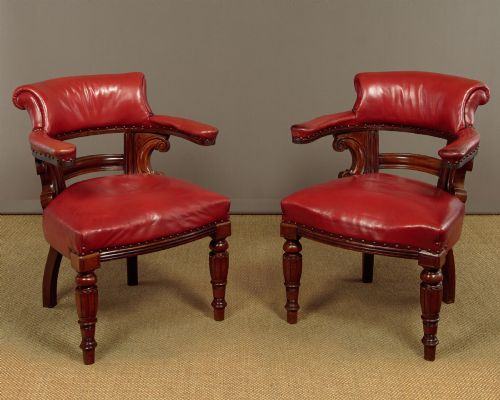
Captains Chair Armchair
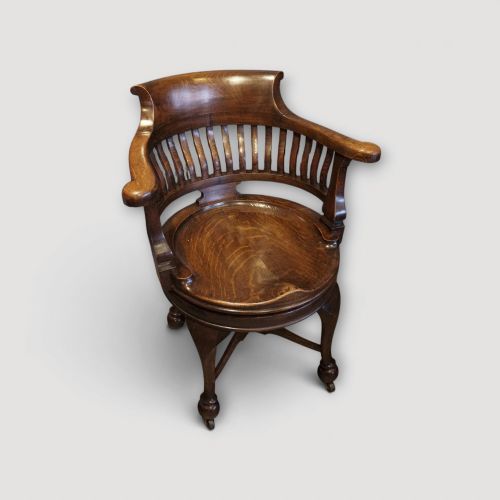
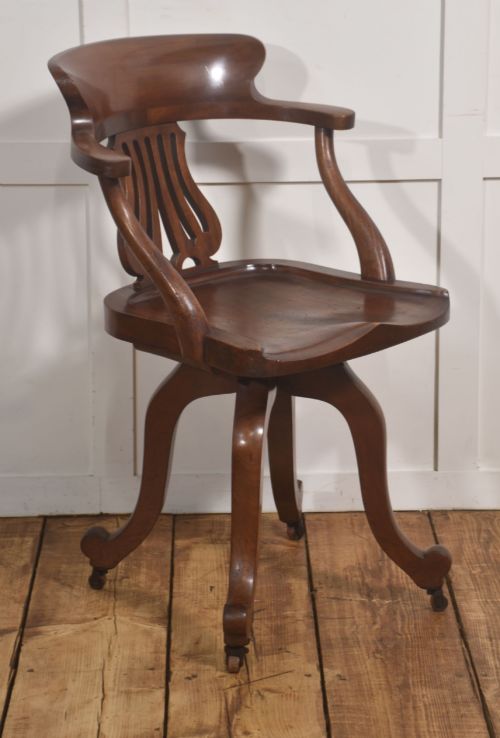
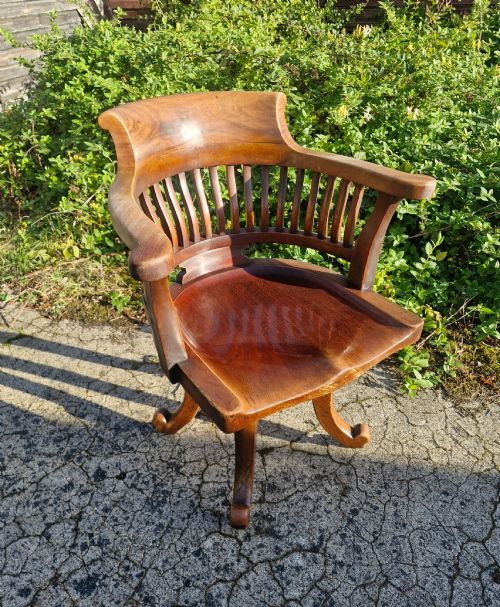
When you search for a captains chair armchair, you are looking at sturdy, low-backed seating designed for long hours at a desk or library table.
Captains Chair Armchair
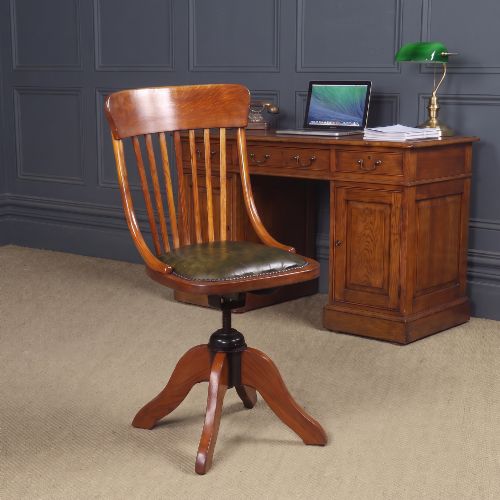
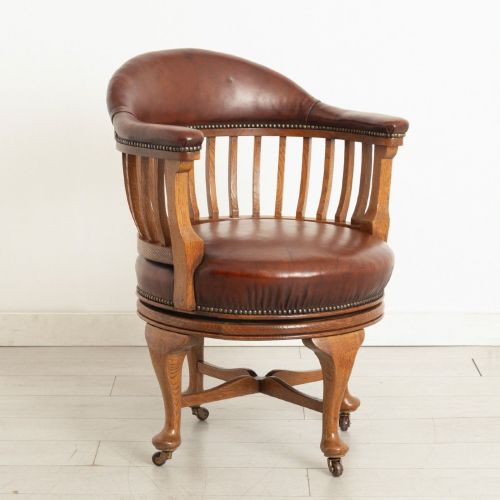
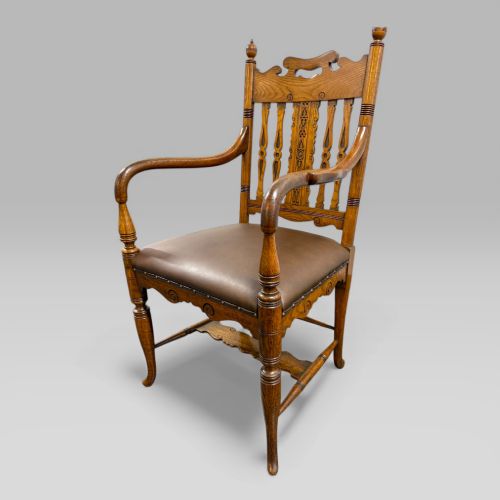
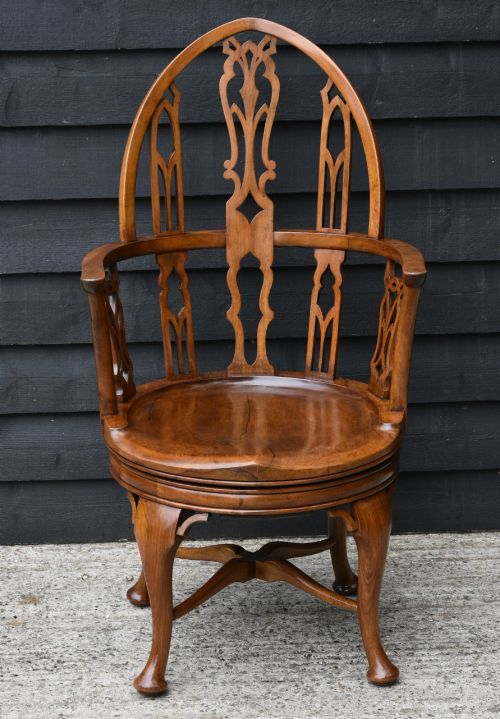
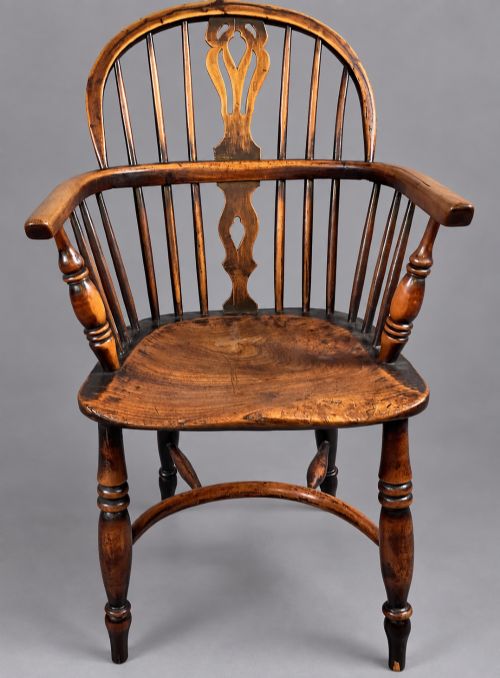
You will most frequently encounter nineteenth-century and Edwardian examples on this page, spanning Victorian walnut, oak, and mahogany designs alongside vernacular elm and ash Windsor variants. Many pieces combine swivel or revolving mechanisms with leather upholstery, pointing directly to their historical use in busy offices and private libraries.
Materials and construction
Makers relied on dense hardwoods like mahogany, oak, walnut, beech, and birch for the sturdy frames, often pairing them with steam-bent elm or ash for the continuous curved arm rail. These timbers were chosen for their tensile strength and ability to withstand the stresses of constant swivelling and daily use.
Seat pads were typically upholstered in hand-dyed leather, secured with brass tacks, and stuffed with traditional materials to provide a firm, resilient cushion. Joinery combined traditional mortise and tenon joints with steam-bending techniques to create the characteristic low, enclosed bow back.
The inventory spans the nineteenth century through the Edwardian era, incorporating Regency and Gothic Revival stylistic influences.
Judging the range
The distinction between a standard workshop piece and a finer example lies in the selection of timber and the sophistication of the turning work. Superior versions show thoughtful grain matching, particularly in solid mahogany or golden oak frames, alongside crisply carved details on the arms and spindle supports.
Mechanism integration also separates the tiers, with high-quality revolving and tilting systems operating smoothly within the wooden base without compromising the structural integrity of the seat. Original leather upholstery displaying a rich, untouched patina elevates a piece far above later replacements.
Howard and Sons·R. Tyzack
The Captains Chair Armchair Glossary
- Smoker's bow
- A low-backed Windsor-style armchair featuring a continuous turned wooden armrail and a solid saddle-moulded seat, often associated with nineteenth-century tavern and office use.
- Carver
- A traditional term for an armchair, typically designed to match a set of dining chairs but built with armrests for the head of the table.
- Tub chair
- An upholstered seating form where the back and arms form a single, rounded, enclosed barrel shape, frequently mounted on a revolving office base.
- Patina
- The deep, lustrous surface sheen developed on old wood and leather through decades of handling, exposure to light, and careful polishing.
- Windsor
- A chair construction method where individual legs and back spindles are wedged directly into a thick, solid wooden seat rather than joined to a separate frame.
Captains Chair Armchair: Frequently Asked Questions
What is a captains chair?
A captains chair is a sturdy, low-backed armchair designed for comfortable seating at a desk or table during long working hours.
They typically feature a rounded, continuous armrail supported by wooden spindles and a solid, contoured wooden seat.
How do I date a captains chair?
Dating relies on examining the timber species, construction methods, and mechanical hardware such as iron swivel mechanisms.
Victorian and Edwardian examples often combine turned ash and elm frames with leather pads, while earlier Regency versions utilise refined mahogany.
Were these chairs used in offices?
These chairs served extensively in nineteenth-century offices, studies, banks, and libraries where durability was essential.
Many surviving examples incorporate revolving swivel bases and brass-capped castors designed specifically for busy clerical and professional work.
How do I care for leather upholstery?
Leather upholstery benefits from gentle cleaning with a damp cloth followed by occasional treatment with a suitable nourishing leather balm.
Avoiding direct sunlight and excessive heat prevents the nineteenth-century hide from drying out and cracking over time.