



Canvas Still Life Study
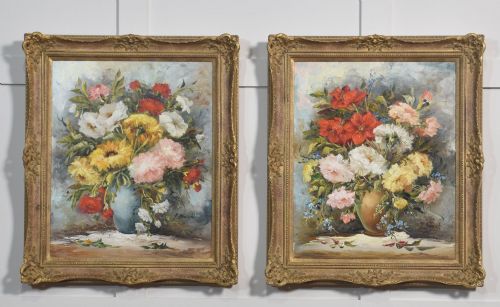
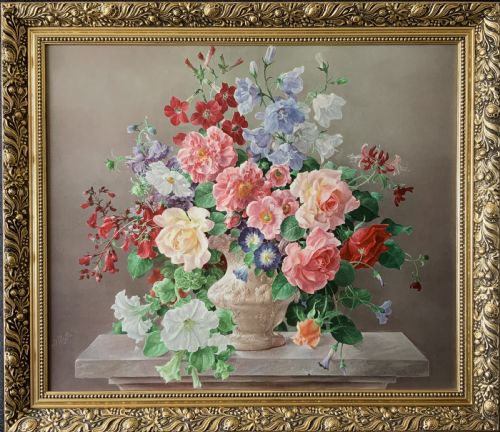
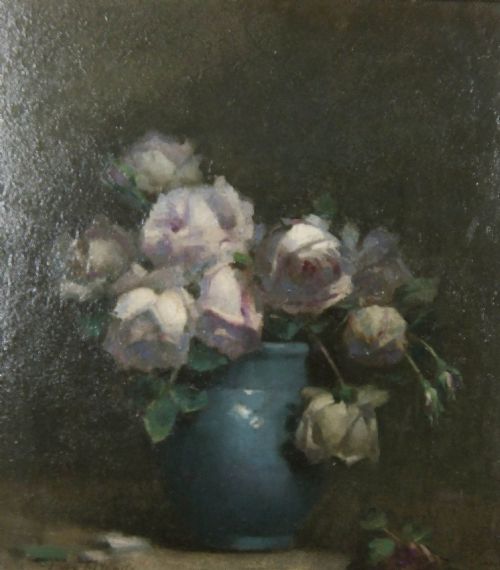
A canvas still life study captures domestic arrangements of fruit, flora and objects through oil paint, bringing direct interior warmth to a room.
Canvas Still Life Study
A canvas still life study brings together painted arrangements of fruit, flowers, vessels and everyday objects rendered in oil. These works span from nineteenth-century academic exercises to mid-century European compositions.
The most common examples on this page are early twentieth-century oil paintings on canvas depicting roses, chrysanthemums and baskets of fruit. British and continental schools dominate the selection.
The phrase encompasses both formal academic pieces, such as South Kensington art school studies, and expressive mid-century interpretations involving jugs and lemons.
Materials and technique
The primary support is woven canvas, occasionally attached to board, stretched across wooden frames that hold the structure taut. Artists applied oil paint, which allows for gradual blending and rich surface texture.
Many works incorporate period wooden frames finished with gesso and gilt, providing structural containment and visual depth to the composition.
Canvas Still Life Study Retail Price Guide 2026
Typical asking prices for canvas still life study among the pieces listed under this phrase on Sellingantiques today, from the lower quarter to the upper quarter. They describe what is for sale here now, not the wider market.
Several artists tucked unexpected items like a Bols gin bottle or a fisherman' quietly caught haul alongside the conventional fruit bowls.
Assessing quality
Quality rests in the handling of light across surfaces, where superior brushwork defines the translucent skin of grapes or the soft petals of roses with economy and precision. The arrangement of negative space and tonal balance determines the visual weight of the composition.
The integrity of the canvas support and the stability of the oil paint layer dictate the physical condition, while period frames tailored to the specific painting add contextual value.
William Thomas Wood·Sir Matthew Smith·Thomas Hooper·L Wilford·Margaret Evangeline Wilson·John Robertson Reid·Owen Bowen·Kershaw Schofield·T Vincent·Jessie Wolfe·William Greaves·John Burns Robertson·Oliver Clare·E A Bower·G Stainton·Peter Colville Horridge Gardner·Thomas Sherlock Evans·C B Curam·James Birmingham Coleman·Luciano Guarnieri
The Canvas Still Life Study Glossary
- Canvas
- A woven fabric stretched over a wooden frame to serve as a support for oil paint. It provides a flexible and textured surface for the artist.
- Gesso
- A plaster-like mixture applied to wooden frames or canvas preparation layers to create a smooth surface for gilding or painting. This material hardens to protect the underlying structure.
- Giltwood
- Wood that has been coated with a thin layer of gold leaf or metallic powder. It frequently appears on nineteenth-century and early twentieth-century picture frames.
- Oleograph
- A mechanical colour lithograph reproduction designed to simulate an oil painting on canvas. These prints mimic the texture of brushstrokes through an embossed roller.
- Impasto
- Paint applied in thick layers that stand out visibly from the canvas surface. This technique preserves the physical gesture of the brush.
Canvas Still Life Study: Frequently Asked Questions
What subjects appear in these studies?
The compositions typically feature arrangements of cut flowers, such as roses, chrysanthemums and anemones, placed in vases or jugs. Other frequent subjects include baskets and platters laden with fruit like apples, grapes and lemons.
Occasionally, objects such as books, copper vessels or glassware accompany the floral and botanical elements to create varied domestic tabletop arrangements.
How do I care for an oil painting on canvas?
Keep paintings away from direct sunlight, high humidity and sudden temperature fluctuations to prevent the canvas from slackening and the oil paint from cracking. Dust the surface gently with a soft, dry brush without applying pressure.
Avoid using water, chemical cleaners or abrasive cloths on the painted surface or the gilt frame. Professional conservators should handle any structural repairs or cleaning of darkened varnish.
How can I distinguish a nineteenth-century work?
Nineteenth-century works generally employ tighter academic brushwork, darker preparatory grounds and traditional subject matter like formal floral arrangements in urns. The stretchers often feature wedge keys in the corners and oxidised iron tacks.
Signatures, framing styles and canvas stamps from known suppliers provide additional chronological markers. Examination under ultraviolet light helps reveal the age of the varnish layers.
Where were these paintings displayed originally?
These works hung primarily in domestic dining rooms, parlours and drawing rooms of middle and upper-class homes. Their subject matter suited spaces dedicated to hospitality and leisure.
Art schools also utilised still life arrangements as fundamental training exercises for students learning observation, composition and tone.