


Canvas Maritime Landscape Art
Canvas maritime landscape art captures the drama of coastal vistas and river scenes through the rich texture of oil paint.
Canvas Maritime Landscape Art
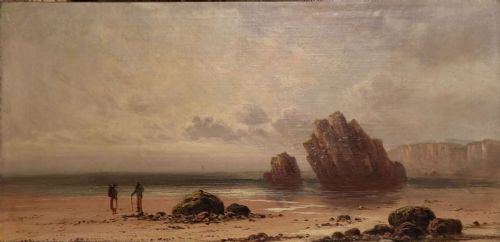
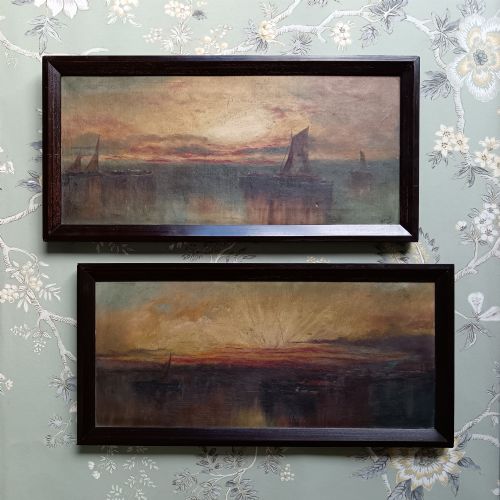
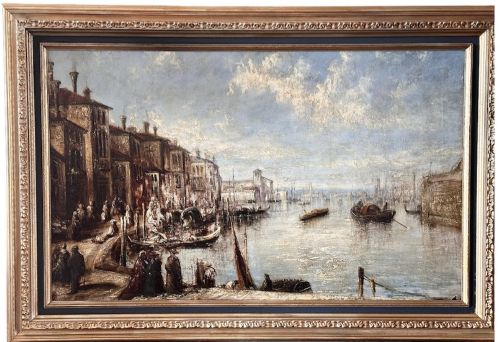
Canvas maritime landscape art encompasses oil paintings on canvas and board depicting coastal views, harbours, estuaries, and open seas. Collectors searching this phrase encounter works spanning from the nineteenth century through the mid twentieth century.
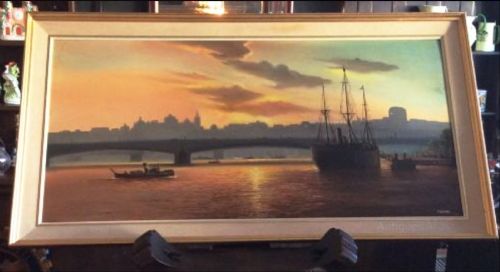
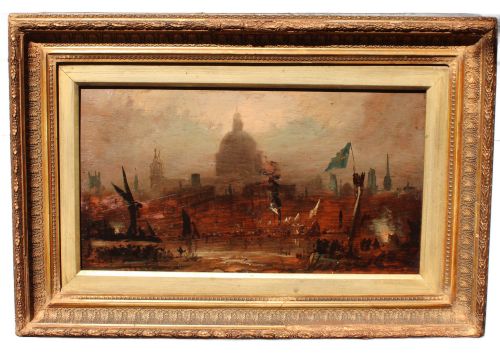
The most common pieces on this page are framed oil paintings representing British and European coastal scenes, rivers like the Thames, and bustling harbour activities executed by listed artists and regional painters.
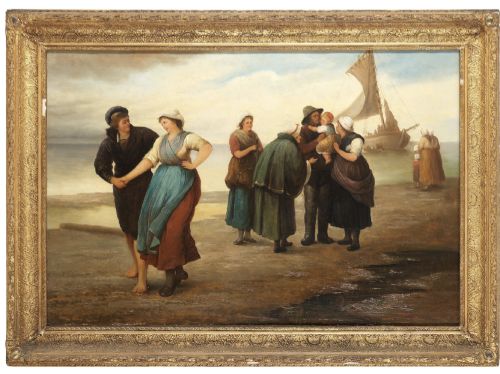
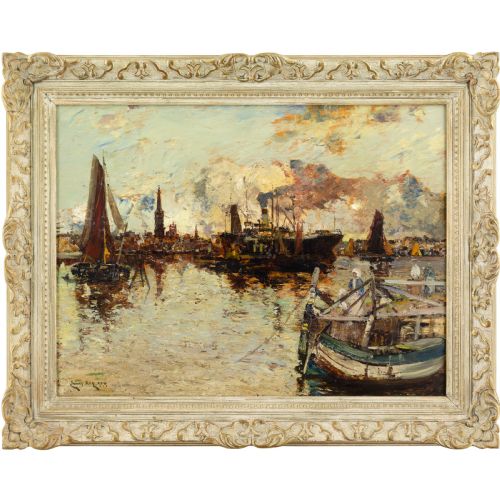
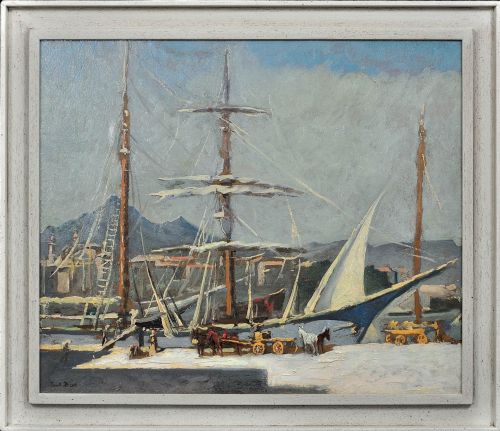
The selection ranges from intimate nineteenth century coastal studies to large Victorian canvases and mid twentieth century Impressionist interpretations of the sea and shore.
Materials and construction
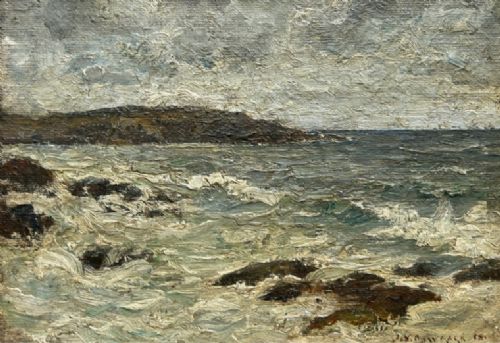
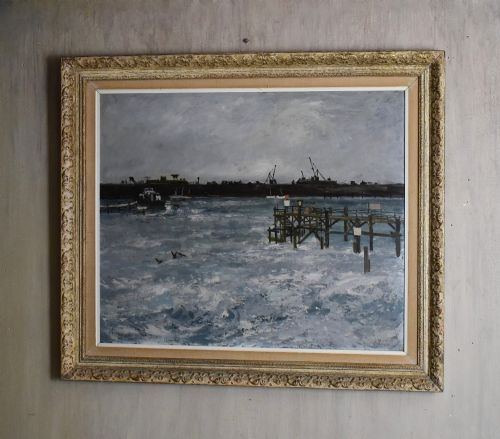
These works rely primarily on oil paint applied to woven canvas stretched over wooden frames, though occasional examples utilise board supports. Artists manipulated oil pigments to capture the shifting light on water, often building thick impasto layers to suggest turbulent waves or choppy harbour surfaces.
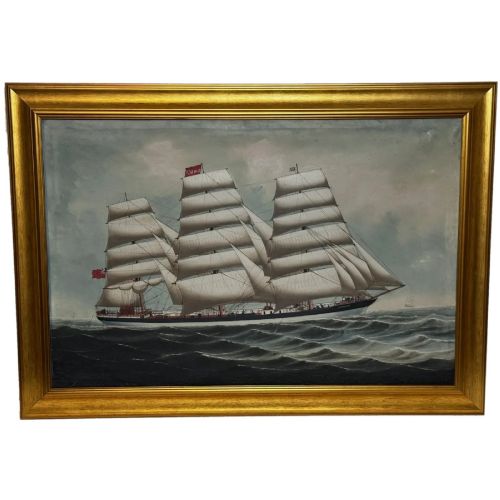
Original framing frequently involves gilt wood or moulded frames that complement the tonal qualities of the marine scenes. The combination of durable oil paint and sturdy wood supports ensures these paintings survive across centuries.
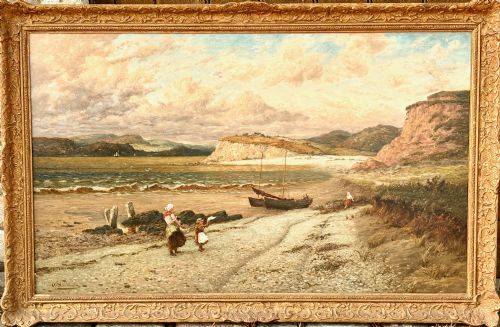
Smugglers with horses appear quietly on coastal paths alongside peaceful fishing boats.
Assessing quality
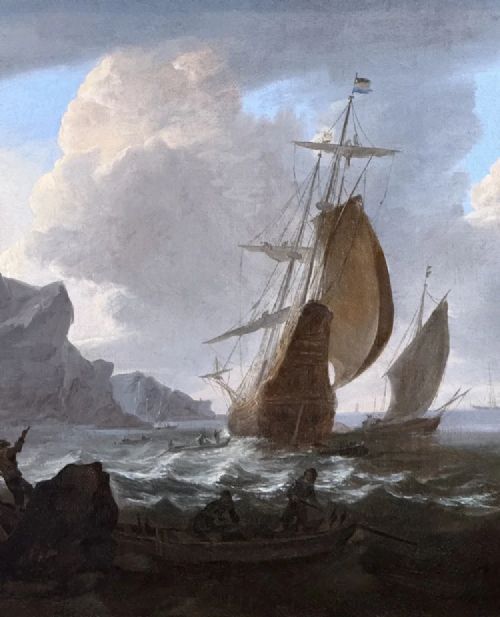
Quality in these paintings rests on the artist's command of light, atmosphere, and maritime architecture. Superior works demonstrate confident brushwork and accurate perspective in rendering vessels, rigging, and tidal movements.
The sophistication of the palette and the preservation of the original paint layer distinguish finer examples. Works housed in period gilt wood frames that match the era of the canvas also hold greater appeal.
Kenneth Cozens·Reginald Arthur Borstel·James Kay·Peter Brannan·Francis Moltino·Bernard Benedict Hemy·Thomas Creswick·Willem Bos·John Wilson Carmichael·Abraham Cooper·Thomas Hodgson Liddell·William Henry Williamson·John Holland·Charles William Wyllie·William Edward Webb·Edward Matthew Elliott·Louis Suire·Gyrth Russell
The Canvas Maritime Landscape Art Glossary
- Impasto
- Paint applied thickly to a canvas, standing out in relief from the surface. This technique adds tactile depth to depictions of rough seas and clouds.
- Seascape
- A painting depicting the sea, coast, or marine views. These works often focus on the interaction between water, sky, and human navigation.
- Gilt wood
- Wood carved and covered with a thin layer of gold leaf or gold paint. Frames finished in this manner were standard for fine art oils of the Victorian and Edwardian periods.
- Provenance
- The documented history of a painting's ownership and exhibition record. A clear provenance helps confirm attribution to specific artists.
- Estuary
- The tidal mouth of a large river where the tide meets the stream. Many British marine paintings feature these transitional waterways.
Canvas Maritime Landscape Art: Frequently Asked Questions
What periods do these paintings cover?
The works span from the early nineteenth century through the mid twentieth century, encompassing Victorian, Edwardian, and mid twentieth century modernist approaches.
Victorian and Edwardian canvases tend towards detailed topographical accuracy, while later twentieth century pieces embrace Impressionist and Post-Impressionist interpretations of coastal light.
How should I care for an oil painting on canvas?
Keep the artwork away from direct sunlight, high humidity, and rapid temperature fluctuations to protect the canvas and oil pigments.
Dust the surface gently with a soft, dry brush and avoid using water or chemical cleaners on the paint or the gilt frame.
How can I identify the subject of a maritime painting?
Many works include specific geographic markers in their titles or inscriptions, such as named harbours, bridges over the Thames, or coastal towns.
Architectural details of vessels, lighthouses, and shoreline landmarks also help pinpoint the exact location depicted by the artist.