

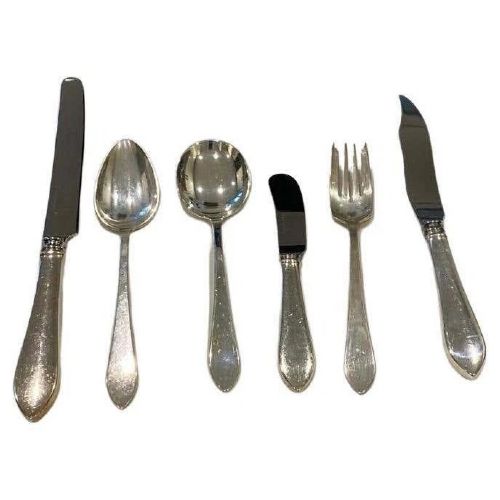
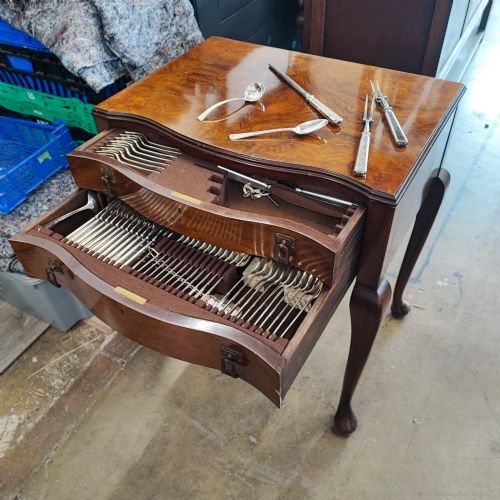


Canteen of Cutlery Table
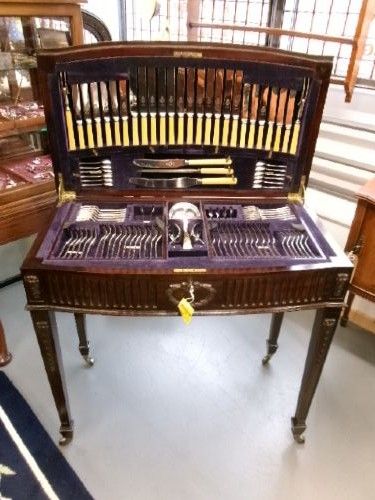
A canteen of cutlery table organises your flatware in dedicated furniture, offering both dining practicality and handsome period timber in the dining room.
Canteen of Cutlery Table
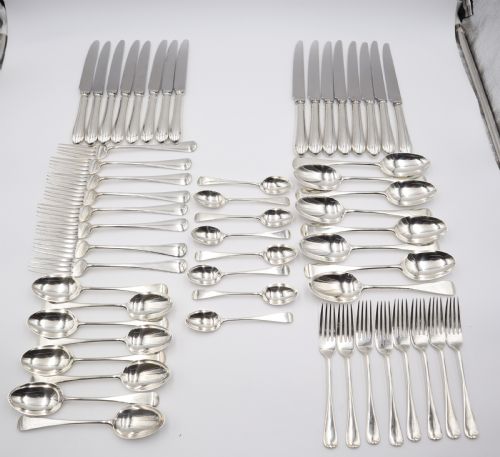
The form bridges domestic utility and fine cabinetry, housing services that stretch from modest six-person settings to large collections exceeding one hundred pieces. Makers housed these sets inside walnut side tables, console tables, or dedicated chests, integrating the cutlery storage directly into the furniture structure.
Materials and construction
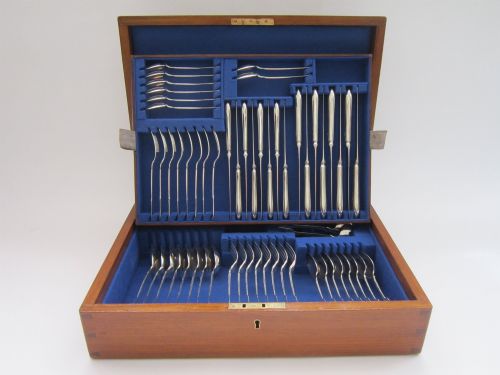
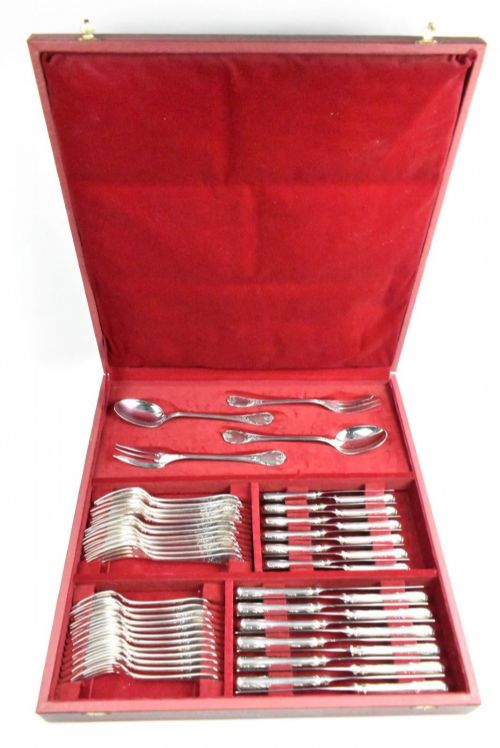
Cabinet makers built these pieces primarily in solid oak, mahogany, and walnut, employing robust joinery to support the substantial weight of metal flatware. Interiors are typically lined with felt to protect the contents, whilst brass handles and fittings secure the exterior doors and drawers.
The internal compartments are precisely partitioned to cradle individual knives, forks, and spoons, preventing movement during use. Exterior surfaces display traditional polishing techniques that highlight the natural grain of the timber.
Some dining tables hide their culinary treasures so securely that guests sit entirely unaware they are dining above a hundred silver spoons.
Distinctions in standard
Quality rests in the harmony between the cabinetwork and the completeness of the enclosed flatware service. Master silversmiths and premier cabinet makers produced pieces with meticulous internal partitioning, robust locking mechanisms, and richly figured timber veneers.
Lower tiers often show simpler secondary woods, mismatched cutlery contents, or plain carcasses lacking the refined proportions and fitted sophistication of workshop-marked pieces.
Elkington & Co·Walker & Hall·Mappin & Webb·Tiffany·Christofle·POSEN
The Canteen of Cutlery Table Glossary
- Fiddle Pattern
- A traditional nineteenth-century flatware handle shape widening gracefully toward the terminal. This profile appears frequently on Victorian silver services found inside fitted tables.
- Flatware
- Collective term for spoons and forks used at the dining table. They form the primary contents stored within these specialised canteens.
- Chippendale Style
- A decorative furniture design featuring carved cabriole legs and ball-and-claw feet. Several notable canteens adopt this aesthetic for their supporting console tables.
- Silver Plate
- A base metal coated with a layer of fine silver through electroplating. Many durable canteens utilise this technique to achieve the appearance of solid silver at a different scale of production.
Canteen of Cutlery Table: Frequently Asked Questions
What is a canteen of cutlery table?
A canteen of cutlery table is a piece of furniture designed specifically to store a complete set of dining utensils within fitted drawers or compartments.
These pieces combine the function of a sideboard, console table, or chest with the organised storage required for formal dining services.
How do I identify the period?
Period identification relies on timber selection, hardware design, and stylistic indicators such as Edwardian Edwardian proportions or Art Deco geometric lines.
Cabinet construction methods and maker marks stamped on the cutlery or furniture carcass provide further chronological guidance.
Are the cutlery sets complete?
Many canteens retain their original matched services, whilst others have accumulated supplementary pieces over time.
Checking the internal partitions and counting the individual items against the slot layout helps determine completeness.
Where should I place it?
These tables suit dining rooms, hallways, or living spaces where their fitted storage remains accessible and practical.
Keeping them away from direct heat sources protects the timber finishes and internal felt linings.