
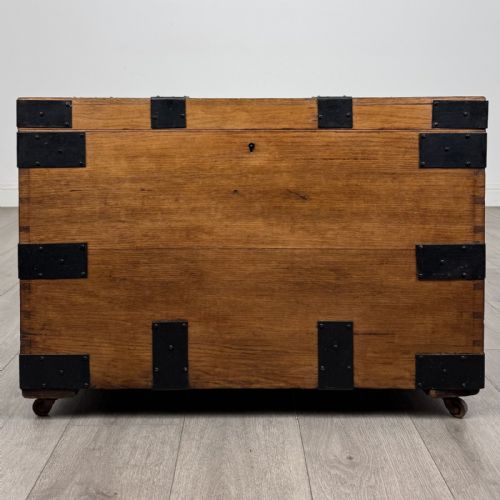


Brown Oak Silver Chest
These brown oak silver chest examples combine sturdy timber with iron hardware to protect valuable tableware.
Brown Oak Silver Chest
A brown oak silver chest serves primarily as a heavy-duty storage trunk or fitted container for household flatware and valuables. Buyers searching for a brown oak silver chest will encounter substantial timber boxes reinforced with iron bands or cast metal mounts.
The pieces listed on this page span several eras including the Victorian and Edwardian periods, alongside earlier examples from the mid eighteenth century. Most items take the form of iron-bound trunks, fitted cutlery canteens, or storage chests constructed from oak.
Makers and retailers from Bond Street and major firms like Walker & Hall or Mappin & Webb supplied these sturdy vessels. Interiors often feature compartments or green felt linings designed to secure silver plates, canteens, and games compendiums.
Materials and construction methods
Construction relies heavily on solid oak timbers joined to withstand heavy loads during travel or household storage. Blacksmiths and carpenters added cast iron bands, brass handles, and robust corner brackets to reinforce the heavy wooden lids and walls.
Internal layouts employ fitted wooden trays, baize linings, and specialised slots for cutlery, canteens, and glass cut crystal decanters. Surviving hardware retains original patination, showing the hand-hammered or cast details typical of nineteenth century metalwork.
Listings span multiple decades, incorporating Victorian iron-bound trunks, Edwardian cutlery canteens by Walker & Hall, and earlier George II oak chests.
Distinguishing quality across examples
Quality shows in the selection of the oak timber, the precision of the dovetail joints, and the substance of the iron or brass mounts. Finer chests possess original working locks, robust drop handles, and comprehensive internal fittings rather than altered compartments.
Retailer provenance and maker marks stamped into the hardware or silver plate elevate certain examples above standard utility trunks. The presence of complete cutlery sets or original fitted components like tantalus frames distinguishes high-end pieces from plain storage boxes.
Walker And Hall·Mappin And Webb
The Brown Oak Silver Chest Glossary
- Oak
- A hard, durable timber native to Britain, prized for its strength and distinct grain pattern in furniture and trunk construction. It forms the primary body of almost every piece listed here.
- Silver Plate
- A thin layer of silver fused to a base metal, frequently found on the flatware housed within these canteens. Walker & Hall and Mappin & Webb specialised in this technique.
- Cutlery Canteen
- A fitted box or table designed to hold a complete set of matching knives, forks, and spoons. These often include multiple sliding tiers and baize-lined slots.
- Tantalus
- A locking beverage cabinet that displays decanters while preventing unauthorised access to the contents. They appear within combined games compendiums from the Edwardian era.
- Cast Iron
- Molten iron poured into a mould to create structural straps, hinges, and corner brackets for heavy trunks. These sturdy mounts protected the oak edges from impact during transit.
Brown Oak Silver Chest: Frequently Asked Questions
What were brown oak silver chests used for?
These chests served secure domestic storage roles for valuable household silverware, flatware, and dining accessories. Wealthy households utilised them to protect silver services from tarnish and theft during storage or transport.
Later variations incorporated fitted interior trays and specialised slots to organise specific settings of knives, forks, and serving spoons.
How do I identify a Victorian silver chest?
Victorian examples typically feature heavy oak bodies secured with robust cast iron bands, corner braces, and iron drop handles. Many include maker stamps or retail signatures associated with nineteenth century Bond Street outfitters.
The construction prioritises maximum durability for shipping, resulting in thick timber walls and secure locking mechanisms.
What is inside a cutlery canteen chest?
A cutlery canteen contains fitted tiers, removable trays, and lined compartments designed to hold flatware securely in place. Interiors are frequently lined with green felt or baize to prevent the metal from scratching.
Larger configurations accommodate complete table services including carving sets, fish knives, and serving ladles.
How should I care for an antique oak chest?
Maintain the timber by applying traditional beeswax sparingly to nourish the dry oak surface and preserve the natural grain. Avoid placing the chest near direct heat sources or rapid temperature shifts that could cause the wood to split.
Metal ironwork benefits from a light wipe with a dry cloth to remove dust while retaining the historic dark patination.