



Canine Oil Canvas Portrait
A canine oil canvas portrait captures the distinct character and spirit of a cherished animal through traditional painted artistry.
Canine Oil Canvas Portrait
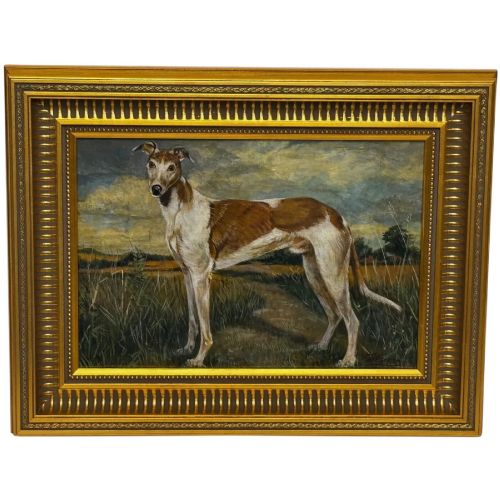
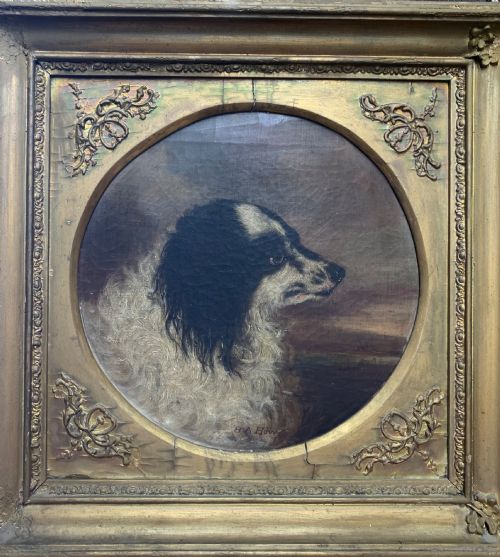
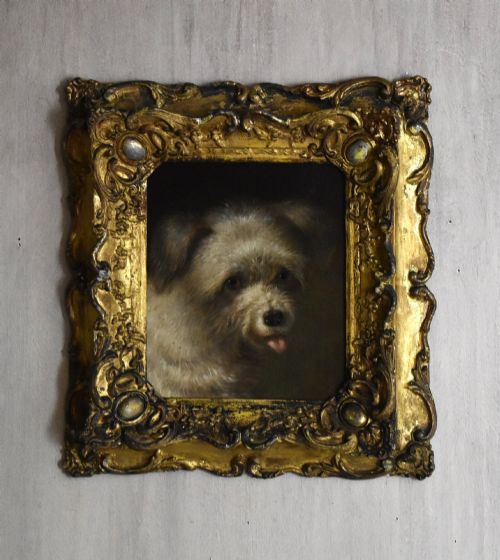
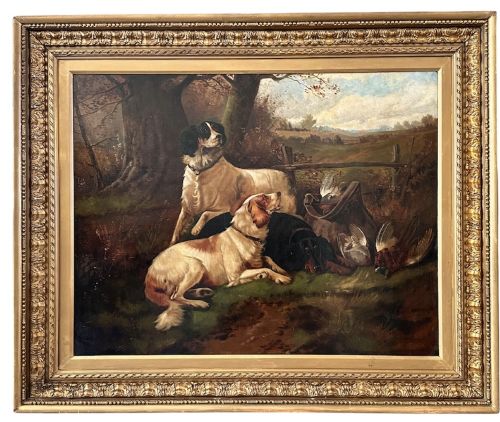
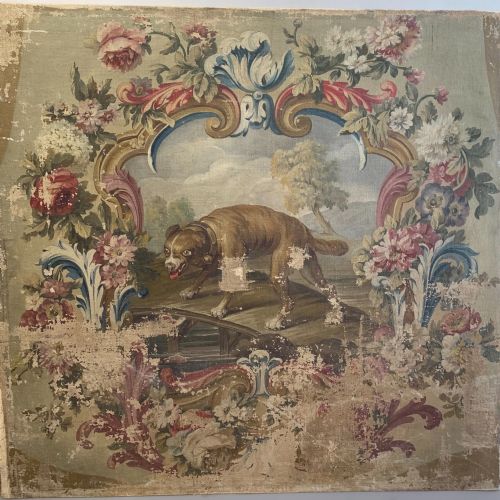
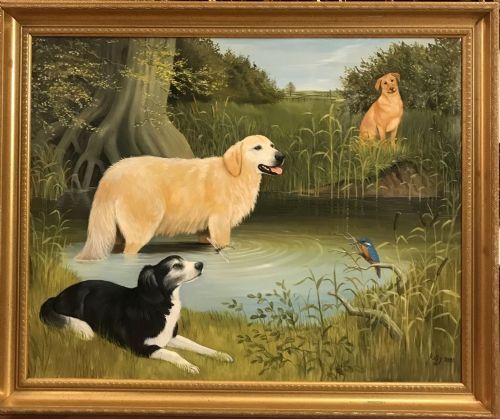
A canine oil canvas portrait is a traditional painted study of a dog, rendered on stretched fabric using oil pigments. When you browse this selection, you encounter pieces spanning from the nineteenth century through the mid-twentieth century, capturing various breeds from spaniels and terriers to sporting hounds.
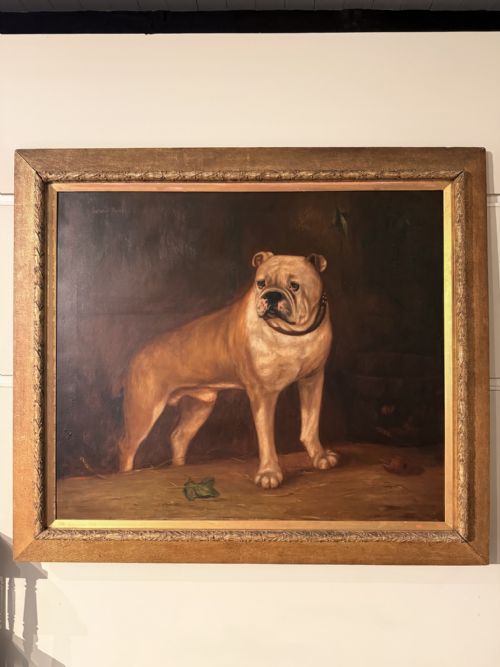
The works originate predominantly from British and French schools, reflecting historical domestic fondness for working dogs, sporting companions, and household pets. You will frequently find Victorian examples, often framed in period giltwood, depicting animals either posed formally within domestic interiors or set against open landscape backgrounds.
Materials and execution
These works are executed using oil paint applied to woven canvas supports, sometimes stretched over wooden frames or laid down on board. Artists utilised the slow-drying nature of oils to build rich textures, blending tones to capture the sheen of a retriever's coat or the expression in a spaniel's eye.
Many surviving examples are housed in their original gilt or giltwood frames, which provide structural support and complement the warm colour palette typical of the period. The combination of durable canvas and stable oil pigments accounts for the survival of these detailed animal studies across successive generations.
Several portraits quietly record dogs caught mid-action, guarding rat traps or staring down imaginary intruders.
Assessing the work
Quality in a canine oil canvas portrait rests upon the artist's ability to render the anatomy, posture, and individual expression of the animal with convincing accuracy. Stronger examples demonstrate a confident handling of brushwork in the rendering of fur and texture, rather than a stiff or formulaic depiction.
The depth of the background and the integration of the subject within its environment further distinguish finer works from simpler commercial productions. Furthermore, the preservation of the original canvas tension and the condition of the gilt frame contribute significantly to the overall integrity of the piece.
Valentine T. Garland·Martin Theodore Ward·John Sargent Noble·John Emms·LM Webb·William Barraud·Colin Graeme Roe·John Trivett Nettleship·Florence Mabel Hollams·Philip Eustace Stretton
The Canine Oil Canvas Portrait Glossary
- Oil on Canvas
- A painting medium where pigments bound in drying oil are applied to a woven fabric support. This combination allows for subtle blending and rich textural depth.
- Giltwood
- Wood that has been coated with a thin layer of gold leaf or gilt powder. It is frequently found on period frames enclosing nineteenth-century canvases.
- Sporting Art
- A genre of painting dedicated to pursuits such as hunting, shooting, and the animals associated with them. Canine portraits frequently fall within this category.
- School
- A group of artists sharing a similar style, period, or geographical origin, often influenced by a prominent master. Attributions to a specific school denote stylistic lineage.
Canine Oil Canvas Portrait: Frequently Asked Questions
How do I date a canine oil canvas portrait?
Dating relies heavily on stylistic clues, clothing or interior details in the background, and the construction of the canvas and stretcher frame. Signatures, inscriptions on the reverse, and historical framing styles also provide reliable chronological markers.
Comparative study of known artist outputs helps narrow the timeframe further. Examining the preparation of the canvas offers additional insight into the period of creation.
Were these portraits commissioned by owners?
Many canine portraits were indeed commissioned by devoted owners wishing to immortalise prized hunting dogs, racing champions, or beloved household pets. Wealthy patrons frequently hired established animal painters to record their specific animals.
Other works were created independently by artists who specialised in animal subjects, capturing local breeds or notable working dogs for exhibition or sale.
How should I clean an antique oil painting?
Surface dust should be gently removed using a very soft, dry brush, taking care not to touch the painted surface directly. Professional conservationists should handle any deeper cleaning or removal of aged varnish.
Household cleaning products, water, and solvents must be avoided entirely, as they can permanently damage the fragile oil pigments and canvas substrate.
What lighting suits these portraits best?
Displaying these works away from direct, harsh sunlight prevents the oil pigments and any gilt framing from fading or degrading over time. Controlled, indirect accent lighting highlights the texture of the brushwork effectively.
Stable indoor humidity and temperature conditions also protect the canvas from warping and the paint from cracking.