





Canine Art Print
A canine art print captures the character and loyalty of dogs through traditional printmaking, painting, and drawing.
Canine Art Print
A canine art print encompasses framed prints, etchings, engravings, and original paintings dating from the nineteenth century through the mid twentieth century. Buyers seeking a canine art print will encounter Victorian engravings, Edwardian etchings, and mid twentieth century watercolours.
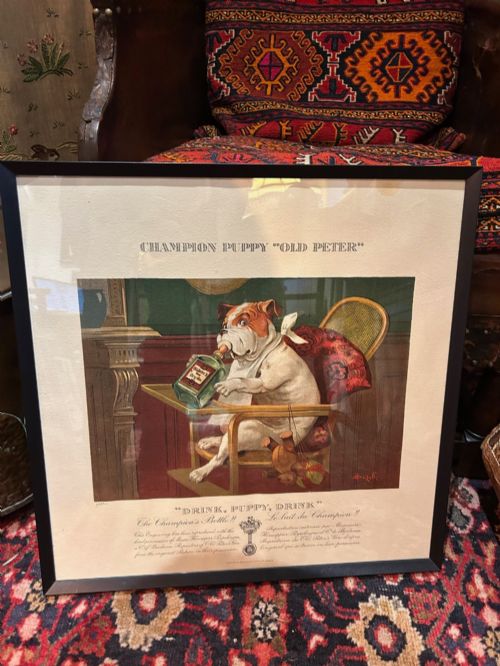
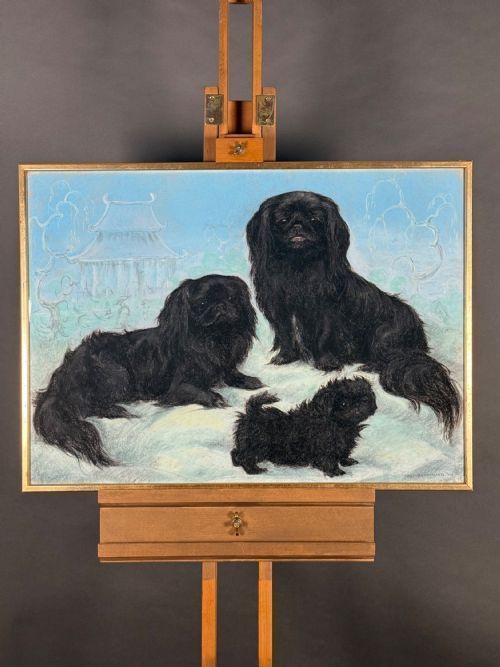
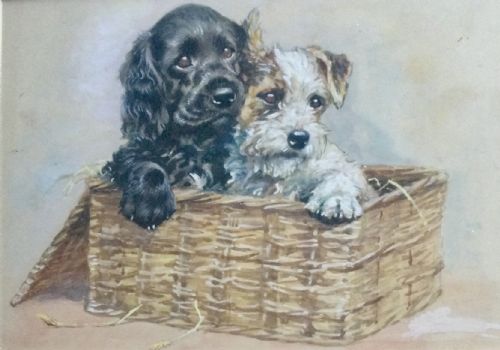
The subjects range from sporting hounds and working gundogs to affectionate portraits of Pekingese, terriers, and bulldogs. These pieces bridge natural history observation and domestic portraiture, recording specific breeds and beloved pets.
Framed works frequently combine paper, ink, and glass within wood or giltwood frames that suit period interiors. The aesthetic varies from realistic Victorian genre scenes to the cleaner lines of early twentieth century fine art.
Materials and methods
Many works utilise traditional printmaking techniques such as etching, drypoint, and engraving on paper using dark inks to render the fine texture of canine coats. Artists often signed these impressions by hand beneath the image.
Watercolour and pastel on paper capture softer tones and tonal depth, while oil paintings on canvas employ rich pigments to depict light on fur and background scenery. These mediums are typically protected behind glass within wooden mouldings.
Canine Art Print Retail Price Guide 2026
Typical asking prices for canine art print among the pieces listed under this phrase on Sellingantiques today, from the lower quarter to the upper quarter. They describe what is for sale here now, not the wider market.
Several Bulldogs maintain a stoic watch over these listings, reminding viewers that canine artists had a particular fondness for stubborn frowns.
Distinctions in quality
Quality rests upon the draughtsmanship of the artist and the clarity of the printed line or brushwork in capturing canine anatomy and expression. Master printmakers render the texture of a spaniel or bulldog coat with striking precision.
Condition of the paper and preservation beneath glass influence desirability, alongside the presence of original artist signatures and period framing materials.
Herbert Dicksee·Florence Mabel Hollams·Mabel Gear·Tom Carr·Marcellin Auzolle
The Canine Art Print Glossary
- Drypoint
- A printmaking process where the artist scratches directly into a metal plate with a sharp needle, creating a rich, velvety burr that holds ink. This technique yields impressions with soft, dark lines.
- Etching
- A method where acid bites lines into a metal plate prepared with a ground, which are then inked and pressed onto paper. It allows for fine detail and tonal variation.
- Engraving
- A technique where an artisan cuts lines directly into a hard metal plate using a burin tool. The resulting prints show crisp, clean lines.
- Giltwood
- Wood carved and coated with gold leaf or a gold-coloured finish. It is commonly found on traditional frames.
Canine Art Print: Frequently Asked Questions
How do I identify an original etching?
An original etching displays a visible plate mark indented into the paper around the printed image, where the edges of the metal plate pressed down during printing.
Close examination with a loupe reveals raised lines of ink rather than the flat dot pattern associated with modern mechanical reproductions.
What periods do these pieces come from?
The works span from the nineteenth century through the mid twentieth century, covering Victorian, Edwardian, and Art Deco eras.
Each period reflects changing tastes in pet ownership and the evolution of sporting art illustration.
How should I frame and hang them?
These works suit traditional English country house interiors and studies, often paired with wooden or giltwood frames.
Keep them away from direct sunlight to protect delicate watercolours, pastels, and ink on paper from fading.
What is the difference between an engraving and a print?
An engraving is created by directly cutting lines into a metal plate, resulting in precise, uniform lines.
Other prints on this page include lithographs, advertising prints, and spontaneous drypoint etchings.