


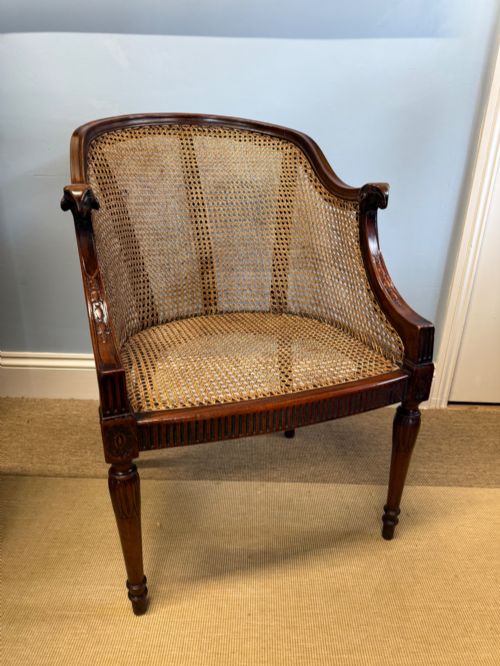

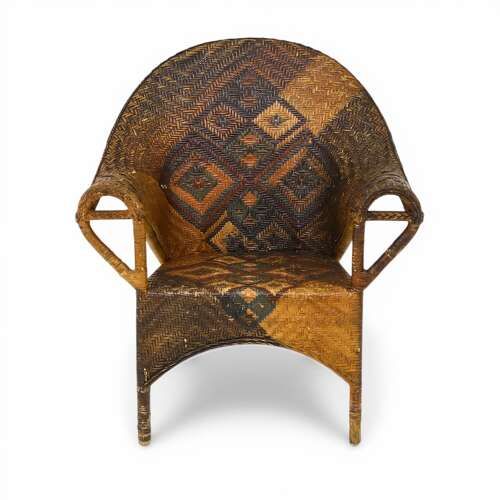


Caned Tub Chair
A caned tub chair provides a curved, enclosing seat woven in plant fibres, offering graceful support for a library or drawing room.
Caned Tub Chair
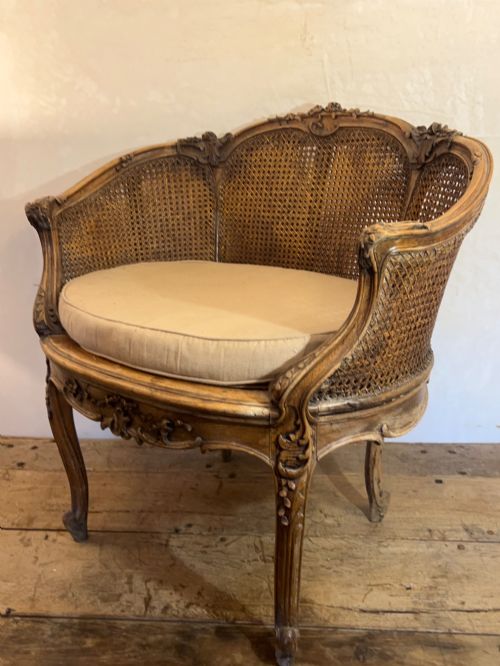
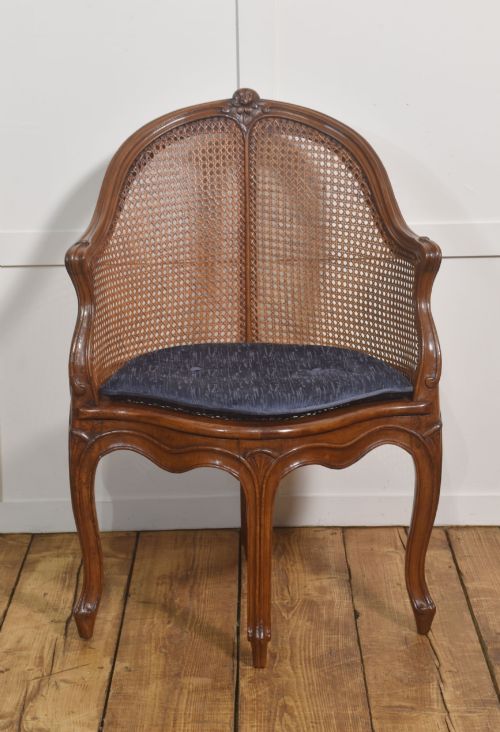
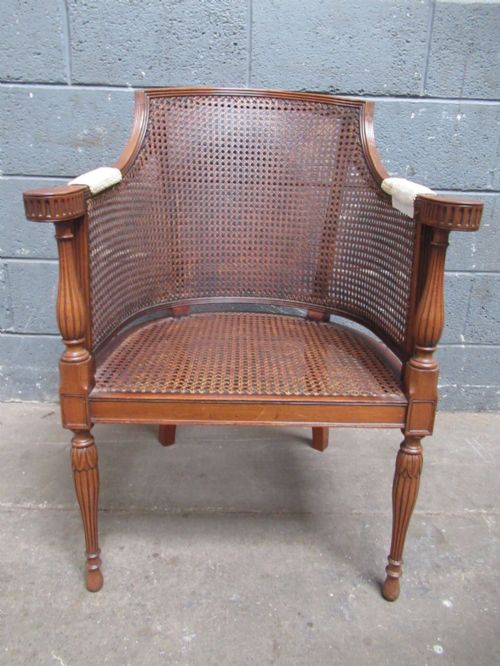
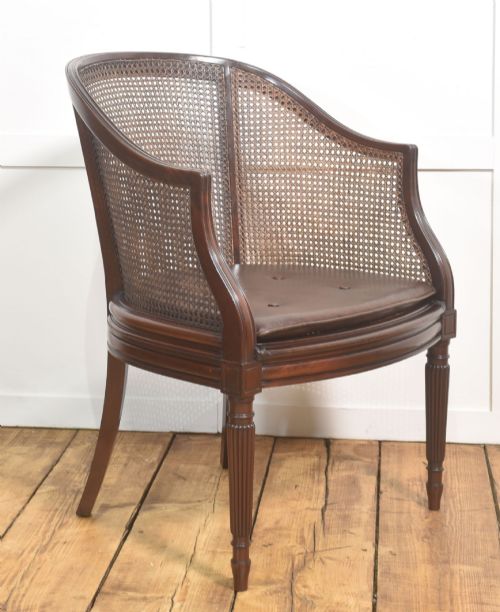
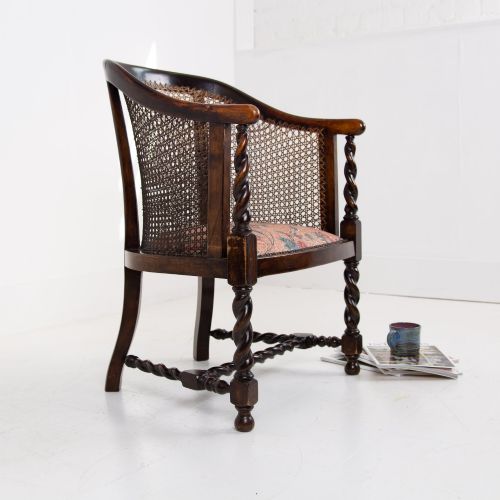
A caned tub chair combines a rounded, semi-circular backrest with an open woven seat or back panel. The form wraps around the sitter to create a secure, comfortable enclosure that suited reading rooms and parlours across the nineteenth and twentieth centuries.
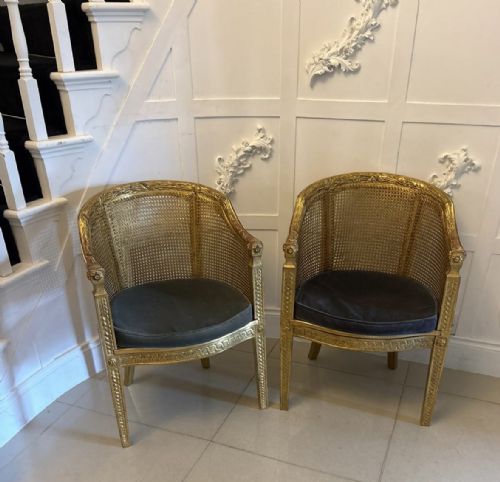
Most examples found in these listings trace back to the Regency and Edwardian eras, alongside French models styled after Louis XV and Louis XVI designs. Makers shaped these seats in mahogany, walnut, and beech, frequently integrating low profiles for libraries or elevated frames for children.
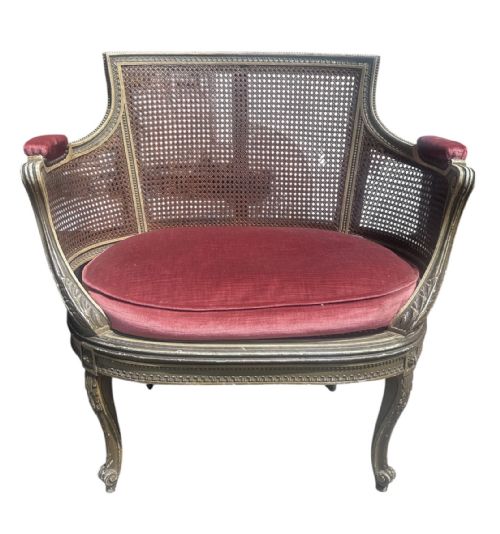
The term encompasses both classic tub shapes and heavier bergère forms with closed upholstered sides or open cane panels. Buyers frequently encounter French carved frames alongside British mahogany library chairs built during the William IV and Victorian periods.
Materials and Construction
Cabinetmakers built the structural frames using dense timbers such as mahogany, walnut, satinwood, and oak, occasionally applying ebonised finishes or simulated faux rosewood paint. These solid woods provided the necessary rigidity to support the tension of woven cane panels.
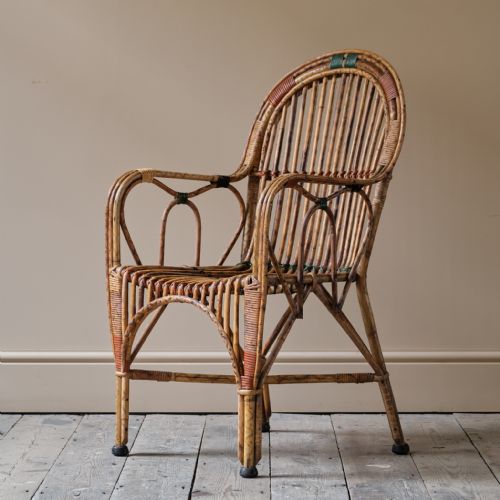
Woven cane and rattan form the distinctive backrests and seats, threaded through pre-drilled holes along the inner frame rails. Many designs incorporate loose cushions upholstered in leather, velvet, or traditional fabric to sit atop the woven cane base.
The selection includes specialised forms such as parlour musician's chairs, child's highchairs, and library bergères.
Assessing Quality and Craftsmanship
Quality rests primarily on the crispness of the timber carving and the precision of the frame joinery. Finer workshops invested in deeply sculpted arm supports, superior turning on the legs, and carefully matched wood grain across the curved back rails.
The tightness and regularity of the hand-woven cane work indicate the standard of the piece. Superior examples display neat, uniform drilling and consistent tension across every panel, whereas simpler chairs rely on basic machine-pressed cane sheets.
Gillows·Dryad And Co·Dryad Of Leicester
The Caned Tub Chair Glossary
- Tub chair
- An armchair featuring a continuous curved back and armrest rail forming a single hollow enclosure. The rounded shape resembles the upper half of a wooden bathing tub.
- Cane
- Strips of peeled rattan plant woven into open mesh patterns to form chair seats and backs. The material offers flexible strength and lightweight ventilation.
- Ebonised
- Timber treated with chemical stains or dark paint to imitate expensive ebony wood. This dark finish gained popularity during the Regency and Victorian periods for neoclassical furniture.
- Faux rosewood
- A painted or grained surface finish designed to simulate the rich figured appearance of genuine rosewood. Craftsmen applied this technique to cheaper hardwoods to match fashionable trends.
Caned Tub Chair: Frequently Asked Questions
What is a caned tub chair?
A caned tub chair is an armchair featuring a curved, semicircular backrest and a seat or back panel woven from rattan cane. The enclosing shape was designed to shelter the sitter from draughts.
These pieces appeared in British and French drawing rooms from the Regency era through to the early twentieth century, combining sturdy timber frames with flexible woven panels.
How were caned tub chairs used?
They served primarily as library, parlour, or reading chairs where sitters required comfortable, supportive seating for extended periods. Their relatively light frames allowed servants to move them easily around a grand house.
Smaller variants also functioned as specialised music chairs or children's highchairs, whilst larger bergère models were positioned near firesides and reading desks.
How do I care for cane furniture?
Cane requires moderate humidity to prevent the natural rattan fibres from drying out and snapping under tension. Regular dusting with a soft brush keeps the woven mesh clean.
Avoid placing these chairs directly next to modern radiators or in intense sunlight, and occasionally wipe the cane with a damp cloth to maintain its flexibility.
How do I identify Regency examples?
Regency caned chairs typically display classical restraint, featuring sabre legs, reeded frames, and dark mahogany or simulated rosewood finishes. Many reflect antique Grecian and Roman design influences popular around eighteen-ten.
Attributions to prominent cabinetmakers like Gillows often appear on higher-end library armchairs from this period, marked by exceptional timber selection and refined turning.