






Caned Oak Umbrella Rack
A caned oak umbrella rack organises hallway rain gear with natural texture and sturdy practicality.
Caned Oak Umbrella Rack
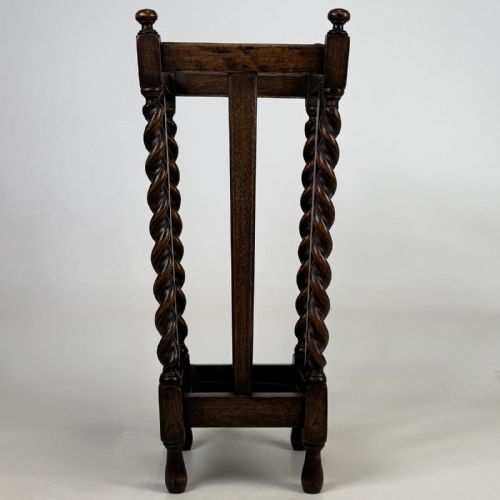
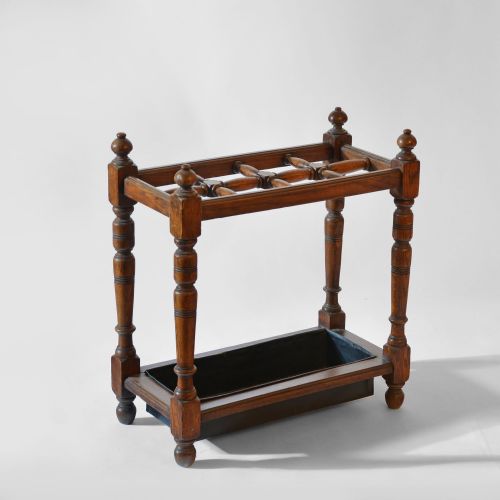
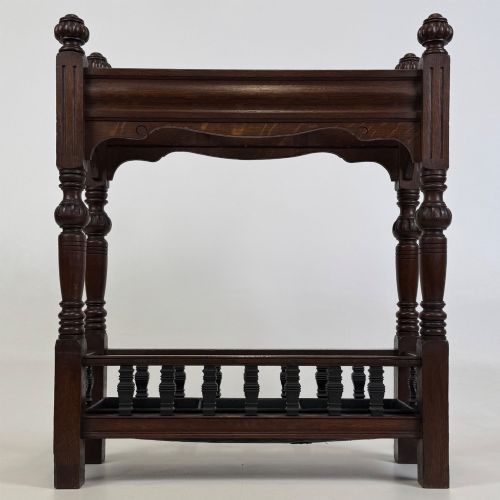
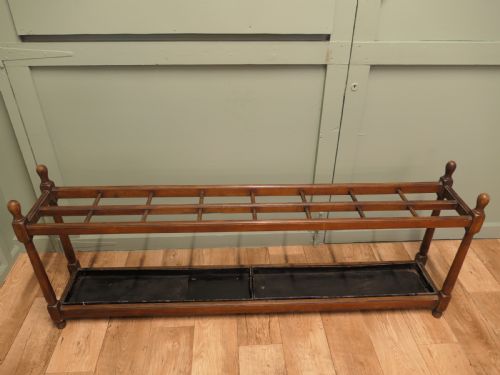
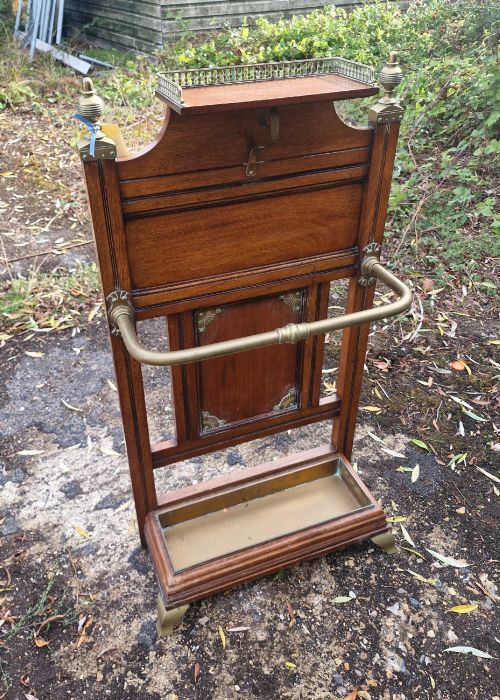
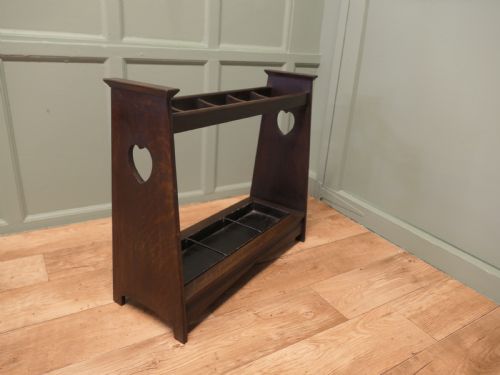
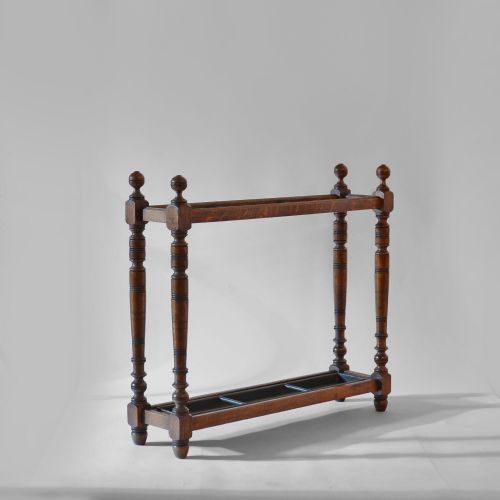
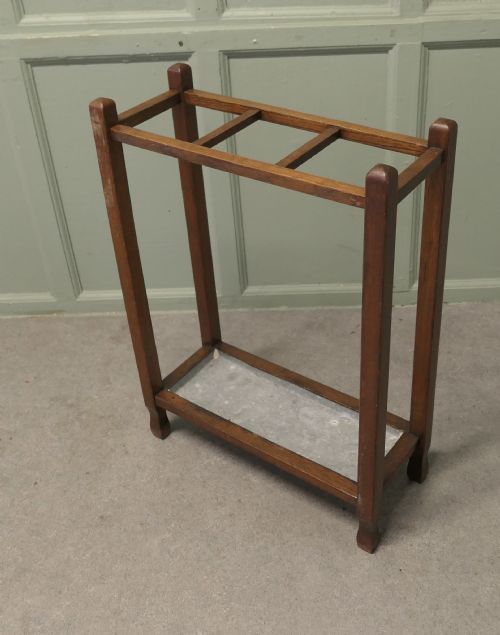
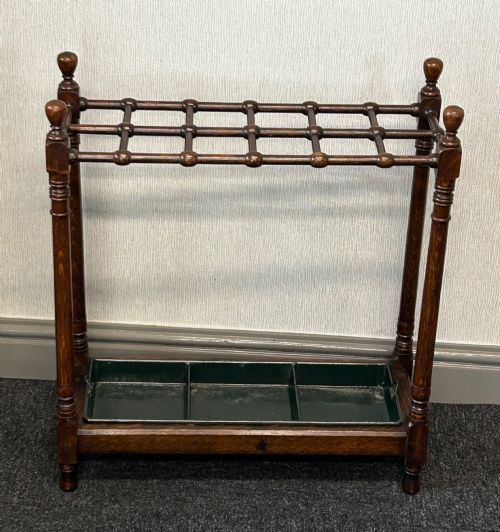
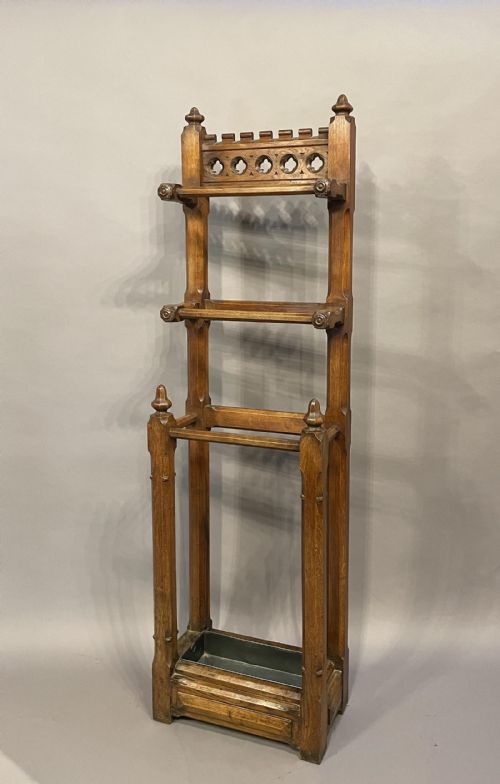
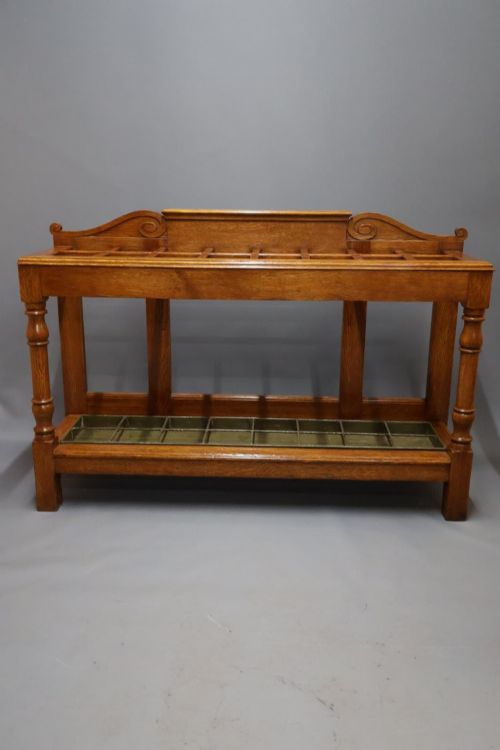
Caned oak umbrella racks serve as functional hallway furniture designed to hold wet umbrellas and walking sticks upright. They appear in forms ranging from simple rectangular frames to large country house hall stands.
Most examples date from the nineteenth century through the Edwardian period, encompassing Victorian, Arts and Crafts, and Aesthetic styles. Buyers encounter pieces featuring divisions, drip trays, and carved or coopered details.
Originating primarily from English workshops, these stands utilise robust timbers suited for daily domestic use. The incorporation of cane panels adds visual lightness to the substantial oak frames.
What varies in quality
Quality depends upon the calibre of the timber selection, the tightness and condition of the cane weaving, and the presence of original metal drip trays. Finer examples display careful joinery and deliberate stylistic details rather than plain utility.
Design complexity distinguishes basic hallway furniture from pieces attributed to notable retailers or specific stylistic movements like Arts and Crafts or Gothic Revival.
Caned Oak Umbrella Rack Retail Price Guide 2026
Typical asking prices for caned oak umbrella rack among the pieces listed under this phrase on Sellingantiques today, from the lower quarter to the upper quarter. They describe what is for sale here now, not the wider market.
Listings span oak combined with brass, zinc, iron, and ceramic elements across Victorian and Edwardian periods.
Liberty Design·Heals of London
The Caned Oak Umbrella Rack Glossary
- Caned
- Woven cane panels utilised to form decorative sides or backs on furniture frames. This technique introduces textural contrast to solid timber constructions.
- Demi lune
- A half-moon shape characteristic of certain hallway stands designed to sit flush against a wall. This profile saves floor space in narrow entrance halls.
- Coopered
- Built using vertical staves of wood bound together with metal bands, similar to barrel construction. This method appears in cylindrical stick stands.
- Drip tray
- A removable metal basin placed at the base to catch water from wet umbrellas. These trays protect the wooden floor from moisture damage.
- Arts and Crafts
- A design movement prioritising traditional craftsmanship and simple forms over mass-produced ornamentation. Pieces from this style often emphasise the natural grain of the oak.
Caned Oak Umbrella Rack: Frequently Asked Questions
What periods do these umbrella stands date from?
These pieces date from the nineteenth century through the early twentieth century, spanning Victorian, Edwardian, and Arts and Crafts periods.
Most examples reflect design characteristics popular between eighteen eighty and nineteen twenty.
How do you maintain the caning?
Caning requires gentle dusting and occasional light moisture to prevent the natural material from becoming brittle over time.
Keeping the cane panels away from direct heat sources preserves their flexibility.
Where were these stands placed?
Hall stands and umbrella racks stood in entrance halls and reception rooms of period homes to receive wet outdoor gear.
Their placement near the front door offered immediate access for visitors and residents.
What metals are found in these stands?
Brass, zinc, iron, and cast metal appear in drip trays, frames, and dividers.
These metals provided rust resistance and structural support for wet items.