


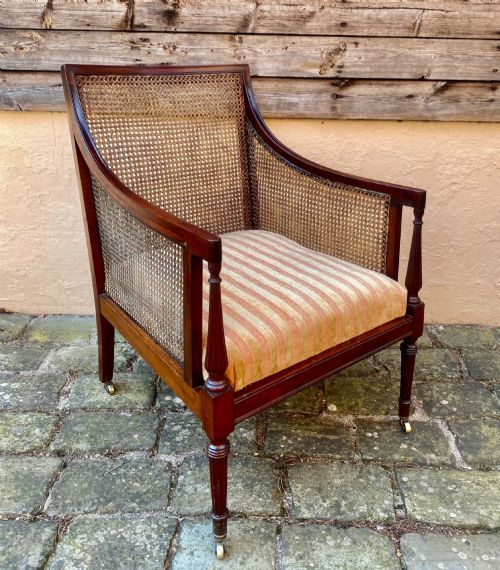
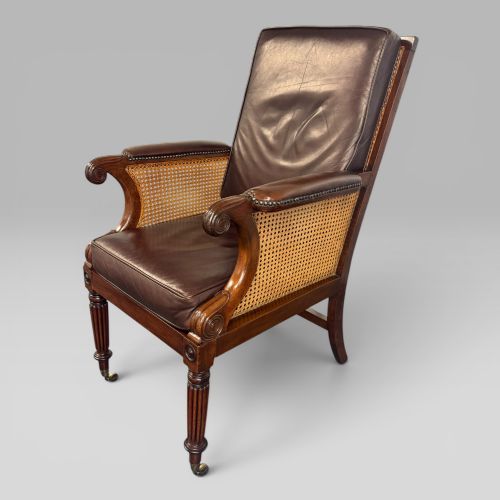
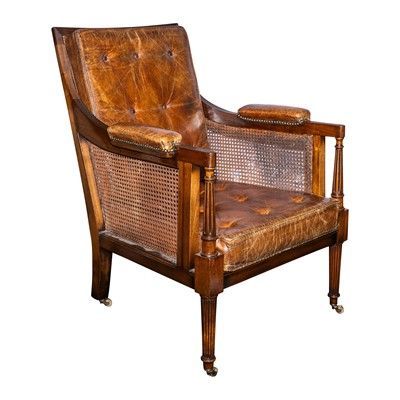
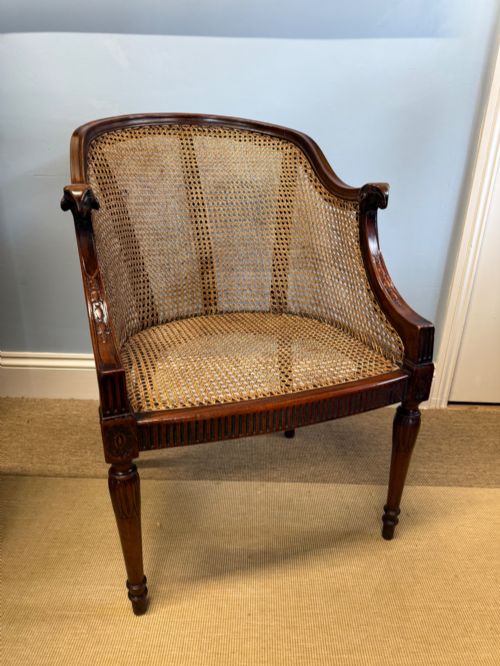

Caned Library Armchairs
Caned library armchairs bring together generous proportions and woven panels to create seating built for long hours of reading.
Caned Library Armchairs
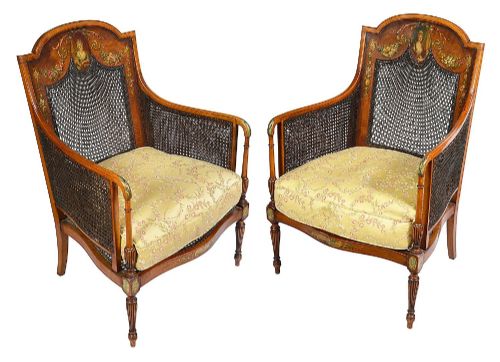
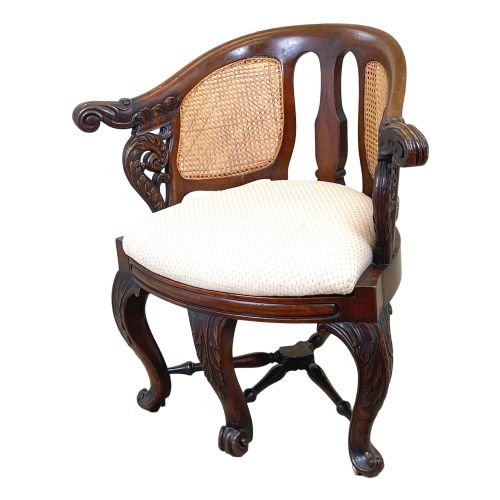
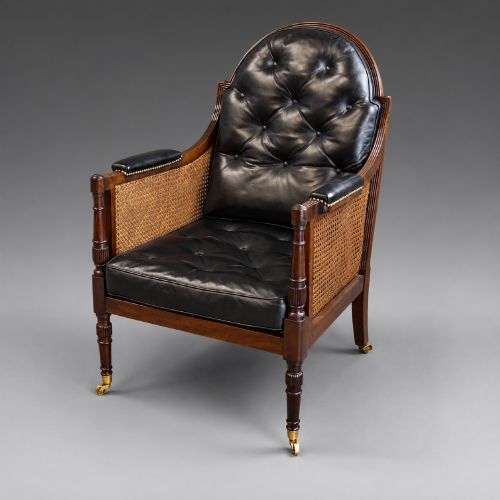
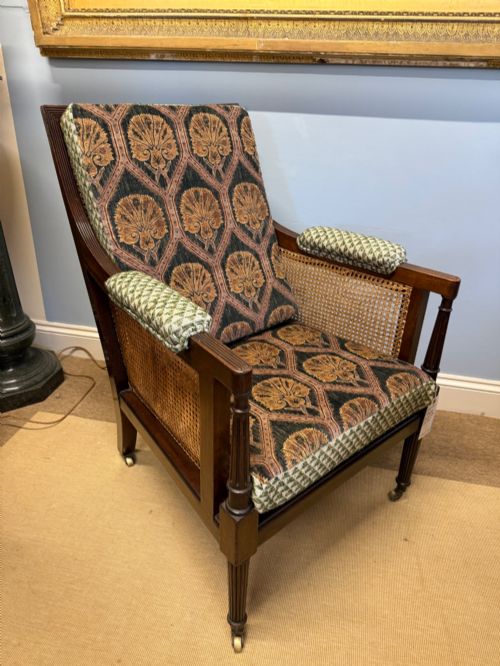
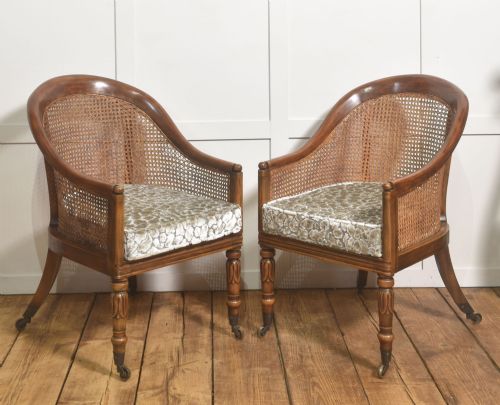
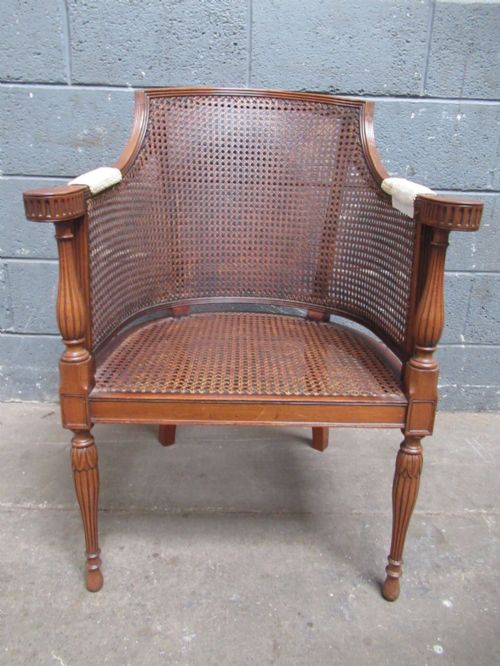
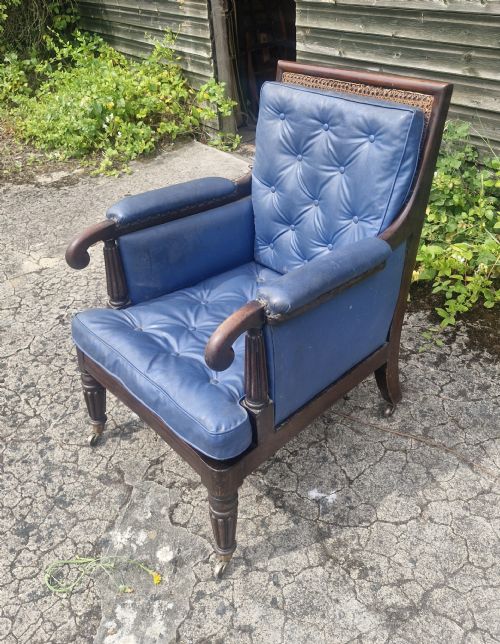
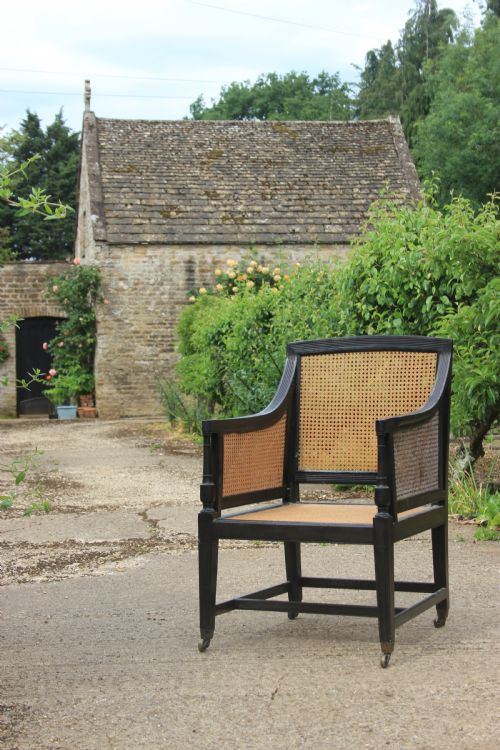
Caned library armchairs are sturdy seating forms designed for reading rooms and studies, appearing most frequently in mahogany frames from the Regency and Victorian periods. These pieces combine deep seats with supportive caned backrests and sides, often featuring upholstered loose cushions for added comfort.
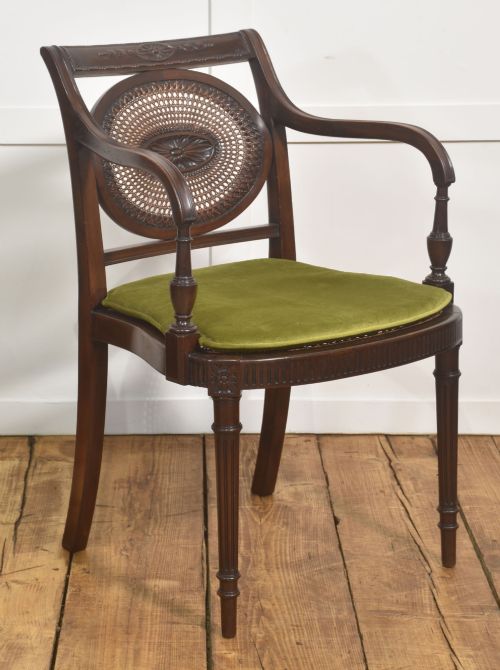
The selection centres heavily on nineteenth-century examples alongside later Edwardian revivals, showing styles ranging from Sheraton Revival to William IV. Forms vary from open tub shapes to ingenious metamorphic designs that convert into library steps.
Materials and construction
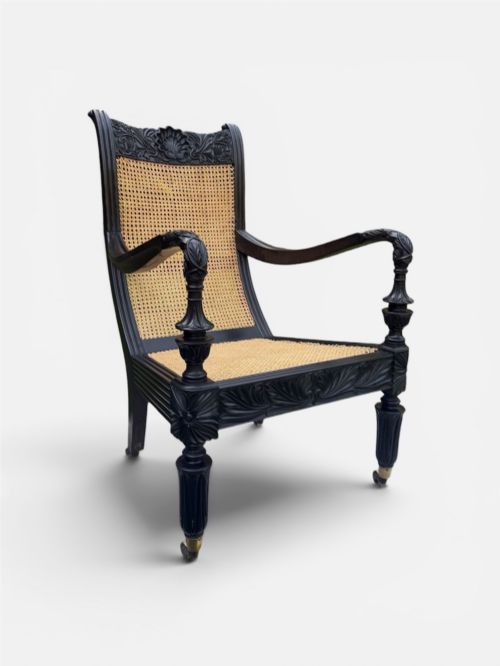
Cabinetmakers utilised solid mahogany, rosewood, and ebony for the structural frames, occasionally employing satinwood or simulated rosewood finishes. Frames were carefully turned or carved to support the curved backrests and arms.
Caning material, rattan cane, and cane panels were tightly woven by hand into the pierced wooden frames to provide a resilient, breathable backing. Brass hardware and leather inserts appear on desk chairs and metamorphic library steps.
Caned Library Armchairs Retail Price Guide 2026
Typical asking prices for caned library armchairs among the pieces listed under this phrase on Sellingantiques today, from the lower quarter to the upper quarter. They describe what is for sale here now, not the wider market.
Listings feature eighteenth and nineteenth-century forms including mahogany, rosewood, ebony, and satinwood, alongside Edwardian revivals and Dutch Colonial styles.
Judging quality
The distinction between ordinary and exceptional examples lies in the fineness of the frame carving, the generosity of the proportions, and the tightness of the cane weaving. Well-drawn chairs exhibit balanced curves and carefully selected timber grain that elevate the design beyond basic utility.
Originality of the frame and the retention of period caning contribute significantly to the standing of a piece. Subtle details such as inlaid stringing or ebonised highlights separate standard workshop output from finer cabinet work.
Gillows
The Caned Library Armchairs Glossary
- Bergere
- An enclosed upholstered armchair with a wooden frame and cane sides and back. This French-inspired form became a staple of English libraries during the Regency period.
- Caning
- A woven mesh made from the peeled bark of rattan palm. It offers a flexible and durable surface for chair backs and seats.
- Metamorphic
- Describing furniture designed to transform into another object, such as a library armchair that unfolds into a set of steps. These multifunctional pieces required precise mechanical hinges.
- Sheraton Revival
- A late nineteenth-century design movement inspired by the neoclassical furniture of George Sheraton. It frequently employed satinwood, delicate inlay, and light frames.
- Tub chair
- An armchair featuring a continuous curved back and arms that form a rounded enclosure. This shape provides enclosed support for the sitter.
Caned Library Armchairs: Frequently Asked Questions
What is a bergere chair?
A bergere chair is a closed-arm armchair featuring woven cane panels on the back and sides. These seats were designed to be used with loose upholstered cushions.
They became prominent in English libraries and drawing rooms during the Regency period and remain popular for their combination of light weight and sturdy wooden framing.
How do I spot a metamorphic chair?
Metamorphic library armchairs incorporate hidden hinges and pivoting joints that allow the seat and back to unfold into a set of library steps. These clever dual-purpose designs allowed scholars to reach high bookshelves.
Examine the joints and mechanics carefully to understand how the wooden sections move between the chair and step configurations.
What woods were used for these chairs?
Cabinetmakers primarily constructed these armchairs using mahogany, alongside rosewood, ebony, and satinwood. Some examples feature simulated or faux rosewood finishes painted onto a base timber.
These dense hardwoods provided the structural strength required to support the curved frames and the tension of woven cane panels.
How do I care for cane panels?
Cane panels require gentle dusting and occasional light humidification to prevent the rattan material from becoming brittle. Keeping the chairs away from direct heat sources helps preserve the natural flexibility of the weave.
Avoid pressing heavily against the centre of unsupported cane panels when moving or cleaning the furniture.