


Caned Bergere Armchairs
Caned bergere armchairs combine woven rattan sides with deep upholstered cushions, offering an inviting seat found across Regency, Victorian and Edwardian periods.
Caned Bergere Armchairs
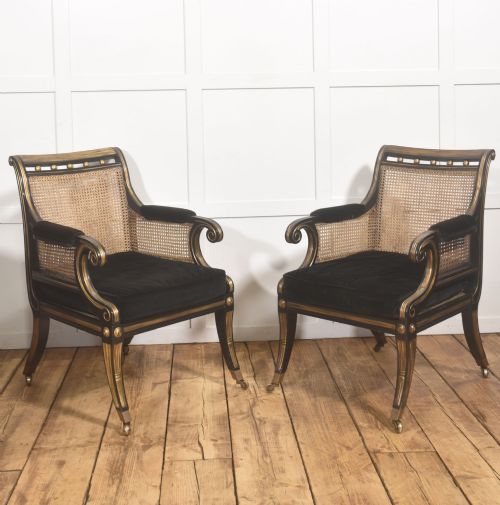
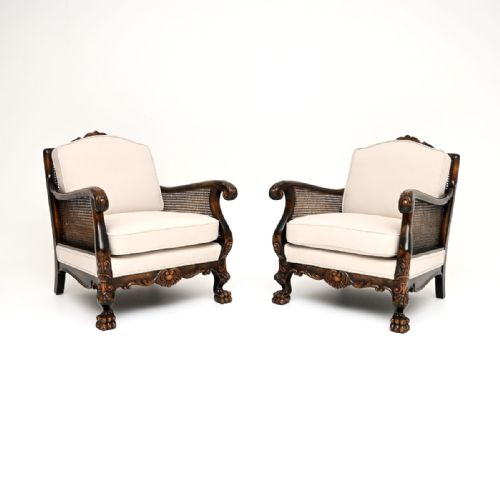
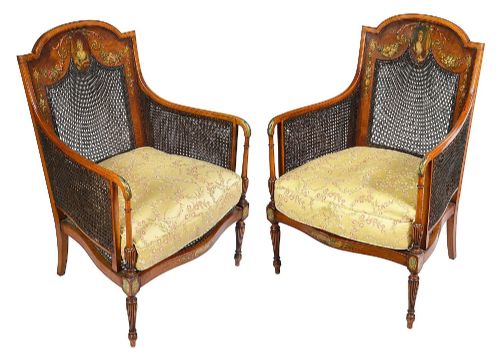
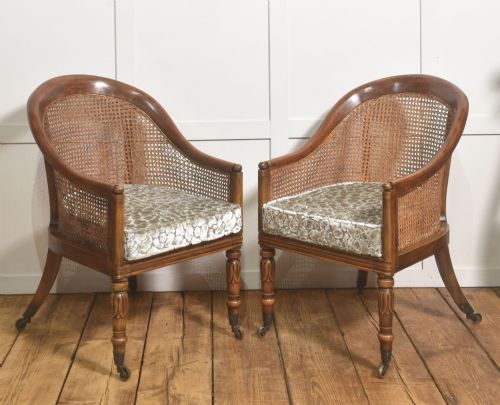
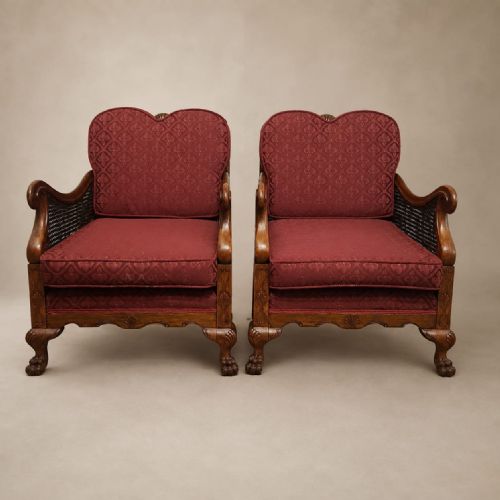
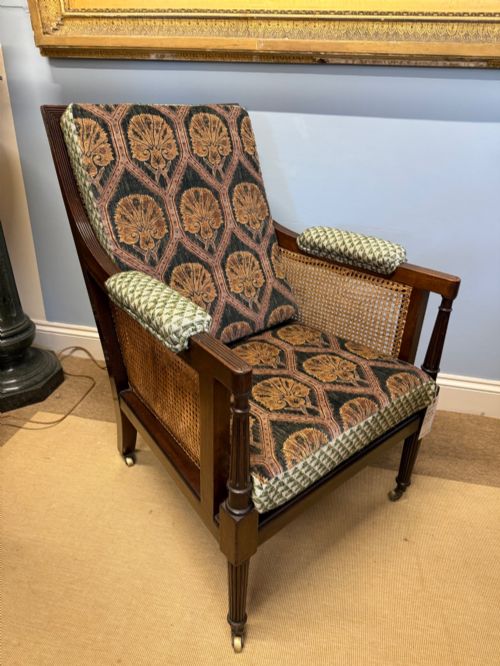
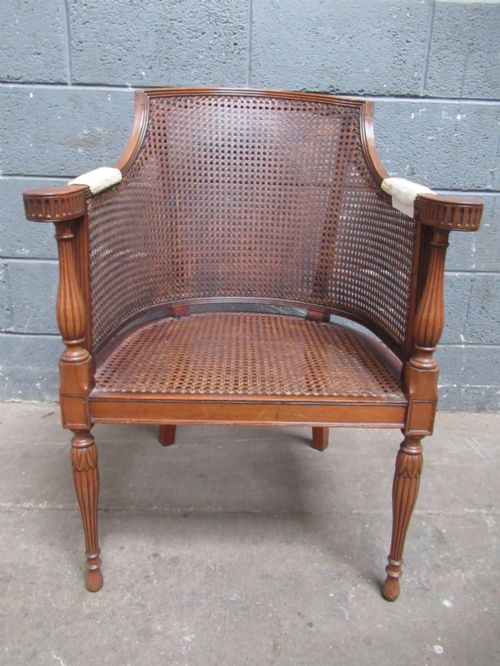
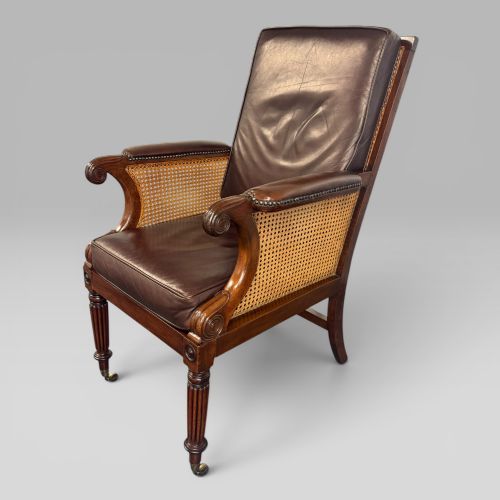
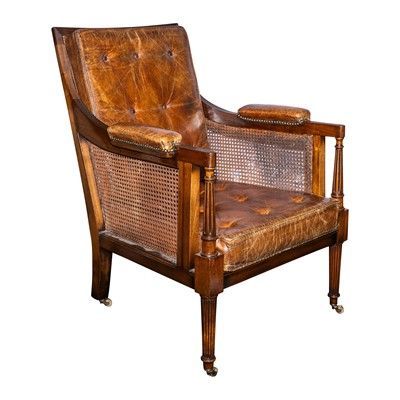
Caned bergere armchairs are upholstered seats featuring woven cane panels on the back and sides, designed for comfort in libraries, drawing rooms and country houses. These pieces appear frequently in mahogany, walnut, oak and rosewood, spanning periods from the Regency era through to the 1920s.
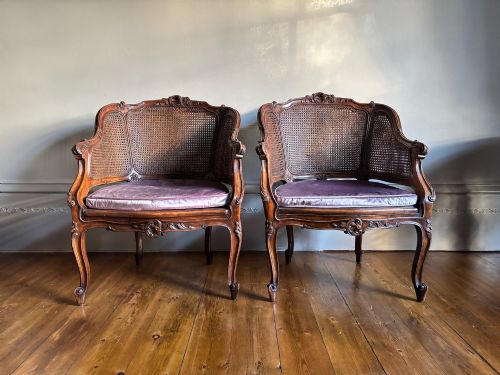
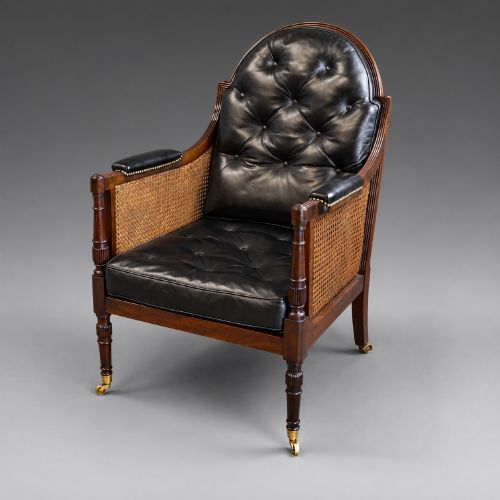
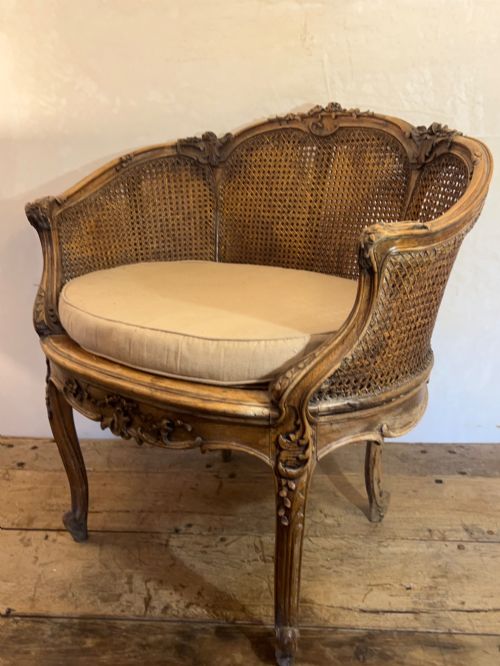
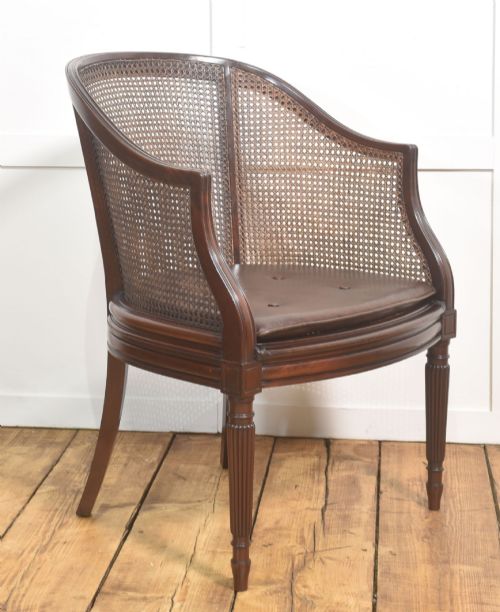
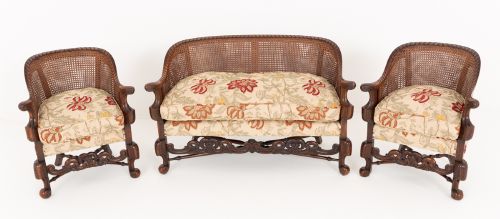
The versions most commonly met on this page include mahogany library chairs from the nineteenth century alongside French-inspired seating in Louis XV and Louis XVI styles. Buyers also encounter Edwardian examples, tub-shaped seats, childs armchairs and larger matching seating suites.
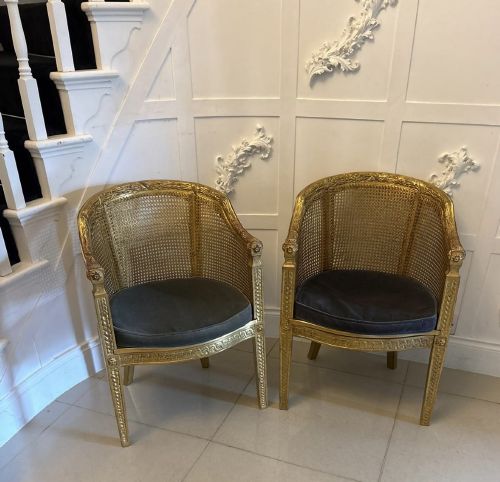
Forms vary from robust library chairs with brass details to elegant gilded frames and ebonised wood. Whether selecting an early nineteenth century Regency piece or a later French revival model, each chair displays the characteristic enclosed woven sides that define the form.
Materials and construction
Frames are constructed from dense timbers such as mahogany, walnut, oak, rosewood and ebony, providing structural strength for the enclosed seating area. Some French examples utilise giltwood, painted finishes or faux rosewood to achieve decorative elegance.
The distinctive caning utilises rattan cane threaded through the wooden framework to form supportive woven panels on the back and armrests. Upholstered elements incorporate leather, velvet, brass accents and fabric cushions to complete the seat.
Caned Bergere Armchairs Retail Price Guide 2026
Typical asking prices for caned bergere armchairs among the pieces listed under this phrase on Sellingantiques today, from the lower quarter to the upper quarter. They describe what is for sale here now, not the wider market.
Listings feature mahogany, walnut, oak and rosewood frames alongside both single chairs and matching seating suites.
Judging quality in construction
Quality rests upon the crispness of the timber carving and the tightness of the hand-woven cane panels. Superior examples exhibit refined proportions, precise joinery and well-figured wood grains across the arms and legs.
The harmony between the wooden frame and the upholstered cushions separates standard production from finer workshop pieces. Attribution to notable makers such as Gillows elevates the standing of certain Regency library chairs.
Gillows·James Shoolbred
The Caned Bergere Armchairs Glossary
- Bergere
- An enclosed armchair with upholstered seat cushions and woven cane sides. This French form gained popularity in British interiors during the eighteenth and nineteenth centuries.
- Caning
- A weaving technique utilising rattan strips to create supportive panels. Traditional work involves hand-piercing holes and threading single strands through the frame.
- Regency
- A British design period spanning the early nineteenth century. Pieces from this era often feature classical lines, dark timbers and brass mounts.
- Tub chair
- An armchair with a curved continuous back and armrest rail forming a rounded enclosure. This form provides a deep, enclosing seat.
- Giltwood
- Timber treated with a thin layer of gold leaf applied to the carved surface. This finish is frequently found on French revival seating.
Caned Bergere Armchairs: Frequently Asked Questions
What is a bergere armchair?
A bergere armchair is a fully or partially enclosed upholstered seat featuring woven rattan cane panels along the back and sides. Originating in France, these comfortable chairs became staples of British libraries and drawing rooms.
They differ from standard armchairs through their solid wooden frames and integrated woven sides, which provide a lighter visual weight while maintaining structural support for deep cushions.
How do I date a caned armchair?
Dating relies upon examining the timber species, carved details and structural proportions against known historical periods. Regency examples often feature rosewood, mahogany or ebonised finishes with classical restraint, while Edwardian and 1920s pieces reflect later revival tastes.
The weave of the cane and the method of attachment to the frame also offer clues, as machine-drilled holes generally point to later nineteenth or twentieth century production.
Where were these chairs used?
These armchairs served primarily as comfortable seating in private libraries, studies and formal drawing rooms of large country houses. Their enclosed sides and deep cushions made them suitable for extended periods of reading or relaxation.
Today, they function equally well as statement reading chairs in modern living spaces, bedrooms or studies, pairing well with both antique and contemporary furnishings.
Are these chairs comfortable for daily use?
These armchairs are designed for relaxed seating, combining supportive wooden frames with upholstered seat cushions. The woven cane sides provide a firm yet yielding backrest enclosure.
Many surviving pieces retain or have been fitted with comfortable feather or foam cushions, making them practical for regular daily seating in domestic environments.