

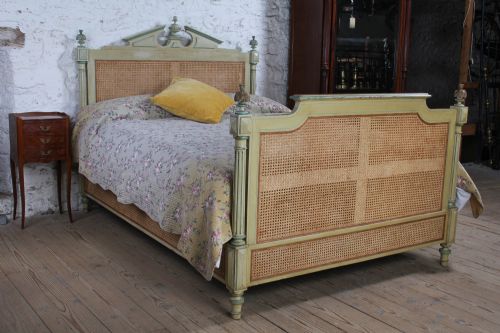
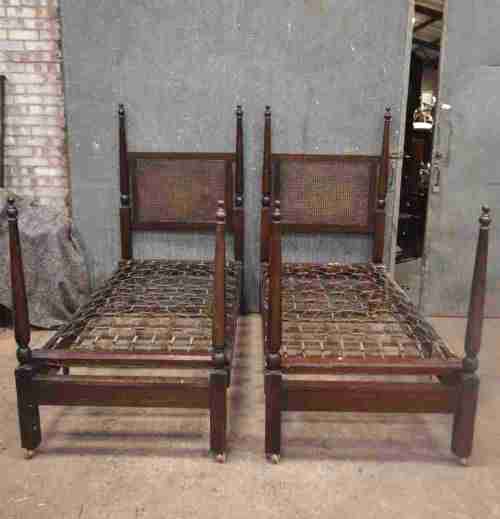
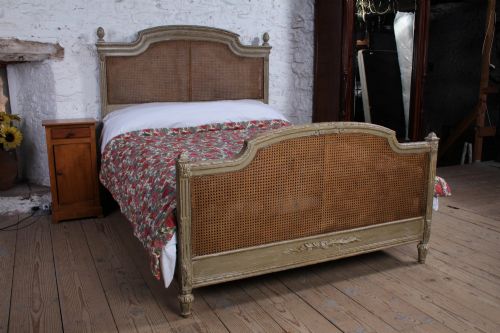


Cane Bed Frame
These cane bed frame designs offer woven panels and painted wood structures, providing timeless style and sturdy sleeping quarters.
Cane Bed Frame
A cane bed frame combines woven natural materials with solid timber structures, creating a light yet durable piece of bedroom furniture. These items range from single sleeping berths to grand king size formats.
Variations include single beds, double beds, king size frames, and specialised items such as rocking cribs. Painted finishes and carved wood details frequently accompany the woven panels.
How they were made
Craftsmen utilised beech, oak, and satinwood to build the primary structures of each cane bed frame. Artisans shaped these timbers through traditional carving and joinery techniques.
Panels incorporate cane and rattan, woven tightly into open frameworks to provide ventilation and visual texture. Additional surface treatments include paint, polychrome detailing, and gold leaf gilding.
Cane Bed Frame Retail Price Guide 2026
Typical asking prices for cane bed frame among the pieces listed under this phrase on Sellingantiques today, from the lower quarter to the upper quarter. They describe what is for sale here now, not the wider market.
Listings span from the late Victorian period through 1920, incorporating beech, oak, and satinwood alongside painted finishes.
What varies in quality
The intricacy of the carved wood ornamentation and the tightness of the cane weaving separate standard items from finer works. Hand painted portrait panels and detailed gilding elevate specific pieces above plain painted finishes.
Makers such as Maple and Co and retailers like Heals and Son produced work with superior joinery and durable timber selection. The integration of matching side furniture within suites also changes the scope of an assembly.
Maple and Co·Heals and Son
The Cane Bed Frame Glossary
- Cane
- Material woven from stripped rattan or bamboo plants. It creates flexible yet robust panels within headboards and footboards.
- Bergere
- An enclosed upholstered armchair or bed structure featuring wooden frames and woven cane sides. This French seating form influenced various nineteenth and twentieth century sleeping furniture.
- Gilt
- Application of gold leaf or gold paint onto wood surfaces. It provides a reflective decorative finish found on select revival furniture.
- Polychrome
- Decoration employing multiple colours on a single surface. This technique appears on hand painted panels within specific bed compositions.
- Rattan
- A climbing palm species whose stems provide durable strands for weaving. It serves as the primary material for the woven sections seen in these listings.
Cane Bed Frame: Frequently Asked Questions
What periods do these beds come from?
The available pieces originate from the late Victorian era through to the 1920s. Common periods include the late nineteenth century and the early twentieth century.
Designs reflect historical revivals such as Louis XVI style, Empire style, and Colonial Revival. Each piece displays the manufacturing traits of its specific decade.
How do I care for the cane panels?
Cane requires gentle cleaning with a slightly damp cloth to remove dust from the woven gaps. Avoid soaking the material to prevent the natural fibres from becoming brittle.
Keeping the room at a stable humidity helps maintain the flexibility of the rattan. Applying occasional light moisture can prevent the weave from drying out.
Are modern mattresses suitable for these frames?
Many historical frames accommodate standard modern mattress sizes such as double or king size. Checking the internal dimensions of the specific bed ensures a proper fit.
Some listings include matching bed bases or platforms to support contemporary mattresses. Custom adjustments may be necessary for non standard nineteenth century dimensions.
What is the difference between cane and rattan?
Cane refers specifically to the outer glossy peel of the rattan palm. Rattan encompasses the entire solid stem of the climbing plant used in structural furniture.
Craftsmen weave cane into flexible panels while thicker rattan forms sturdy framework elements. Both natural materials frequently appear together in these traditional bed designs.