

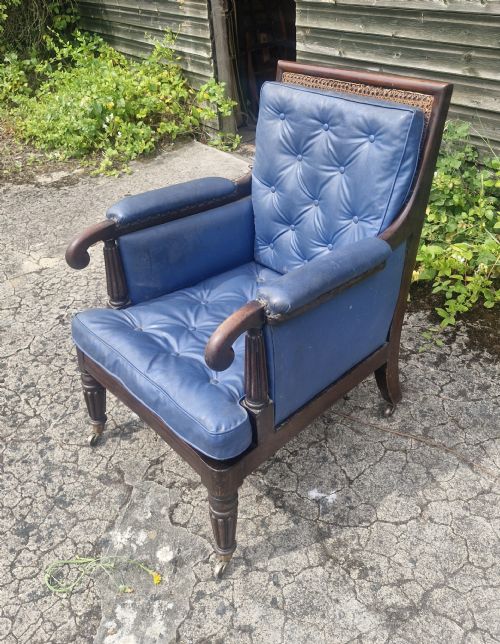


Cane Back Library Armchair
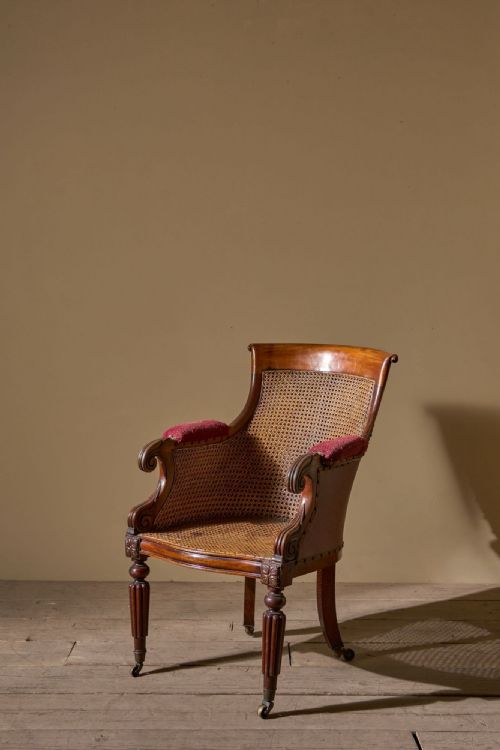
These cane back library armchairs offer deep seating and sturdy timber frames built for long hours among the bookshelves.
Cane Back Library Armchair
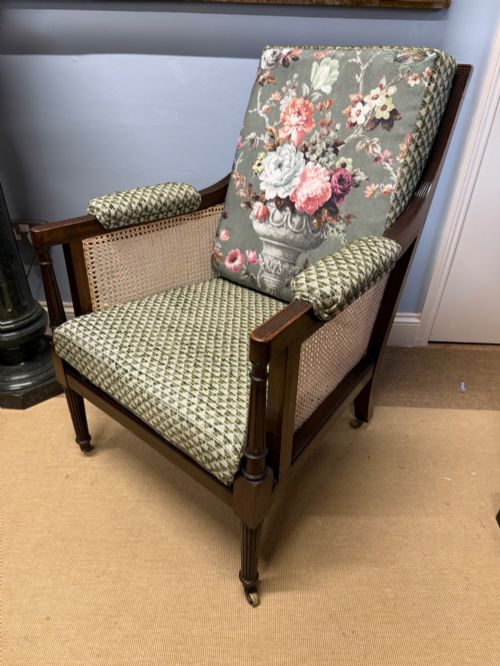
A cane back library armchair combines a supportive timber frame with woven panels and upholstered seats designed for reading rooms.
The versions met most often on this page date from the nineteenth century, including Regency, William IV, and Victorian periods.
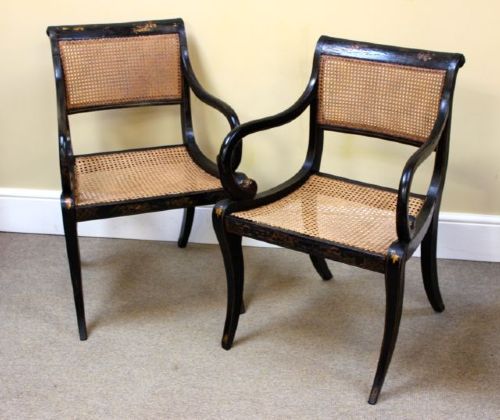
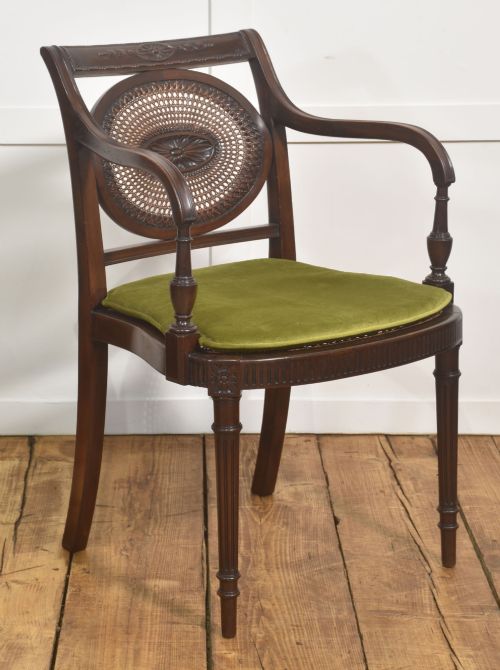
Makers shaped these seating forms from mahogany, walnut, and ebonised wood, often incorporating leather or fabric squab cushions for comfort.
How they were made
Craftsmen shaped solid timbers such as mahogany and walnut into curved frames, armrests, and supportive legs.
Workers wove cane and rattan tightly through frame channels to form resilient backrests and sometimes seats.
Upholsterers added drop-in cushions covered in leather, velvet, or fabric, sometimes securing them with brass detailing.
Some nineteenth-century readers needed a chair that doubled as a ladder.
What varies in quality
The tightness and regularity of the woven cane panels dictate much of the initial structural integrity.
Timber selection ranges from plain nineteenth-century mahogany to finely carved walnut or ebonised wood.
Frame joinery and the presence of clever mechanisms, such as metamorphic steps, separate standard seating from exceptional works.
Gillows
The Cane Back Library Armchair Glossary
- Bergere
- A type of enclosed upholstered armchair with wooden framing and cane sides or back. These chairs date predominantly from the nineteenth century.
- Caning
- The practice of weaving rattan or cane into patterned panels for chair backs. This technique provides flexible yet robust support.
- Metamorphic
- A descriptive term for furniture that transforms into another object, such as a library armchair converting into library steps.
- Ebonised
- Timber treated to resemble ebony through staining or painting. This dark finish appears frequently on Regency pieces.
- Squab
- A loose, upholstered cushion placed on the seat of a chair. These cushions often feature leather or velvet coverings.
Cane Back Library Armchair: Frequently Asked Questions
What is a bergere armchair?
A bergere is a closed-arm French-style chair with wooden frames and woven cane panels. They were adapted in Britain during the Regency and Victorian periods for domestic libraries.
These chairs prioritised comfort and often included loose leather or fabric cushions for extended reading sessions.
How do I date a cane back library chair?
Dating relies on timber choices, leg profiles, and structural joinery observed across pieces. Regency and William IV examples show distinct classical carving and proportions.
Victorian and later revival pieces often incorporate heavier frames or different secondary woods that point to nineteenth-century production methods.
Are cane seats durable for daily use?
Original cane is surprisingly resilient when treated with care and kept away from excessive dryness. Most library chairs add a removable squab cushion to protect the woven surface.
Regular cleaning and proper humidity levels help preserve the tension and flexibility of the rattan weave over time.
What woods were used for these armchairs?
Makers primarily utilised mahogany, walnut, and ebonised wood for the structural frames. Some examples feature faux rosewood finishes to mimic exotic imported timbers.
These dense hardwoods provided the structural strength required to support curved armrests and woven cane backs.