


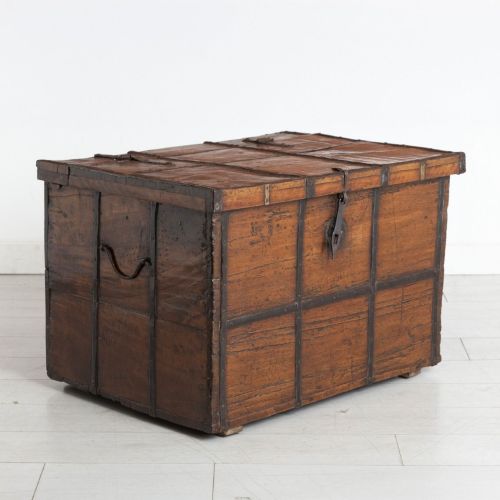
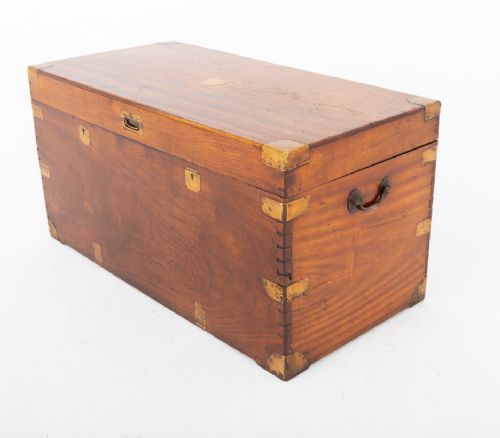
Campaign Storage Box
A campaign storage box offers sturdy portability built for travel, spanning periods from the eighteenth century through the Victorian era in resilient woods and metal mounts.
Campaign Storage Box
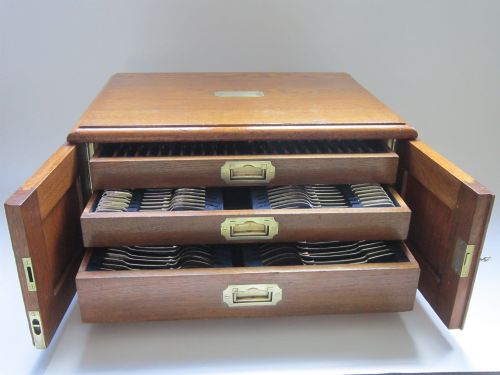
The pieces date predominantly from the nineteenth century, including Victorian and Regency periods, alongside earlier Georgian iterations. Common variations range from large blanket boxes and steamer trunks to smaller apothecary boxes and cutlery canteens.
How they were made
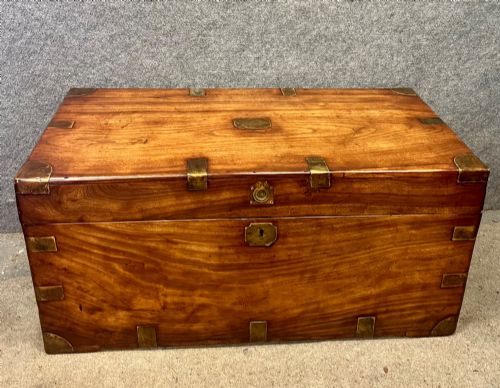
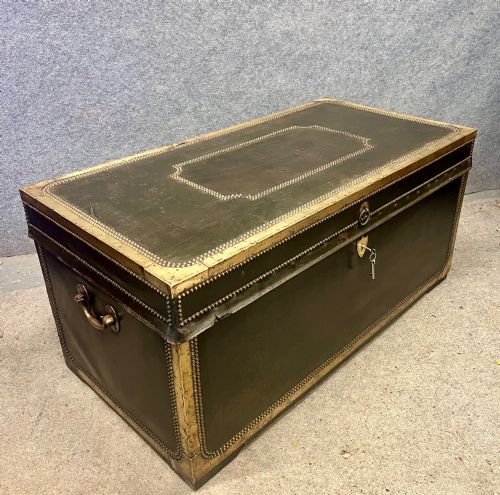
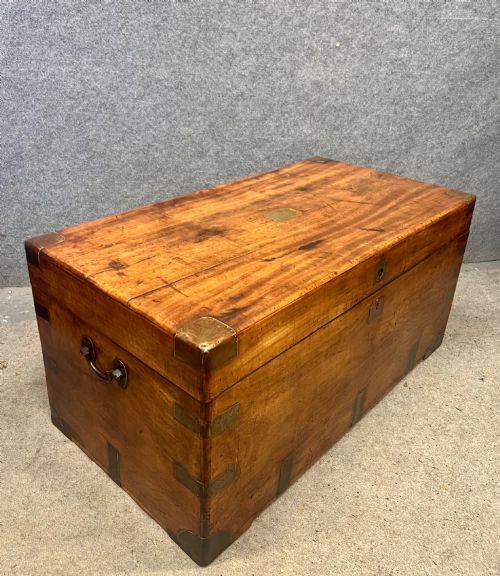
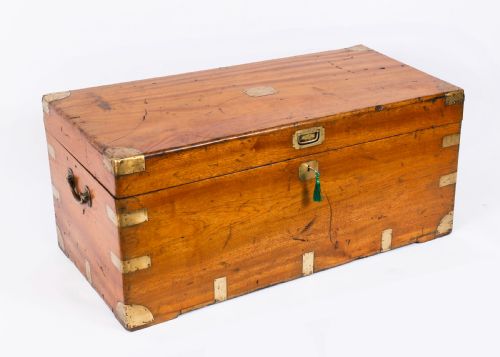
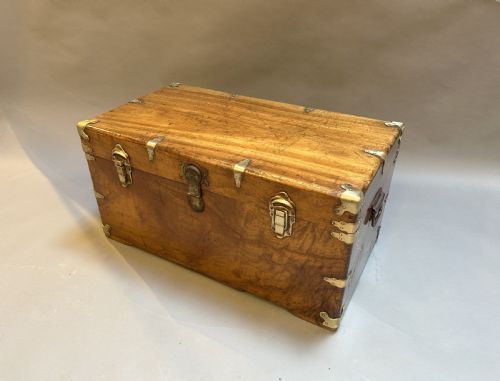
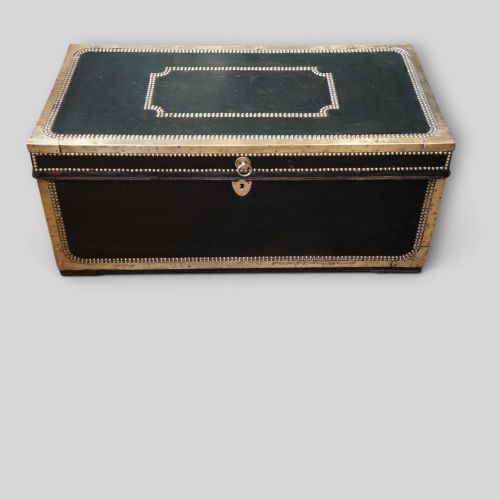
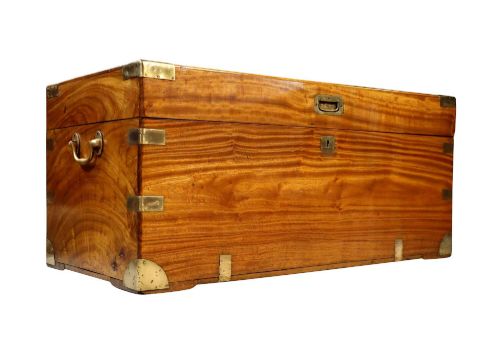
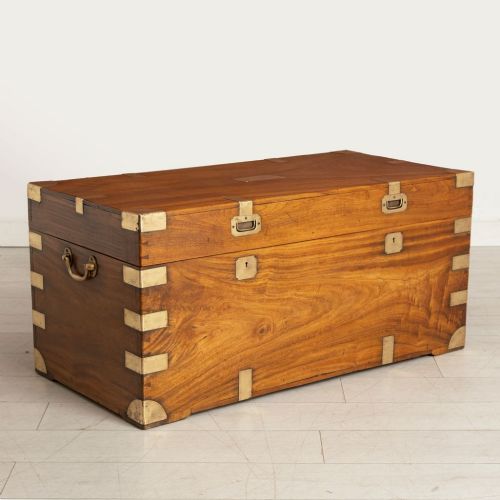
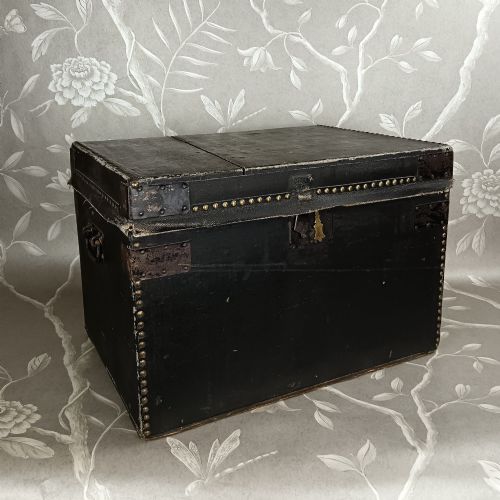
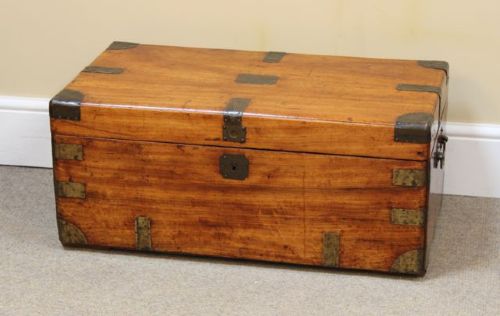
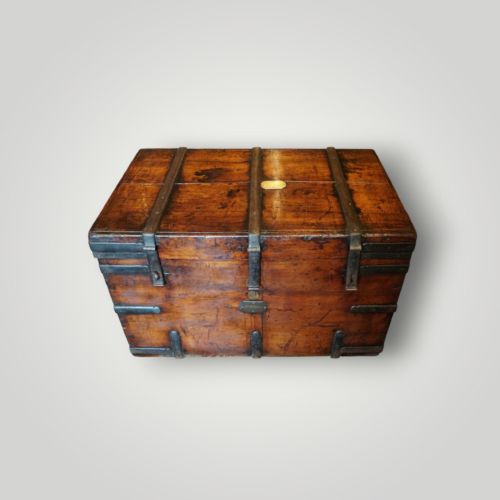
Construction relies heavily on durable timbers like camphor wood, teak, mahogany, and pine, chosen for their resilience against travel wear and climatic changes. Makers integrated structural metalwork, securing corners, edges, and lids with brass or iron bindings and studs.
Surface treatments frequently involve leather covering or polished wood finishes, complemented by inset brass carrying handles designed to lie flush during transport.
Camphor wood chests retain their distinct herbal scent after more than a century, continuing to repel moths much as they did for colonial officers.
What varies in quality
Quality differences emerge in the selection and stability of timber, where dense woods like camphor and teak maintain better structural integrity than softer pines. The execution of metalwork also distinguishes pieces, with cleanly fitted brass bindings and flush recessed handles representing higher manufacturing standards.
Provenance and original maker details elevate certain examples, particularly those retaining documented military or colonial history through inscriptions or identified makers.
Samuel Pratt·Wm. Insall of Bristol
The Campaign Storage Box Glossary
- Camphor wood
- A fragrant timber frequently utilised for campaign furniture due to its natural insect-repellent properties. It safeguards textiles and paper contents during long maritime journeys.
- Brass bound
- A method of reinforcing chest edges and corners with brass strips and corner pieces. This protects the wood from heavy impact during military transport.
- Canteen
- A fitted box or case designed to securely transport cutlery or glassware. These interiors often feature partitioned compartments lined for protection.
- Cellarette
- A lockable container used for holding bottles of wine or spirits during travel. Examples from the nineteenth century are typically lined or partitioned to prevent breakage.
Campaign Storage Box: Frequently Asked Questions
What is a campaign storage box?
A campaign storage box is a portable container built for military officers or travellers on the move. These pieces include trunks, chests, and canteens designed to withstand frequent transport.
Built during the eighteenth and nineteenth centuries, they utilise robust timbers and protective metal mounts. Their primary function was keeping personal belongings secure and orderly during long journeys.
How were campaign boxes used?
Owners used these boxes to pack uniforms, documents, tableware, and personal valuables while on active service or colonial posting. Recessed handles and reinforced corners allowed them to be loaded easily onto ships and wagons.
Many designs doubled as functional furniture or desks while in camp. Their sturdy construction ensured contents remained protected from damp climates and rough handling.
How do I live with a campaign box?
A campaign box works well as a coffee table, blanket chest, or bedroom storage piece. Their rich wood tones and brass hardware suit both traditional and contemporary interiors.
Placing them away from direct heat sources helps preserve the natural timber and prevent shrinkage. Routine dusting and occasional conditioning keep the wood and brass finishes in good condition.
How do I date a campaign box?
Dating relies on examining the timber species, construction methods, and metal hardware styles. Georgian and Regency pieces often feature simpler iron or brass mounts on mahogany or teak, whereas Victorian examples frequently showcase extensive brass binding and camphor wood.
Maker signatures, stamps, or written provenance under the lid or inside compartments offer direct confirmation of origin and period. Stylistic shifts in handles and locks also provide clear chronological markers.