
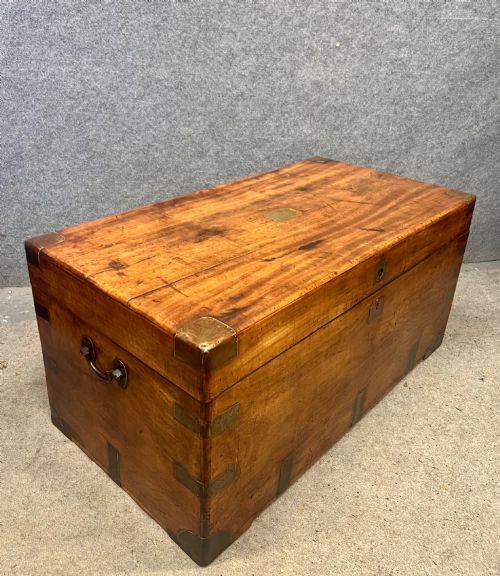

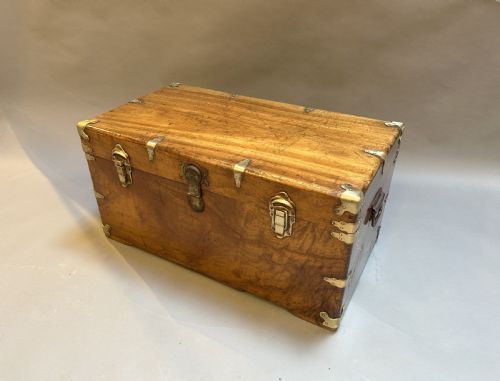
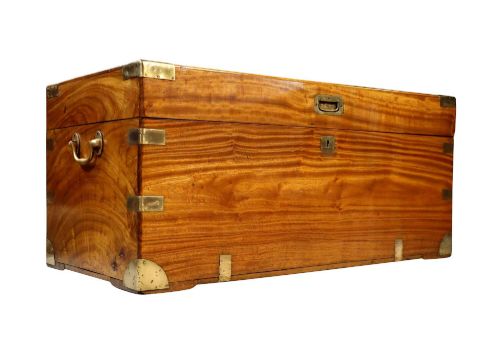
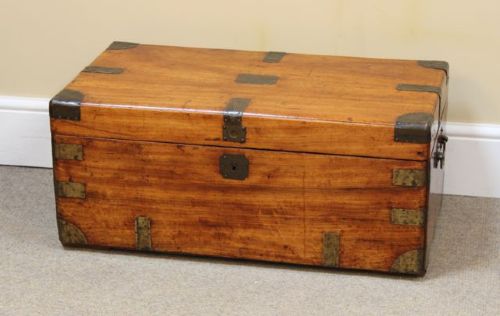


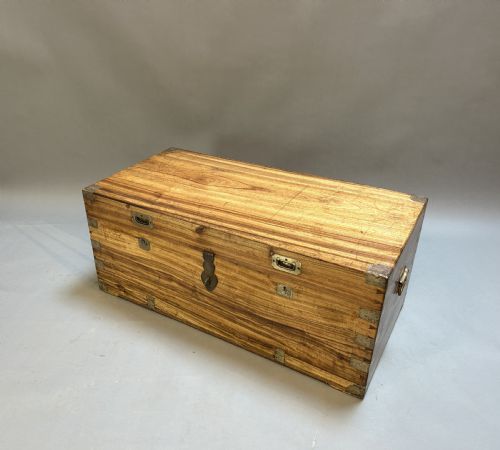
Campaign Sea Chest
A campaign sea chest is built to travel the world, offering sturdy timber and brass reinforcement designed for life at sea.
Campaign Sea Chest
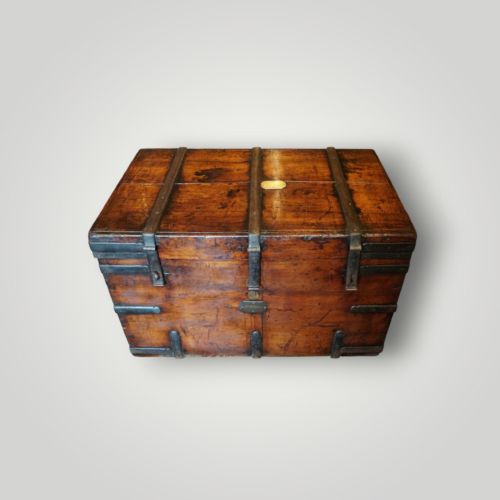
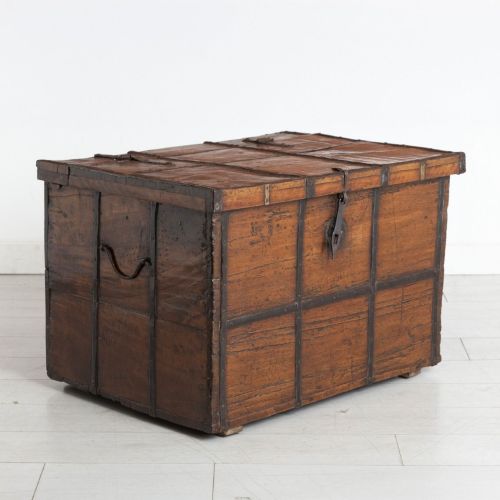
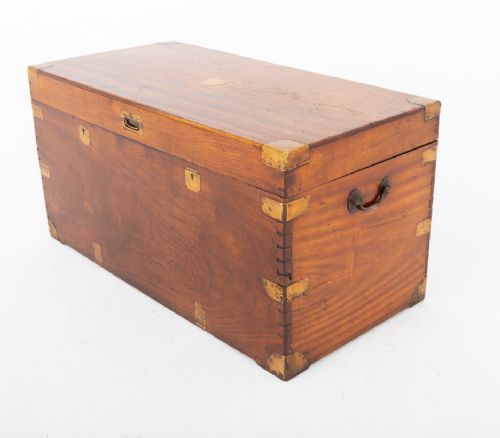
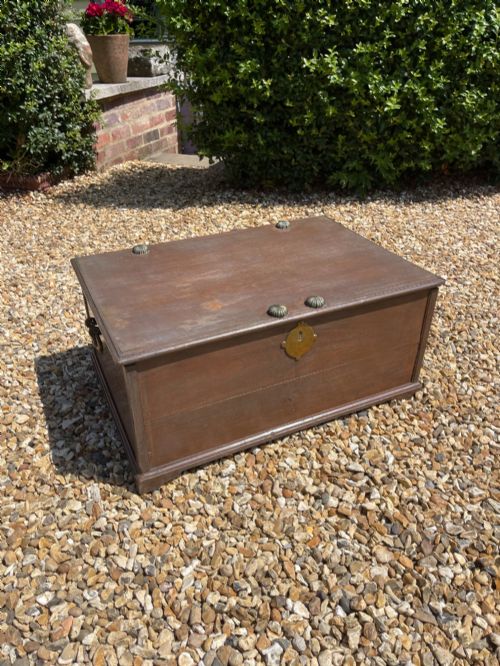
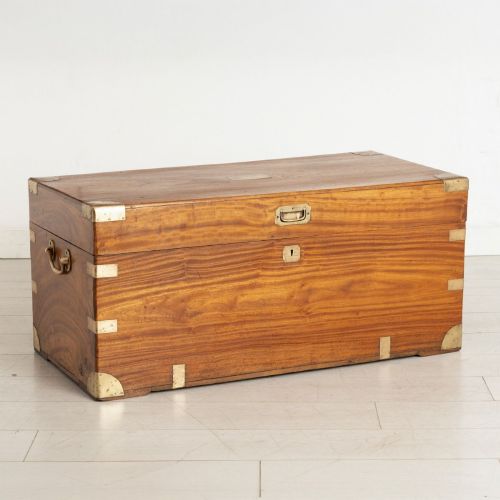
A campaign sea chest represents rugged utility combined with travel readiness, built for officers and travellers during the eighteenth, nineteenth and early twentieth centuries. These pieces appear frequently in camphor wood, mahogany and teak, often reinforced with heavy brass corners and straps to withstand rough voyages.
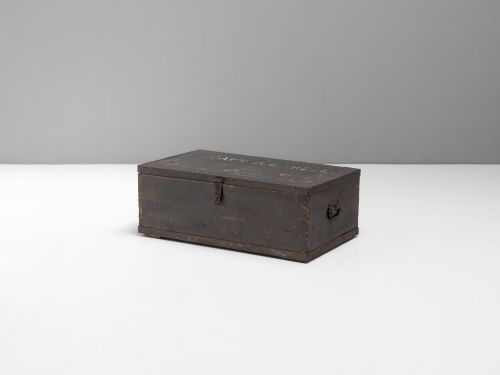
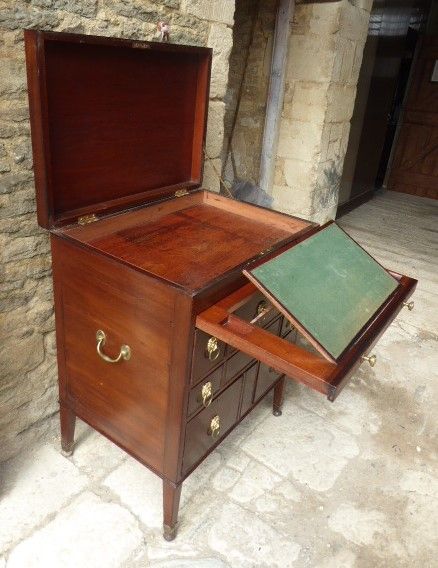
Most examples encountered on this page belong to the Victorian and Georgian eras, spanning styles from military campaign to colonial and Victorian campaign. Forms range from simple storage trunks and blanket boxes to fitted interior trunks and chests of drawers.
How they were made
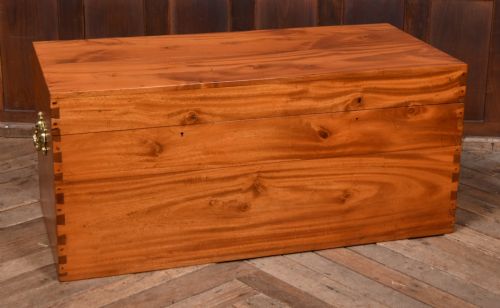
Makers utilised dense timbers such as camphor wood, teak and mahogany because these woods resisted humidity and insects during long journeys across the ocean. Camphor wood added a distinct aroma alongside its durability.
Metal hardware, predominantly brass and iron, was secured with robust fixings to protect corners and edges from heavy impacts. Flush-fitting brass handles and reinforcement bands allowed trunks to stack tightly inside ship cabins and wagons.
Some trunks retain the faint, lingering scent of camphor after more than a century at sea.
What varies in quality
Quality rests in the selection of timber and the precision of the metalwork, distinguishing utilitarian supply chests from officers' private commissions. Heavy brass bindings, original recessed hardware and dovetail joinery elevate an example above standard utility boxes.
The presence of fitted interior compartments, original keys and documented historical associations signal superior craftsmanship and careful preservation. Plain pine or iron-bound travelling trunks represent the simpler end of the range.
The Campaign Sea Chest Glossary
- Campaign chest
- A portable storage unit built in sections or fitted with carrying handles for military officers on the move. These chests disassemble or travel easily.
- Camphor wood
- An aromatic timber native to Asia, prized for its insect-repelling qualities and stability in tropical climates. It forms the primary material for many export chests.
- Brass bound
- Furniture strengthened along edges and corners with brass strips and corner pieces. This technique protected the wood during rough transit.
- Dovetail joinery
- An interlocking woodworking joint formed by interlocking wedge-shaped fingers. It provides exceptional strength at the corners of a trunk.
- Chinese Export Trade
- Goods manufactured in China specifically for Western markets during the eighteenth and nineteenth centuries. These items often combined local materials with European forms.
Campaign Sea Chest: Frequently Asked Questions
What is a campaign sea chest?
A campaign sea chest is a portable trunk designed for military officers, sailors and travellers on long journeys. They were constructed to endure rough handling aboard ships and during land expeditions.
These chests typically feature robust timber construction reinforced with brass or iron corners and recessed carrying handles for efficient packing.
Why use camphor wood for chests?
Camphor wood naturally repels insects and resists moisture, making it ideal for maritime travel and tropical climates. Its distinct fragrance helped keep stored garments fresh.
Carpenters favoured the timber for its stability and handsome grain pattern when left polished or oiled.
How were these chests used?
Officers and travellers packed uniforms, documents and personal belongings inside them for transit across oceans and land campaigns. The sturdy exterior protected contents from seawater and rough handling.
In camp or quarters, the chests often doubled as tables or seating while keeping supplies organised and secure.
How do I date a campaign trunk?
Dating relies on examining the timber, the style of the brass hardware and the construction methods used in the joinery. Georgian and early nineteenth-century examples often feature hand-cut dovetails and specific brass corner plate designs.
Later Victorian and Edwardian pieces show machine-sawn elements and different lock mechanisms while maintaining the traditional portable format.