
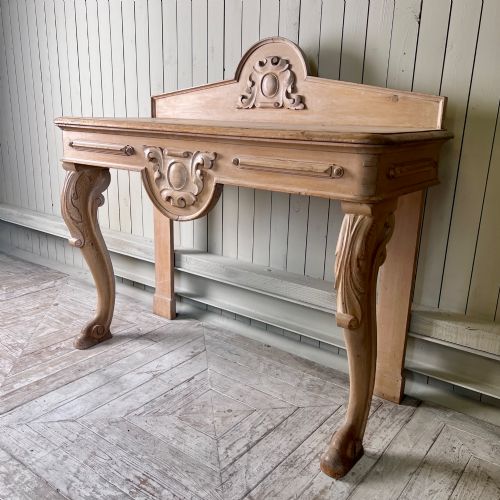
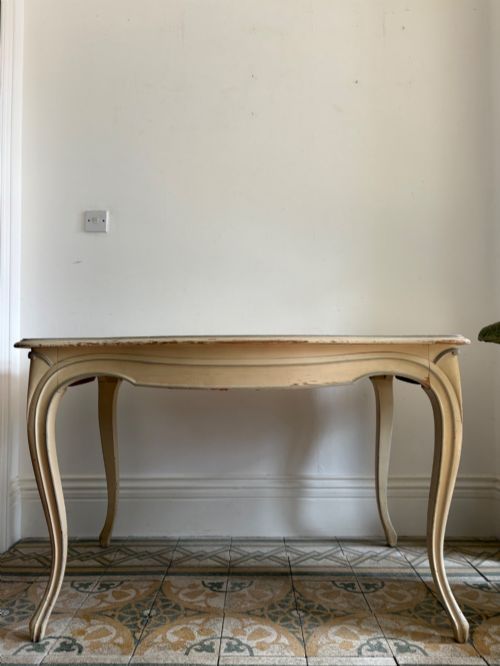
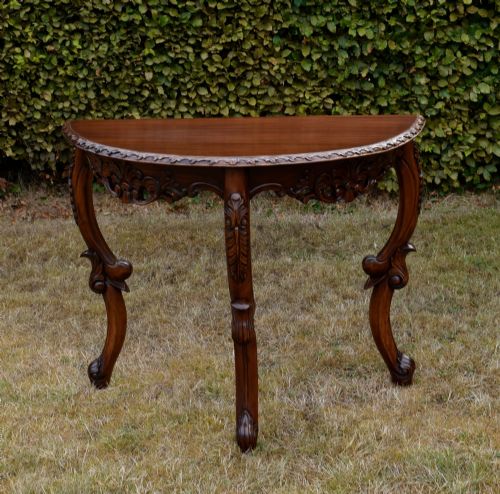
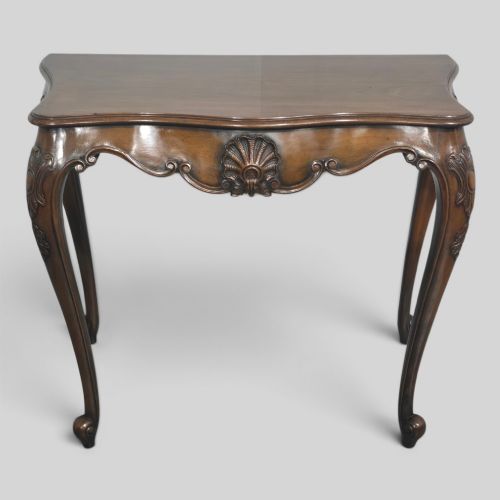



Cabriole Leg Wall Table
A cabriole leg wall table brings sculptural curves and compact utility to a hallway, with walnut and mahogany forms most commonly met here.
Cabriole Leg Wall Table
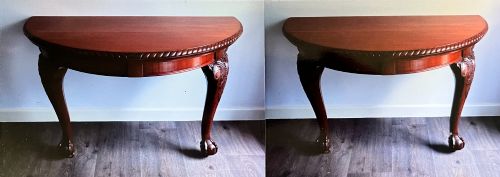
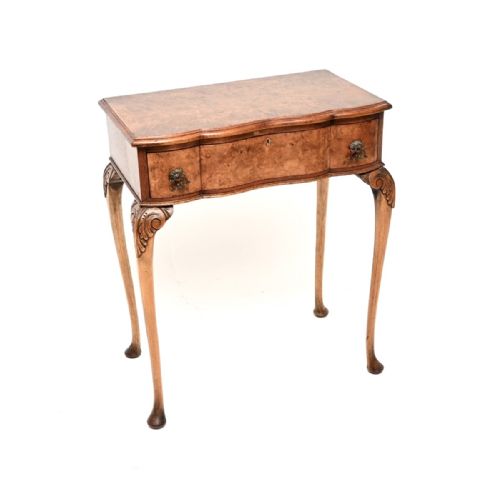
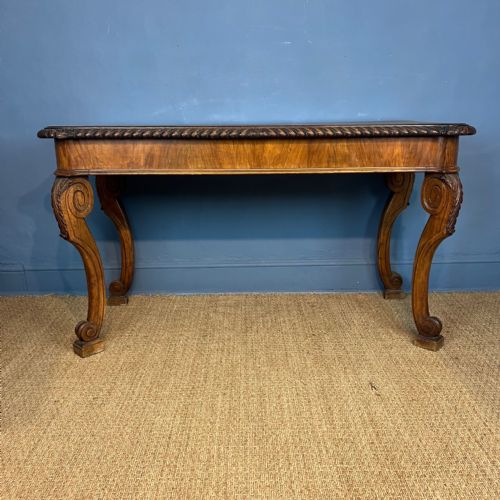
A cabriole leg wall table is primarily represented here by console tables and tea tables designed to stand flat against a room boundary. These pieces emerge across periods spanning the eighteenth century through to the 1930s revival eras, reflecting continental and British cabinetmaking traditions.
The materials recorded in the listings heavily favour walnut, mahogany, and oak, frequently paired with marble tops or painted finishes. Forms range from demi-lune shapes to serpentine fronts and straight console designs suited for narrow spaces.
Makers and origins stretch from French provincial workshops to Italian centres and British country houses. Pieces appear in distinct revivals including Queen Anne and Rococo styles alongside genuine eighteenth-century examples.
Materials and construction
Cabinetmakers utilised hardwoods such as mahogany, oak, and walnut, often selecting burr walnut veneers for figured surfaces. Timber construction is frequently augmented by heavy marble slabs set into the upper frames of console tables.
Surface treatments vary from traditional hand-applied polish to painted and gilded finishes, alongside inset suede panels. Joinery techniques support complex serpentine and demi-lune curves, particularly on Italian and French regional items.
One grand console table carries the Clifton family coat of arms for Lytham Hall.
Distinctions in quality
Quality rests upon the crispness of the carved cabriole leg and the harmonious proportion of the frame against the top. Finer examples display superior timber selection, such as richly figured burr walnut or substantial marble slabs fitted precisely to the frieze.
The depth of the carving and the integrity of the original finish distinguish ambitious country house or continental pieces from simpler commercial revival tables. Details like serpentine shaping and original coat of arms provenance elevate the status of a piece within its period.
Epstein and Co
The Cabriole Leg Wall Table Glossary
- Cabriole leg
- A furniture leg that curves out and then in, mimicking an animal's hind leg. This form is characteristic of eighteenth-century design and subsequent revival styles.
- Console table
- A table designed to be fixed against a wall, often supported by front legs only with brackets securing the rear. These pieces serve decorative and utilitarian roles in halls and living rooms.
- Demi-lune
- A half-moon shape used for table tops and frames. This geometry allows the furniture to sit flush against a wall while projecting minimally into a room.
- Serpentine
- A curved line that is convex in the middle and concave at the ends. This contour adds visual movement to the front edge of a table top or frieze.
- Frieze
- The horizontal band sitting directly beneath the table top. It often receives decorative carving, veneer work, or drawer integration.
Cabriole Leg Wall Table: Frequently Asked Questions
What is a cabriole leg wall table used for?
These tables are positioned against hallways or living room walls to hold decorative objects, lamps, or correspondence without blocking walking space.
Fold-over tea table variants also provide surface area that expands when needed for entertaining.
How do I identify a revival piece?
Revival items from the 1900s to 1930s often combine earlier stylistic motifs, such as Queen Anne cabriole legs, with twentieth-century timber preparation and secondary woods.
Examining the construction methods and interior drawer linings helps separate these later interpretations from eighteenth-century originals.
Are marble tops original to these tables?
Many continental and French console tables incorporate heavy marble slabs as an integral part of their design, offering a durable surface.
Matching the weight and edge profile of the marble to the wooden base helps confirm period integrity.
Where were these tables made?
The listings include examples originating from British, French, and Italian workshops, reflecting distinct regional tastes in carving and finishing.
French and Italian pieces frequently feature painted surfaces, giltwood, or serpentine walnut frames.