





Cabriole Leg Sewing Table
A cabriole leg sewing table combines refined curvilinear support with specialised compartmented storage for needlework and small treasures.
Cabriole Leg Sewing Table
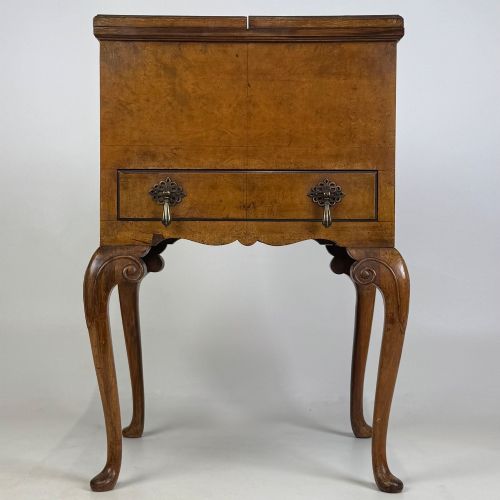
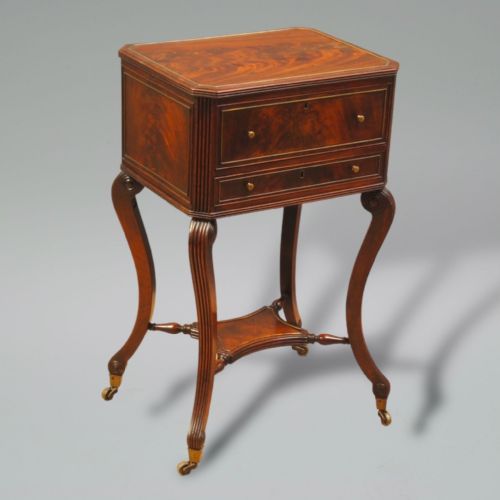
When searching for a cabriole leg sewing table, you encounter versatile multi-purpose furnishings designed primarily during the Victorian and Edwardian periods, alongside earlier Regency examples. These pieces typically function as work tables, side tables, or occasional tables, often incorporating fitted interiors for textiles and accessories.
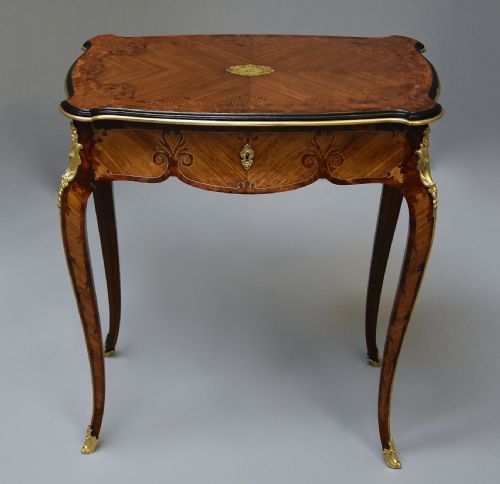
The prevailing aesthetic draws heavily from French Rococo Revival and Louis XV styles, where slender, curving supports define the silhouette. Walnut, burr walnut, rosewood and kingwood dominate the construction, frequently accented with marquetry inlay, ormolu mounts, or porcelain plaques.
Most items you meet on this page span the mid-19th century to the early 20th century, reflecting domestic pursuits of the era. Their dual role as decorative accents and practical receptacles ensures they integrate readily into contemporary reception rooms.
Materials and construction methods
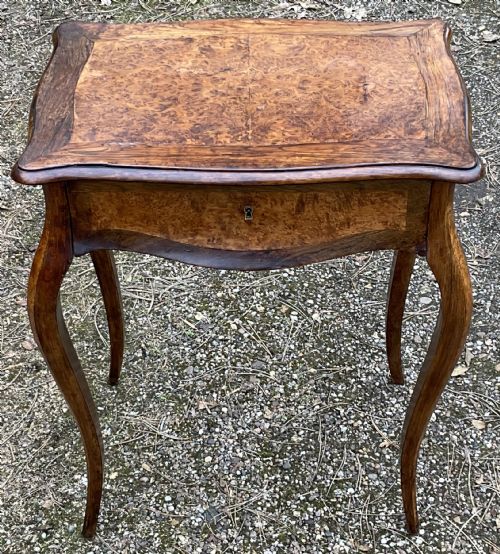
Cabinet makers utilised dense hardwoods such as walnut, rosewood and mahogany as the foundational structure, often applying figured veneers and intricate wood inlay or marquetry across the exterior surfaces. These decorative veneers display rich grain patterns, particularly on burr walnut and flame mahogany variants.
Structural embellishments relied on cast brass and ormolu mounts, which frame panels or articulate the knee and foot of each sweeping leg. Specialised interior mechanisms, from lifting lids to sliding work bags, required precise carpentry to operate smoothly within compact proportions.
Some tables conceal sophisticated mechanisms beneath their polished tops, turning simple sewing boxes into ingenious miniature desks.
Distinguishing quality across examples
The standard of execution rests on the crispness of the wood carving, the depth of the veneer figuring, and the precision of the marquetry patterns. Superior pieces demonstrate seamless integration of the structural frame with delicate internal compartments for sewing equipment or documents.
Hardware and metalwork also indicate grade, with chased ormolu mounts and finely fitted brass locks elevating an object above standard production. The fluidity of the leg curvature and the stability of the joints under everyday use further separate accomplished cabinet work from simpler domestic items.
The Cabriole Leg Sewing Table Glossary
- Cabriole leg
- A furniture support that curves outward at the knee and tapers inward to an ankle, mimicking an animal's leg. This form derives from classical antiquity and became a defining feature of 18th-century and revival furniture.
- Marquetry
- The art of applying decorative pieces of veneer to a structure to form intricate pictorial or geometric designs. Craftsmen utilised various coloured woods to achieve tonal contrast without paint.
- Ormolu
- Gilded bronze ornamentation applied to furniture mounts, drawer pulls, and feet. The technique involves coating bronze with a mercury-gold amalgam and firing it to produce a rich metallic lustre.
- Poudreuse
- A multi-functional vanity or dressing table equipped with a mirror and compartments for cosmetics. These pieces often double as small work tables in domestic interiors.
- Work table
- A specialised small table designed for needlework, sewing, and crafting, usually featuring a hinged lid, internal trays, or an attached fabric pouch.
Cabriole Leg Sewing Table: Frequently Asked Questions
What is a cabriole leg sewing table used for?
These pieces served historical households as dedicated furniture for needlework, embroidery, and small domestic tasks. The interior compartments kept threads, needles, and fabric organised close to hand.
Today, they function effectively as occasional or side tables in living spaces. Their hidden storage compartments make them practical for contemporary items like keys, stationery, or sewing supplies.
How do I date a sewing table?
Dating relies on examining the timber species, construction joints, secondary woods, and decorative style. Mid-19th-century examples often feature rosewood and elaborate marquetry, while Edwardian pieces frequently utilise burr walnut.
Stylistic revivals also offer clues, as Victorian makers reinterpreted Louis XV and Rococo aesthetics. Hardware types, such as brass locks and hinges, provide additional chronological markers.
Are these tables sturdy enough for daily use?
The structural integrity depends on the quality of the original joinery and subsequent maintenance. Solid hardwood frames with well-dovetailed joints handle normal placement of decorative objects or use as a side surface.
Care should be taken with folding leaves or intricate internal mechanisms to avoid straining antique hinges. Placing the table away from direct heat sources preserves the veneers and prevents timber movement.
What is the difference between a work table and a side table?
A work table specifically incorporates internal storage compartments, sliding trays, or suspended fabric bags designed for sewing and crafting materials. A side table provides a simple flat surface without dedicated internal receptacles.
Many antique sewing tables double visually as side tables when closed, concealing their utilitarian purpose beneath polished veneered tops.