

Cabriole Leg Salon Armchairs
Cabriole leg salon armchairs bring sweeping continental grace and upholstered comfort to a formal room.
Cabriole Leg Salon Armchairs
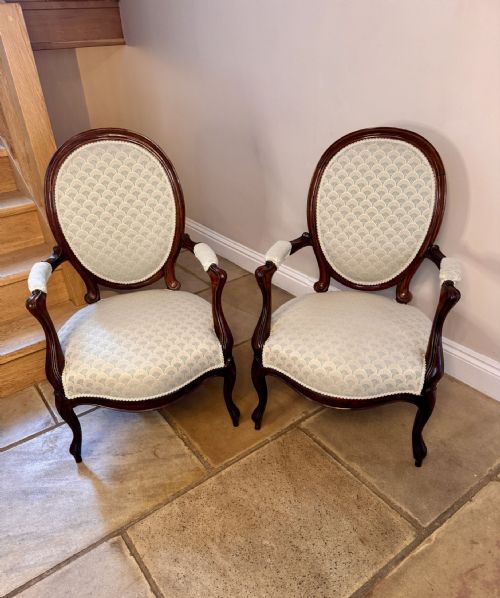
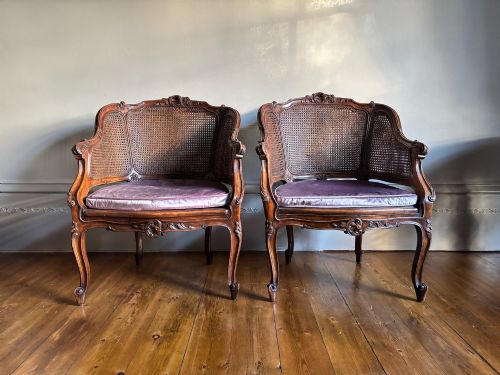
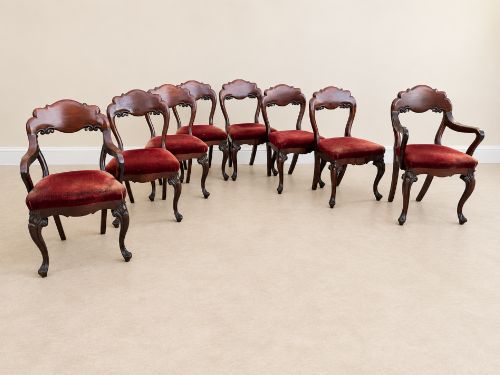
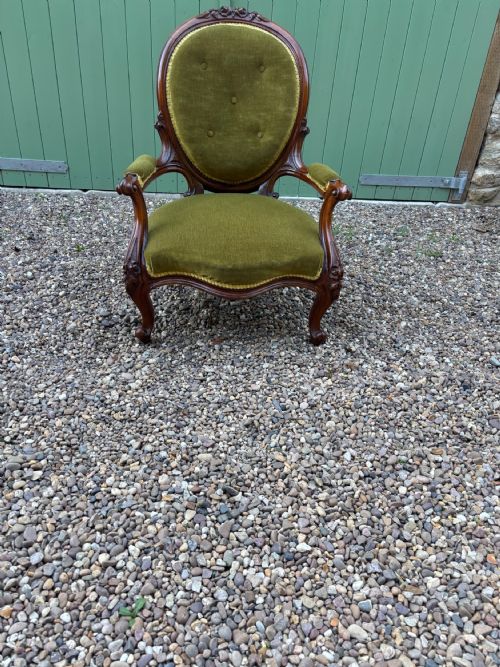
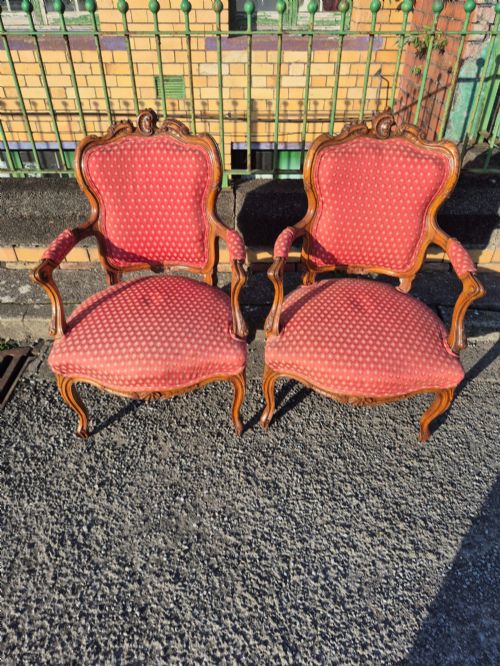
When you search for cabriole leg salon armchairs, you are looking at formal seating designed for entertaining in nineteenth century and eighteenth century drawing rooms. These pieces combine curved wooden frames with upholstered seats and backs, appearing as single armchairs, matched pairs or elements of larger salon suites. The nineteenth century examples frequently draw on earlier French aesthetics, adopting the fluid contours that defined the Louis XV style and Rococo revival movements.
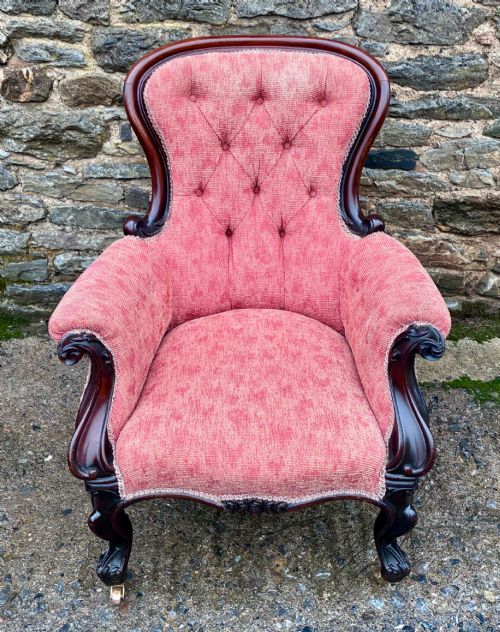
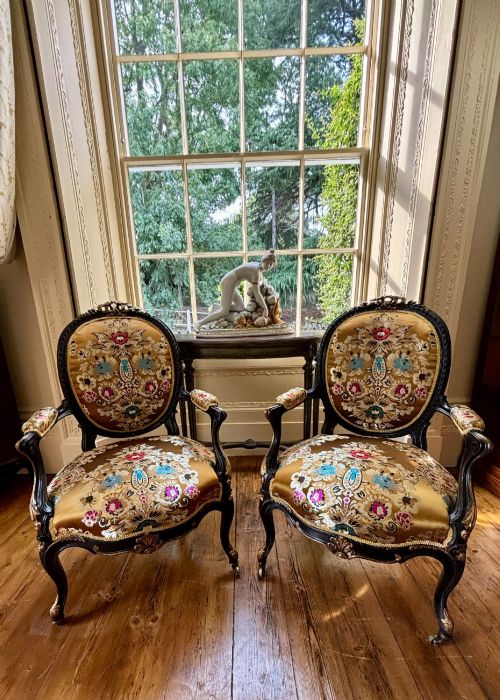
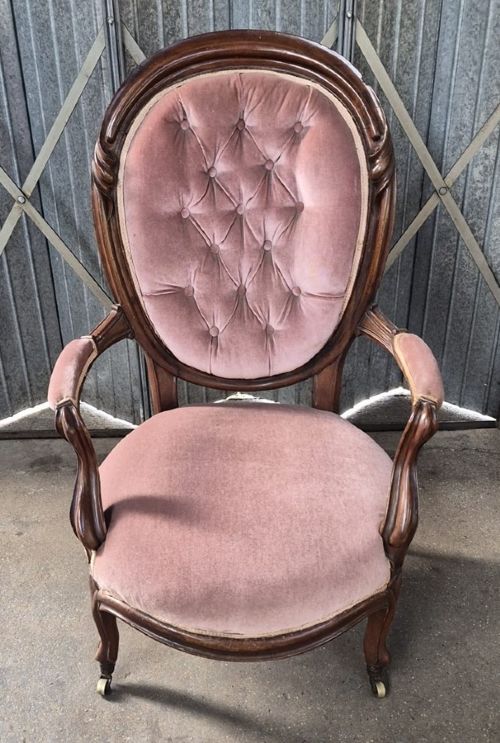
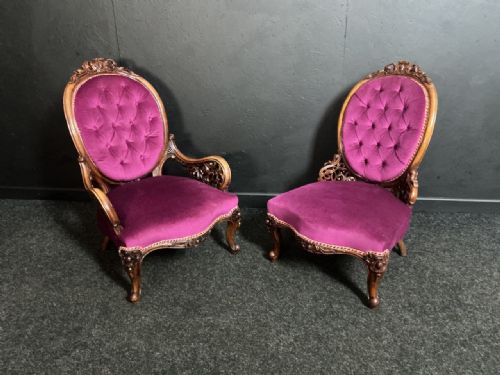
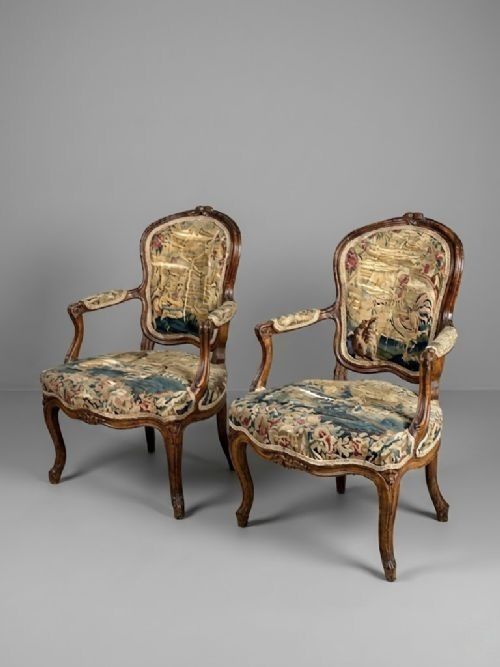
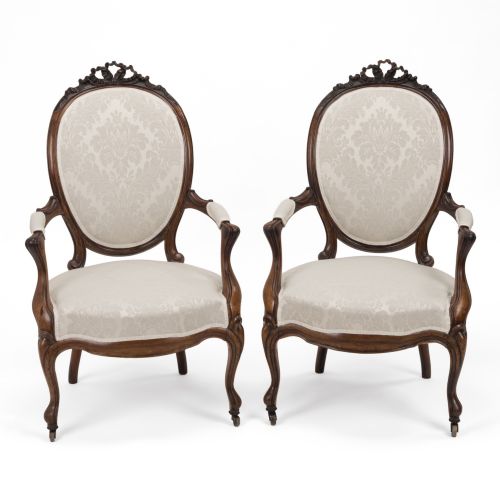
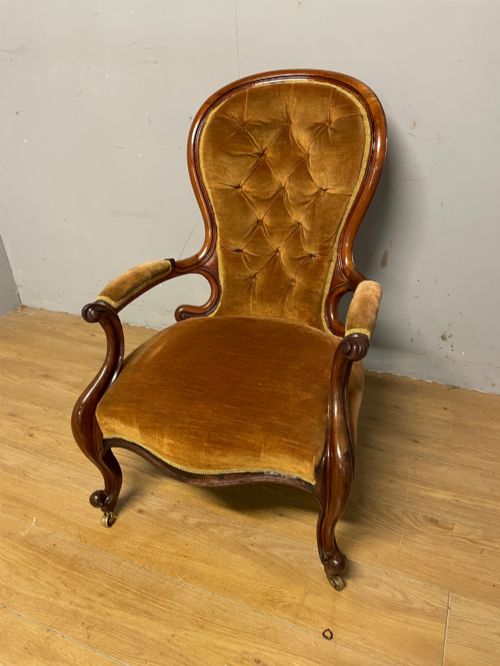
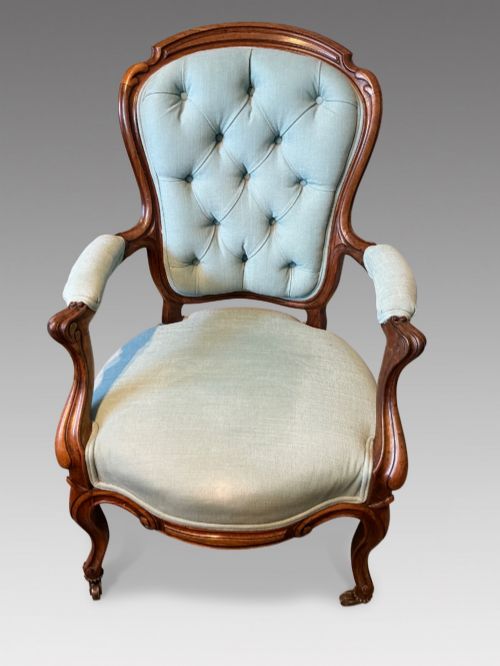
The version you are most likely to meet on this page is the Victorian walnut or mahogany armchair, often carved with organic motifs and supported on sinuous corner supports. French models from the eighteenth century or later periods also surface, frequently retaining period textile coverings such as Aubusson tapestries or later velvet and fabric upholstery. English makers contributed substantial mahogany and rosewood interpretations alongside lighter bedroom and occasional chairs.
How cabriole leg salon armchairs were made
Makers shaped the distinctive curved supports from dense hardwoods including walnut, mahogany, rosewood and goncalo alves, sometimes applying giltwood finishes or paint to the timber frame. Artisans carved foliate details and scrollwork directly into the structural wood of the arms, crest rails and knees before assembling the joints.
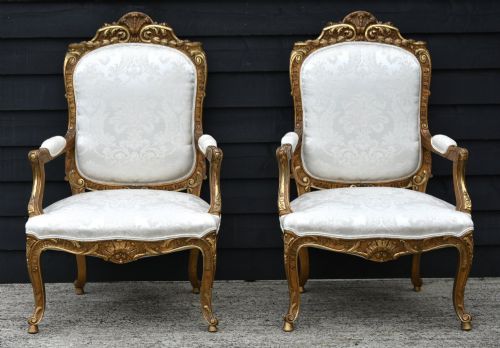
Upholstery was built up using traditional stuffing techniques over webbing or springs, secured with brass tacks and finished in velvet, patterned fabric or historical tapestries. Frames occasionally utilised secondary timbers beneath the show wood, while gilding was applied over a prepared gesso base on decorative French style seating.
Cabriole Leg Salon Armchairs Retail Price Guide 2026
Typical asking prices for cabriole leg salon armchairs among the pieces listed under this phrase on Sellingantiques today, from the lower quarter to the upper quarter. They describe what is for sale here now, not the wider market.
What varies in quality
The distinction between ordinary and exceptional seating rests on the depth and crispness of the hand carving on the wooden frame. Superior examples display fluent, deeply undercut foliage and organic scrolls that integrate seamlessly into the structural lines of the arms and knees, whereas lesser pieces show shallow or mechanically stamped decoration.
Timber selection and frame integrity dictate the overall standard of construction. Dense, highly figured walnut or rosewood with tight joinery represents the upper tier of production, ensuring the curved supports bear weight without flexing.
The Cabriole Leg Salon Armchairs Glossary
- Cabriole leg
- A furniture support that curves out from the frame and then bends inward toward the foot, mimicking animal limbs. This form became a defining feature of eighteenth century and revival seating.
- Fauteuil
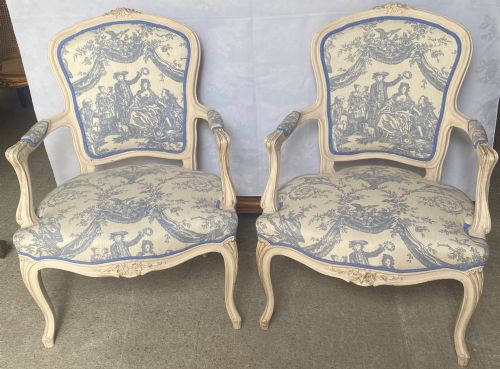
- An open-armed French armchair with upholstered back and seat exposed over a wooden frame. These chairs typically date from revival periods or earlier French epochs.
- Spoon back
- An upholstered chair back hollowed into a concave oval contour resembling the bowl of a spoon. This profile appeared frequently on Victorian walnut salon chairs.
- Aubusson
- A hand-woven tapestry traditionally produced in France, often utilised for covering period armchair seats and backs. These textiles depict floral or pastoral scenes.
- Giltwood
- Timber coated with gold leaf or metallic powder applied over a prepared ground. It appears on decorative salon chairs designed in continental tastes.
Cabriole Leg Salon Armchairs: Frequently Asked Questions
What distinguishes a salon armchair?
Salon armchairs were built for formal entertaining rather than heavy daily lounging, featuring lighter proportions and decorative exposed wood frames. They were intended to furnish drawing rooms and parlours where guests gathered.
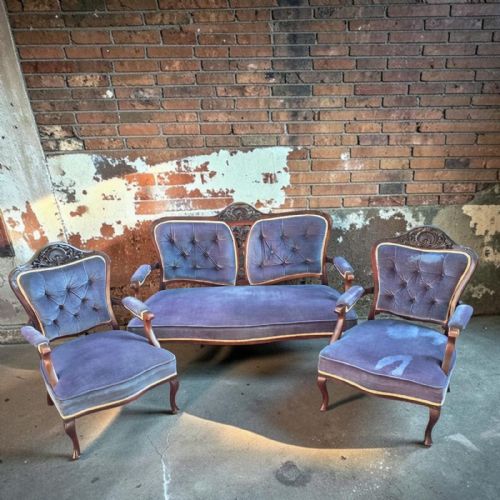
These chairs often match settee designs or form part of larger seating suites, combining aesthetic elegance with comfortable upholstered support.
How do I identify French revival styles?
French revival pieces incorporate the flowing asymmetric lines, cabriole supports and organic motifs associated with eighteenth century court furniture. Makers during the nineteenth century reinterpreted these designs using native or imported timbers.
Look for scrollwork on the crest rail, moulded arm terminals and painted or gilt finishes that echo continental models from earlier eras.
Where should I place these chairs?
These armchairs suit drawing rooms, studies or bedrooms where their decorative frames and upholstered backs can be viewed from multiple angles. Pairs function effectively flanking a fireplace or positioned beneath a mirror.
Because of their lighter scale compared to heavy library seating, they fit easily into conversational groupings or empty corners needing a focal point.
How can I tell the period?
Dating relies on timber choices, carving styles and construction methods. Mid nineteenth century pieces often use rich rosewood or walnut with deep relief carving, while later Victorian examples introduce different upholstery treatments.
French style frames from the nineteenth century frequently employ walnut or beech, sometimes bearing stylistic markers of the Rococo revival.