


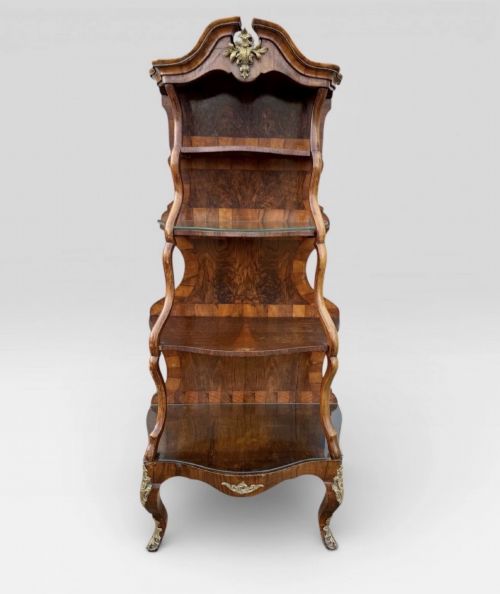
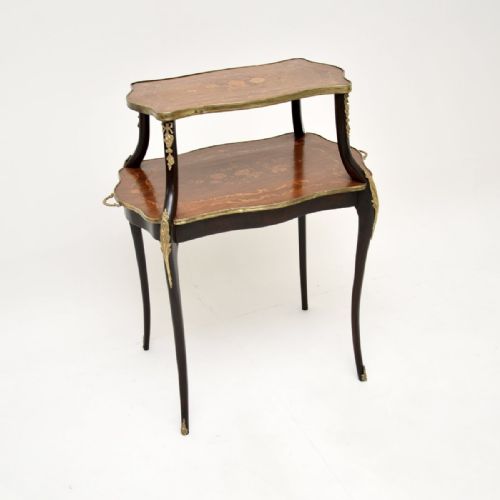
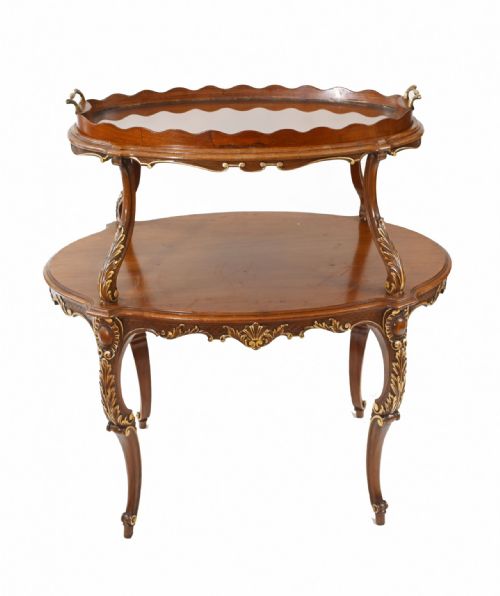


Cabriole Leg Etagere
A cabriole leg etagere brings tiered display space to a room through curved supports that echo French Rococo taste.
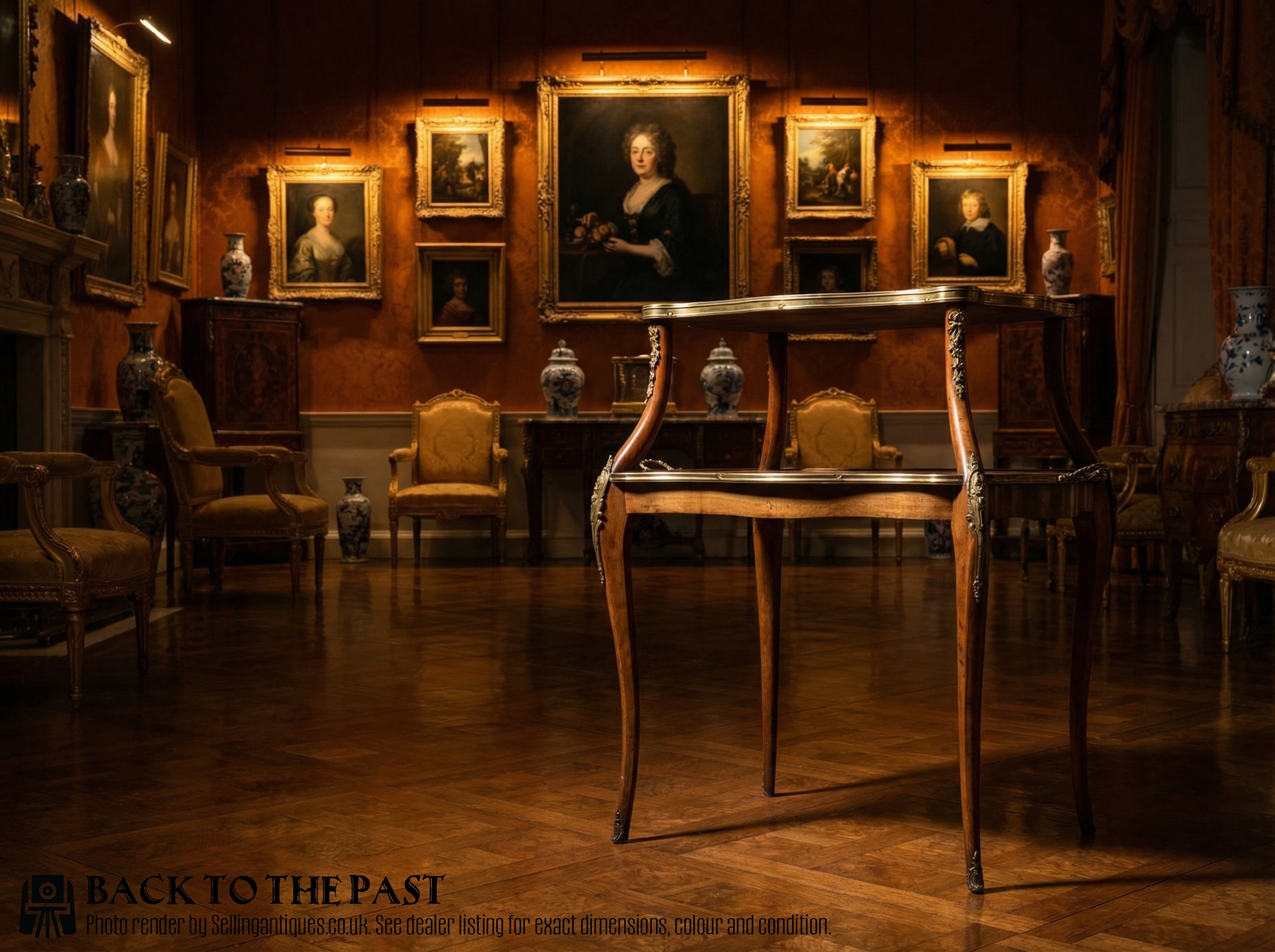
Cabriole Leg Etagere
A cabriole leg etagere serves as a tiered display or occasional table, offering multiple surfaces for objects while maintaining a slender footprint in a room. The search for a cabriole leg etagere most often leads to multi-tiered tables from the nineteenth century, finished in walnut or mahogany with distinct serpentine contours.
Makers designed these tiered pieces in varied styles such as Victorian, Napoleon III, and Louis XV Revival, adopting French Rococo characteristics. The selection encompasses two-tier tea tables, occasional display pieces, and occasional side tables that rest on signature curved legs.
How they were made
Craftsmen built these pieces using dense hardwoods like mahogany, walnut, and kingwood, frequently applying intricate marquetry inlay to the primary surfaces. Workshops integrated bronze ormolu mounts, gilt metal accents, and brass details to highlight the curved frameworks.
Structures often incorporate glass shelves or tiered platforms supported by shaped uprights, with hand-carved details defining the signature leg profiles across French and English examples.
Cabriole Leg Etagere Retail Price Guide 2026
Typical asking prices for cabriole leg etagere among the pieces listed under this phrase on Sellingantiques today, from the lower quarter to the upper quarter. They describe what is for sale here now, not the wider market.
Listings feature walnut, mahogany, and kingwood timbers alongside marquetry inlay and ormolu mounts.
What varies in quality
Differentiation lies in the crispness of the marquetry and the definition achieved in the carved wooden curves. Superior examples display refined proportions where the mounts integrate seamlessly with the timber.
The choice of fine timbers, such as figured walnut or rich mahogany, combined with detailed cast bronze ormolu, separates standard production from exceptional pieces.
W. Turner Lord & Co
The Cabriole Leg Etagere Glossary
- Cabriole leg
- A furniture leg that curves out and then in, resembling the leg of an animal, typical of eighteenth-century and revival furniture styles.
- Etagere
- A piece of furniture consisting of a set of open shelves for displaying small objects or ornaments.
- Marquetry inlay
- Decorative patterns formed by inserting small pieces of wood, veneer, or shell into a solid wood surface.
- Ormolu
- Gilded bronze used as an ornamental mount on furniture, popular in French decorative arts.
- Serpentine
- A furniture contour that curves outward in the centre and inward at the sides, creating a wave-like front.
Cabriole Leg Etagere: Frequently Asked Questions
What is a cabriole leg etagere used for?
These tiered pieces provide open surfaces for displaying decorative objects, serving tea, or holding books in a principal room. Their multi-level design maximises vertical display space without dominating the floor area.
Historically, they functioned as light occasional tables or display stands for prized ornaments. Today, they suit corners or empty wall spaces where height and layered surface area are desired.
How do I identify a Victorian etagere?
Victorian examples frequently utilise mahogany or walnut, often featuring rich marquetry inlay across the tiers and slender turned or carved uprights. The presence of brass or ormolu mounts points toward French revival influences popular during the period.
Examining the construction of the shelves and the joinery underneath helps confirm the nineteenth-century origin. Makers often incorporated serpentine edges and glazed display elements in these pieces.
Where should I place an etagere?
An etagere sits well against a panelled wall, beside a seating arrangement, or in a hallway as a focal point for small collections. Because the shelves are open, placing them away from heavy foot traffic protects delicate display items.
Ensure the piece has adequate light to highlight the wood grain and any marquetry inlay on the tiers. Avoid positioning them in direct sunlight to protect antique timber finishes.
Are these pieces French or English?
The evidence shows a strong French influence, with many pieces adopting Louis XV styles, Napoleon III aesthetics, and Rococo revival characteristics. British cabinetmakers also produced similar tiered furniture during the Victorian era, often adopting continental forms.
Distinguishing between them relies on specific timber choices, mounting techniques, and the character of the marquetry work. Both traditions valued serpentine profiles and decorative bronze ormolu.