



Cabochon Turquoise Necklace
A cabochon turquoise necklace brings together polished, unfaceted stones and precious metals across Victorian, Edwardian, and Arts and Crafts designs.
Cabochon Turquoise Necklace
The selections span Victorian, Edwardian, Art Nouveau, and Arts and Crafts styles, alongside Egyptian Revival and Mid-Century pieces. Most examples combine turquoise with silver or various carats of gold, forming distinctive pendants and matched sets.
Materials and construction methods
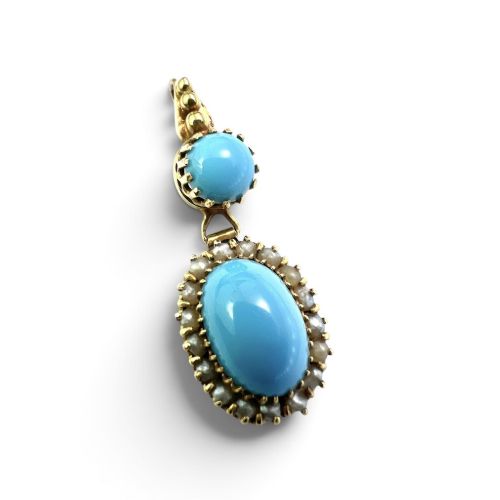
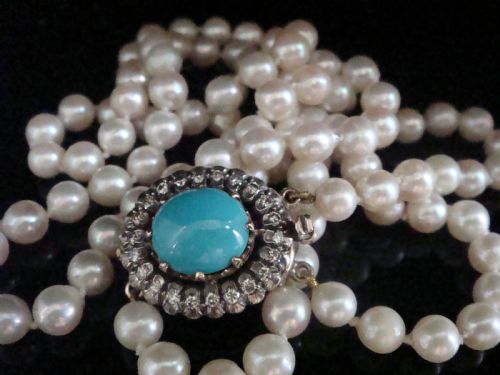
Goldsmiths and silversmiths shaped precious metals into filigree, bezels, and settings to secure the domed turquoise stones. Many items integrate pearls or diamonds alongside turquoise matrix within gold and silver frameworks.
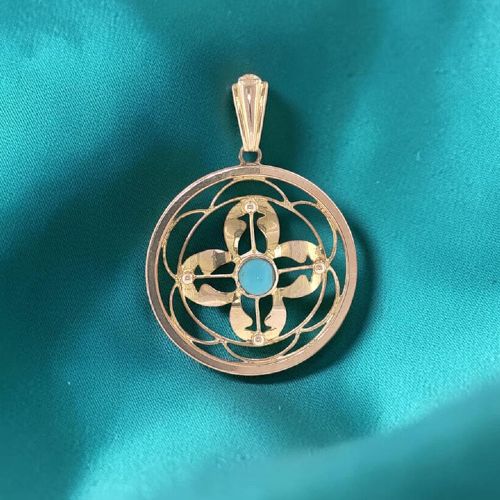
Makers utilised techniques ranging from delicate wirework in Arts and Crafts pieces to substantial casting in Victorian and Edwardian pendants. Chains, longuards with dog clips, and matching suites demonstrate varied metalwork methods from different eras.
The listings span the Victorian, Edwardian, Arts and Crafts, Art Nouveau, and Mid-Century periods, using both silver and gold.
Factors influencing quality
Quality rests in the harmony between the metalwork and the stone, whether clean turquoise or natural matrix. Finer examples show careful stone matching, secure bezel settings, and distinctive stylistic execution by named makers.
The integration of secondary gems like diamonds and pearls, alongside the complexity of silver filigree or gold construction, elevates the work. Period authenticity and the integrity of original clasps and chains further distinguish individual pieces.
The Gaskins·Dorrie Nossiter
The Cabochon Turquoise Necklace Glossary
- Cabochon
- A gemstone shaped and polished with a smooth, convex surface rather than faceted. This cut highlights the natural colour and matrix of turquoise.
- Filigree
- Fine, delicate wirework soldered into open patterns, frequently seen in silver mountings. This technique defines specific Art Nouveau and Edwardian designs.
- Parure
- A matched set of jewellery, such as a necklace, earrings, and ring designed to be worn together. Complete suites appear in nineteenth-century styles.
Cabochon Turquoise Necklace: Frequently Asked Questions
How do I date a turquoise necklace?
Dating relies on stylistic clues, metal types, and construction methods characteristic of periods like the Victorian era or the Arts and Crafts movement. Hallmark evidence and stone settings also help establish the decade of origin.
Later mid-century items and Edwardian longuards display different fastening techniques and design tropes that separate them from nineteenth-century work.
What is a longuard chain?
A longuard is an exceptionally long chain, often measuring fifty-six inches, designed to be doubled around the neck. They frequently incorporate dog clips for suspending pendants.
Edwardian examples in yellow gold demonstrate how these functional chains were worn as practical jewellery.
How do I care for turquoise jewellery?
Turquoise is a softer, porous stone that requires gentle cleaning with a soft cloth and protection from harsh chemicals, perfumes, and oils. Avoiding immersion in water preserves the integrity of both the stone and its setting.
Storing pieces separately prevents scratching from harder gems like diamonds when kept in a collection.
What is an Egyptian Revival pendant?
Egyptian Revival pieces draw design inspiration from ancient Egyptian motifs, colours, and iconography. These items gained popularity during archaeological discoveries in the nineteenth century.
They combine turquoise and diamonds within gold settings to evoke distinct pharaonic aesthetics.