


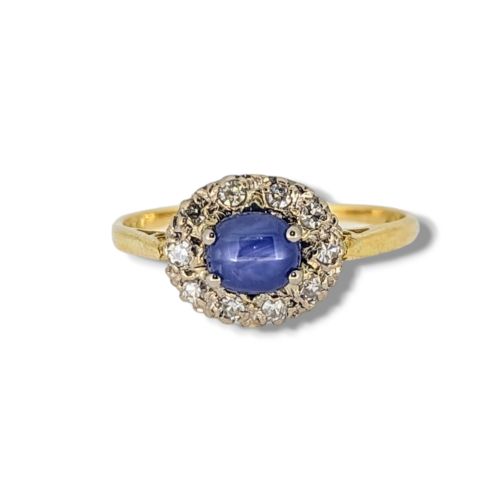


Cabochon Sapphire Halo Ring
A cabochon sapphire halo ring combines a polished, dome-cut sapphire with a sparkling frame of diamonds, offering an enduring statement of vintage elegance.
Cabochon Sapphire Halo Ring
A cabochon sapphire halo ring centres on an unfaceted, rounded sapphire stone surrounded by a geometric or circular border of diamonds. Buyers searching this phrase seek a distinct finger presence where the soft polish of the central gem contrasts sharply with the sharp brilliance of surrounding diamonds.
The versions most commonly met on this page span the Edwardian era through the 1920s, 1930s, and into the mid-century decades of the 1950s and 1960s. These dress rings take the form of structured cluster settings that highlight either standard or star sapphires of notable carat weight.
Origin and geological variety emerge clearly across the selections, featuring specific geographical origins like Ceylon alongside basaltic stones and natural unheated varieties. Formats range from traditional cluster configurations to defined Art Deco geometric mountings.
Materials and construction
The foundational metals utilised in these pieces include platinum, 9ct gold, 14ct white gold, 18ct white gold, and combinations such as platinum settings paired with 18ct yellow gold shanks. Platinum emerged as a preferred medium during the Edwardian and Art Deco periods for its strength in holding delicate diamond work securely.
Stones are set using techniques that frame the central cabochon sapphire closely with rose cut or brilliant cut diamonds. The smooth, rounded top of the cabochon cut requires careful bezel or claw work to secure the curved surface without facets.
The listings on this page span the Edwardian period, 1920, 1930, 1950, and 1960s eras, utilising platinum, 9ct gold, 14ct white gold, and 18ct white gold.
Distinctions in quality
The distinction between tiers rests upon the natural characteristics of the central sapphire, such as the clarity and optical phenomenon present in star sapphires, alongside the weight and integration of the diamond halo. Higher quality examples feature well-matched diamond brilliance that enhances rather than overpowers the dense colour of the central dome.
The precision of the metalwork, whether platinum or gold, defines the structural integrity of the cluster. Superior pieces maintain crisp geometric lines in Art Deco designs or delicate milgrain detail in Edwardian examples, showing minimal wear to the setting claws over decades of existence.
The Cabochon Sapphire Halo Ring Glossary
- Cabochon
- A gemstone shaped and polished with a smooth, rounded dome rather than faceted edges. This cut is particularly suited to displaying asterism in star sapphires.
- Halo ring
- A ring design featuring a central gemstone encircled by a concentric ring of smaller pavé or claw-set diamonds. This arrangement maximises visual impact and perceived stone size.
- Cluster ring
- A jewellery configuration where multiple smaller stones are grouped tightly around a larger central focal point. In these pieces, diamonds typically surround the primary sapphire.
- Basaltic sapphire
- A sapphire originating from alkaline basaltic rock terrains, often displaying deep, saturated colour hues. These stones form a distinct category within the available selection.
- Rose cut
- An antique diamond cut featuring a flat base and a domed crown consisting of triangular facets that culminate in a point. This cut appears frequently in Edwardian cluster examples.
Cabochon Sapphire Halo Ring: Frequently Asked Questions
What is a cabochon sapphire halo ring?
A cabochon sapphire halo ring is a finger ornament featuring a smooth, domed sapphire encircled by a border of smaller diamonds. These pieces date primarily from the Edwardian period through the mid-twentieth century.
The design prioritises the smooth, polished lustre of an unfaceted central stone against the bright sparkle of surrounding diamond work, mounted in platinum or gold.
How do I date a vintage halo ring?
Dating relies on stylistic clues such as the geometric symmetry of Art Deco pieces from the 1930s or the delicate platinum wirework typical of the Edwardian era. Hallmarks and metal choices also provide concrete chronological markers.
Mid-century examples from the 1950s and 1960s often utilise heavier white or yellow gold settings alongside distinct cluster proportions compared to earlier decades.
What is a star sapphire?
A star sapphire is a variety of cabochon-cut sapphire that exhibits asterism, displaying a six-rayed star pattern across the surface when illuminated. This optical effect is caused by microscopic needle-like inclusions within the stone.
Such stones require the smooth dome of a cabochon cut to display the phenomenon properly, adding a dynamic visual element to the ring.
How should I care for an antique ring?
Caring for these rings involves gentle cleaning with warm soapy water and a soft brush, avoiding harsh chemical ultrasonic cleaners that might damage softer stones or aged settings. Regular inspection of the claws by a professional jeweller ensures the central cabochon and diamond halo remain secure.
Due to the age of platinum and gold mountings from the early to mid-twentieth century, removing the ring during rigorous physical activities prevents unnecessary strain on the metal.