



Cabochon Engagement Ring
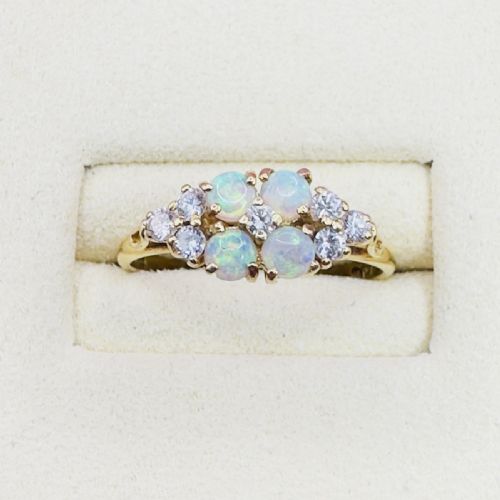
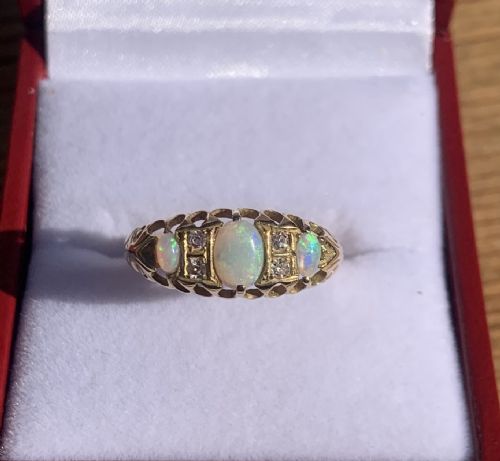
A cabochon engagement ring sets a smooth, domed gemstone into precious metal, offering an alternative to faceted stones that draws attention through soft play of light.
Cabochon Engagement Ring
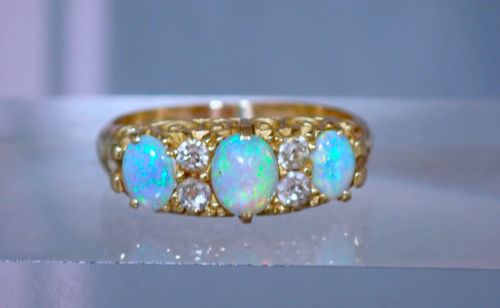
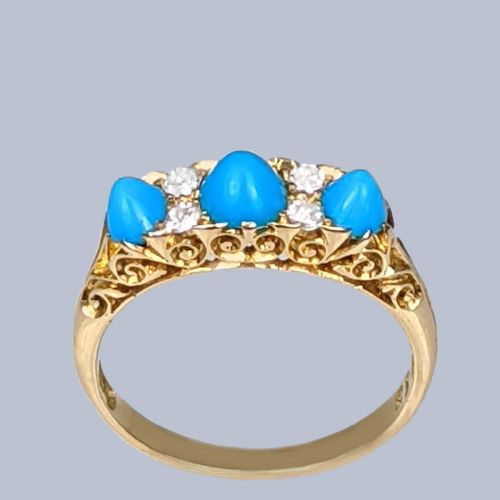
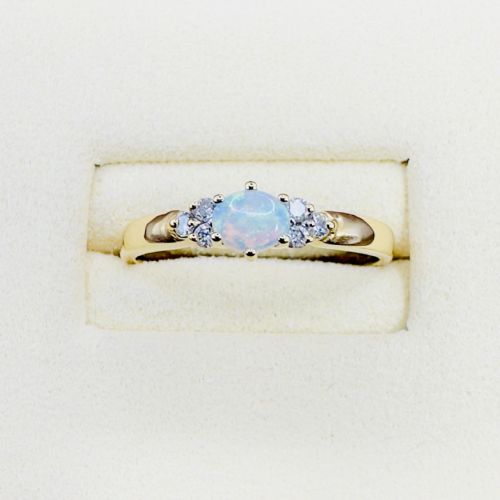
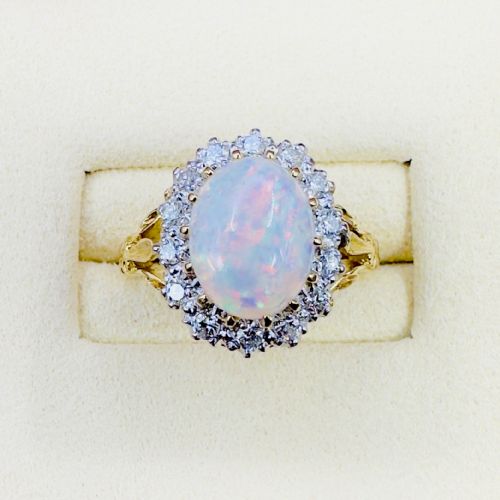
A cabochon engagement ring uses stones polished into rounded surfaces rather than cut with flat facets, frequently paired with diamonds in cluster or trilogy arrangements. These pieces appear across Victorian, Edwardian and Art Deco periods, alongside mid-century examples from the 1950s and 1960s.
The dominant stones seen in these rings are opals and sapphires, occasionally accompanied by turquoise or moonstones. The designs range from delicate nineteenth-century gold settings to geometric platinum mountings from the nineteen-thirties.
Materials and construction methods
Goldsmiths utilised 18ct yellow and white gold, alongside platinum and 9ct gold, to secure central cabochon gems with surrounding diamond accents. Settings rely on traditional claw mountings or close-fitting bezels that follow the curved contour of the polished stone.
Stones are shaped to enhance internal optical effects, such as the play-of-colour in opals or the deep saturation of sapphires. Diamond surrounds utilise old cut, rose cut or round cut stones set in platinum or gold.
Listings span periods from Victorian and Edwardian eras through Art Deco to the 1960s, using platinum, 18ct gold, and 9ct gold.
Assessing quality in polished gemstone rings
Quality rests upon the optical depth and stability of the central cabochon, whether that is an opal displaying varied colour flashes or a sapphire with rich, even tone. The proportion between the domed centre stone and its surrounding diamonds dictates the visual balance of the ring.
The integrity of the metalwork, from hand-forged nineteenth-century bands to geometric platinum mountings, defines the construction standard. Clean claw work and secure bezels that protect the softer edges of domed stones indicate superior execution.
The Cabochon Engagement Ring Glossary
- Cabochon
- A gemstone shaped and polished with a smooth, convex dome rather than faceted edges. This style highlights the natural optical properties of stones like opal, sapphire, and moonstone.
- Cluster ring
- A ring design featuring a prominent central stone encircled by a group of smaller gemstones, typically diamonds. This arrangement maximises surface brilliance on the hand.
- Old cut diamond
- A hand-faceted diamond cut popular before the modern brilliant cut was standardised, featuring a smaller table and higher crown. These stones exhibit distinct facet patterns under magnification.
- Trilogy ring
- A ring set with three stones in a row, often interpreted symbolically as representing past, present, and future. In these listings, they frequently pair an opal or sapphire with flanking diamonds.
- Rose cut diamond
- A vintage diamond cut characterised by a flat base and a domed crown composed of triangular facets. The silhouette resembles an unopened rosebud.
Cabochon Engagement Ring: Frequently Asked Questions
Are cabochon rings durable for daily wear?
Stones polished as cabochons, particularly opals and turquoise, require greater care against hard impacts than faceted diamonds. Choosing a harder gem like sapphire provides more resilience for regular use.
Setting style also influences longevity. Bezel settings offer robust protection to the girdle of a domed stone compared to high claw mountings.
How do I care for an opal cabochon ring?
Opals contain natural water content and benefit from gentle cleaning with warm soapy water, avoiding harsh chemicals, ultrasonic cleaners, and sudden temperature shifts.
Storing the ring separately from harder jewellery prevents scratching on the polished dome of the stone.
What periods are common for these rings?
Victorian and Edwardian examples frequently feature yellow gold bands with turquoise, opals, and rose cut diamonds. Art Deco pieces introduce platinum settings and structured geometric frames around sapphires.
Mid-century rings from the 1950s and 1960s often utilise white gold and cleaner lines for opal and sapphire clusters.
What is the difference between a sapphire and an opal cabochon?
Sapphires are corundum minerals that offer high hardness and deep colour saturation, polished smoothly to reveal asterism or translucent depth. Opals are hydrous silica forms prized for internal diffraction that produces shifting spectral colours.
Both utilise the cabochon form to display optical phenomena rather than light refraction through facets.