
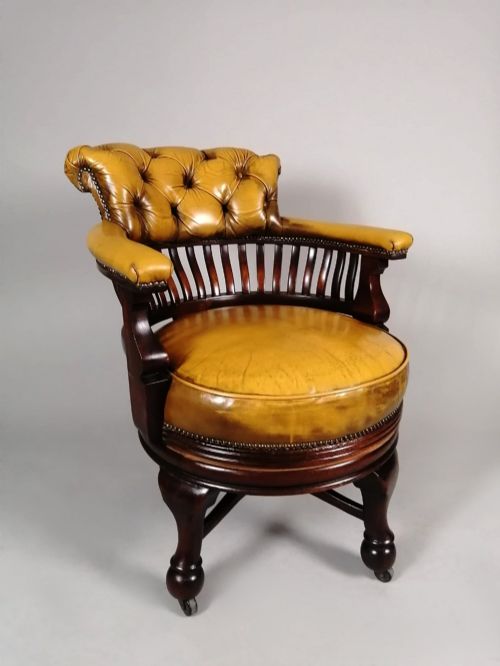

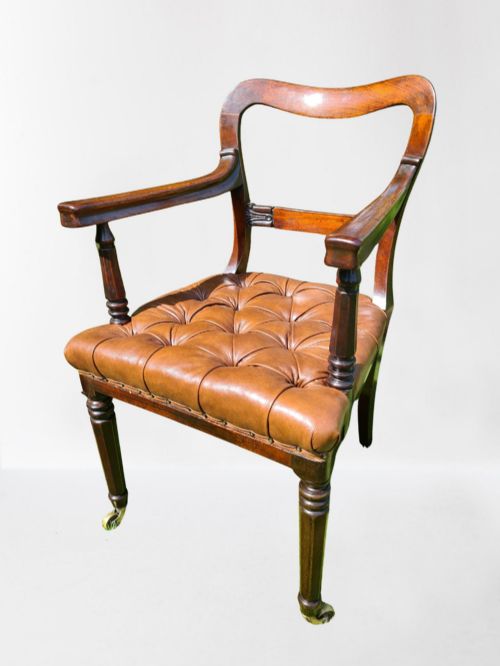

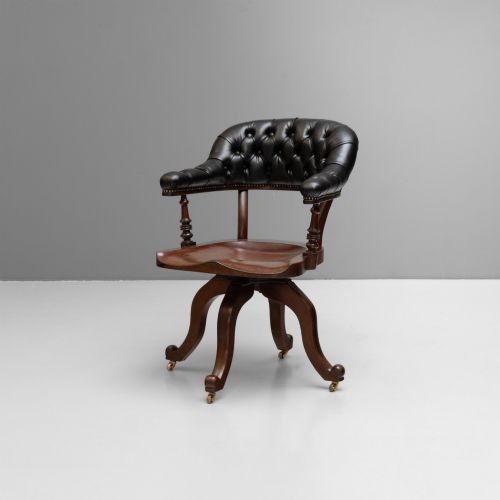
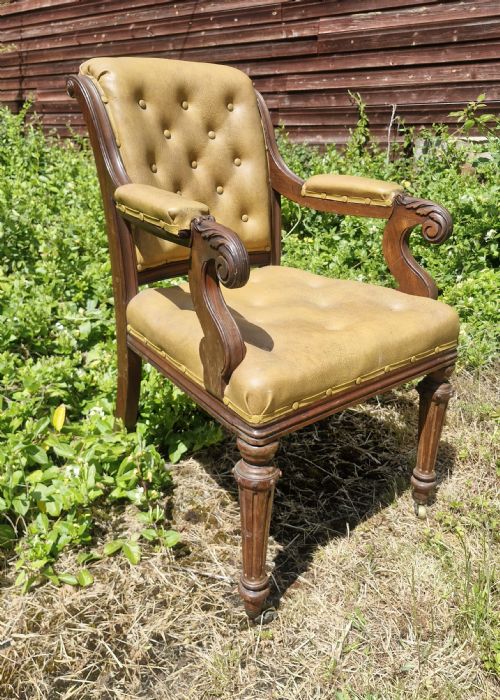


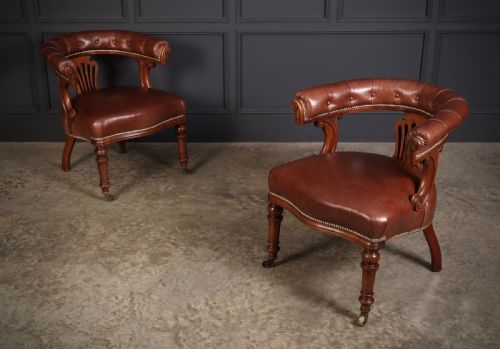


Buttoned Leather Office Chair
A buttoned leather office chair brings substance to a study, pairing functional swivel mechanics with deep buttoned upholstery.
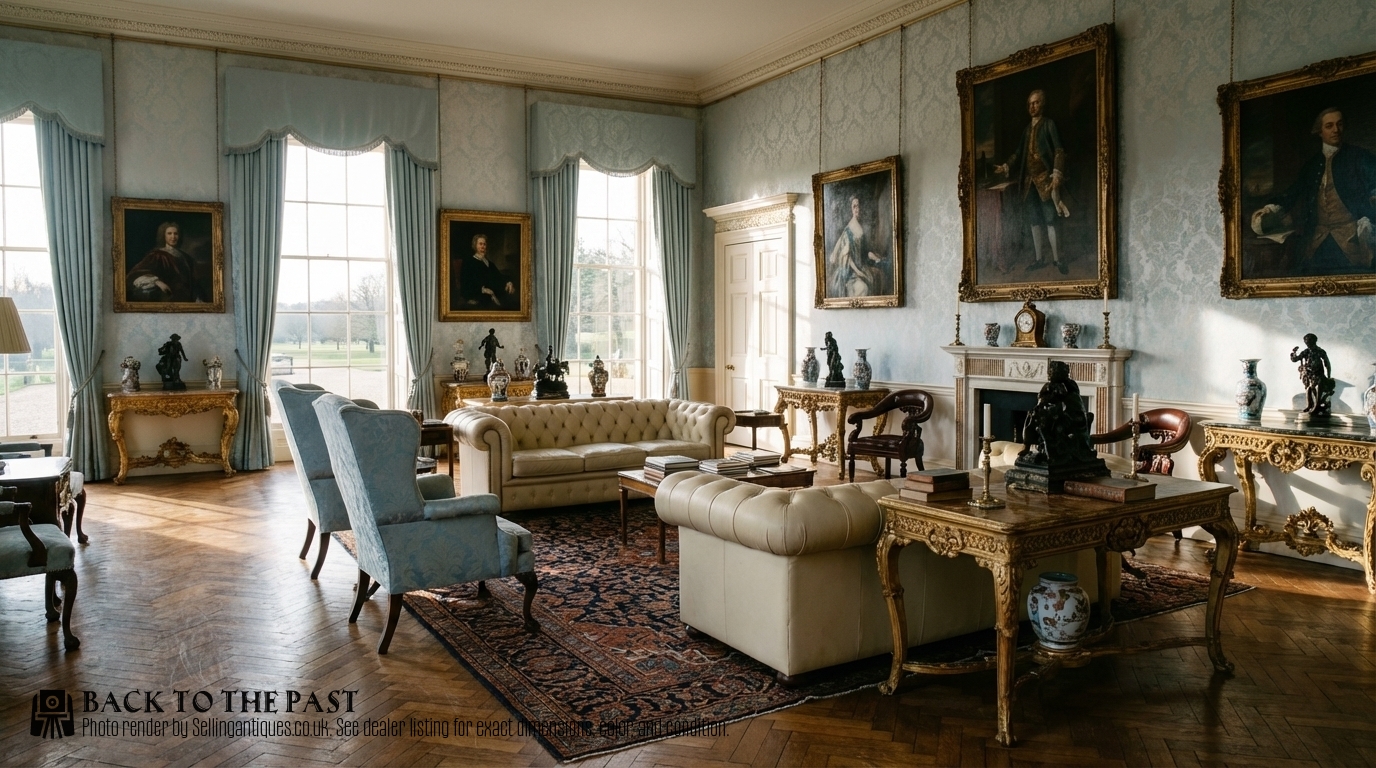
Buttoned Leather Office Chair
A buttoned leather office chair is a working seat built for the desk, combining desk chairs, armchairs, and revolving designs into a single functional form. The pieces collected under this search phrase span the nineteenth century and the Edwardian period, drawing heavily on Victorian and Late Victorian workshops.
Mahogany and oak dominate the timber frames, frequently housing revolving mechanisms or fixed pedestals designed for long hours at the bureau. Examples range from simple Captain's chairs and tub chairs to robust library desks chairs framed in rosewood or walnut.
Most entries belong to the nineteenth century, particularly the decades around 1880 and 1890, offering traditional English forms shaped for functional daily use. Buyers encounter styles varying from strict Georgian reproductions to Louis Philippe rosewood framing and heavy oak carvings.
Materials and Construction
Makers built these desk chairs around sturdy frames of solid mahogany, oak, walnut, or rosewood, often pairing dense hardwoods with supple leather upholstery. Brass hardware appears frequently, securing castors, swivel mechanisms, and structural joints.
Upholstery techniques relied on deep buttoning to secure the leather padding over sprung or stuffed backs, creating durable comfort for prolonged seating. Cast iron and metal components reinforced the revolving and swivelling mechanisms introduced in nineteenth-century workshops.
The listings span the nineteenth century and the Edwardian era, featuring materials such as mahogany, oak, rosewood, brass, and cast iron.
Qualities of Construction and Age
Quality rests in the selection of dense, richly grained timbers like mahogany and oak, and the depth of carving in the wooden frame. Heavier, more substantial frames and integrated revolving mechanisms indicate robust nineteenth-century production standards.
The finesse of the leather upholstery and the execution of the buttoning separate standard workshop output from finer library and captain's chairs. Period integrity in the timber and the brass fittings determines the enduring character of each piece.
The Buttoned Leather Office Chair Glossary
- Captain's Chair
- A sturdy desk armchair featuring a rounded enclosing back rail supported by spindles. These low-back seats were originally designed for ships and offices.
- Revolving Desk Chair
- An office chair mounted on a central pivot mechanism allowing rotation. This form gained popularity in nineteenth-century workspaces for mobility.
- Gainsborough Chair
- An upholstered armchair with an open-framed mahogany structure and padded armrests. Named after the eighteenth-century painter, this style suits a traditional library desk.
- Elbow Chair
- An armchair with short armrests designed to fit neatly beneath a desk top. These chairs provide support without restricting movement in a confined workspace.
- Louis Philippe
- A mid-nineteenth-century French style characterised by understated curves and rich rosewood timbers. It offers a softer silhouette than contemporaneous English designs.
Buttoned Leather Office Chair: Frequently Asked Questions
How do I identify a 19th-century desk chair?
Nineteenth-century desk chairs display solid hardwood framing in mahogany, oak, or rosewood, combined with hand-stitched leather upholstery and traditional joinery. Look for patination on the timber and heavy brass castors beneath the legs.
Interior mechanisms on revolving models often utilise cast iron or threaded metal screws rather than modern pneumatic columns. The weight of the timber and the traditional method of buttoning provide clear indicators of period manufacture.
Can I use an antique desk chair daily?
These chairs were built for daily professional use in nineteenth-century offices and libraries using dense hardwoods like oak and mahogany. Their robust construction handles regular seating well when maintained properly.
Ensure the revolving mechanism and castors remain stable before daily use, and treat the leather upholstery with appropriate conditioners to prevent drying.
How do I care for antique leather upholstery?
Maintain antique leather by keeping the material clean and applying specialised leather balms to preserve suppleness. Avoid placing the chair in direct sunlight or beside heat sources which dry out the hide.
Gentle dusting with a dry cloth prevents abrasive particles from settling into the buttoned folds and seams of the leather surface.