

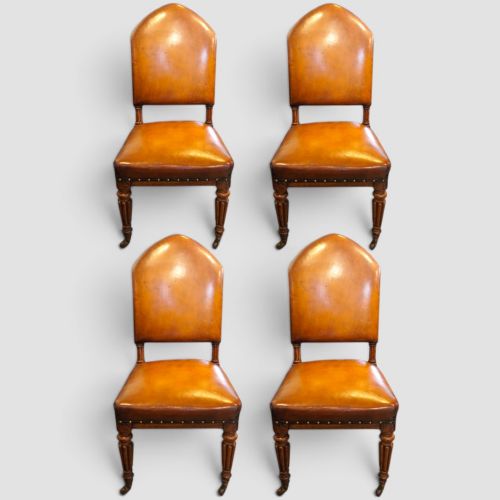
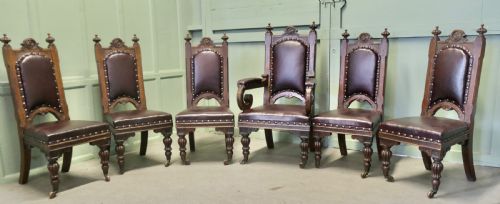
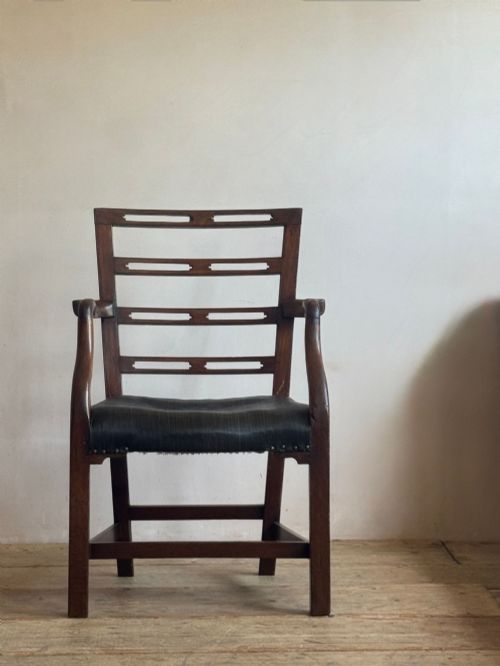
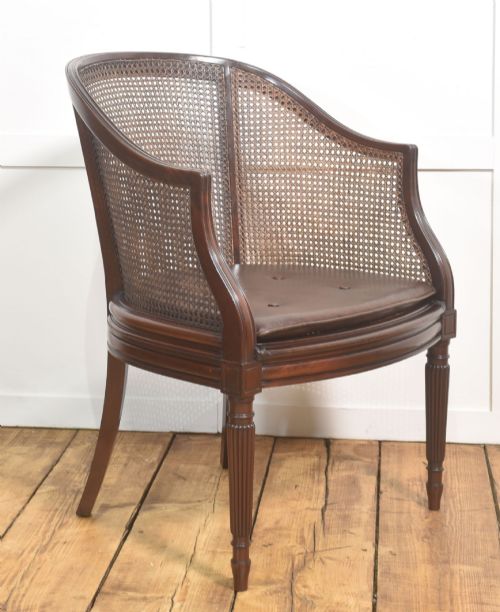
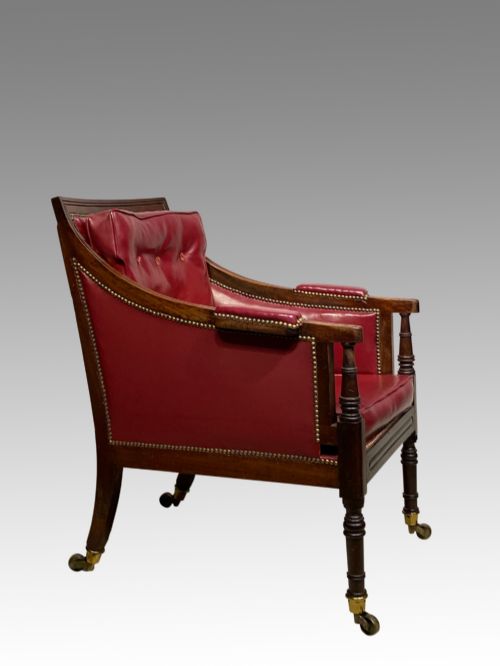
Leather Seat Desk Chair
A leather seat desk chair provides a practical workspace anchor, uniting functional swivel mechanics with traditional upholstery.
Leather Seat Desk Chair
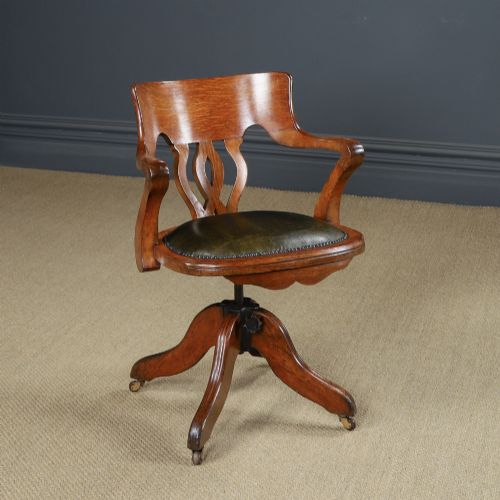
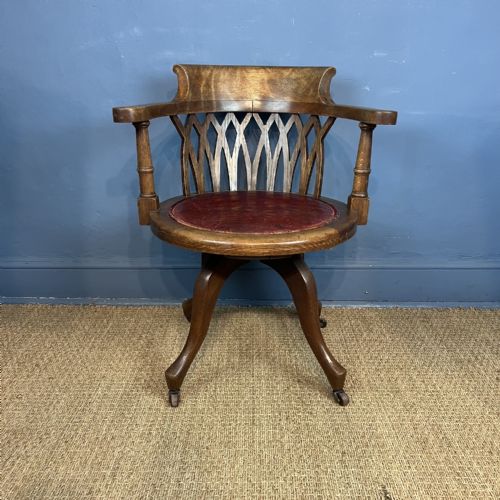
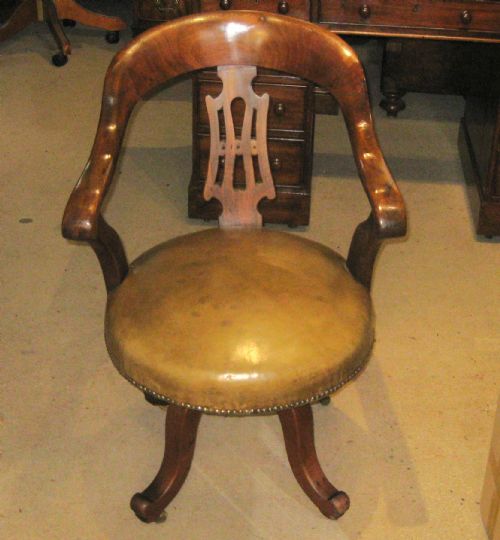
A leather seat desk chair serves as a practical workspace anchor, uniting functional swivel mechanics with traditional upholstery. When searching this phrase, a buyer meets diverse forms ranging from solid oak and mahogany office swivel models to low-slung library armchairs and reading seats.
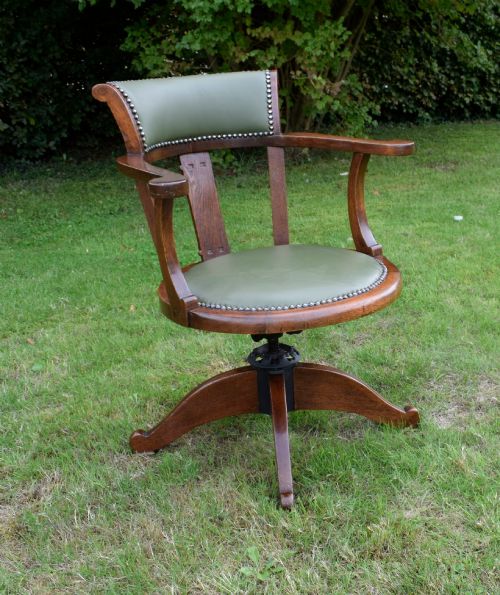
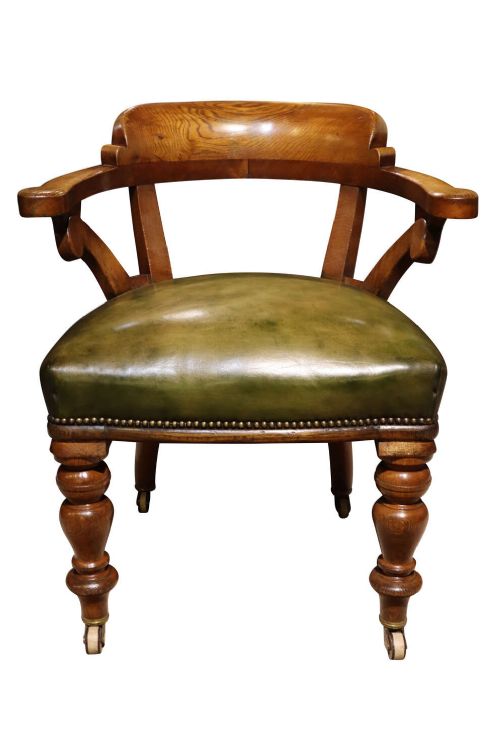
Victorian and Edwardian revolving designs dominate the selection, often featuring green or burgundy hides paired with timber frames. These pieces originate across the nineteenth and early twentieth centuries, spanning straightforward office seating and grander library armchairs.
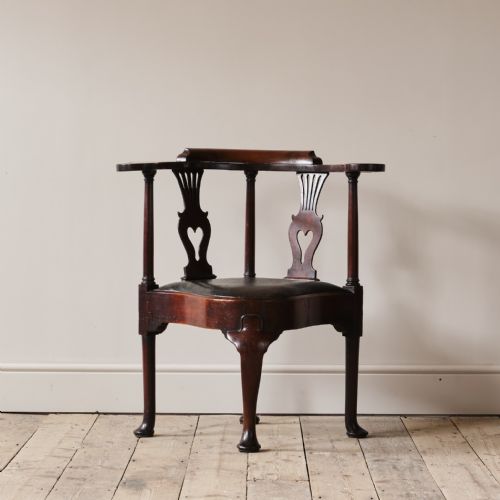
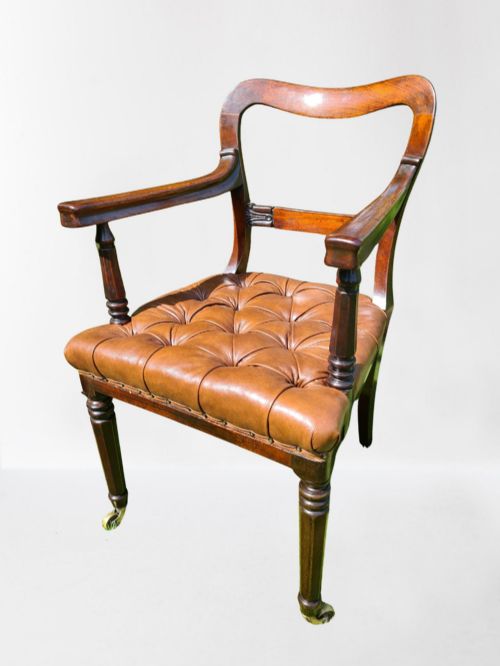
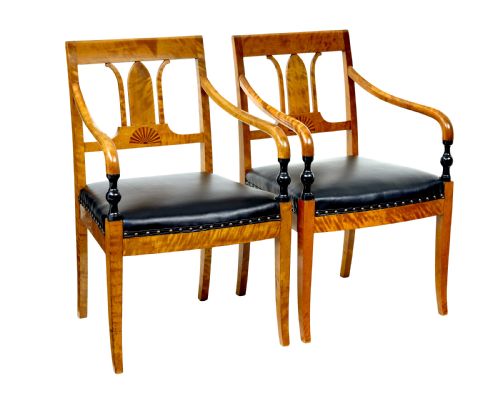
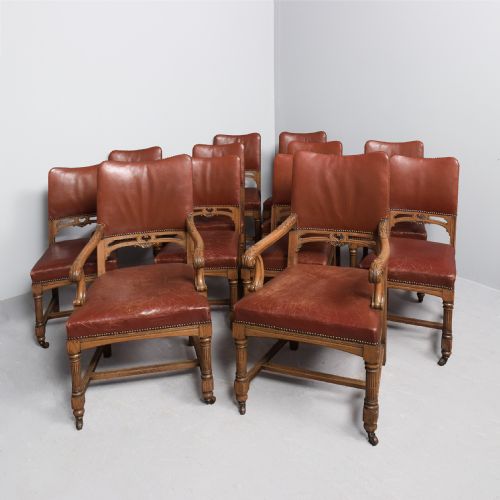
Alongside swivel office chairs, the records include Georgian and Regency library chairs alongside early twentieth-century oak desk seating. Each version combines a firm hide pad with robust timber construction built for daily professional use.
Materials and Technique
Makers constructed these chairs primarily from dense hardwoods like mahogany and oak, occasionally utilising walnut, beech or birch for frames. Timber selection provided the structural strength needed to support complex revolving mechanisms and continuous weight.
Upholsterers fitted natural leather hides directly onto the wooden seats or over internal padding, securing the edges with brass studs. This combination of durable hide and solid timber ensured the friction-heavy environment of a study or office caused minimal wear.
One light oak swivel chair carries a tangible history, having been presented by past and present boys to W Deedes in 1912.
The Spectrum of Craft
Quality rests on the integrity of the timber frame, the weight of the mahogany or oak, and the complexity of the revolving mechanism. Superior examples display refined hand-carving, tightly fitted joints, and original hand-dyed leathers with natural patination.
Simpler office models prioritize functional swivel and tilt movements over decorative flourishes, utilising sturdy beech or oak frameworks. The division between standard workspace seating and premier library armchairs lies in the depth of the carving and the richness of the hide.
Gillows·Bruce James Talbert
The Leather Seat Desk Chair Glossary
- Revolving
- A seating design incorporating a central spindle or screw mechanism that allows the chair to turn through a full circle. This mechanic proved essential for nineteenth-century office environments.
- Gainsborough
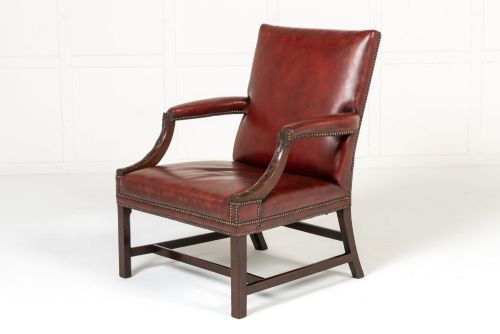
- A spacious open armchair featuring padded armrests, a wide seat, and square legs, originating in the mid-eighteenth century. These chairs often double as library or desk seating.
- Bergère
- An enclosed upholstered armchair with wooden framing exposed around the sides and back. Examples frequently combine cane work with leather seat cushions.
- Blind Carving
- Low-relief ornamentation carved directly into the surface of a chair leg or rail without piercing the wood. This technique appeared frequently on eighteenth-century mahogany frames.
- Balloon Back
- A rounded, oval-shaped backrest resembling a blown-up balloon, popular on Victorian dining and desk chairs.
Leather Seat Desk Chair: Frequently Asked Questions
What periods do these desk chairs come from?
The listings encompass nineteenth-century Victorian and Edwardian periods, alongside Georgian and Regency eras from the 1700s and early 1800s. Later examples stretch into the early twentieth century.
Buyers encounter everything from heavy mahogany swivel seats of the 1880s to lighter oak office chairs from the 1920s.
Were all desk chairs made to swivel?
Not all desk chairs feature revolving mechanisms, as many traditional library and Gainsborough chairs remain stationary on fixed legs. Stationary styles relied on generous proportions rather than mechanical height adjustment.
Swivel technology appeared more commonly in late Victorian and Edwardian office chairs designed for clerks and professionals.
How do I care for the leather seat?
Leather seats require regular dusting and occasional conditioning with appropriate balms to prevent the hide from drying out. Keeping the leather away from direct heat sources preserves its suppleness.
Natural patination develops over decades of use, and gentle cleaning maintains the character without stripping the original dye.
What is the difference between a desk chair and a library chair?
Desk chairs typically feature compact dimensions and mechanical swivel or tilt functions intended for active office work. Library chairs tend to be wider, lower armchairs designed for reading and stationary comfort.
Both variants frequently utilise leather upholstery to withstand heavy daily use in private studies.