
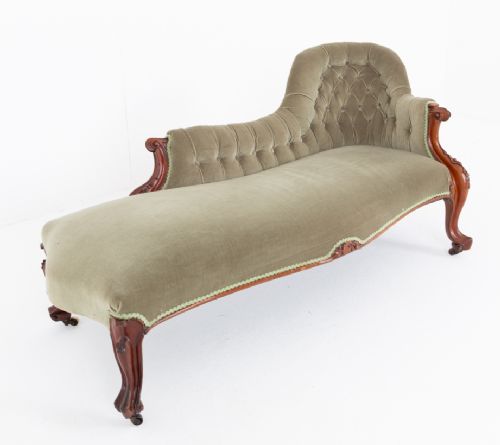
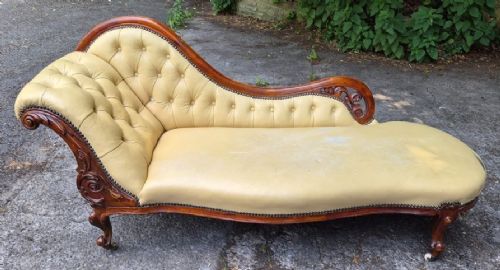


Buttoned Chaise Longue
A buttoned chaise longue offers a reclining seat built for comfort, combining nineteenth-century timber frames with deep tufted upholstery.
Buttoned Chaise Longue
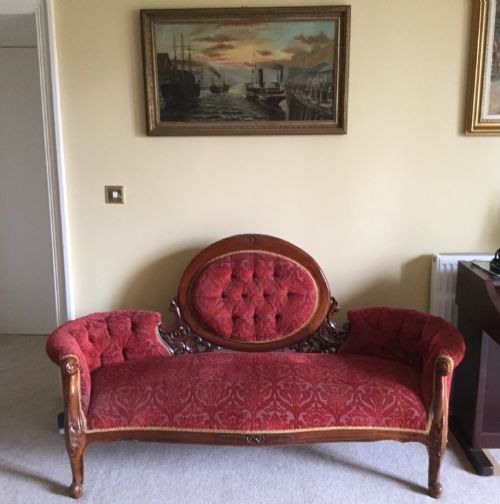
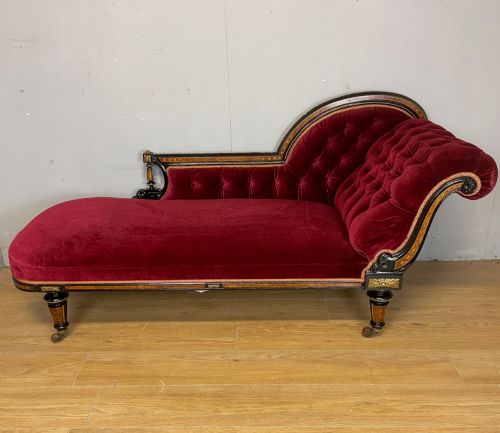
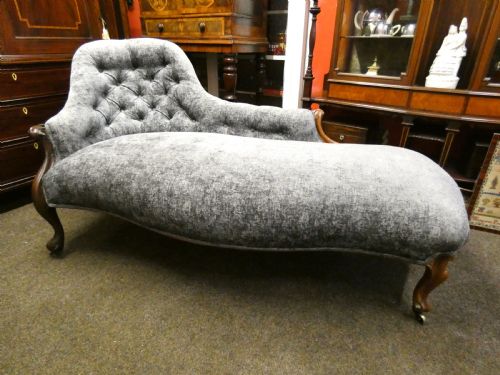
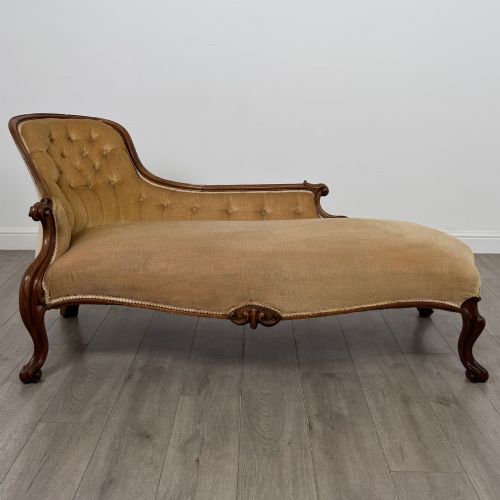
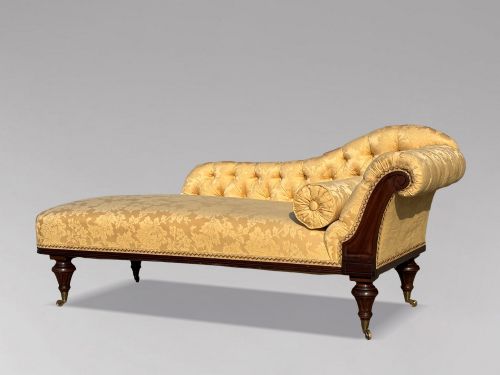
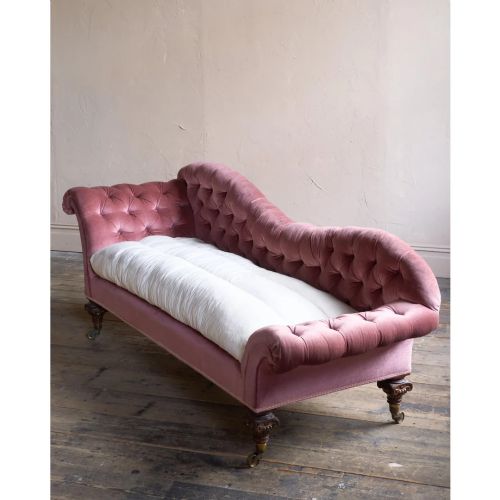
A buttoned chaise longue is a nineteenth-century day bed or reclining sofa designed for half-sitting and half-lying. You will regularly encounter Victorian examples featuring single scrolled ends, double spoon-backs, or low timber frames built for parlours and drawing rooms.
Makers and workshops from the Regency through the late Victorian period produced these day beds in forms ranging from heavy mahogany frames to ebonised and walnut structures. The configuration typically involves an asymmetric backrest flowing down into a single raised scroll end.
Materials and Construction
Makers constructed the structural frames of a buttoned chaise longue using dense hardwoods such as mahogany, walnut, and rosewood, often complemented by ebonised finishes, brass accents, or carved ornamentation. These timbers provided the rigid skeleton required to support sprung upholstery bases and heavy day bed loads.
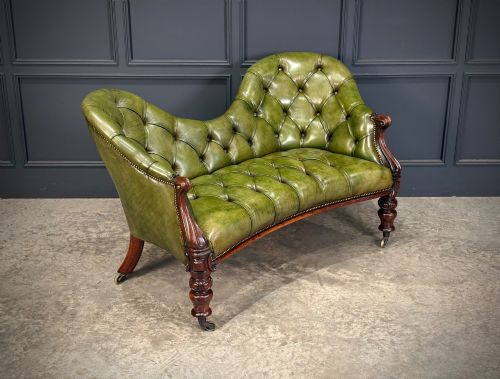
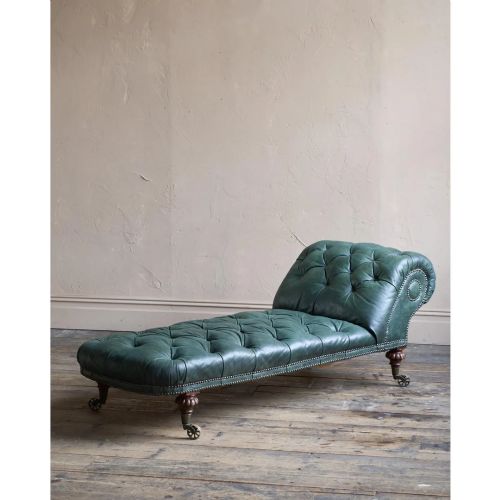
Upholstery methods relied on deep buttoning through fabric, velvet, damask, or leather, secured over heavy horsehair stuffing and complex internal springing. The resulting tufted surface created a firm yet yielding tension across the backrest and arm scroll.
Listings for a buttoned chaise longue span Victorian, Regency, and William IV periods, executed in mahogany, walnut, rosewood, and leather.
Evaluating Craftsmanship
The standard of carving on the rosewood or mahogany frames sets apart basic workshop output from master cabinetmaker production. Crisp detail in the floral motifs, scrolls, and structural joints demonstrates superior hand tool proficiency.
The precision of the tufting and the selection of covering materials, whether fine leather or heavy silk velvet, dictate the tactile and visual grade of the piece. Superior internal springing and tight tensioning maintain the clean contour of the scroll end over decades of use.
Howard & Sons·H. Goodall & Sons·Holland & Sons·Jas Shoolbred·Miles & Edwards
The Buttoned Chaise Longue Glossary
- Chaise Longue
- A long reclining chair or day bed allowing the user to stretch out the legs while keeping the torso supported by a backrest. This form evolved through various revival styles in the nineteenth century.
- Buttoning
- A method of upholstery where twine is pulled deep through the padding and secured with buttons to create a geometric diamond pattern. This technique secures the internal stuffing against shifting.
- Scroll End
- The curved wooden or upholstered terminal of a day bed frame, often shaped into a volute or sweeping arm. It provides the primary headrest or support at one end of the seat.
- Rosewood
- A heavy, dark timber with distinct grain patterns utilised extensively during the Victorian period for high-end parlour seating. It accepts a high polish and intricate carving.
- Ormolu
- Gilt bronze mountings applied to furniture frames for decorative accent during the nineteenth century. These metal details reflect French influence on English cabinetmaking.
Buttoned Chaise Longue: Frequently Asked Questions
How were chaise longues used?
A buttoned chaise longue served as a daytime resting place in nineteenth-century drawing rooms and parlours, used for reading or recovering from illness without retiring to a bedroom.
Ladies utilised the extended seat and backrest to recline in formal day dress, which explains the asymmetric shape designed to support the torso while keeping the legs elevated.
How do I date a chaise longue?
Dating relies on examining the timber frame style, wood species, and upholstery construction methods visible beneath the piece. Regency examples feature sweeping scroll arms and lighter mahogany, whereas mid-Victorian pieces often showcase heavier rosewood or walnut with deep buttoned velvet.
Later nineteenth-century iterations incorporate ebonised finishes or revival details like Ionic columns, moving toward the heavier proportions typical of the eighteen-eighties.
Where should I place a chaise longue?
These day beds suit large living spaces, master bedrooms, or wide hallways where they can stand away from the wall to show off the carved back and scroll end. Positioning them perpendicular to a light source highlights the depth of the buttoned upholstery and the grain of the timber frame.
Because of their asymmetric length, they work well floating in a room rather than pressed flat against a boundary.