

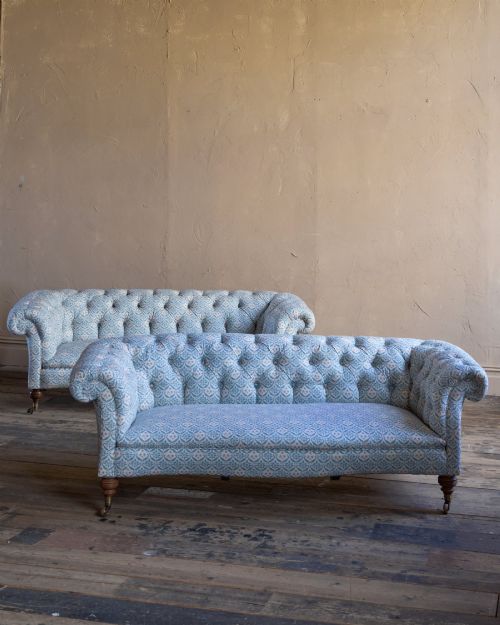
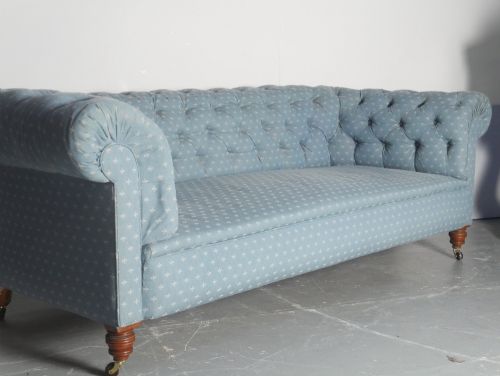
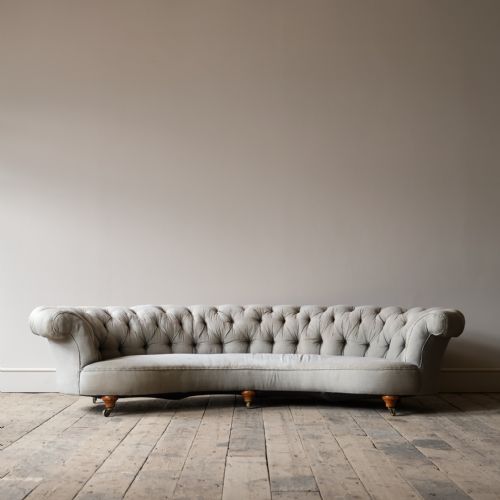
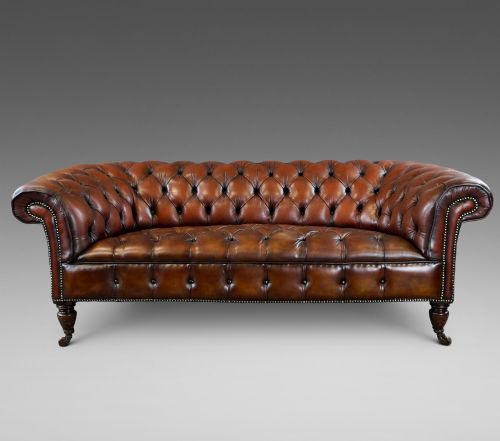
Button Tufted Victorian Sofa
A button tufted victorian sofa brings deep upholstery and rich timber frames into a room, offering both traditional comfort and distinct nineteenth-century character.
Button Tufted Victorian Sofa
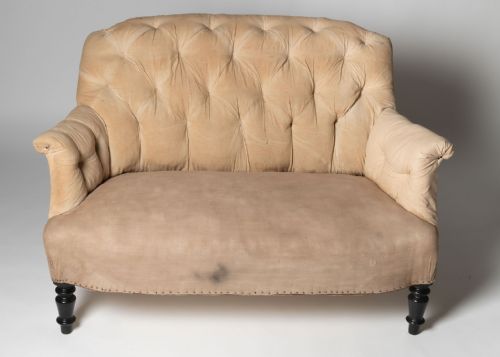
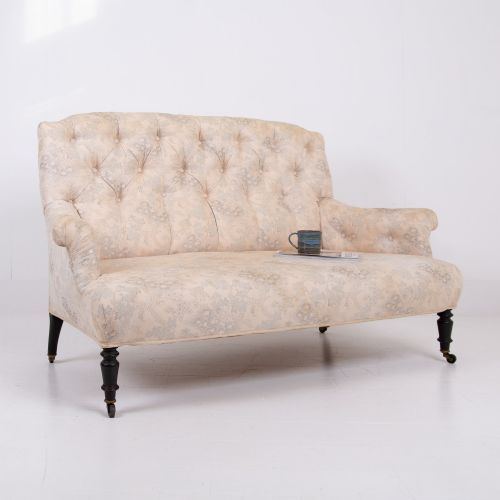
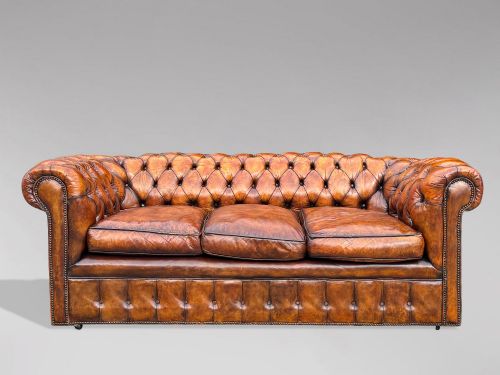
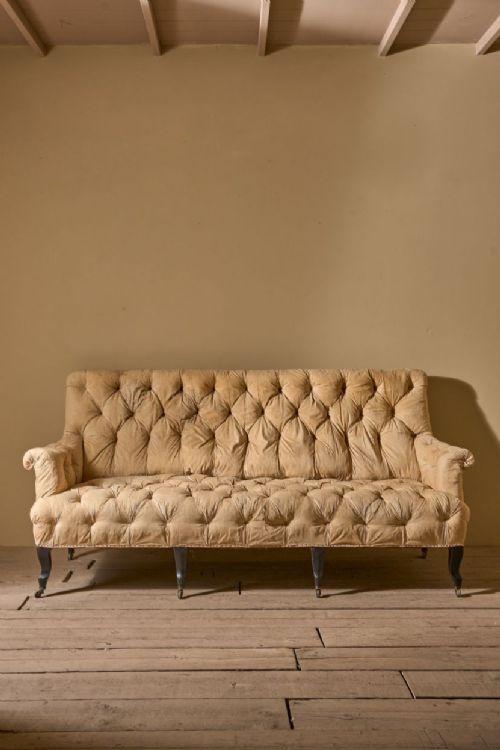
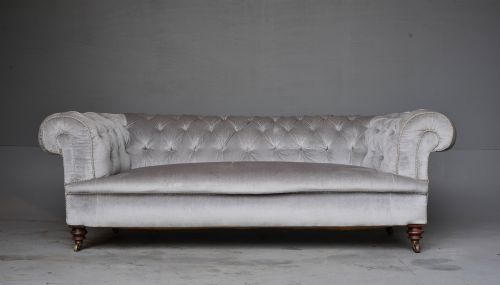
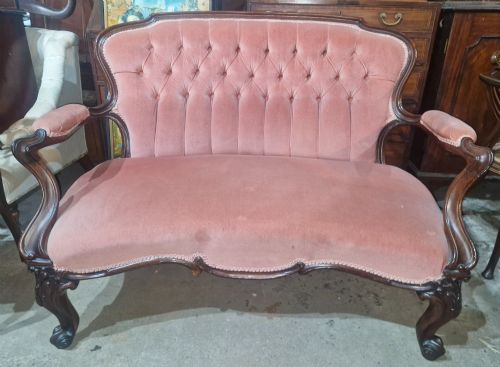
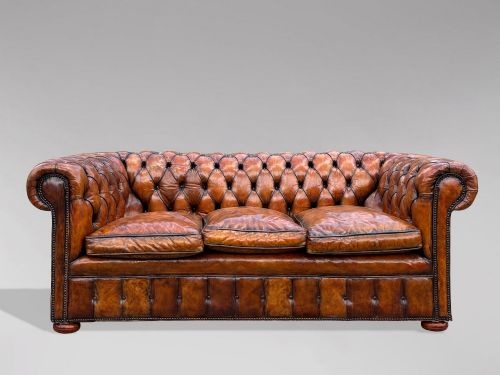
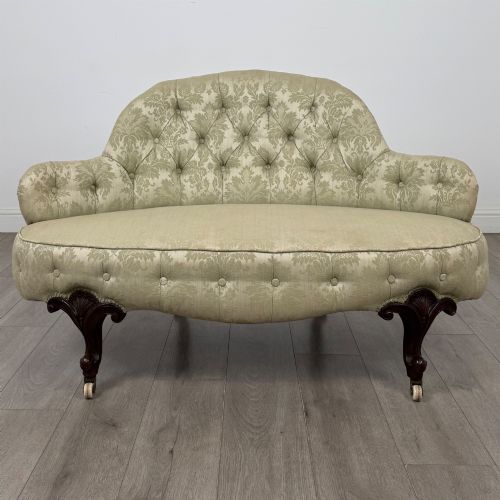
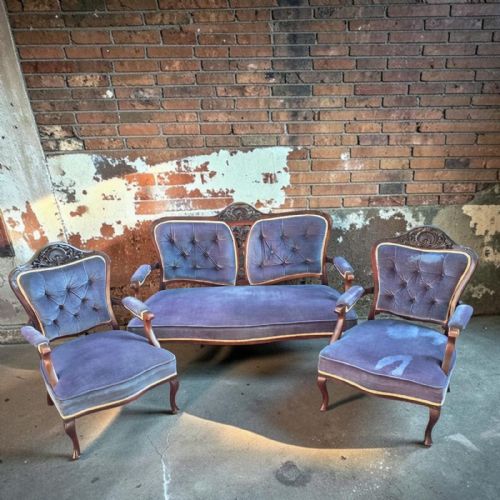
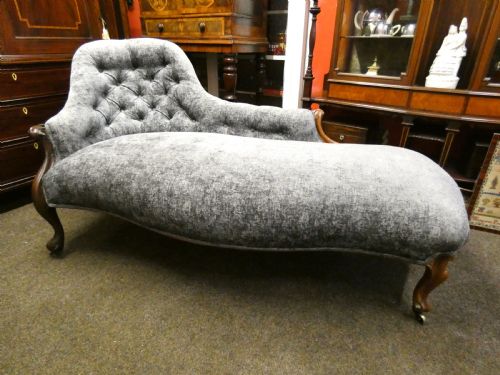
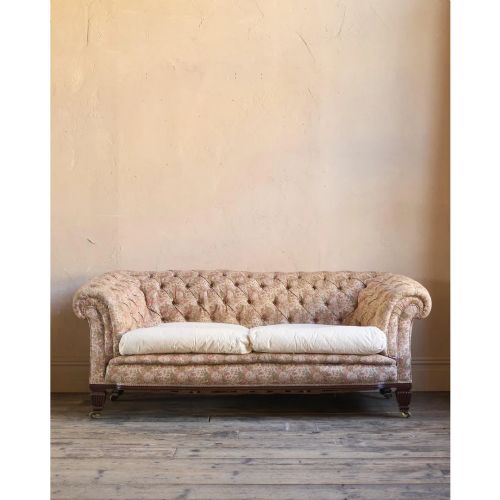
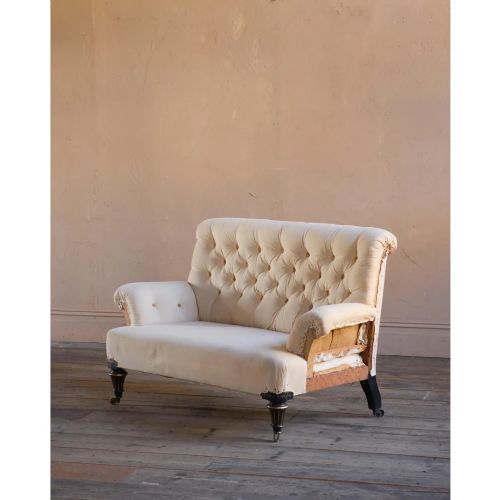
When you search for a button tufted victorian sofa, you encounter deep-buttoned upholstery paired with exposed wooden frames that define nineteenth-century seating. These pieces emerge in various forms, from classic Chesterfields and conversational seats to carved chaise longues and multi-piece salon suites.
The versions most common on this page date primarily from the mid to late nineteenth century, spanning decades such as the eighteen-fifties through to the eighteen-eighties. Alongside standard Victorian items, you meet French Napoleon III pieces and occasional early twentieth-century Edwardian continuations.
Makers and workshops of the period utilised robust hardwoods to support heavy padding and buttoned backs. You find forms ranging from compact window seats and double spoon-back settees to expansive three-seater Chesterfields designed for substantial reception rooms.
Materials and construction methods
Frames rely on dense timbers such as mahogany, walnut, rosewood, and general hardwood, often shaped with hand-carved details along the crest rails and legs. Woodworkers joined these structural elements to bear the considerable tension of tightly pulled upholstery.
Upholstery forms the visual centrepiece, combining traditional stuffing techniques with deep buttoning secured through fabric, velvet, or leather. Brass castors and decorative brass tacks frequently finish the lower framework and scroll arms.
Button Tufted Victorian Sofa Retail Price Guide 2026
Typical asking prices for button tufted victorian sofa among the pieces listed under this phrase on Sellingantiques today, from the lower quarter to the upper quarter. They describe what is for sale here now, not the wider market.
Listings feature nineteenth-century pieces spanning the eighteen-fifties to the turn of the twentieth century, constructed in mahogany, walnut, rosewood, and leather.
Distinctions in quality
The standard of a piece rests on the integrity of the timber frame and the depth of the carving. Superior examples display crisp, hand-carved details in rosewood or walnut rather than softer, indistinct moulding.
Upholstery execution separates workshop output, seen in the regularity of the button tufting and the resilience of the leather or fabric. Original maker stamps on legs or brass castors elevate historical standing significantly.
Howard and Sons·Jackson and Graham·H. Goodall and Sons·Holland and Sons
The Button Tufted Victorian Sofa Glossary
- Chesterfield
- A deep-buttoned upholstered sofa featuring rolled arms of the same height as the back. This form remains a staple of nineteenth-century seating.
- Chaise Longue
- An upholstered long chair or day bed designed for reclining, often featuring a single raised end. Victorian examples frequently utilise carved mahogany or walnut frames.
- Button Tufting
- An upholstery technique where twine pulls through padding and fastens to the frame with buttons, creating regular indentations. This method secures internal stuffing while adding geometric texture.
- Salon Suite
- A matched set of seating comprising a settee and accompanying armchairs or chairs. These groupings furnished formal nineteenth-century drawing rooms.
- Spoon-Back
- A chair or sofa back shaped like the bowl of a spoon, featuring a padded centre surrounded by a carved wooden rim. This style appears frequently on mid-Victorian buttoned seating.
Button Tufted Victorian Sofa: Frequently Asked Questions
What defines a button tufted victorian sofa?
These pieces combine deep buttoned upholstery with structural timber frames originating in the nineteenth century. They include Chesterfields, settees, and chaise longues.
Makers built them using mahogany, walnut, or rosewood, covered in leather, velvet, or fabric. The buttoning creates a distinctive padded surface texture.
How do I care for leather upholstery?
Leather surfaces on nineteenth-century seating require gentle cleaning and periodic conditioning to maintain flexibility. Avoid direct sunlight and excessive heat.
Maintain stable room humidity to prevent the historic leather from drying out or cracking. Professional conservation maintains the integrity of original hides.
Where were these sofas used originally?
Nineteenth-century households placed these seats in formal drawing rooms, libraries, and parlours. Large Chesterfields suited gentlemen's clubs and main reception spaces.
Chaise longues and window seats provided daytime resting spots in private boudoirs. Salon suites accommodated guests during formal gatherings.
How can I identify the period?
Dating relies on stylistic shifts in frame carving, wood choice, and upholstery structure. Mid-century pieces often feature rosewood and walnut with elaborate curves.
Later nineteenth-century examples lean towards substantial leather Chesterfields with brass castors. Maker stamps on woodwork or castors provide definitive dates.