



Victorian Walnut Sofa Set
A victorian walnut sofa set brings together rich timber frames and plush period textiles for grand drawing rooms.
Victorian Walnut Sofa Set
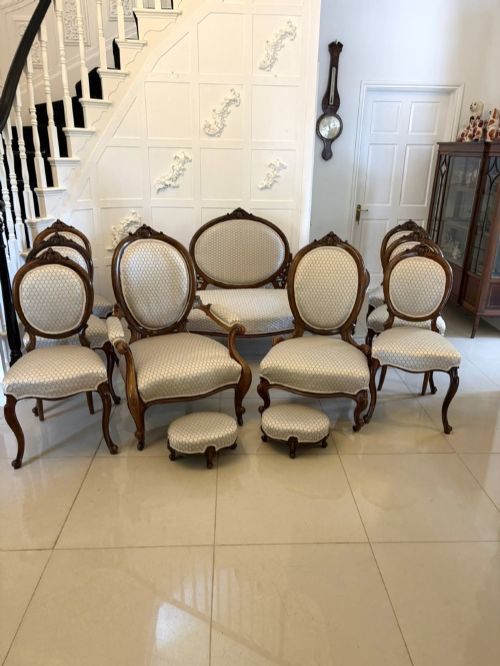
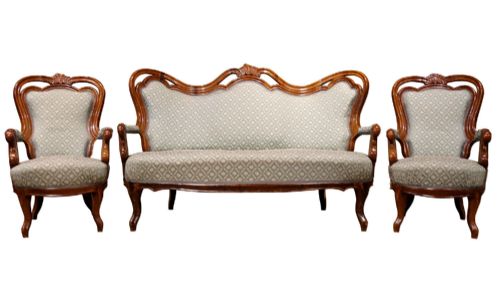
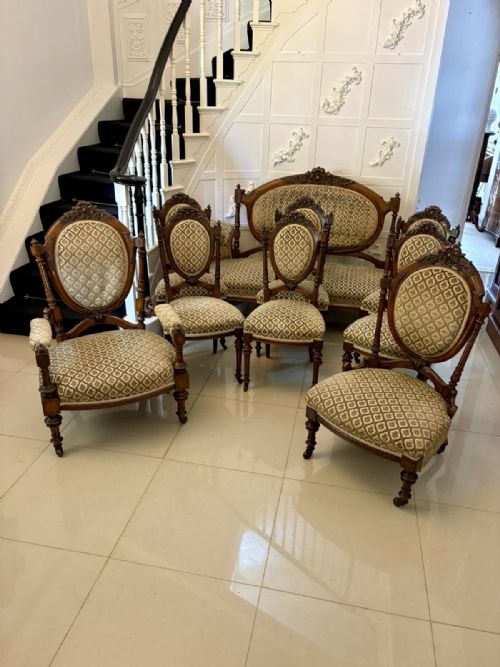
A victorian walnut sofa set comprises matched seating arrangements featuring carved timber frames and upholstered surfaces designed for nineteenth-century drawing rooms and formal salons. These groupings often include a main settee or sofa accompanied by matching armchairs, side chairs, and occasionally footstools or conversation seats.
Buyers will most frequently encounter three-piece salon suites consisting of a settee and a pair of chairs, alongside larger multi-piece drawing room collections spanning the mid to late nineteenth century. Forms range from standard cameo back and spoon back sofas to revivalist expressions.
The aesthetic vocabulary encompasses Victorian Rococo Revival, French Rococo Revival, Moorish Revival, and Egyptian Revival design motifs. Pieces often utilise show-wood frames constructed from walnut, frequently paired with button-backed upholstery.
Materials and construction
Makers constructed the structural frames of these seating groups using solid walnut and applied veneers, occasionally incorporating stringing details in materials like boxwood. The exposed timber, known as show-wood, received elaborate hand-carving displaying floral and scroll motifs.
Upholstery techniques relied on traditional stuffing methods contained within textile coverings such as velvet, damask fabric, and patterned upholstery fabrics. Brass hardware and structural metal components provided internal support and finishing touches on specific revival pieces.
Victorian Walnut Sofa Set Retail Price Guide 2026
Typical asking prices for victorian walnut sofa set among the pieces listed under this phrase on Sellingantiques today, from the lower quarter to the upper quarter. They describe what is for sale here now, not the wider market.
Certain conversation seats allowed two Victorian guests to sit close while facing opposite directions, engaging in gossip without turning their necks.
Assessing quality in period seating
The distinction between standard examples and top-tier pieces rests upon the crispness and depth of the hand-carved ornamentation on the walnut show-wood. Superior sets exhibit sculptural confidence in the carved crest rails and cabriole legs.
The scale and completeness of the original suite heavily influence overall desirability, with larger multi-piece collections or exhibition quality suites commanding greater attention. The integrity and historical sympathy of the upholstery materials further separate ordinary examples from exceptional survivals.
The Victorian Walnut Sofa Set Glossary
- Show-wood
- The exposed, polished wooden portions of an upholstered piece of furniture. This highlights the carved walnut frame rather than concealing it beneath fabric.
- Cameo back
- An oval-shaped upholstered backrest resembling a cameo portrait. This form is frequently found on Victorian salon suites.
- Spoon back
- A recessed wooden-framed upholstered back shaped distinctly like the bowl of a spoon. It emerged during the early Victorian period to support the sitter's spine.
- Salon suite
- A coordinated grouping of drawing room seating designed en suite. These suites typically comprise a settee paired with matching armchairs and side chairs.
- Rococo Revival
- A nineteenth-century design style drawing inspiration from the asymmetrical curves and natural motifs of the French eighteenth century. It dominates many Victorian walnut seating groups.
Victorian Walnut Sofa Set: Frequently Asked Questions
How many pieces make a complete suite?
A standard suite typically consists of three pieces, usually a settee and two matching chairs. Larger configurations can expand to include seven, nine, or eleven pieces.
These extensive groupings incorporate additional side chairs, armchairs, footstools, or specialised conversation seats for large drawing rooms.
Where were these suites originally placed?
These seating groups were designed specifically for formal reception spaces, drawing rooms, and private parlours. They served as the visual centrepiece for entertaining guests.
Smaller salon suites fitted comfortably into intimate Victorian drawing rooms, while massive multi-piece suites furnished expansive country house reception halls.
How do I care for antique walnut frames?
Maintain the walnut show-wood by dusting regularly with a soft, dry cloth and avoiding harsh chemical polishes. Keep the timber away from direct sunlight and excessive heat sources to prevent cracking.
Feed the polished wood surface occasionally with a traditional microcrystalline wax to preserve the natural grain and sheen.
Can these suites be used daily?
These historical seating groups can withstand normal domestic use provided they receive gentle treatment. Original internal webbing and upholstery may require professional conservation if structural support has weakened.
Sit carefully and avoid placing heavy loads on delicate carved crest rails to preserve the nineteenth-century joinery.