

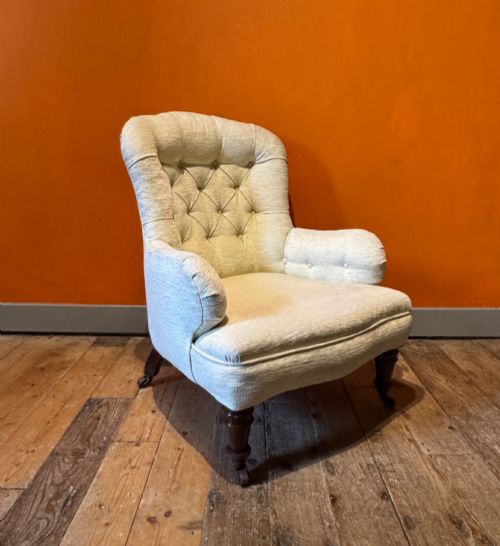
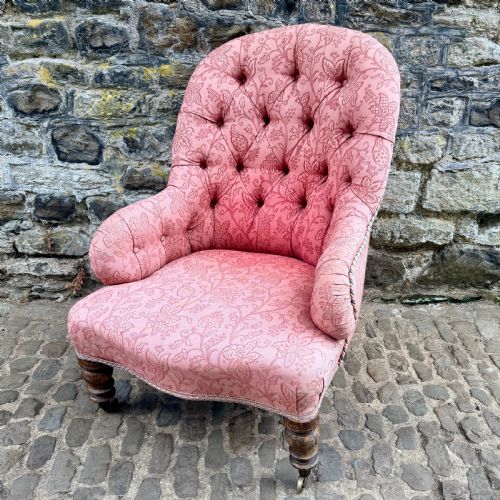
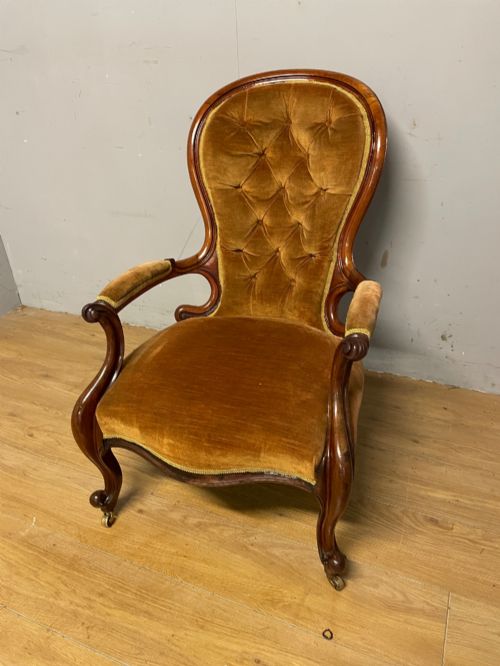
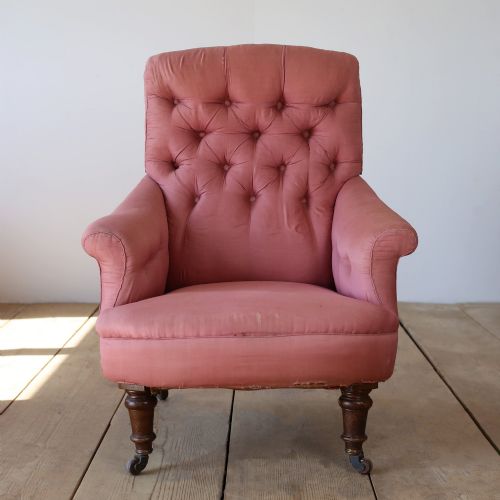


Button Tufted Nursing Chair
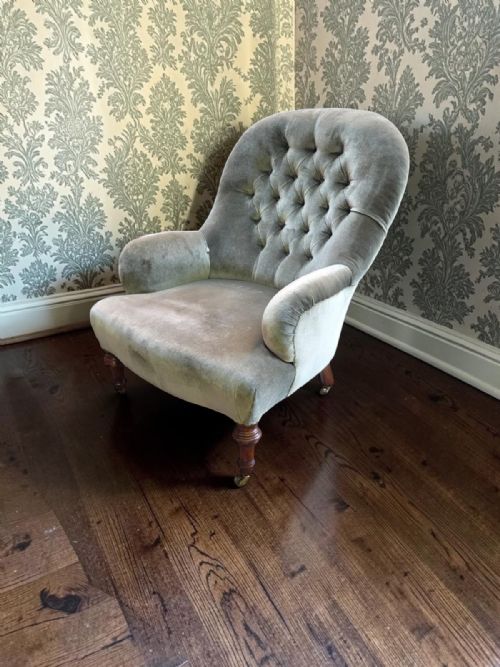
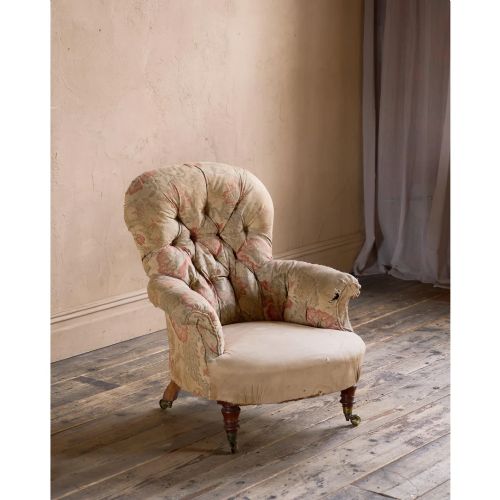
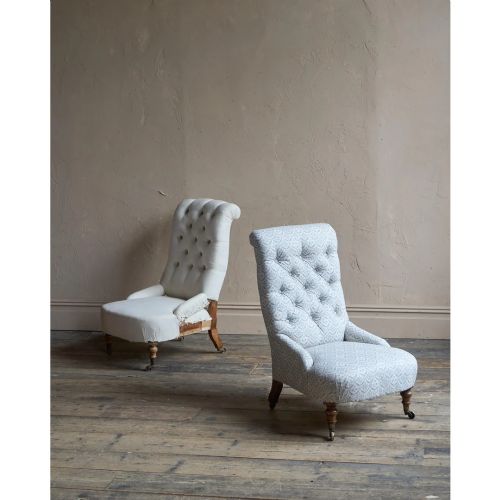
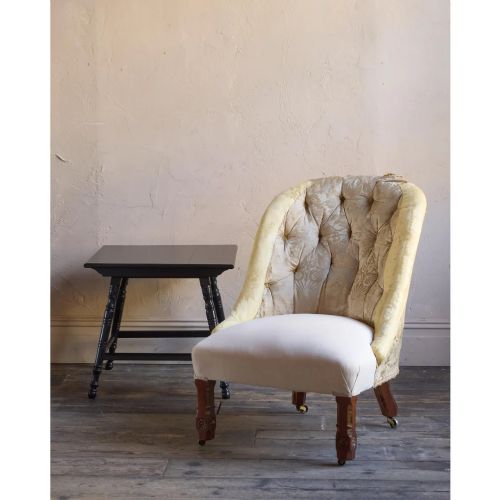
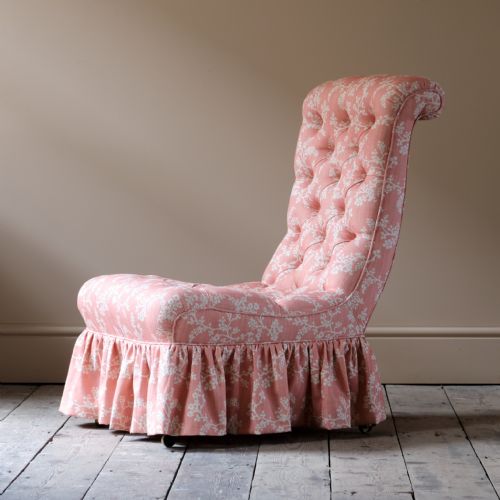
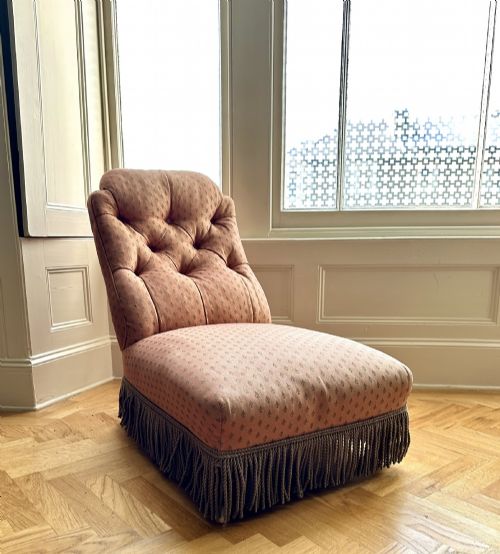
A button tufted nursing chair offers low-slung, upholstered comfort designed for the nineteenth-century bedroom and parlour.
Button Tufted Nursing Chair
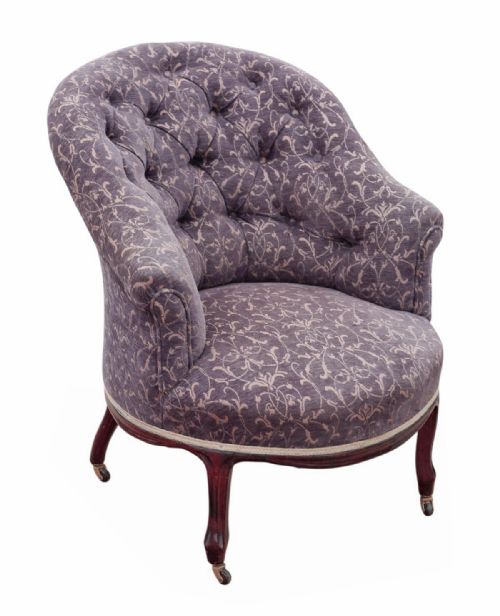
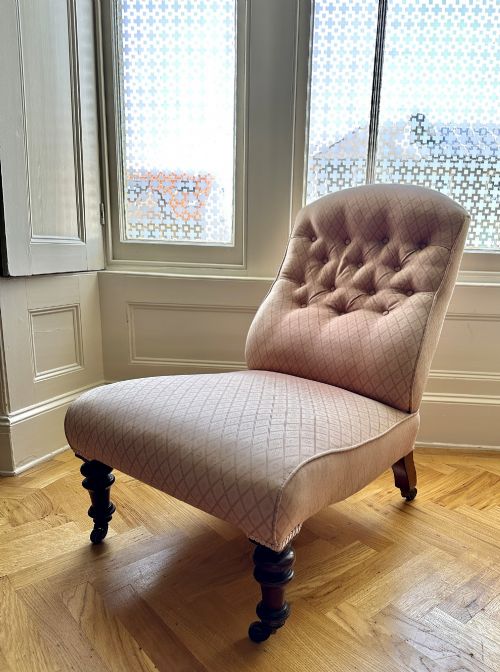
A button tufted nursing chair is typically encountered as a nineteenth-century Victorian or Edwardian low armchair designed for the bedroom or drawing room. The form encompasses slipper chairs, salon chairs, and ladies chairs that share a low seat and an upholstered back.
The pieces appearing in these listings span the mid nineteenth century through to the early twentieth century, taking in Victorian and Edwardian periods alongside French and William IV influences. Makers and workshops such as Holland & Sons and Howard and Sons produced notable examples within this tradition.
Buyers will find these seating options listed under various nineteenth-century designations including bedroom chairs, accent chairs, and rocking chairs. The defining characteristic across these forms remains the deep-set, button-upholstered back intended for intimate domestic spaces.
Materials and construction
Frames are constructed from timbers such as mahogany, walnut, rosewood, and timber, frequently supported by brass castors and ceramic components.
Upholstery relies on fabric, velvet, leather, and linen, secured through deep buttoning techniques over iron or wooden frames.
Button Tufted Nursing Chair Retail Price Guide 2026
Typical asking prices for button tufted nursing chair among the pieces listed under this phrase on Sellingantiques today, from the lower quarter to the upper quarter. They describe what is for sale here now, not the wider market.
Quality and craftsmanship
The standard of a button tufted nursing chair depends upon the structural integrity of the timber frame and the precision of the button upholstery. Finer examples display carefully carved walnut or rosewood components and robust iron-backed internal framing.
Distinction across the range also rests in the provenance of the workshop and the sophistication of the timber turning on legs, from simple cabriole forms to gilt or ebonised finishes.
Holland and Sons·Howard and Sons·Gillows
The Button Tufted Nursing Chair Glossary
- Button tufting
- An upholstery method where buttons are sewn through the padding at regular intervals to create deeply indented geometric patterns. This technique secures the internal stuffing and shapes the profile of the chair back.
- Slipper chair
- A low-set bedroom armchair traditionally built without arms to allow women to sit while putting on shoes or garments. These pieces often feature sprung seats and upholstered backs.
- Cabriole leg
- A furniture leg that curves outward and then tapers inward, inspired by the shape of an animal's leg. It is frequently seen on mid-nineteenth-century mahogany and walnut frames.
- Spoon back
- A padded chair back shaped in the concave form of an oval spoon, designed to fit the contours of the human spine. This style is characteristic of Victorian seating.
- Tub chair
- An upholstered armchair with a continuous curved back and arms forming a single circular barrier around the seat. They appear in various nineteenth-century woods and finishes.
Button Tufted Nursing Chair: Frequently Asked Questions
Where were nursing chairs used?
These low seats were traditionally placed in nineteenth-century bedrooms and nurseries for practical domestic tasks.
Over time, their compact proportions made them popular additions to drawing rooms and intimate parlours.
How do I identify a Victorian piece?
Victorian examples typically feature dark timber frames such as mahogany or walnut, paired with deep button-tufted upholstery.
They often incorporate turned wooden legs, sometimes fitted with brass and ceramic castors.
What is the difference between a slipper chair and a nursing chair?
Slipper chairs are generally built without arms to facilitate dressing in nineteenth-century bedchambers.
Nursing chairs share a similarly low seat height but frequently include low armrests designed for comfort.
Can these chairs fit into modern rooms?
Their compact scale and low profile allow them to function effectively as accent chairs in contemporary bedrooms or living spaces.
They provide comfortable secondary seating without dominating the room's layout.