
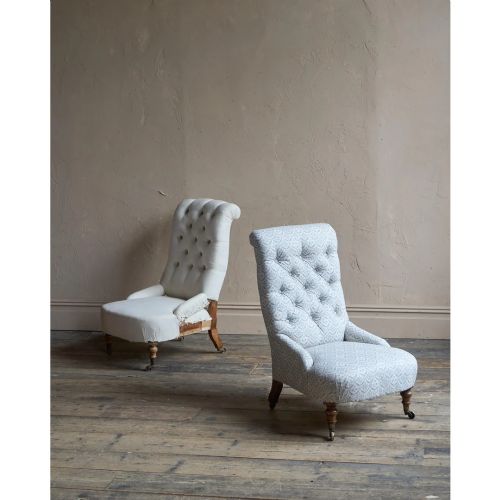
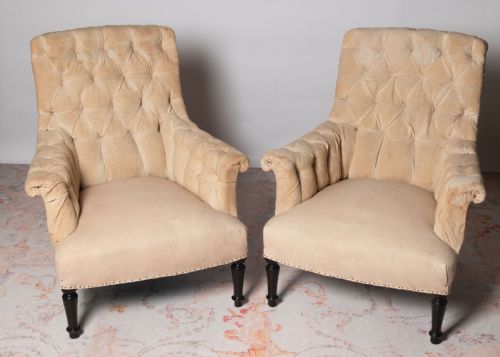
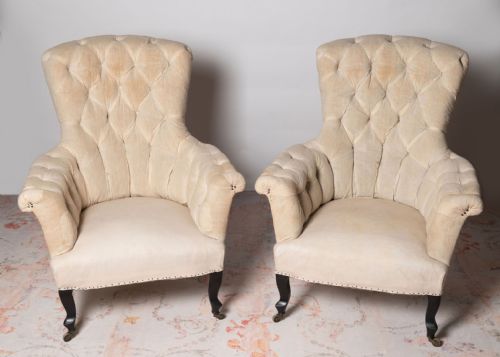
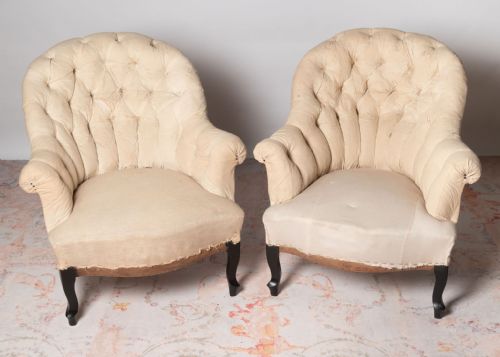
Button Tufted Bedroom Chair
Button tufted bedroom chair designs bring deep-buttoned upholstery and compact proportions into private quarters, offering a comfortable seat for dressing rooms and parlours.
Button Tufted Bedroom Chair
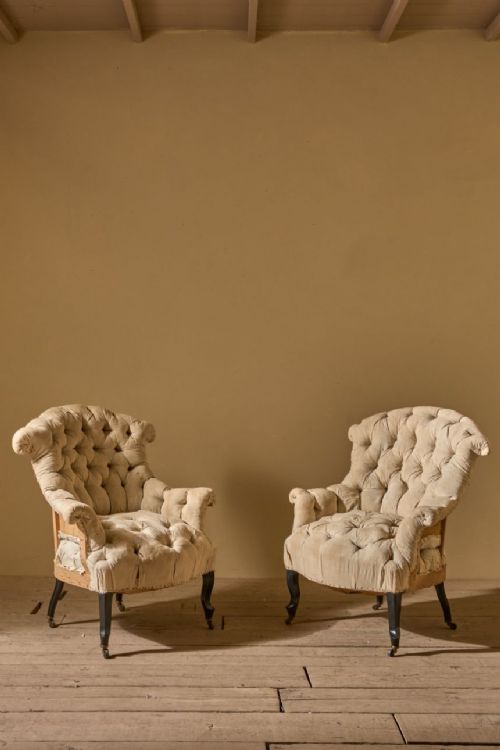
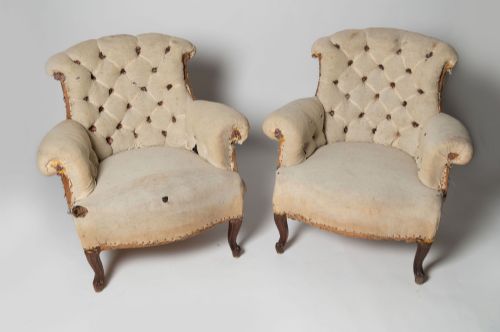
A button tufted bedroom chair encompasses low-slung slipper chairs, intimate nursing seats, and compact armchairs designed primarily for domestic chambers during the nineteenth and early twentieth centuries. These pieces emerge predominantly from Victorian and Edwardian workshops, alongside continental French variants reflecting Napoleon III and Louis XVI revival aesthetics.
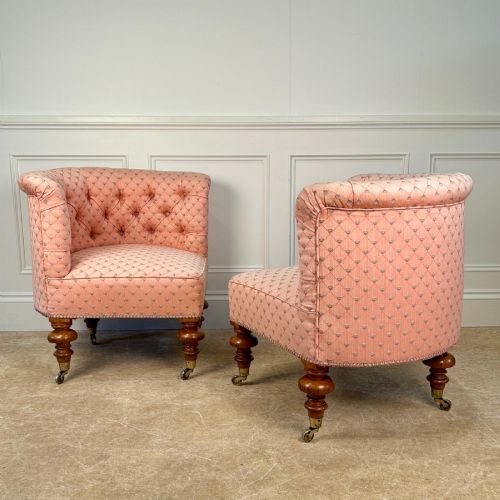
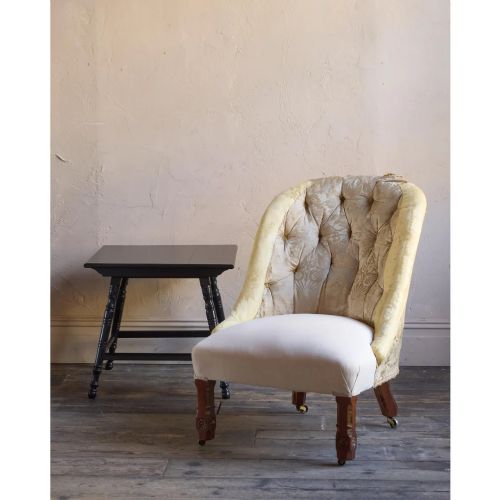
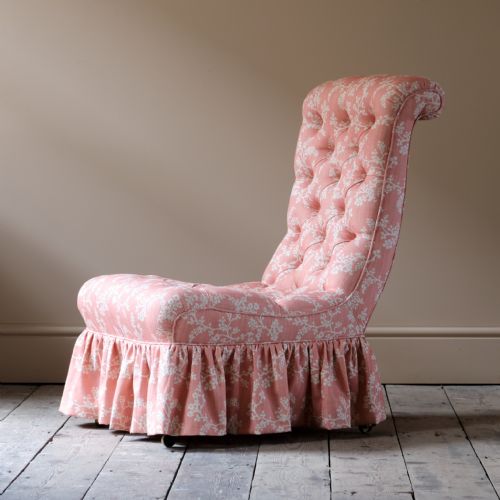
The form typically prioritises comfort and lower seat heights, intended historically for domestic dressing routines or quiet fireside sitting. Slipper chairs and ladies tub chairs feature prominently among the listed forms, often distinguished by enclosed padded backs and deeply sprung seats.
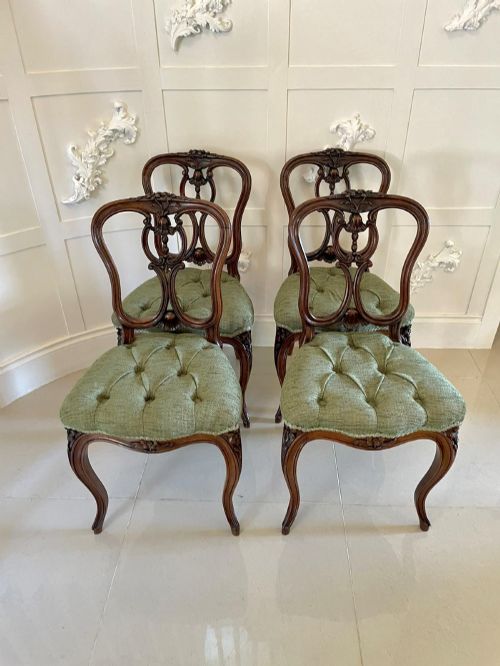
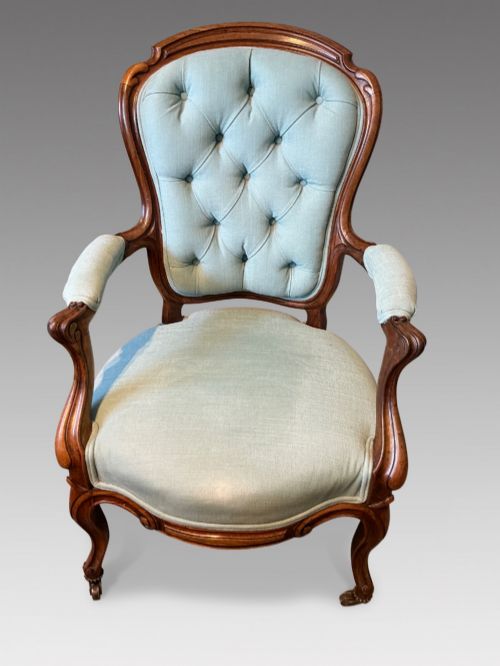
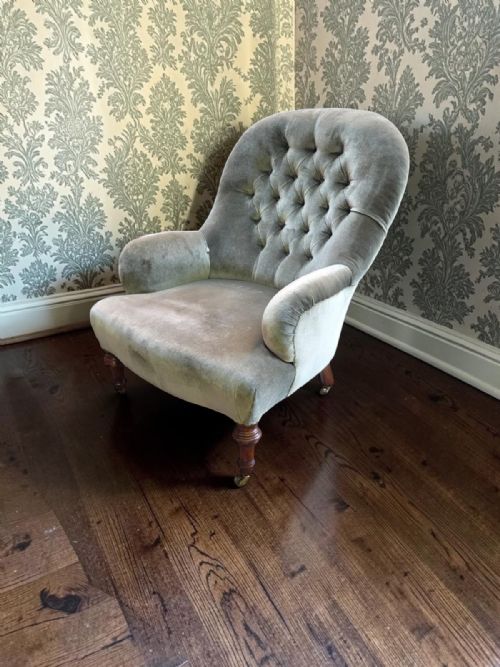
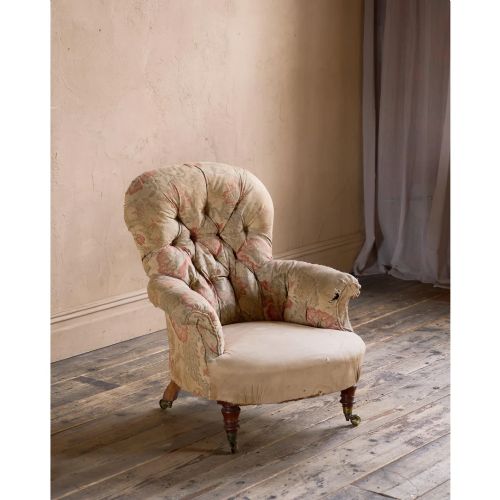
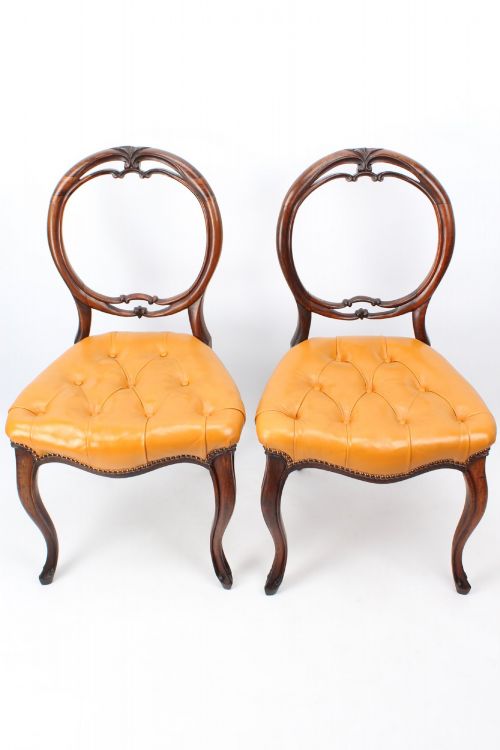
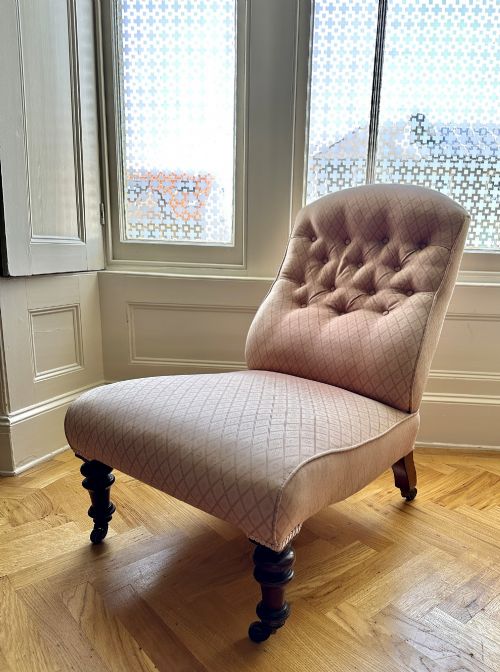
Makers utilised timber frames ranging from mahogany and walnut to oak and ebonised wood, overlaying them with plush velvet, calico, or red leather. The defining visual characteristic remains the buttoned back, which secures the padding while creating a geometric pattern across the textile.
Materials and Construction Techniques
Frames rely on hardwoods such as mahogany, walnut, oak, and rosewood, carved or turned to support the upholstered superstructure. Joinery is concealed beneath fabric linings, with brass castors frequently fitted to wooden or gilt legs for mobility.
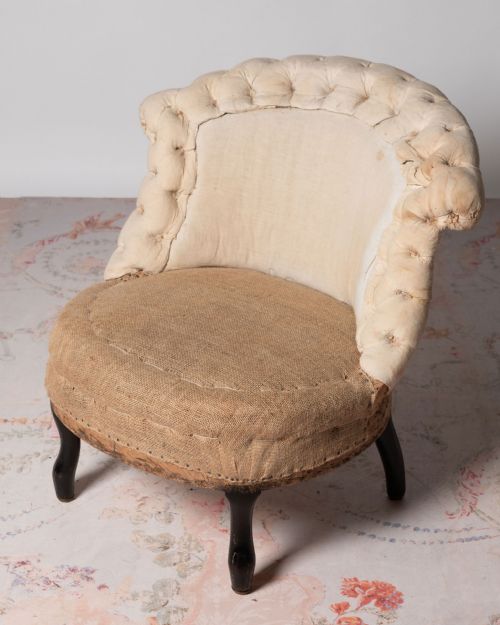
Upholstery techniques involve deep-buttoning, where twine passes through the padding and backing material to pull the fabric into uniform recesses, secured with tightly pulled knots. Brass tacks and fringes frequently edge the base upholstery of Victorian and French examples.
Listings feature Victorian, Edwardian, and nineteenth-century periods, utilising timber frames of mahogany, walnut, oak, and rosewood.
Distinctions in Quality and Craft
Quality rests in the integrity of the underlying wooden frame and the precision of the upholstery work. Pieces attributed to distinguished makers demonstrate superior carving on walnut or rosewood components and tighter, more resilient spring assemblies.
Subtleties in proportion and decorative finish set finer examples apart, such as gilt enrichment on ebonised frames or the deliberate scale of Aesthetic movement proportions. Original show-wood surfaces without excessive intervention retain greater integrity than heavily reworked frames.
Holland and Sons·Howard and Sons·Gillows
The Button Tufted Bedroom Chair Glossary
- Button-tufted
- Upholstery secured by deep stitches or buttons pulled through the padding to form a patterned grid. This technique keeps internal stuffing from shifting and creates a firm, tailored surface.
- Slipper chair
- A low-seated bedroom or dressing chair traditionally designed without arms to allow women to put on shoes or slippers easily. These chairs sit close to the floor on short wooden legs or castors.
- Nursing chair
- A low, upholstered seat popular in the Victorian period, designed to give mothers a comfortable position for nursing infants. They frequently feature low seats and supportive, high backs.
- Tub chair
- An armchair featuring a continuous curved back and arms forming a rounded enclosure. The design offers wrap-around comfort and usually sits on low wooden supports.
- Show-wood
- Exposed polished timber on an upholstered chair frame where the wood grain remains visible rather than covered in fabric. Walnut, mahogany, and rosewood are typical show-wood materials.
Button Tufted Bedroom Chair: Frequently Asked Questions
What is a button tufted bedroom chair?
A button tufted bedroom chair is a low, upholstered seat featuring deep-buttoned textile work across the backrest, designed historically for private rooms.
These pieces include slipper chairs, nursing seats, and compact armchairs originating mainly from the nineteenth century.
How were button tufted bedroom chairs used?
They served practical functions in domestic chambers, dressing rooms, and parlours, providing a comfortable place for resting or dressing.
Their lower seat heights and supportive padded backs made them suited to private quarters rather than formal reception rooms.
How do I identify a Victorian bedroom chair?
Victorian examples often feature dark hardwoods like walnut, rosewood, or mahogany, combined with deep-buttoned velvet, leather, or calico upholstery.
Turned wooden legs, frequently fitted with brass castors, and carved spoon-backs further signal nineteenth-century manufacture.
What is the difference between a slipper chair and a nursing chair?
A slipper chair is typically armless and sits very low to the ground to assist with dressing.
A nursing chair shares the low seat height but generally includes a higher, upholstered back designed for relaxed sitting.
How do I care for antique upholstered chairs?
Keep upholstered antique chairs away from direct sunlight and excessive heat sources to protect delicate fabrics like velvet and antique leather.
Gentle dusting of the wooden frame and professional textile cleaning help maintain the condition of the piece.