


Button Backed Chaise Longue
A button backed chaise longue offers reclining elegance, and finding the right one means balancing period woodwork with deep-buttoned comfort.
Button Backed Chaise Longue
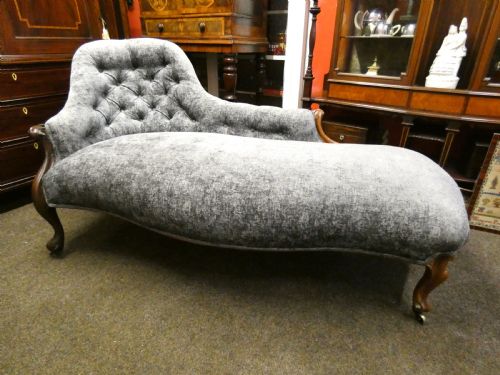
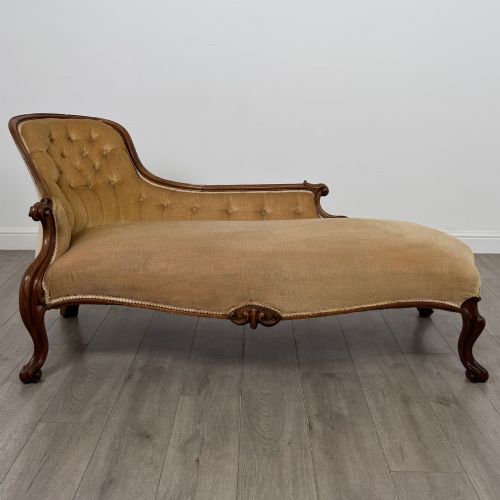
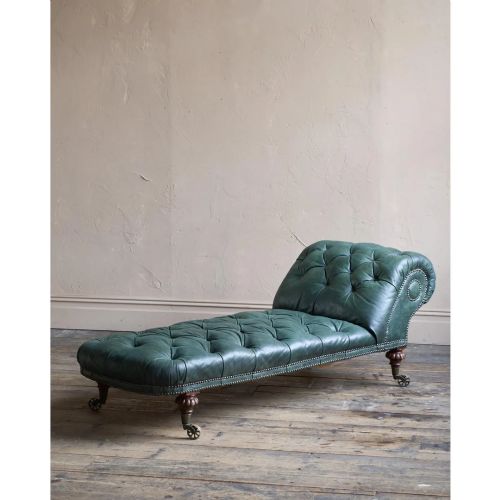
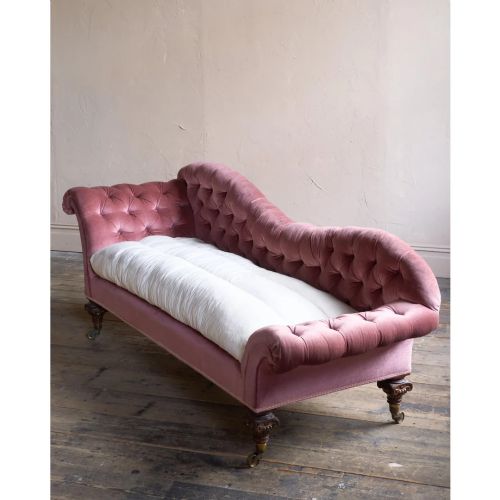
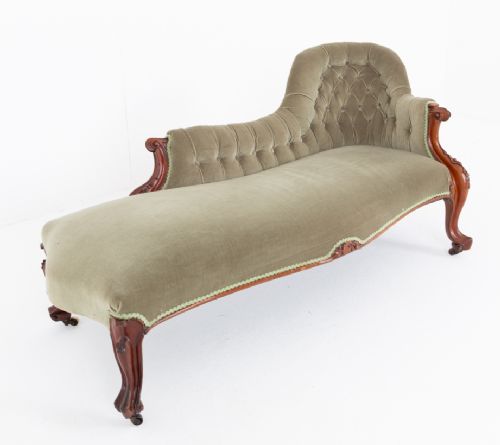
A button backed chaise longue is a reclining seat designed for semi-recumbent repose, combining the backrest of a sofa with the extended seat of a daybed. These pieces span the nineteenth century, with Victorian examples appearing most frequently alongside Regency and early twentieth-century variations.
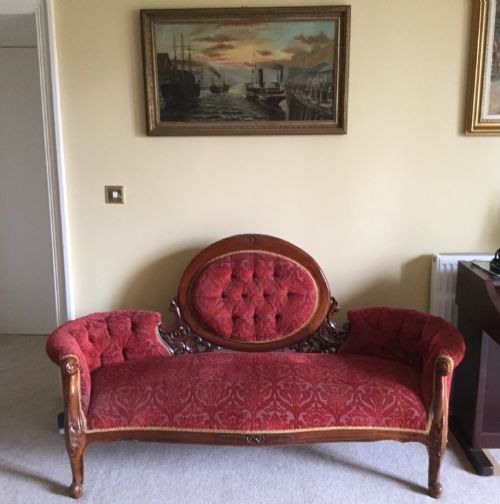
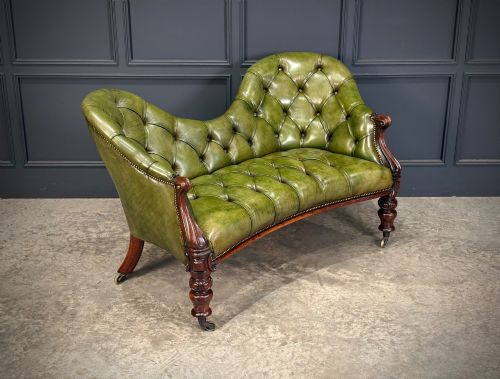
The form encompasses single-ended designs with a raised scroll end, double-ended sofas, and kidney-shaped frames. Timbers such as mahogany, walnut, and rosewood form the structural chassis, while upholstery ranges from rich velvet and fabric to whisky-brown and green leather.
Makers and workshops of the period produced these daybeds for formal drawing rooms and private boudoirs. Surviving examples demonstrate distinct stylistic evolutions, from early Victorian carved rosewood to later gilt-decorated day beds and Louis XVI revival frames.
Materials and construction
Cabinetmakers constructed the frames using dense hardwoods like mahogany, walnut, and rosewood, often featuring elaborate hand-carved details or ebonised finishes. Structural stability relied on traditional joinery, supporting serpentine rails and showwood frames.
Upholstery techniques defined the buttoned aesthetic, requiring skilled artisans to pull deep tufts into the fabric, velvet, or leather. Sprung seat bases and horsehair stuffing provided resilient support beneath the final covering.
Victorian conversation seats allowed two people to chat face-to-face while maintaining strict nineteenth-century propriety.
Judging quality and craftsmanship
The distinction between tiers rests upon the crispness of the timber carving and the architectural ambition of the frame. Higher-tier pieces display sculptural showwood, refined scroll ends, and intricate details like barley twist supports or ionic column legs.
Upholstery execution separates standard output from superior work. Deep buttoning requires precise geometric spacing and secure tensioning that maintains form without distorting the underlying wooden architecture.
Holland & Sons·Miles & Edwards·Howard and Sons
The Button Backed Chaise Longue Glossary
- Buttoned
- Upholstery pulled into deep indentations secured by fabric-covered or leather buttons. This technique creates a distinctive diamond pattern that holds internal stuffing firmly in place.
- Showwood
- Polished wooden framing left exposed around the upholstered sections of a seat. It highlights the grain and carving of timbers like mahogany or walnut.
- Scroll end
- The curved wooden terminal of a daybed or sofa backrest. It provides ergonomic support for the head or arm during reclining.
- Double-ended
- A sofa or daybed featuring raised headrests at both sides rather than a single end. This symmetrical form allows reclining from either direction.
Button Backed Chaise Longue: Frequently Asked Questions
How do I style a chaise longue?
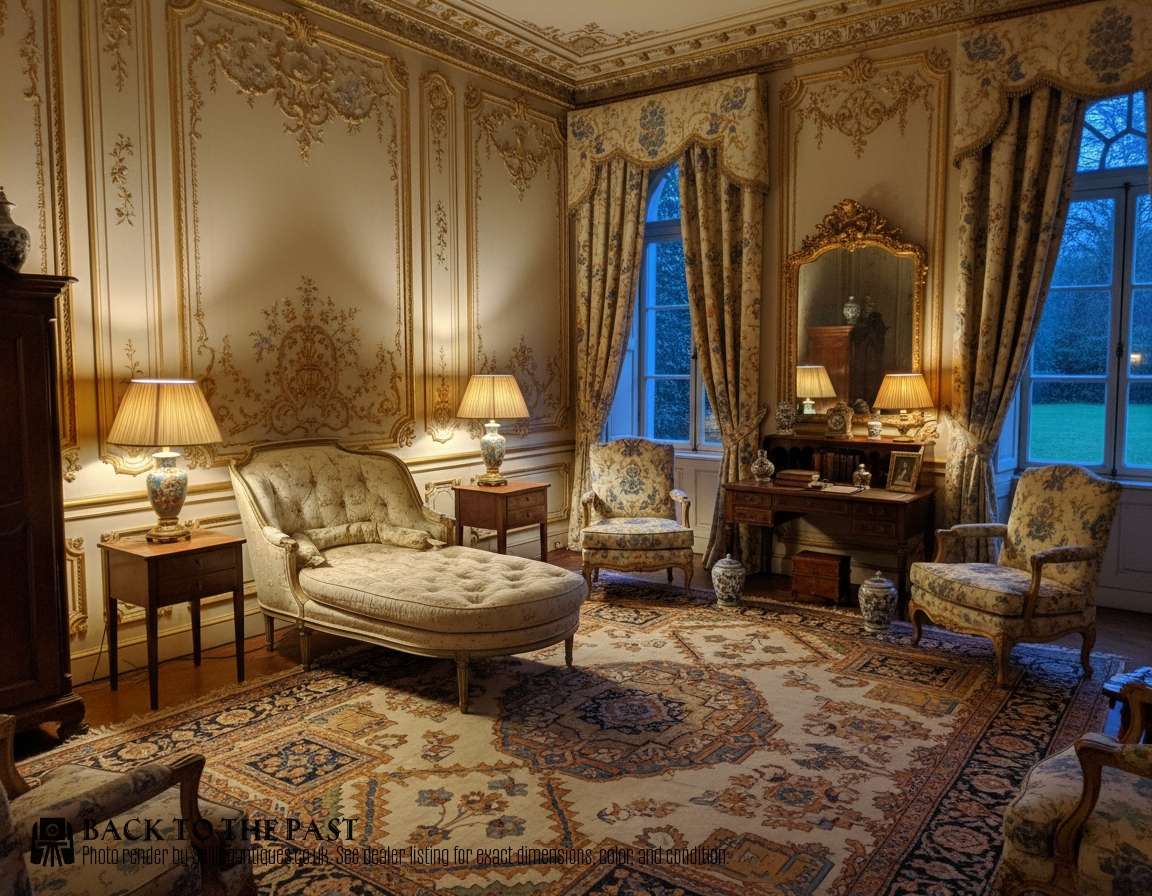
Place the piece against a principal wall in a living room or bedroom where its silhouette can be appreciated without blocking walkways.
Pair it with a low side table or position it to catch natural light for reading and resting.
Were these seats used for sleeping?
These daybeds were intended for daytime resting, reading, and receiving visitors in a semi-recumbent posture rather than overnight sleeping.
The raised end supported the head while the extended seat accommodated the legs.
How do I date a Victorian chaise?
Examine the timber choice, carving style, and frame proportions to determine the likely decade of manufacture.
Early pieces often display robust mahogany frames with restrained classical details, while later nineteenth-century examples show lighter woods and more ornate revival decoration.
Is leather original to these daybeds?
Both fabric and leather served as primary coverings depending on the room the seating was destined for.
Library and study daybeds frequently utilised dark leathers, whereas formal salons featured velvet and woven brocades.