





Button Back Side Chairs
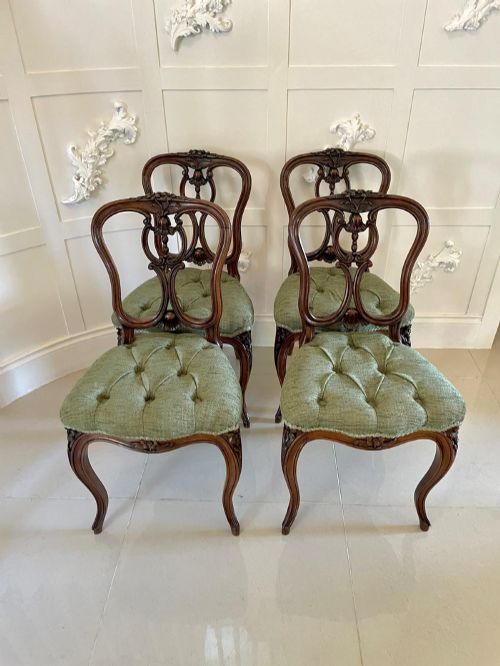
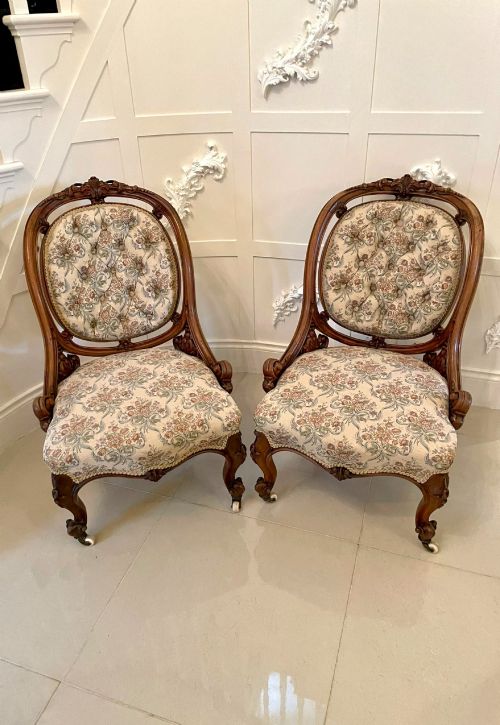
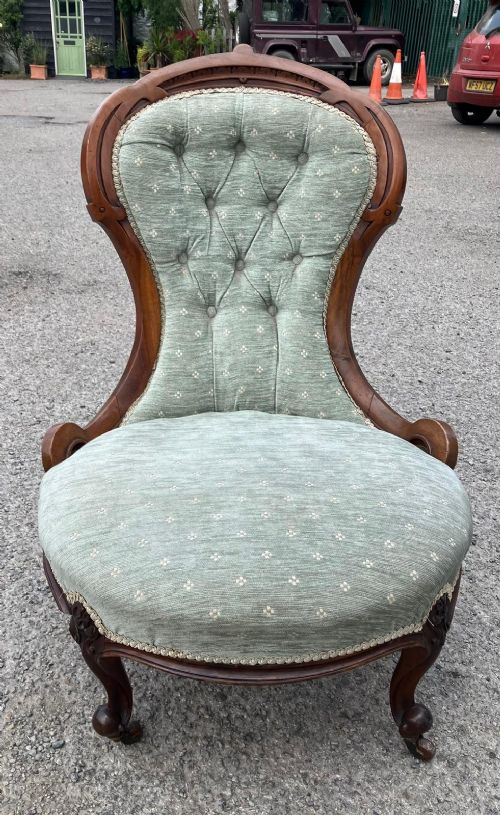
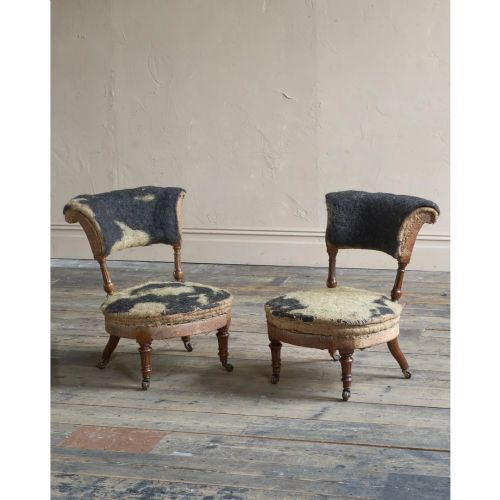
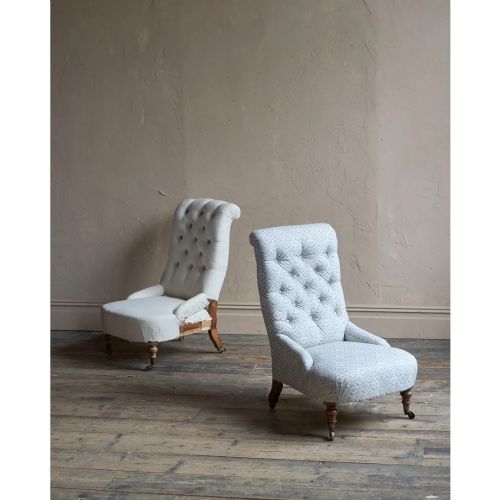
Button back side chairs offer low seats and buttoned upholstery, bringing nineteenth-century comfort and carved timber frames to a bedroom or parlour.
Button Back Side Chairs
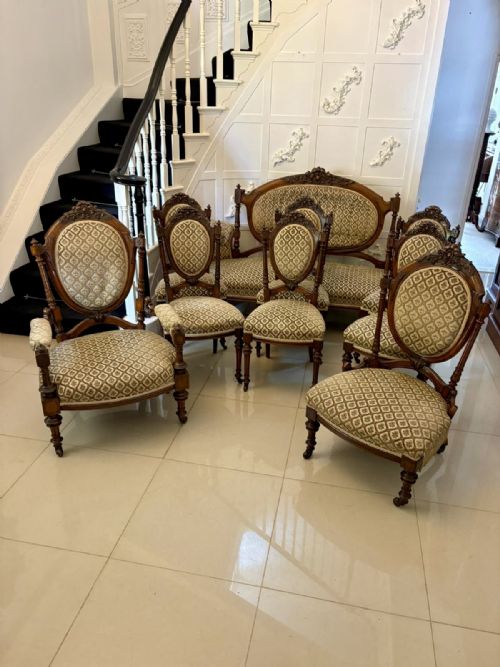
When you search for button back side chairs, you encounter seating forms spanning the nineteenth century into the Edwardian era, predominantly shaped by Victorian makers. These pieces emerge in walnut, mahogany, and rosewood, encompassing low-slung nursing chairs, bedroom chairs, and salon seating alongside larger dining sets.
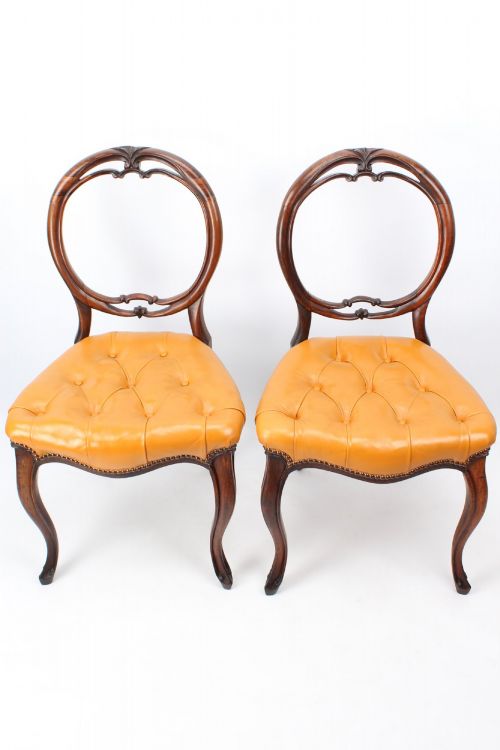
The Victorian examples dominate the selection, often featuring balloon backs, spoon backs, or scroll designs mounted on castors. Alongside these, William IV and Regency variants appear in mahogany, while Edwardian pieces continue the tradition in carved walnut with original upholstery.
Makers such as Howard and Sons, Gillows, and Blyth and Sons contribute to the heritage of these forms, working within styles that range from Rococo Revival to Louis XV. The smaller bedroom and nursing chairs frequently display the characteristic buttoned padding designed for sitting close to dressing tables or firesides.
Materials and construction
Makers constructed these frames from solid hardwoods including walnut, mahogany, rosewood, and ebonized timber, often employing carved decoration along the crest rails and cabriole legs. Brass castors frequently support the feet on nineteenth-century examples, allowing mobility across carpeted floors.
Upholstery techniques combined traditional stuffing with deep buttoning through the back panels, secured using textiles such as velvet, leather, fabric, and tapestry. Caned panels also appear on specific library and side chair variants alongside the fully padded surfaces.
Button Back Side Chairs Retail Price Guide 2026
Typical asking prices for button back side chairs among the pieces listed under this phrase on Sellingantiques today, from the lower quarter to the upper quarter. They describe what is for sale here now, not the wider market.
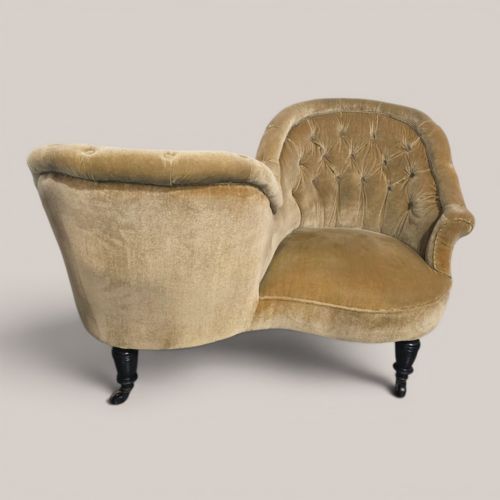
The selection includes specialised seating forms such as harpists' chairs and conversation sofas alongside standard dining and bedroom chairs.
Distinctions in craftsmanship
The distinction between ordinary production and top-tier work rests in the crispness of the timber carving and the integrity of the frame construction. Pieces associated with notable cabinet makers display more fluid lines in walnut and rosewood, coupled with substantial joinery that withstands centuries of use.
Upholstery execution separates workshop standards, where deep buttoning maintains precise tension across the backrest and maintains symmetrical folds in the fabric or leather. The choice of primary timber, from plain mahogany to finely figured walnut and rosewood, dictates the visual weight of the chair.
Howard and Sons·Gillows·Blyth and Sons·H. Samuel, London
The Button Back Side Chairs Glossary
- Button back
- Upholstered backrest featuring indented tufts secured by buttons arranged in a geometric grid. This technique creates cushioned padding across the surface.
- Nursing chair
- Low-seated Victorian chair designed for comfort, traditionally used by women while nursing infants or dressing. They often feature balloon or spoon backs.
- Bergère
- Enclosed armchair with cane or upholstered sides and back panels. These typically date from the Regency and nineteenth-century periods.
- Balloon back
- Ovoid or rounded chair back popular during the Victorian era. The curved wooden frame frames the upholstered centre.
- Spoon back
- Padded chair back shaped like the bowl of a spoon, curving inward to fit the human spine. It is a common feature on mid-nineteenth-century salon and nursing chairs.
Button Back Side Chairs: Frequently Asked Questions
What is a button back side chair?
A button back side chair is a nineteenth-century seat featuring deep-buttoned upholstery across the backrest and a timber frame built from walnut, mahogany, or rosewood. These chairs serve as bedroom, nursing, or salon seating.
They generally lack arms and stand on short legs, frequently fitted with brass castors to ease movement across nineteenth-century floor coverings.
How do I date a Victorian button back chair?
Dating relies on stylistic shifts in timber choice and frame profile, moving from William IV mahogany into Victorian walnut and rosewood revival styles. Cabinet makers often incorporated specific carving motifs like the spoon back or balloon back during the mid-nineteenth century.
Later Victorian and Edwardian examples show modified proportions and different upholstery treatments while retaining the core buttoned design.
Where were these chairs used in the home?
These chairs were placed in bedrooms, dressing rooms, and intimate parlours where low seating facilitated dressing or quiet conversation. Nursing chairs specifically sat near bedroom fireplaces.
Larger sets functioned around dining tables or in formal reception rooms as part of matching salon suites.
Are these chairs suitable for daily use?
Nineteenth-century frames provide sturdy seating constructed from solid hardwoods like mahogany and walnut, though internal webbing and padding may require professional restoration. Their compact dimensions suit modern living spaces as occasional chairs.
Care should be taken with delicate fabrics, leather, and original horsehair stuffing to preserve the integrity of the buttoned upholstery.