
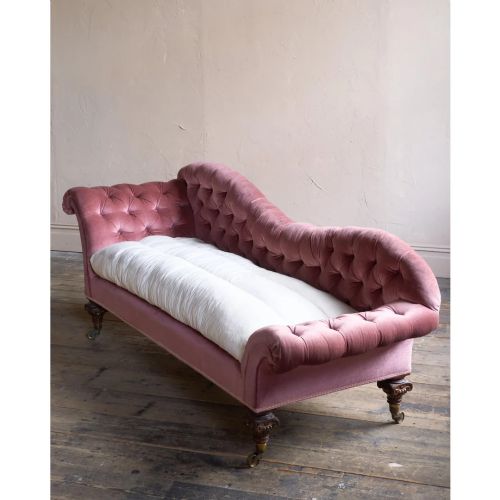
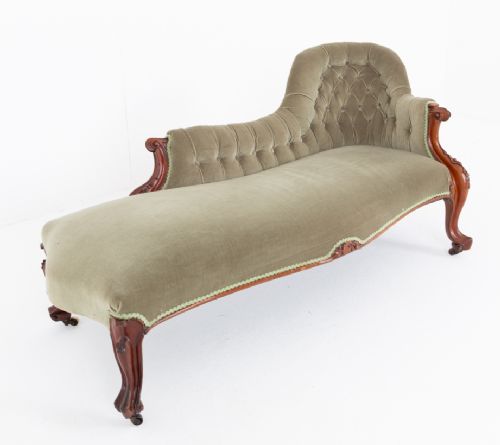


Button Back Daybed
A button back daybed offers reclining comfort with heritage form, combining timber frames with deep tufted upholstery for relaxed seating.
Button Back Daybed
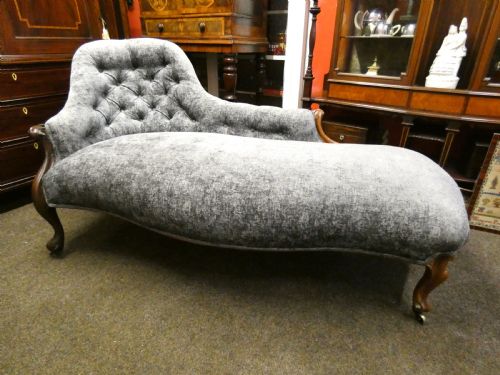
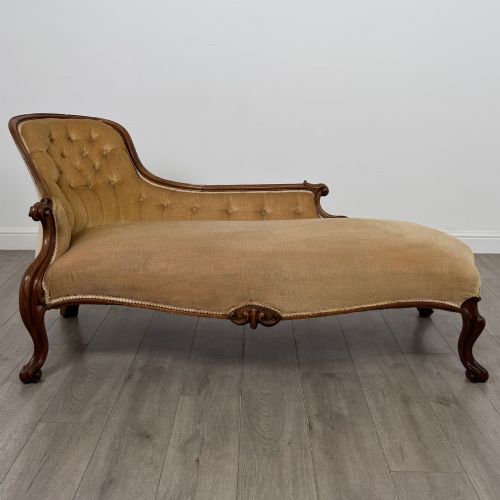
A button back daybed brings together nineteenth-century daybeds, chaise longues, and salon sofas. When you search for a button back daybed, you encounter nineteenth-century forms spanning Victorian, Regency, and William IV periods, alongside Louis XVI Revival pieces and French nineteenth-century examples. The most frequent versions on this page are Victorian rosewood and mahogany chaise longues featuring upholstered backs and side rests designed for reclining.
Makers recorded in the archive and current listings include C. Hindley & Sons, Holland & Sons, Miles & Edwards, and Howard & Sons. These pieces function as long seats for living spaces and drawing rooms, often taking the form of single-ended couches with carved frames and scrolled ends. Miniature furniture examples also appear among the selections, alongside kidney-shaped sofas and paired Regency day beds.
Materials and Construction Methods
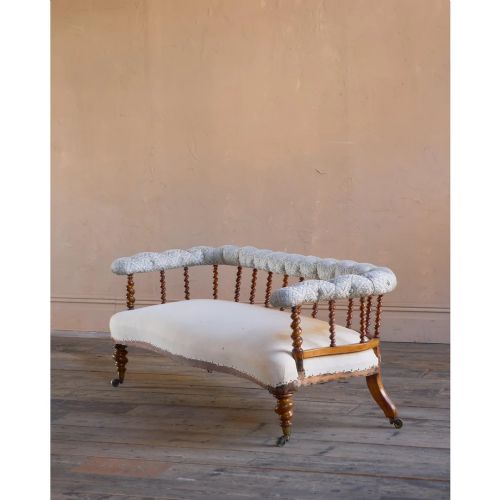
Frames are constructed from solid timber including mahogany, rosewood, walnut, ebonised wood, and occasional brass details. Woodworkers shaped these timbers into carved scroll ends, open arms, spindle backs, and Ionic column legs, with gilt decoration applied to select day beds.
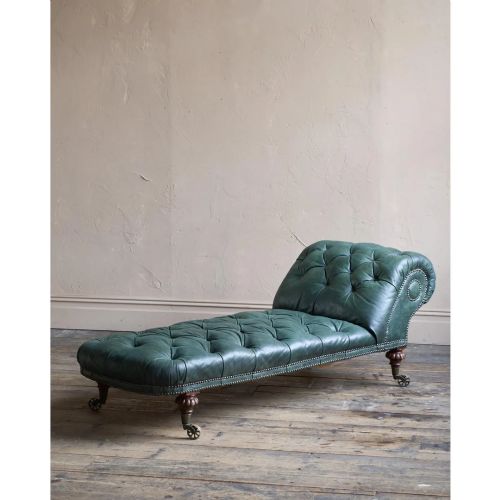
Upholstery relies on fabric, velvet, leather, and whisky brown hide secured with traditional buttoning techniques. Craftsmen built the padded surfaces over internal webbing and springs to support the deep tufted finish characteristic of Victorian seating.
Judging Quality and Execution
Quality rests in the crispness of the timber carving and the architectural balance of the frame, whether dealing with a rosewood Victorian chaise or a Regency mahogany day bed. Superior pieces show refined joinery in elements like scrolled ends and column legs, alongside thoughtful proportions that maintain structural integrity across a long span.
The standard of upholstery and buttoning distinguishes better examples, as does the choice of primary wood. Finer items utilise dense rosewood or well-figured mahogany, paired with carefully fitted leather, velvet, or fabric that follows the contours of the wooden frame without slackness.
C. Hindley & Sons·Holland & Sons·Miles & Edwards·Howard & Sons
The Button Back Daybed Glossary
- Chaise Longue
- A long upholstered chair for reclining, combining the function of a chair and a sofa. These pieces feature a single raised backrest at one end.
- Button Back
- An upholstery style where buttons are pulled deep into the padding at regular intervals to create a tufted surface. This method secures the internal filling while providing textural detail.
- Regency
- An English design period spanning the early nineteenth century, known for classical restraint and influences from ancient Greece and Rome. Pieces from this era often employ dark mahogany and clean architectural lines.
- Louis XVI Revival
- A nineteenth-century style drawing on eighteenth-century French neoclassical design. It typically showcases symmetrical frames, carved woodwork, and elegant proportions.
- Spindle Back
- A chair or sofa back constructed from a series of thin, turned wooden rods or spindles. This technique lightens the visual weight of large seating frames.
Button Back Daybed: Frequently Asked Questions
Where were daybeds placed in nineteenth-century homes?
Nineteenth-century daybeds and chaise longues typically stood in drawing rooms, parlours, or large bedrooms where residents could rest during the day without retiring to a bed.
Their elongated form allowed them to sit comfortably against a wall or function as a room divider while providing a supportive surface for reading or relaxing.
How do I identify a Victorian chaise longue?
Victorian examples often display rich timbers like rosewood or mahogany, paired with carved scrolling framework, upholstered single-ended backrests, and turned legs.
Many incorporate button-backed upholstery and deep springing, reflecting the era's preference for comfort combined with ornate woodwork.
How should I care for leather and velvet upholstery?
Leather upholstery benefits from periodic conditioning to maintain suppleness and prevent the hide from drying out over time.
Velvet surfaces require gentle brushing with the grain to lift dust and preserve the pile, avoiding harsh chemical cleaners that might damage the fabric.