



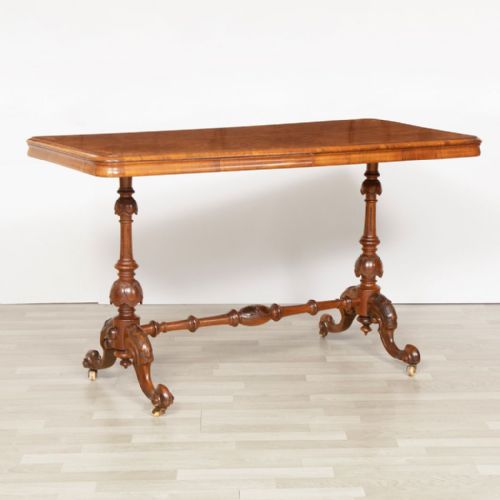


Burr Wood Work Table
These burr wood work tables bring striking natural grain and practical surfaces into a room, combining tactile timber with the clever compartments of the nineteenth century.
Burr Wood Work Table
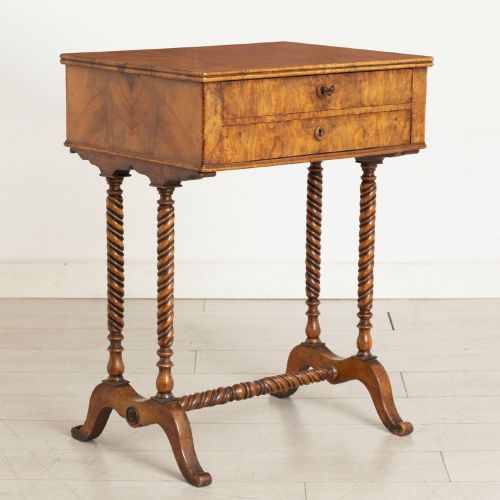
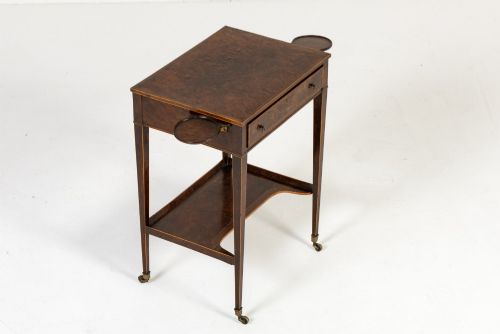
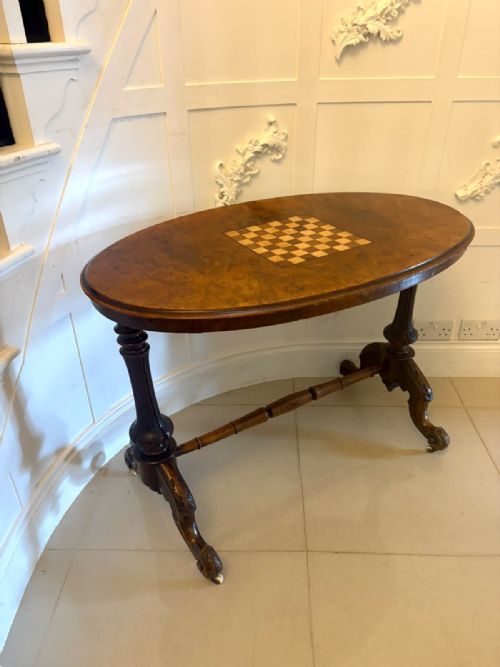
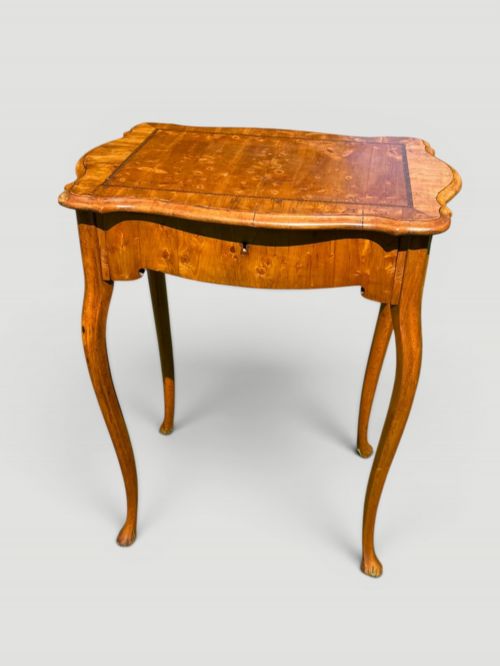
A burr wood work table offers a designated surface for domestic crafts alongside hidden compartments, standing as a staple of nineteenth-century interiors. These pieces appear primarily from the Regency and Victorian eras, taking forms that double as writing desks, games tables and occasional stands.
The varieties on this page lean heavily towards burr walnut and burr yew, accompanied by occasional examples in birch, elm, ash, pollard oak and amboyna. Alongside dedicated sewing and work tables, the selection includes side tables, centre tables and jewellery boxes sharing the same distinctive figured timber.
Materials and construction
Cabinet makers utilised highly figured burr veneers sliced from tree growths, applying them over solid secondary timbers to create rich, swirling grain patterns across tabletops and lids. These surfaces frequently incorporate contrasting boxwood and wood inlay, framing the wild patterns of the burr with precise geometric lines.
Internal compartments often feature fitted trays and fabric linings designed to hold sewing implements or writing materials. Brass mounts and drop-leaf mechanisms appear on select pieces, supporting the functional multi-use design demanded by nineteenth-century households.
The listings on this page span the Regency period through the Victorian era into the mid-twentieth century, dominated by burr walnut and burr yew.
Judging quality in burr timber
The density and movement of the burr grain dictate the visual impact of the piece, with tightly clustered eyes commanding greater attention than flat or plain sections of timber. Superior examples display seamless veneer matching across hinged lids and tabletops, ensuring the natural pattern flows without awkward interruptions.
Construction integrity separates standard items from exceptional ones, particularly in the smoothness of drawer actions, the snug fit of internal lift-out trays, and the stability of pedestal bases or turned legs. Integration of fine stringing, marquetry, and well-cast brass elements further elevates the standing of a piece.
Waring & Gillow
The Burr Wood Work Table Glossary
- Burr wood
- Timber harvested from tree growths or burls, producing dense, swirling patterns of knot clusters and distorted grain. It is sliced into thin veneers for cabinet work.
- Work table
- A small domestic table designed for sewing, needlework or light writing, usually equipped with internal compartments, drawers or an attached fabric bag.
- Marquetry
- The art of applying pieces of veneer to a structure to form decorative patterns and pictures. Craftsmen use various coloured woods to achieve pictorial detail.
- Stringing
- Thin lines of contrasting wood inlay used to outline panels, drawers and tabletops. This technique defines the edges of geometric designs on nineteenth-century furniture.
- Drop-leaf
- A table design featuring hinged flaps that fold down to save space or lift up to extend the top surface. These leaves are often supported by swinging brackets.
Burr Wood Work Table: Frequently Asked Questions
What is a burr wood work table used for?
These tables served nineteenth-century households as compact writing desks, sewing stations and occasional display surfaces in drawing rooms and boudoirs. Their internal compartments kept needlework, threads and letters neatly organised out of sight.
Today, they function effectively as lamp tables or bedside stands, offering a concealed drawer or well for modern trinkets while displaying rich natural timber grain.
How do I tell a Regency work table from a Victorian one?
Regency pieces, dating from the early nineteenth century, tend to feature cleaner architectural lines, lighter woods such as burr yew or pollard oak, and restrained brass details. Their proportions remain crisp and classical.
Victorian examples from the mid to late nineteenth century frequently showcase heavier burr walnut veneers, elaborate marquetry inlay, carved pedestal bases, and complex serpentine shapes.
Are all burr wood tables made of solid burr timber?
Cabinet makers rarely constructed entire tables from solid burr wood because the twisted grain makes it unstable and prone to warping. Instead, they sliced the burr into thin veneers and applied them over stable secondary timbers like pine or mahogany.
This technique allowed craftsmen to display the dramatic swirling patterns safely across wide surfaces while maintaining structural durability.
How should I care for an antique burr walnut surface?
Protect the antique polish by keeping the table away from direct sunlight and heat sources, which can dry out and crack the old veneer. Use coasters and avoid placing damp items directly onto the wood.
Apply a light coat of quality beeswax periodically to nourish the timber and maintain a soft, natural sheen without building up heavy chemical layers.