
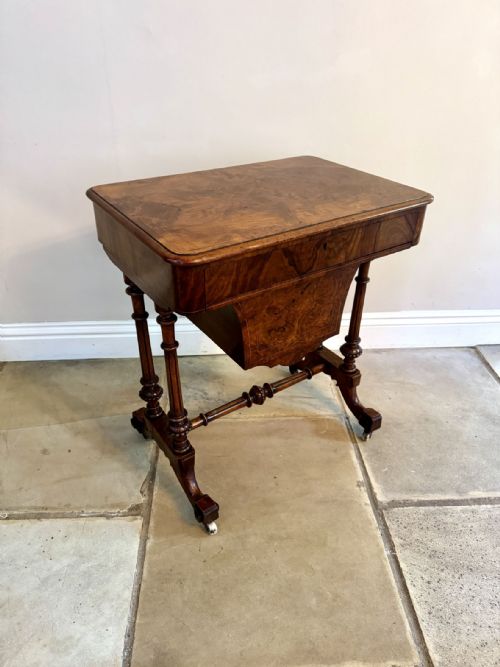
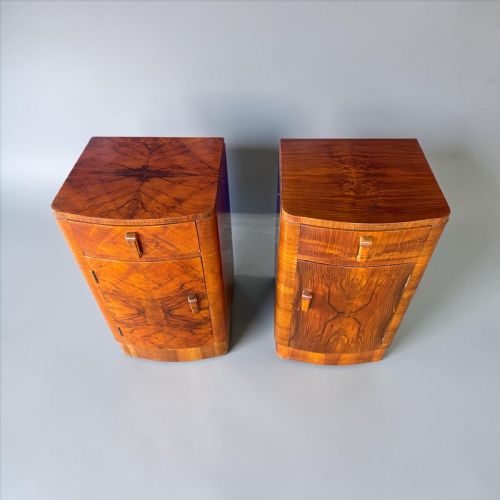
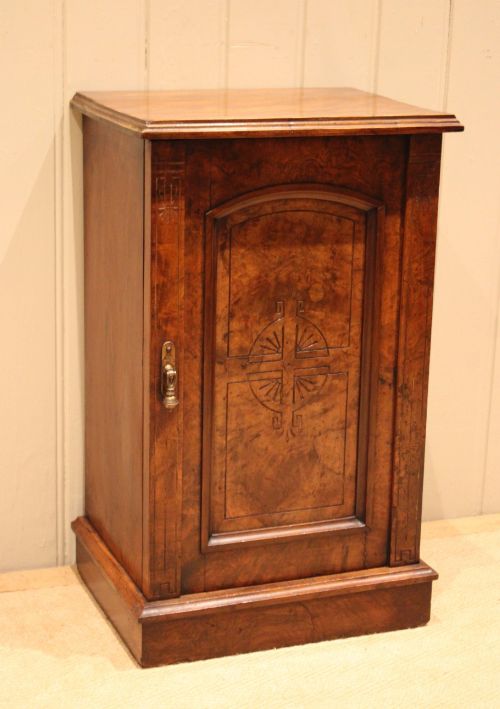
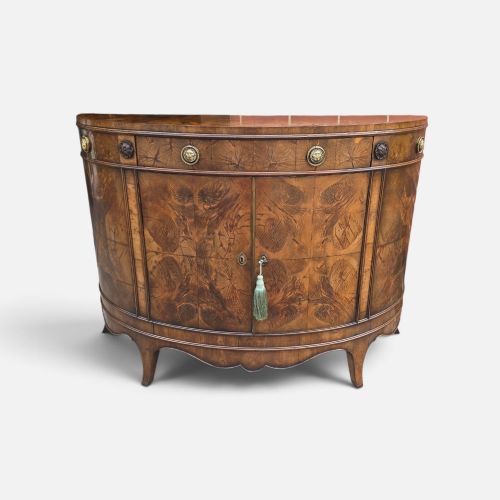
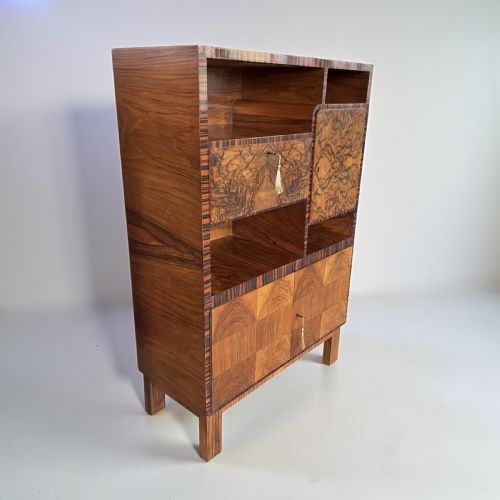


Burr Wood Side Cabinet
A burr wood side cabinet brings rich, swirling grain patterns and practical storage into a room.
Burr Wood Side Cabinet
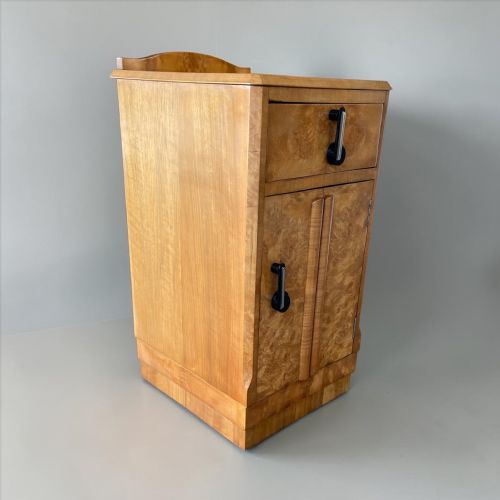
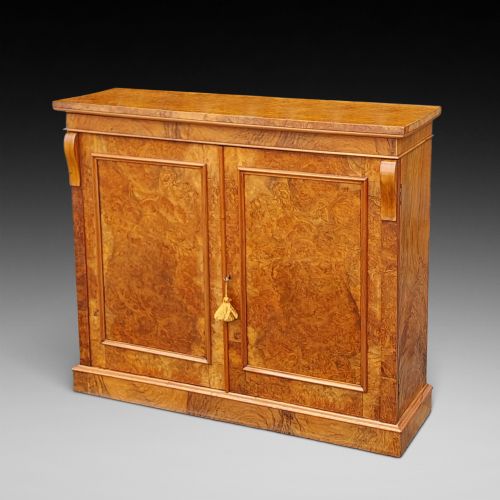
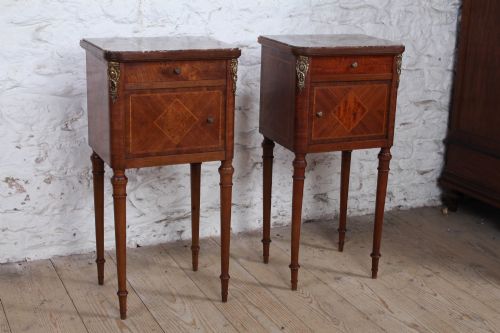
A burr wood side cabinet is a storage piece designed to sit against a wall, frequently taking the form of a credenza, pier cabinet, or bedside table. These items emerge from periods spanning the eighteenth century through to the art deco era of nineteen thirty.
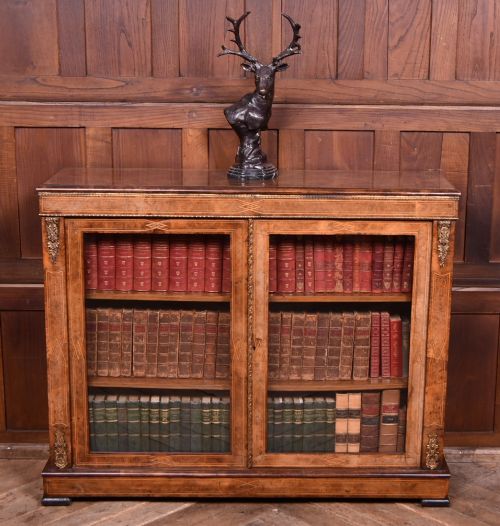
The selections on this page lean heavily toward Victorian examples alongside art deco designs. Forms range from compact bedside tables to glazed display cabinets and serpentine credenzas.
Origins stretch across English workshops and continental makers, incorporating smaller bedside cupboards and larger breakfront bookcases. Walnut, yew, and elm provide the characteristic figured surfaces across these varied shapes.
How they were made
Cabinet makers utilised thin slices of burr veneer applied over solid secondary timbers to display the complex, knotty grain patterns of walnut, yew, and elm. These figured veneers required precise matching and hand-laying to achieve symmetrical patterns on doors and top surfaces.
Construction frequently incorporated secondary woods like fruitwood or plain walnut for internal carcases, whilst mounts of brass or ormolu and marble tops appeared on high status examples from the Victorian and eighteenth century periods.
Listings feature burr walnut, burr yew, and burr elm across pieces spanning the eighteenth century to art deco nineteen thirty.
What varies in quality
Quality rests primarily on the selection and density of the burr figure in the wood veneer and how symmetrically it is arranged across the piece. Finer examples display continuous, unbroken patterns across doors and drawers rather than patched sections.
Hille·S Jamar·Waring & Gillow
The Burr Wood Side Cabinet Glossary
- Burr wood
- Wood taken from a tree growth where the grain has grown in a deformed, swirling manner. This produces highly decorative patterns full of small knots and eyes.
- Credenza
- A low dining room or parlour cabinet, often featuring glass doors or central cupboards flanked by curved side sections. Victorian examples frequently incorporate marquetry and ormolu.
- Veneer
- A thin layer of choice wood applied to a base timber of lesser quality. This technique allowed makers to utilise expensive burr timbers economically.
- Pier cabinet
- A narrow cabinet designed specifically to stand against the wall space between windows. These pieces often have glazed doors for displaying porcelain or books.
Burr Wood Side Cabinet: Frequently Asked Questions
Where should I place a burr wood side cabinet?
These cabinets suit hallways, living rooms, and bedrooms where their decorative grain can be appreciated up close. Placing them away from direct sunlight protects the polished wood and delicate veneers from fading.
Smaller bedside versions fit neatly beside a bed, while larger credenzas serve as focal points against living room walls.
How do I care for burr wood furniture?
Dust the surfaces regularly with a soft, dry cloth to prevent dirt build-up in the intricate grain crevices. Avoid using silicone sprays or harsh chemical polishes that can damage old finishes.
Keep the cabinet away from direct heat sources and radiators to prevent the wood veneer from drying out and lifting.
How can I tell a Victorian burr walnut cabinet from an art deco one?
Victorian cabinets from the nineteenth century often feature ornate marquetry inlay, carved details, and shaped serpentine fronts. Ormolu mounts and polished brass hardware are also common on these earlier pieces.
Art deco pieces from nineteen thirty display cleaner, more geometric lines with modernist three-tiered structures and minimal ornamentation, relying entirely on the natural burr elm or walnut grain for visual impact.