
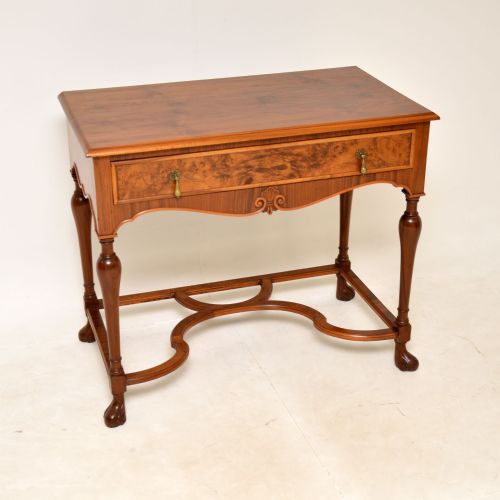


Burr Wood Hallway Table
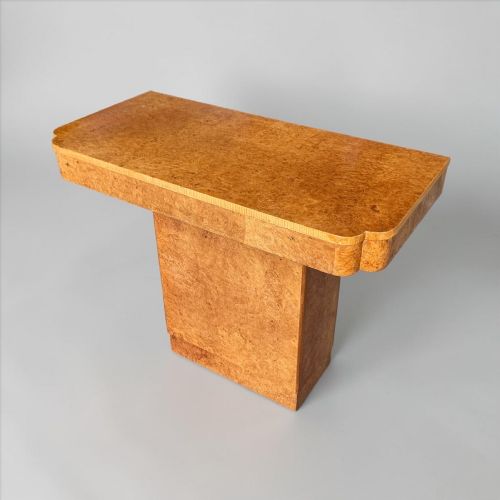
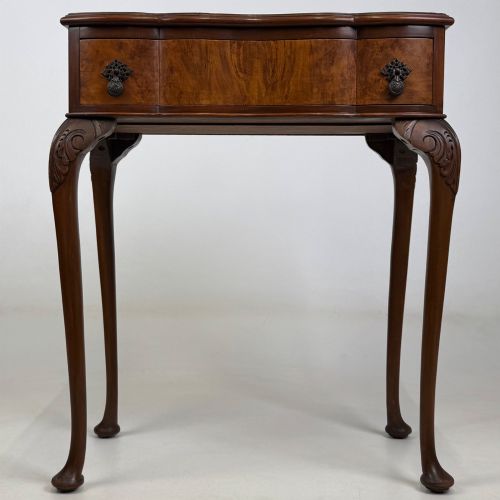
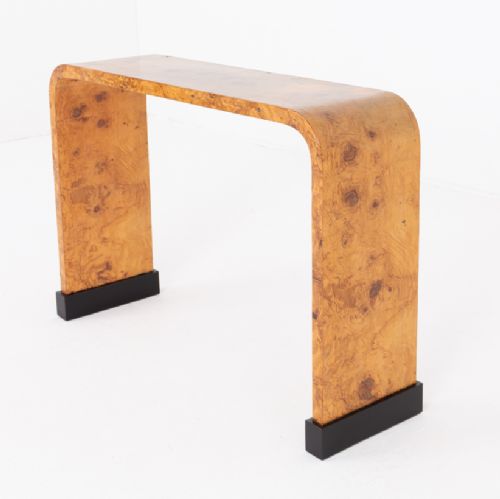
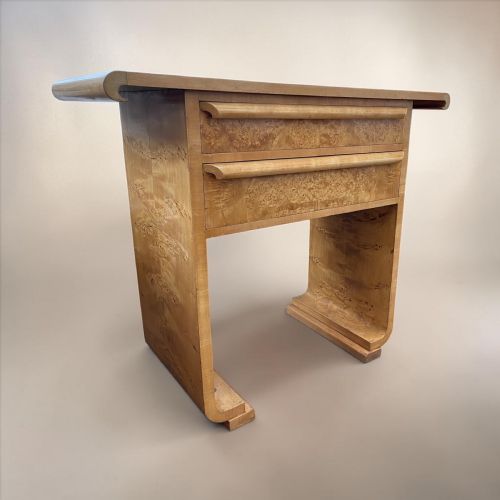
These burr wood hallway table options bring striking figured grain and practical proportions straight into an entrance space.
Burr Wood Hallway Table
A burr wood hallway table selection offers console and side table forms designed to sit neatly against a passage wall. These items emerge from various periods including Victorian, Edwardian, nineteen-ten, nineteen-thirty, and the nineteenth century.
The assortment relies on console tables and side tables shaped by styles such as Art Deco, Edwardian, Queen Anne, and Empire Revival. Buyers meet walnut, burr walnut, burr birch, and burr maple surfaces across these listings.
Makers and retailers like Fortnum and Mason appear in the record alongside unmarked period examples. Most pieces focus on the entrance hall or serving function within the home.
How they were made
Craftsmen utilised timber foundations overlaid with wood veneer to display intricate burr figures. Walnut and birch veneers form the primary visual surfaces.
Metal elements such as brass appear on certain hardware details, while marble provides a durable top surface on specific console variants.
The listings span five distinct periods, stretching from the nineteenth century through Victorian and Edwardian eras to nineteen-ten and nineteen-thirty Art Deco designs.
What varies in quality
Quality rests upon the selection and matching of the veneer grain across the primary surfaces. Finer examples display symmetrical burr patterns that catch the eye immediately.
Construction methods and period detailing dictate the standing of each piece. Tables carrying attribution to established houses like Fortnum and Mason show higher refinement in their joinery and finish.
Fortnum and Mason
The Burr Wood Hallway Table Glossary
- Burr wood
- Timber harvested from a tree growth where the grain has grown in a deformed, swirling manner. This produces highly decorative patterns prized for veneering furniture.
- Console table
- A table designed to be fixed against a wall, often supported by brackets or legs at the front. It serves decorative and utilitarian purposes in a hallway.
- Veneer
- A thin slice of superior wood applied to a commoner timber base. This technique allows makers to showcase expensive burr patterns economically.
- Empire Revival
- A nineteenth and twentieth-century style drawing inspiration from the neoclassical designs of the French Empire. It favours bold forms and classical motifs.
- Side table
- A small table intended to stand against a wall or beside furniture. These items provide useful surface space in domestic interiors.
Burr Wood Hallway Table: Frequently Asked Questions
What is a burr wood hallway table?
These items are console or side tables surfaced with highly figured wood veneer. They fit narrow spaces like hallways and landings.
Their decorative grain patterns provide an immediate visual focal point upon entering a home.
How do I date these tables?
Dating relies on stylistic clues, construction methods, and materials recorded in the specific listing. Art Deco pieces display geometric lines from nineteen-thirty, while Victorian items show heavier proportions.
Comparing leg shapes and veneer work helps distinguish Edwardian and nineteenth-century examples from later revivals.
Where should I place a console table?
These tables suit narrow entrance passages and hallways where floor space is limited. They provide a surface for keys, lamps, and decorative objects.
Matching the table style to your existing interior architecture ensures a balanced arrangement.
How do I care for burr walnut veneer?
Protect the surface by keeping it away from direct sunlight and excessive moisture. Regular dusting with a soft, dry cloth maintains the finish.
Avoid placing hot items or liquids directly onto the wood.