

Burr Walnut Tilt Top
When you handle a burr walnut tilt top, you touch a piece where the figured timber does the heavy lifting.
Burr Walnut Tilt Top
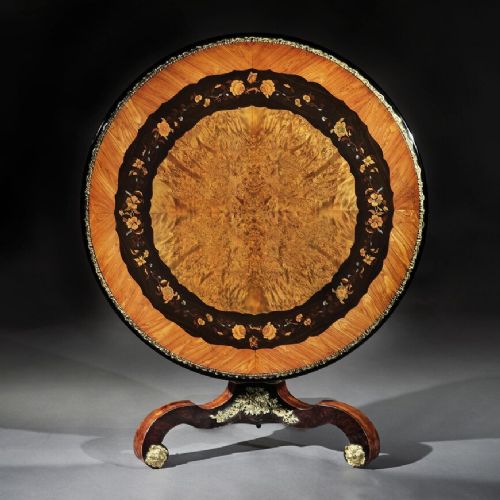
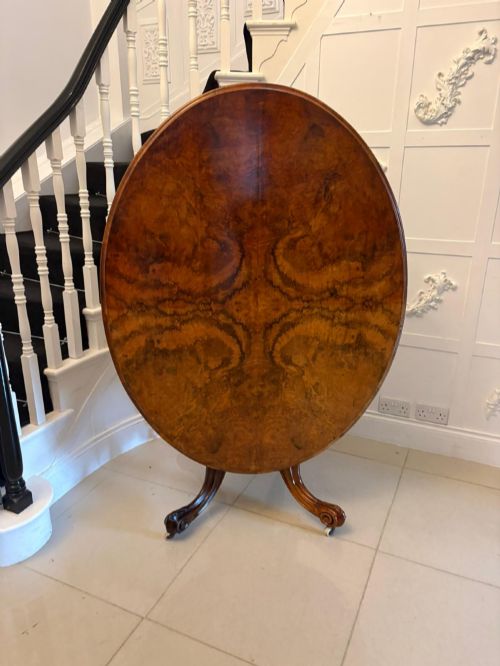
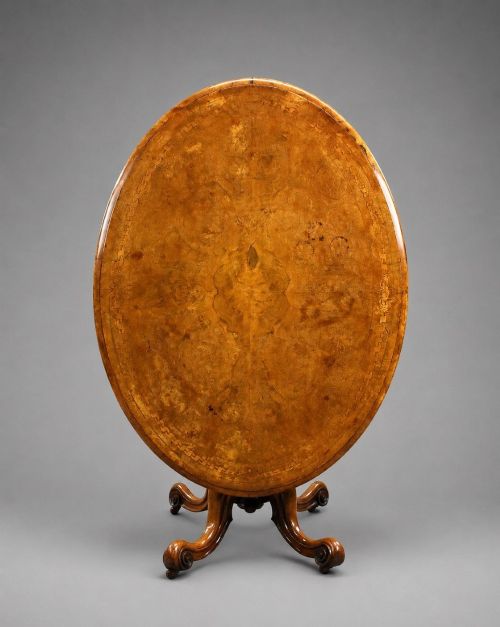
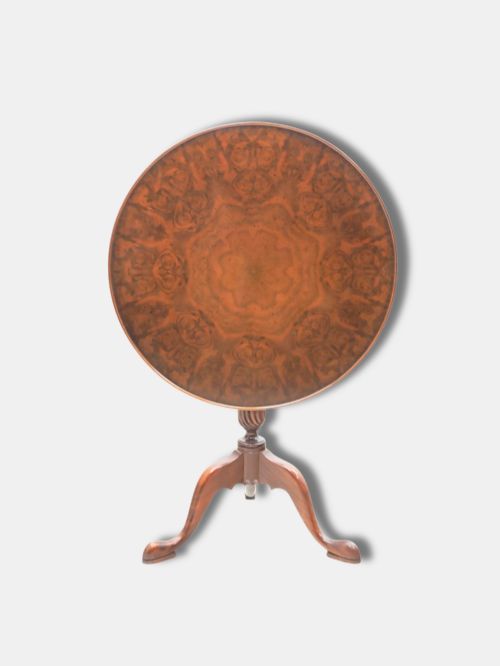
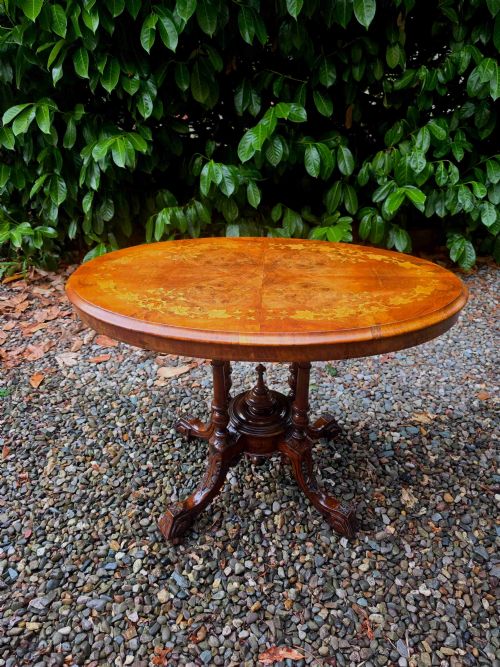
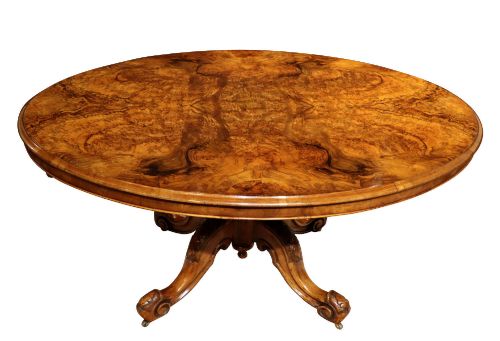
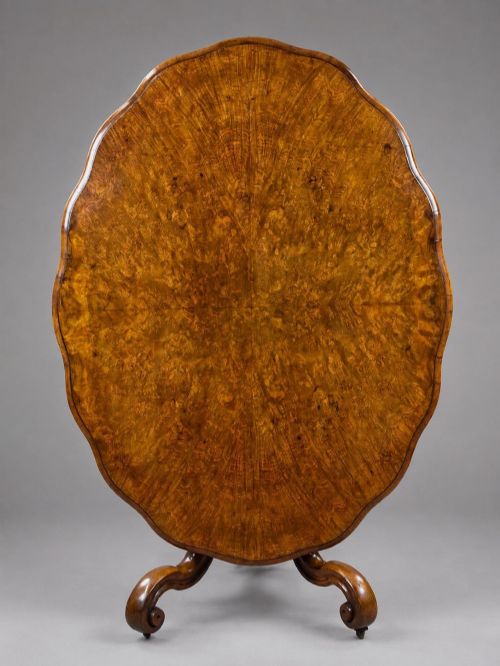
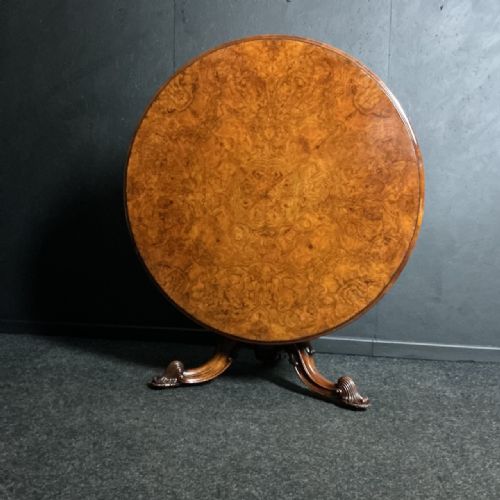
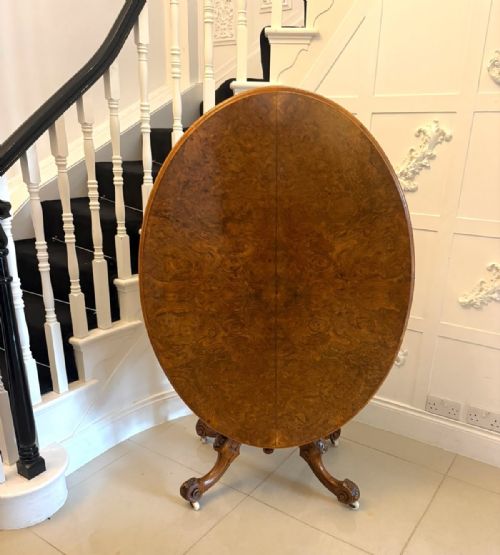
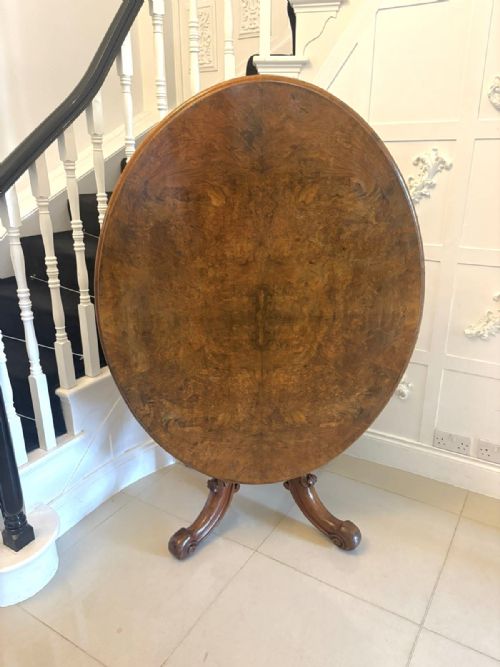
A burr walnut tilt top brings together nineteenth-century ingenuity and decorative woodwork, appearing most often on this page as an oval loo, breakfast, or centre table supported by a pedestal base. These pieces date principally from the Victorian era, spanning decades such as eighteen-sixty and eighteen-seventy, alongside occasional later revivals.
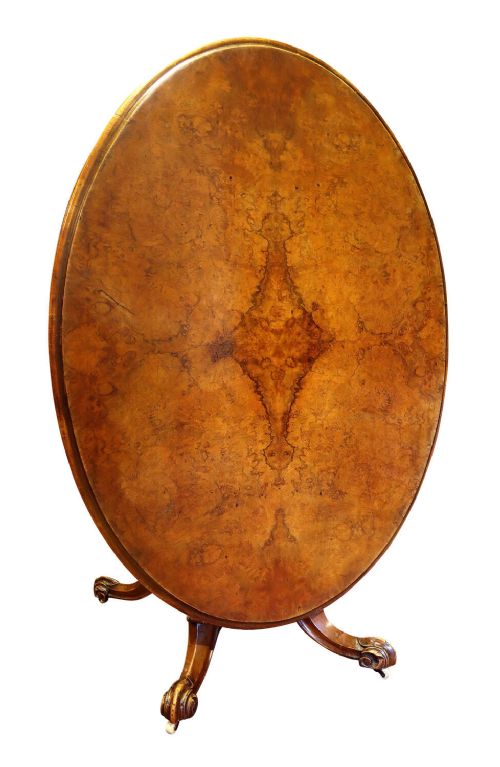
The format serves multiple domestic roles, functioning as a dining or centre surface when lowered and tilting vertically to save space against a wall when not in use. Oval and round formats dominate the selection, frequently configured with seating capacity for four or six people.
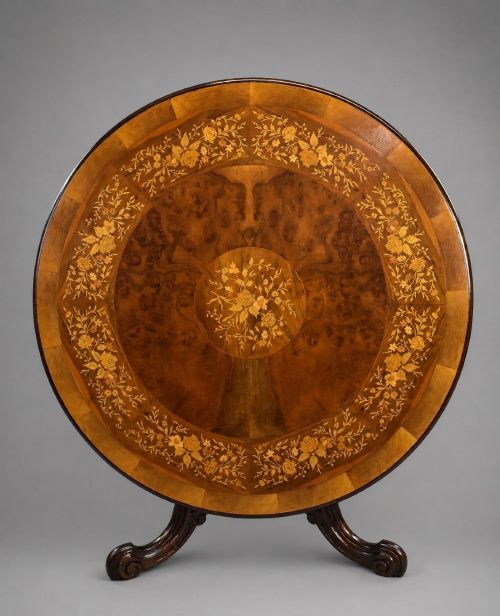
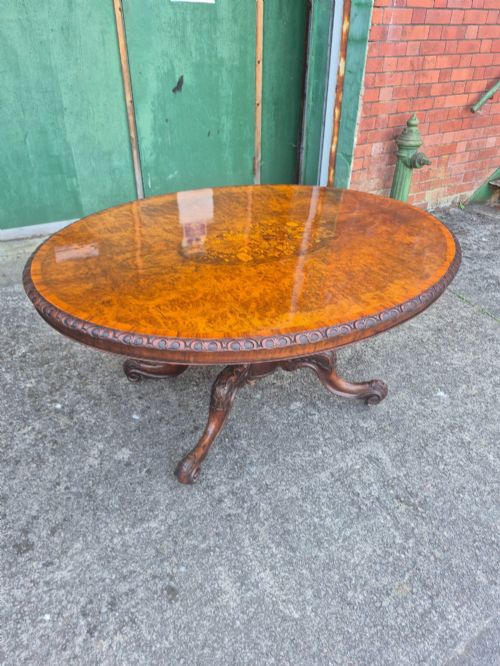
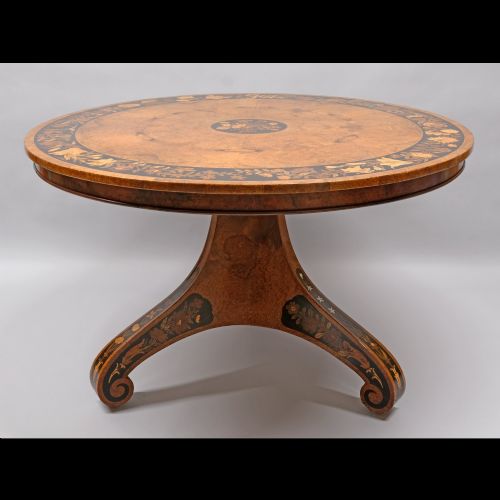
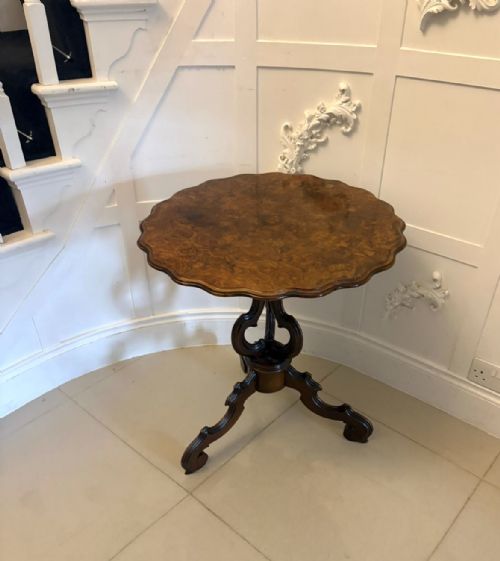
Cabinet makers designed these tables to showcase the striking growth patterns of walnut burl, often framing the central top with marquetry, boxwood inlay, or fruitwood details. The underlying structure relies on a pivoting mechanism secured to a tripod or quadrapod timber base.
Construction and Materials
Constructors sliced thin veneers from walnut burls - the gnarled excrescences of the tree - and laid them over stable secondary timbers to create swirling, highly figured tabletops. They enhanced these surfaces using contrasting stringing, boxwood inlay, fruitwood marquetry, and occasional brass fittings.
The tilting mechanism requires a sturdy pivot block and release catch beneath the surface, allowing the heavy walnut top to snap securely into a horizontal position or fold back safely. Carved central pedestals rest upon three or four legs, frequently finished with scrolling feet or castors.
Victorian hosts relied on these tilting tops to magically vanish large tables against the drawing-room wall before guests arrived for dancing.
Judging Quality
The density, symmetry, and visual depth of the burl veneer dictate the primary visual impact of the piece, with tighter and more complex grain patterns commanding attention. Craftspeople who aligned marquetry motifs precisely with the contours of the oval top achieved a more harmonious result.
Structural integrity depends upon the smooth operation of the tilt mechanism and the rigidity of the central pedestal joint. Tables that retain their original brass hardware, unwarped tops, and crisp carving on the base display superior workshop origins.
Edward Holmes Baldock·Gillows
The Burr Walnut Tilt Top Glossary
- Burr Walnut
- Timber sliced from the warted growths of walnut trees, yielding intricate, swirling grain patterns. Cabinet makers prized this wood for high-status Victorian tabletops.
- Tilt Top
- A hinged tabletop mechanism that allows the surface to pivot into a vertical position. This design enabled nineteenth-century households to clear floor space easily.
- Loo Table
- A large Victorian parlour table designed for card games like loo, which frequently featured a tilt top. These pieces double easily as breakfast or centre tables.
- Marquetry
- Decorative woodwork where different coloured veneers are fitted into a design on a solid ground. Floral and geometric motifs appear frequently in these pieces.
- Quadrapod
- A four-legged pedestal base supporting the central column of a heavy table. This configuration provides stability for wide oval breakfast surfaces.
Burr Walnut Tilt Top: Frequently Asked Questions
How do I operate the tilt mechanism?
Release the brass catch or wooden wedge located beneath the tabletop to allow the surface to pivot backward on its hinge. Ensure you support the weight of the top with both hands during the transition.
Lock the catch firmly back into place once the table is fully vertical or horizontal to prevent unintended movement.
Were these tables used for dining?
Many larger oval examples served dual purposes for morning breakfast and evening gatherings, offering generous seating space for four to six diners.
Smaller round variants functioned primarily as occasional, lamp, or wine tables rather than full dining surfaces.
How do I care for burr walnut veneer?
Keep walnut furniture away from direct sunlight and heat sources to prevent the thin veneer from drying out, cracking, or lifting from the core wood.
Apply a traditional beeswax polish sparingly and buff with a soft cloth to maintain the natural lustre of the nineteenth-century finish.
How can I tell Victorian pieces apart?
Examine the construction methods underneath the top, looking for hand-cut screws, traditional dovetailing, and the heavy timber framing typical of nineteenth-century workshops.
Stylistic cues such as aesthetic movement linearity, French revival curves, or heavy carved pedestal bases help narrow down the decade of manufacture.