

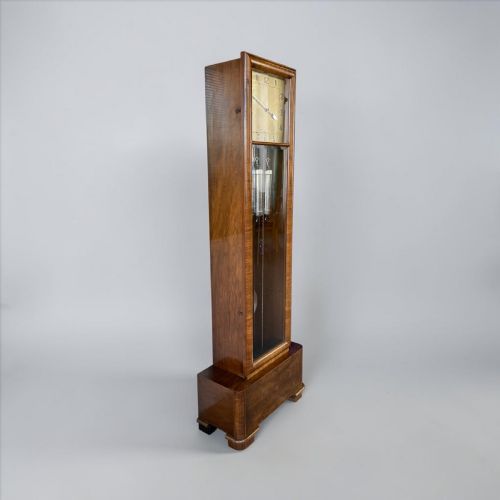
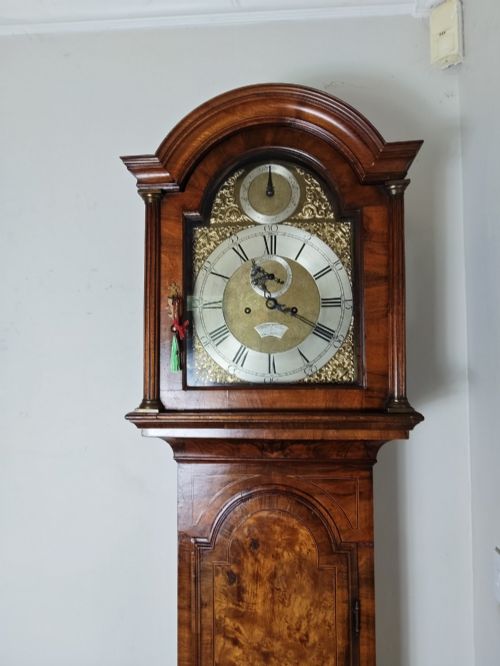
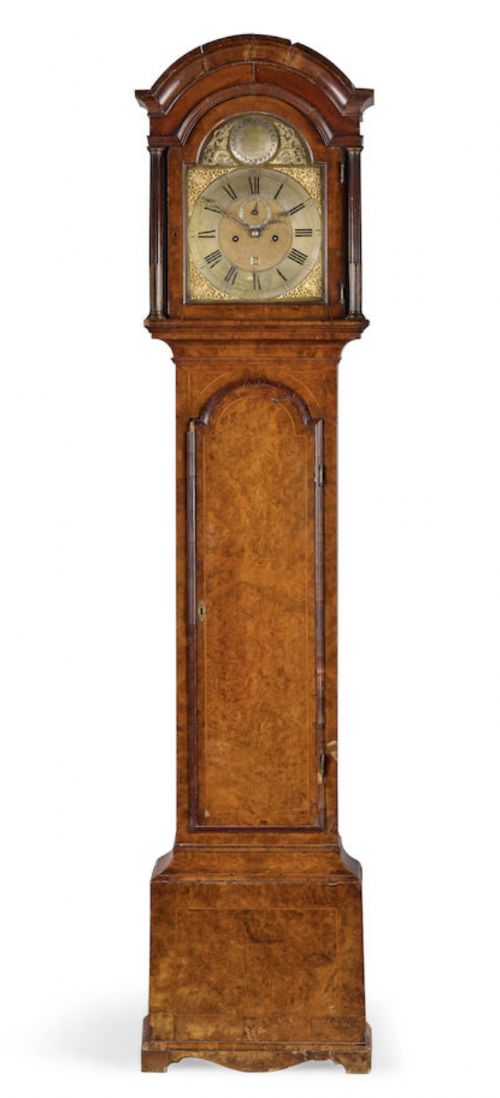


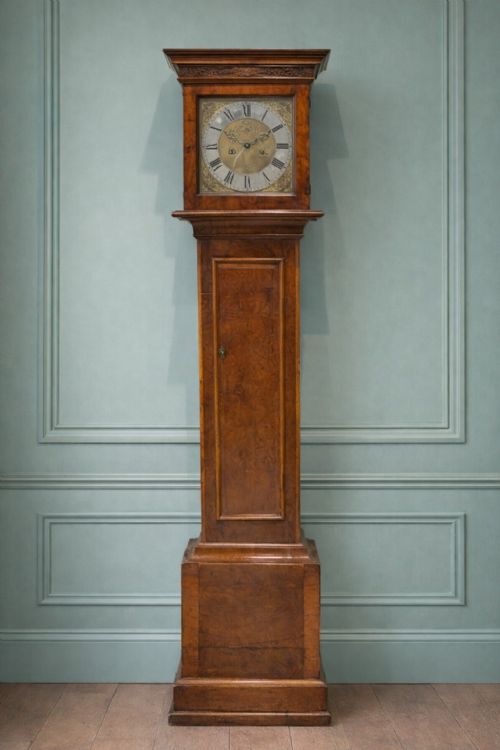


Burr Walnut Tall Clock
These burr walnut tall clock pieces combine architectural presence with figured timber, bringing exceptional movement design into domestic spaces.
Burr Walnut Tall Clock
A burr walnut tall clock stands as a commanding vertical timekeeper, housing intricate mechanisms within a timber-fronted case. These grand pieces trace their lineage from the seventeenth century through the Georgian era, appearing also in later twentieth-century iterations.
Buyers encountering this search phrase find longcase and grandfather forms constructed predominantly from walnut and burr walnut. Oak often forms the underlying carcase wood beneath the decorative figured veneers.
London makers dominate the heritage origins, alongside provincial English examples from periods such as the reign of George II. Selected pieces integrate striking movements, brass dials, and moonphase displays.
Construction and materials
Cabinetmakers selected highly figured burr walnut veneers for the primary visual surfaces, applying them carefully to stable underlying timbers like oak. These wooden cases enclose mechanical movements driven by weights or springs.
Brass and glass form the essential components of the dial and glazed door panels, protecting the delicate hands and engraved chapters. Iron, steel, and chrome appear in movements and fixings across different centuries of production.
Burr Walnut Tall Clock Retail Price Guide 2026
Typical asking prices for burr walnut tall clock among the pieces listed under this phrase on Sellingantiques today, from the lower quarter to the upper quarter. They describe what is for sale here now, not the wider market.
One French mantel clock sneaked into the archives wearing heavy ormolu mounts, proving that tallness is ultimately a state of mind.
Judging quality in tall clocks
Quality rests upon the selection and matching of the burr walnut veneer across the front door and trunk. Master cabinetmakers aligned the swirling grain patterns to create symmetrical visual harmony.
The reputation of the maker inscribed upon the brass dial elevates a piece significantly. Mechanisms signed by London watchmakers reflect higher precision and superior longevity.
Windmills and Wightman·Thomas Vernon·Edin Burgis·Edward East·Edward Stanton·Joseph Saer·Joseph Windmills·Joseph Oxley
The Burr Walnut Tall Clock Glossary
- Longcase clock
- A tall pendulum clock enclosed in a wooden case that stands directly on the floor. This form gained immense popularity across Britain from the late seventeenth century onwards.
- Burr walnut
- A specialised timber harvested from walnut tree growths, displaying complex and swirling grain patterns. Cabinetmakers prized this material for high-status furniture fronts.
- Grandfather clock
- A popular vernacular term for a longcase clock, distinguishing taller floor-standing timekeepers from bracket or wall models. The name originates from an American song written in the nineteenth century.
- Moonphase
- A dial mechanism tracking the phases of the lunar cycle alongside standard time. Clockmakers integrated this feature into more elaborate movements.
- William and Mary
- The design style spanning the late seventeenth century, characterised by rich veneers and seaweed marquetry. Walnut became the dominant cabinet timber during this period.
Burr Walnut Tall Clock: Frequently Asked Questions
How do I wind a tall clock?
Winding requires raising the internal weights using a crank key inserted into holes on the dial face. Care must be taken not to over-wind the movement.
Most eight-day movements require weekly attention, while thirty-hour versions need daily winding. Keeping a consistent schedule ensures accurate timekeeping.
Where should I place a tall clock?
Position the clock against an interior wall away from direct sunlight, heating vents, and damp areas. Stable environmental conditions prevent timber movement and veneer cracking.
Ensure the floor surface is entirely level so the pendulum swings symmetrically. Uneven placement causes the clock to lose time or stop entirely.
How do I identify a seventeenth-century piece?
Early pieces display narrower trunk proportions, simpler architectural hoods, and distinctively small brass dial plates with square corners. The use of solid walnut and early floral marquetry often indicates this era.
Signatures on the dial face often match known makers working in London during the reigns of William and Mary or early Georgian periods.
What is a quarter chiming movement?
A quarter chiming mechanism sounds melodies on bells or gongs at fifteen-minute intervals throughout the hour. This complex train requires additional weights or springs.
Such movements indicate higher complexity and typically appear in grander domestic clocks intended for prominent reception rooms.