


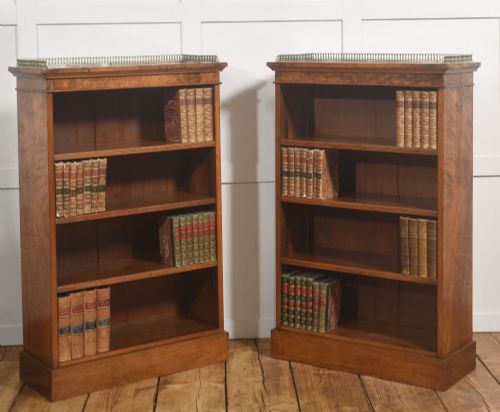
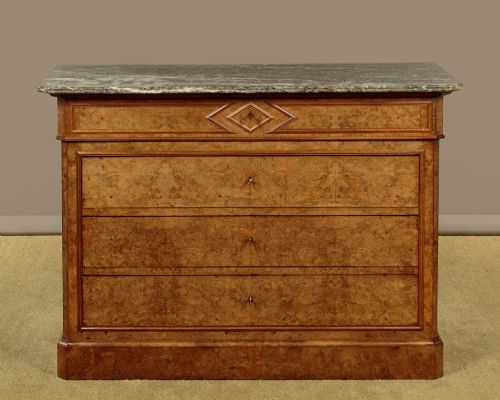

Burr Walnut Style Cabinet
A burr walnut style cabinet brings deep figured grain and rich warmth into a room, combining decorative presence with practical storage.
Burr Walnut Style Cabinet
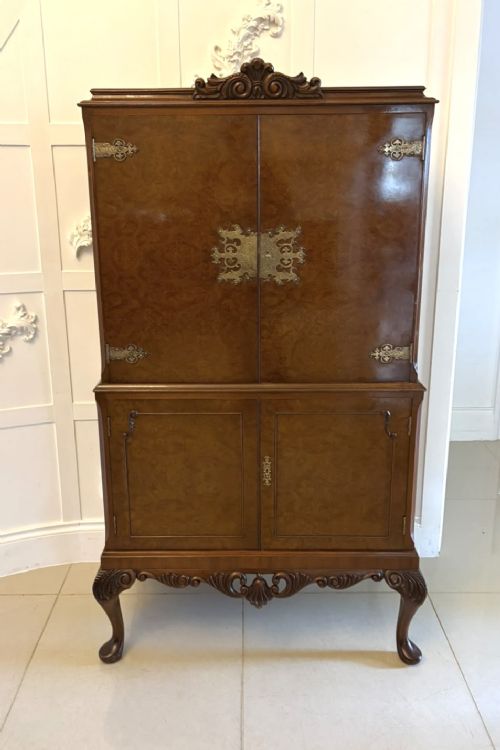
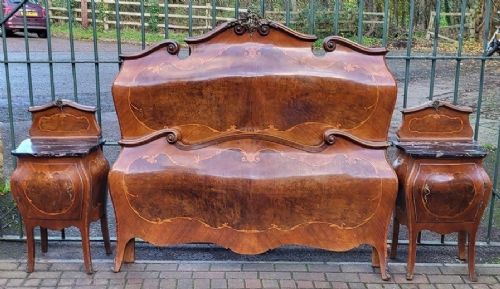
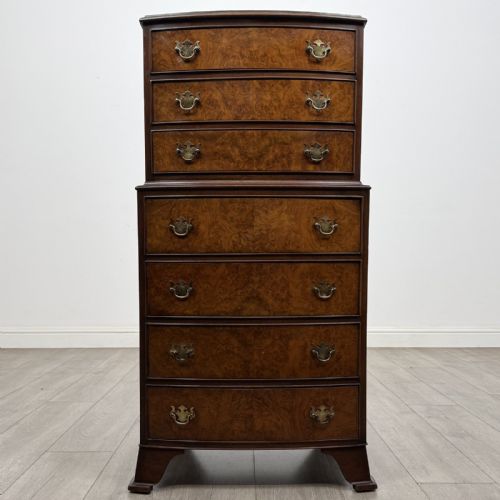
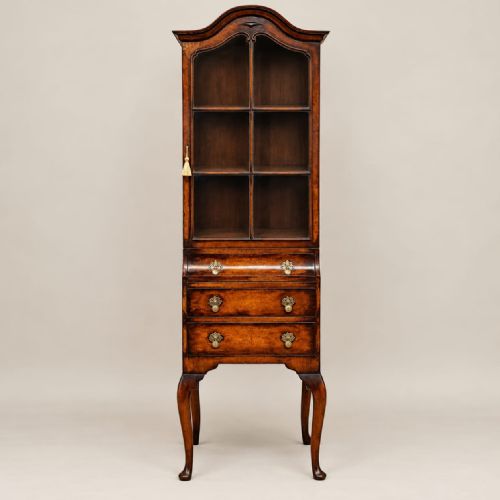
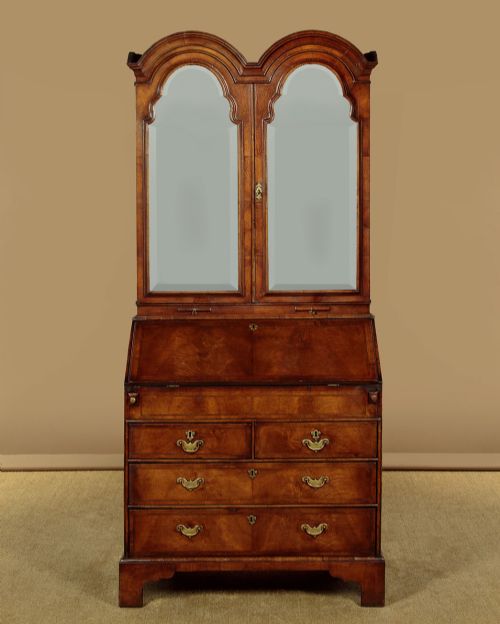
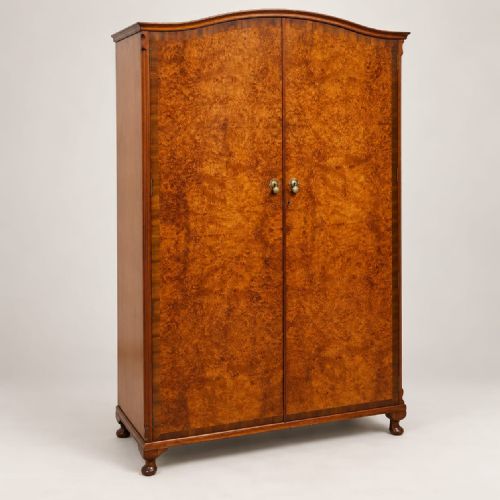
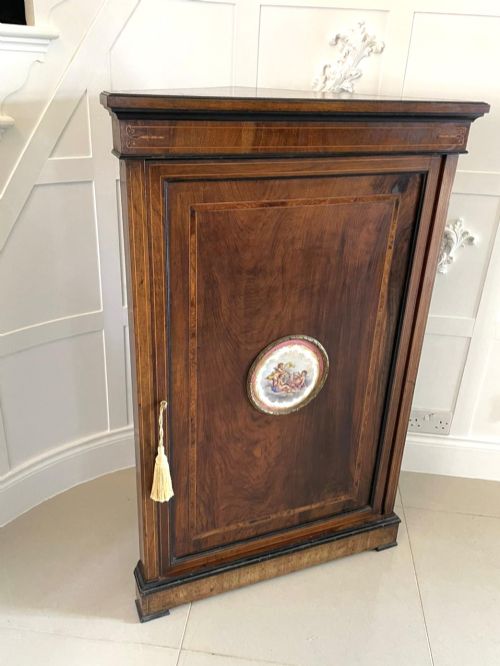
A burr walnut style cabinet encompasses side cabinets, credenzas, bookcases, wardrobes, and bedside chests spanning the Victorian, Edwardian, and early twentieth-century periods. Buyers seeking this phrase find diverse forms ranging from serpentine sideboards and pier cabinets to bureau bookcases and cocktail cabinets reflecting historic revivals.
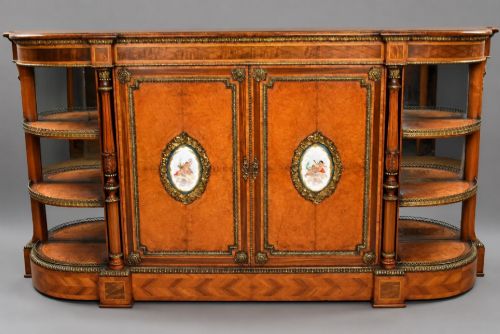
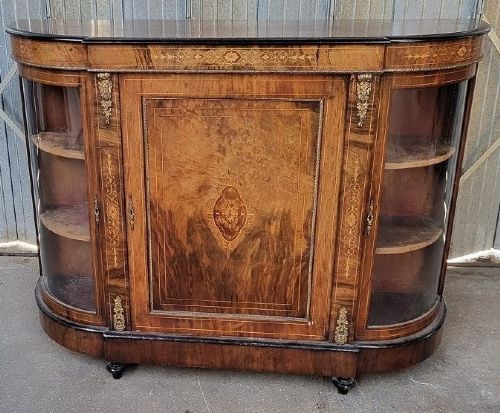
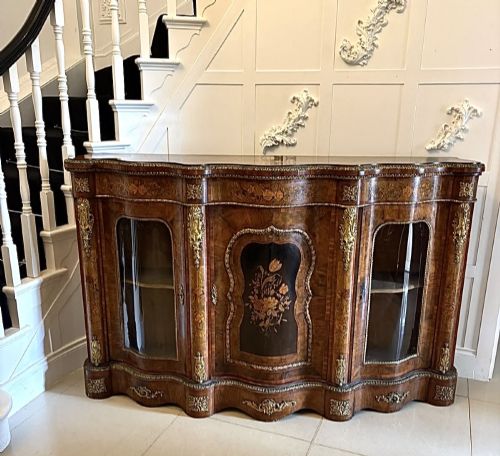
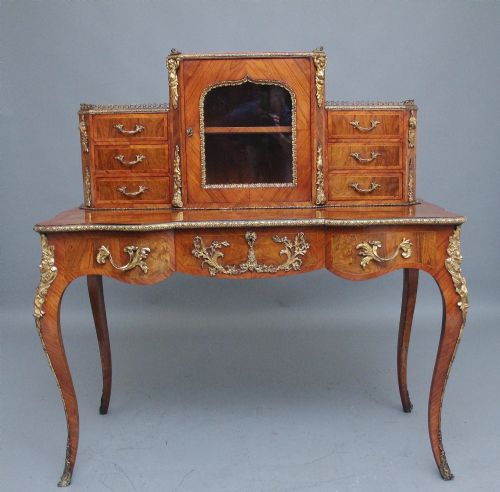
The nineteenth-century pieces lean towards elaborate Victorian credenzas and pier cabinets featuring marquetry inlay and ormolu mounts, alongside Gillows desks and Wellington chests. Later examples from the nineteen-twenties and thirties often adopt Queen Anne revival lines or clean art deco proportions.
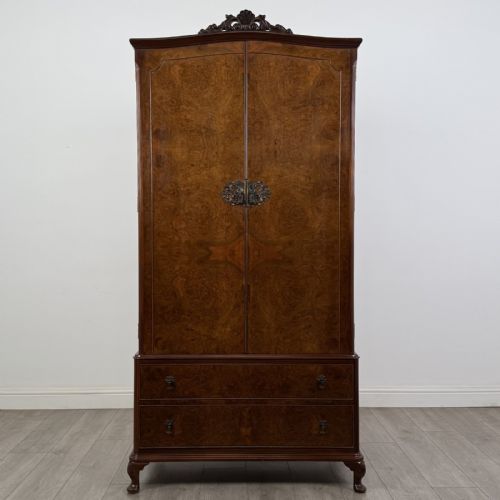
Queen Anne style side cabinets and bedside chests from the nineteen-twenties frequently display cabriole legs and figured veneer fronts. These pieces bridge traditional furniture shapes with the dramatic patterning characteristic of burr walnut timber.
Materials and Construction
Cabinet makers applied thin layers of burr walnut veneer over secondary timbers such as oak to showcase the knotty, swirling grain patterns without risking the instability of solid burr wood. This technique allowed craftsmen to create symmetrical panels on doors and drawer fronts.
Many pieces incorporate brass galleries, ormolu mounts, and marble tops to accent the rich brown tones of the walnut. Marquetry inlay and floral patterns appear across Victorian credenzas and cabinets, adding textural contrast to the polished surfaces.
Burr Walnut Style Cabinet Retail Price Guide 2026
Typical asking prices for burr walnut style cabinet among the pieces listed under this phrase on Sellingantiques today, from the lower quarter to the upper quarter. They describe what is for sale here now, not the wider market.
Some nineteenth-century walnut credenzas include secret compartments designed to hide correspondence from prying eyes.
Craftsmanship and Proportion
The standard of a burr walnut style cabinet rests on the selection and matching of the veneer across prominent surfaces. Finer examples display harmonious grain movement that flows across doors and drawers, whereas simpler pieces show random or mismatched patterning.
The integration of mounts, handles, and secondary woods dictates the overall success of the piece. High-quality items feature crisp ormolu castings, solid brass hardware, and secondary timbers like oak that remain stable over generations.
Gillows·Epstein
The Burr Walnut Style Cabinet Glossary
- Burr walnut
- A veneer cut from the gnarled growths or burls on walnut trees, prized for its intricate, swirling grain patterns. It creates highly decorative surfaces on cabinet doors and drawer fronts.
- Ormolu
- Gilded bronze mounts applied to the corners, friezes, and feet of nineteenth-century furniture. This decorative metalwork complements the dark tones of walnut.
- Marquetry
- The art of applying pieces of veneer to a structure to form decorative patterns and pictures. Floral motifs frequently appear on Victorian credenzas.
- Credenza
- A sideboard or display cabinet originating in the Victorian era, often fitted with glass doors and flanked by curved side compartments. These units combine storage with display space.
- Cabriole leg
- A furniture leg that curves out and then tapers inward, ending in a pad or foot. This form appears frequently on Queen Anne style cabinets and chests.
Burr Walnut Style Cabinet: Frequently Asked Questions
What is a burr walnut style cabinet?
A burr walnut style cabinet is a storage piece veneered in the knotty, highly figured grain of walnut burr wood. These items range from Victorian credenzas to nineteen-twenties Queen Anne revival side cabinets and bedside chests.
Craftsmen used the decorative veneer to create striking symmetrical patterns on doors and drawer fronts, supported by secondary woods like oak.
How do I date a burr walnut cabinet?
Dating relies on stylistic clues such as the presence of nineteenth-century ormolu mounts and marquetry versus nineteen-twenties cabriole legs or art deco lines. Victorian examples often feature elaborate brass inlays and glazed credenza doors.
Later pieces from the twentieth century tend to adopt cleaner Queen Anne revival proportions or simplified cocktail cabinet formats.
Where should I place a cabinet in my home?
These cabinets work well in living rooms as media units or sideboards, and in bedrooms as wardrobes or bedside chests. Their rich timber tones pair effectively with both traditional and contemporary interiors.
Positioning them away from direct sunlight protects the walnut veneer from fading and prevents the timber from drying out.
How do I care for burr walnut veneer?
Maintenance involves dusting with a soft, dry cloth and applying occasional quality wax to nourish the polished surface. Avoid using liquid cleaners or silicone polishes that can damage the historic finish.
Maintaining stable room humidity prevents the veneer from lifting or cracking over time.