

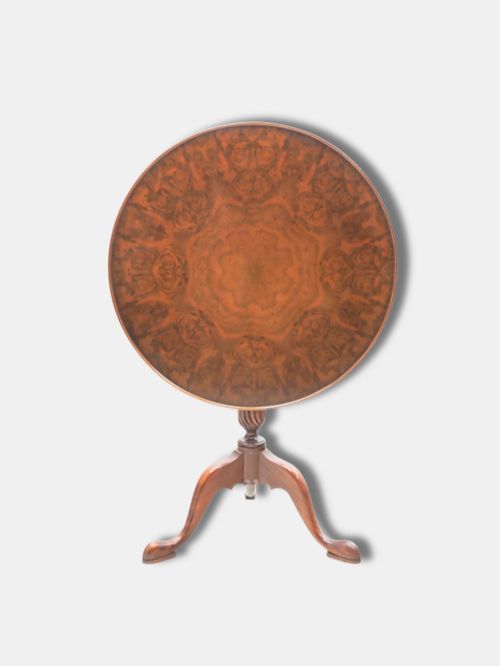
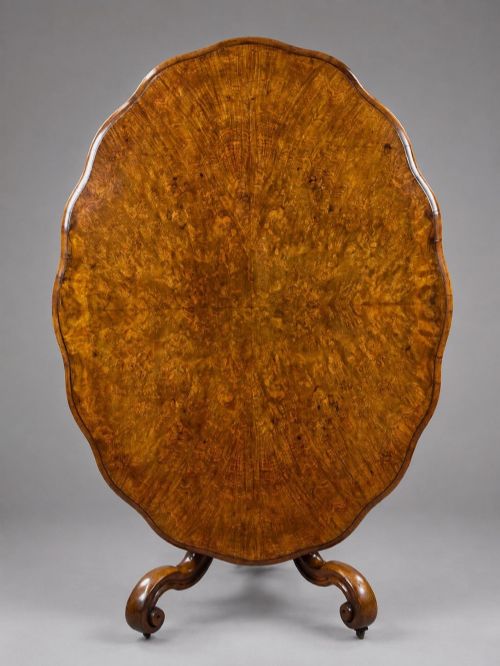


Burr Walnut Snap Table
A burr walnut snap table brings warmth and rich timber figure to a room, offering a versatile surface that tilts away when floor space matters.
Burr Walnut Snap Table
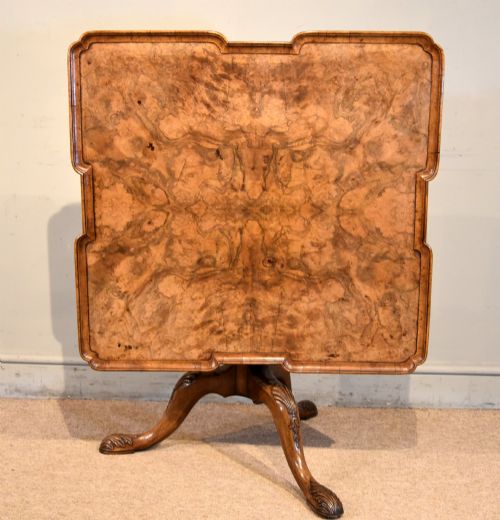
A burr walnut snap table combines a decorative veneered top with a tilt mechanism, allowing the surface to swivel vertically against the pedestal when not in use. These pieces primarily date from the Victorian era, alongside later Georgian Revival interpretations from the early twentieth century.
Forms span across pedestal centre tables, loo tables, and tripod tables designed for occasional use or supper service. The most frequent examples encountered on this page belong to the Victorian period, showcasing the distinctive mottled grain pattern prized by makers.
Originating largely in English workshops, these items serve as both practical occasional surfaces and decorative focal points within a traditional interior. The tilt top mechanism remains the defining characteristic linking centre tables and tripod variations together.
How they were made
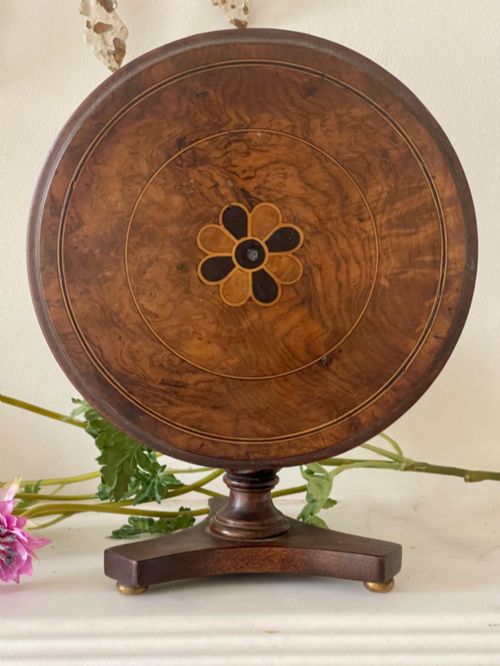
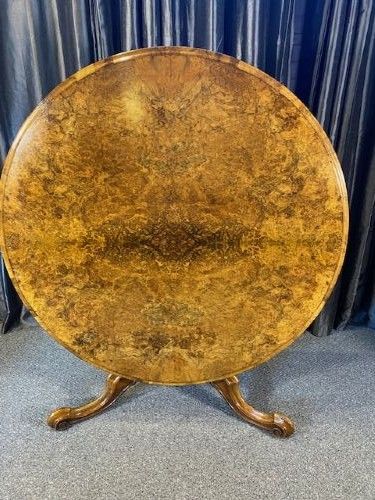
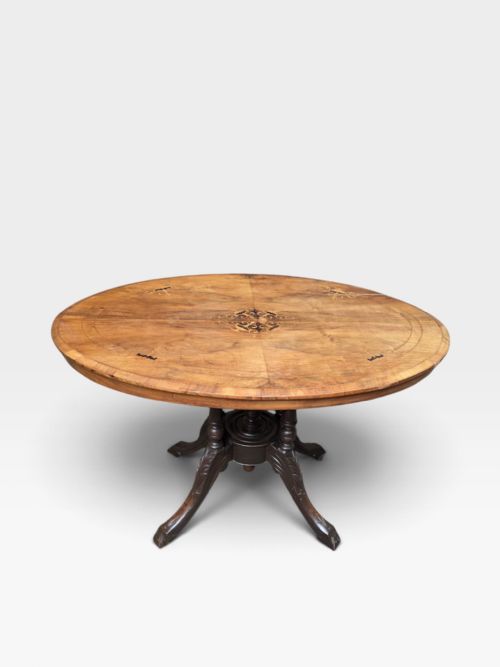
Craftsmen applied burr walnut veneer over solid wood substrates, frequently incorporating boxwood inlay and marquetry to enhance the visual appeal of the top. The irregular, swirling grain of burr timber requires careful cutting and bookmatching to achieve a balanced symmetrical pattern across the surface.
Supporting structures utilise solid walnut and brass fittings for the tilt action and pedestal base, ensuring stability when the table is locked horizontally. Turning and carving shape the central pillar and tripod legs, aligning with Victorian and Georgian design idioms.
Burr Walnut Snap Table Retail Price Guide 2026
Typical asking prices for burr walnut snap table among the pieces listed under this phrase on Sellingantiques today, from the lower quarter to the upper quarter. They describe what is for sale here now, not the wider market.
Victorian diners once tilted their tables upright between courses to confuse overly eager guests.
What varies in quality
The sophistication of the timber figure and the precision of the veneer work dictate the visual hierarchy of these tables. Richly patterned burr walnut with minimal disturbance commands greater appreciation than plainer walnut surfaces.
The execution of supplementary details such as boxwood inlay and marquetry separates standard production from finer examples. Structural integrity in the tilting mechanism and the stability of the pedestal base also influence the overall standard.
The Burr Walnut Snap Table Glossary
- Burr walnut
- A figured timber taken from the excrescence on a walnut tree, yielding complex, swirling patterns highly prized for veneer. It forms the defining visual characteristic of these tables.
- Snap top
- A mechanism allowing the table top to tilt into a vertical position for storage or movement. This clever engineering frees up floor space when the table is inactive.
- Marquetry
- The art of applying decorative pieces of veneer to a structure to form intricate patterns or pictures. Examples on this page often feature delicate floral or geometric motifs.
- Tripod table
- A small freestanding table supported by a pillar resting on three legs. This construction provides stable footing on uneven floors.
- Loo table
- A large round or oval centre table popular in the nineteenth century for card games and social gatherings. They frequently incorporate the tilting mechanism found in smaller examples.
Burr Walnut Snap Table: Frequently Asked Questions
What is a burr walnut snap table?
A burr walnut snap table is a Victorian or early twentieth-century occasional table featuring a decorative veneered top that tilts vertically on its pedestal. The timber displays a characteristic swirling grain pattern derived from tree growths.
These pieces function as centre tables or tripod tables, combining utility with decorative presence. The snap mechanism allows the surface to fold away flat against the base when space is required.
How do you operate the tilt mechanism?
The tilting action typically relies on a wooden or brass catch beneath the top that releases the surface from its horizontal position. This allows the table top to swivel upright for storage or compact placement against a wall.
When returning the table to use, the top lowers back onto the pedestal block and engages the latch. One should support the weight of the timber carefully during this movement.
Where do these tables fit in a modern home?
These tables sit comfortably as centrepieces in a drawing room, serving as lamp tables or display surfaces for decorative objects. Their compact tripod bases allow them to occupy corners or beside seating areas without overwhelming the floor plan.
Leaving the top tilted upright against a wall when not in use reveals the decorative burr veneer as a wall panel. This traditional feature adapts well to contemporary living spaces seeking warmth and historical character.
How do I distinguish Victorian from later revival pieces?
Victorian examples generally date from the mid to late nineteenth century, showing construction methods and timber selections typical of that period. They often take the form of loo tables or pedestal centre tables with rich patination.
Later pieces from the early twentieth century frequently follow Georgian design principles while utilising walnut veneer and traditional joinery. Examining the timber finish, interior secondary woods, and wear patterns helps clarify the age.