

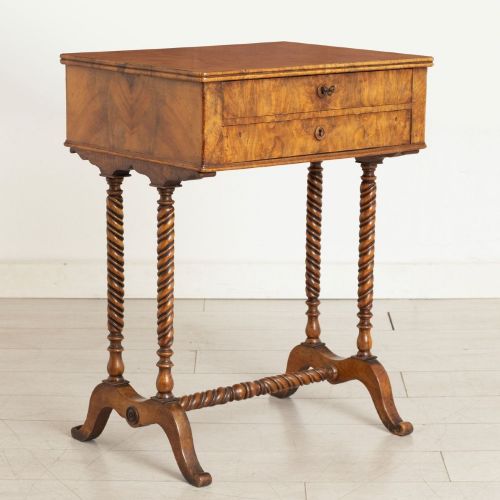
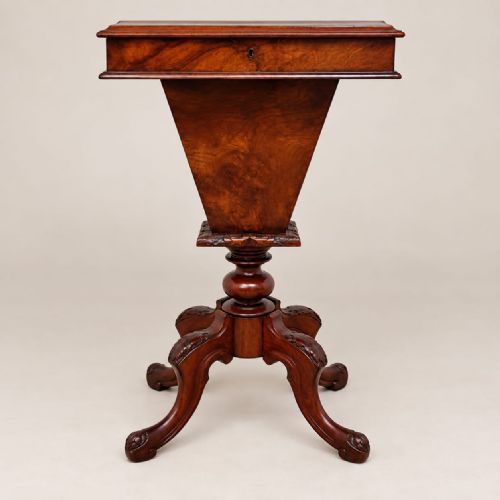
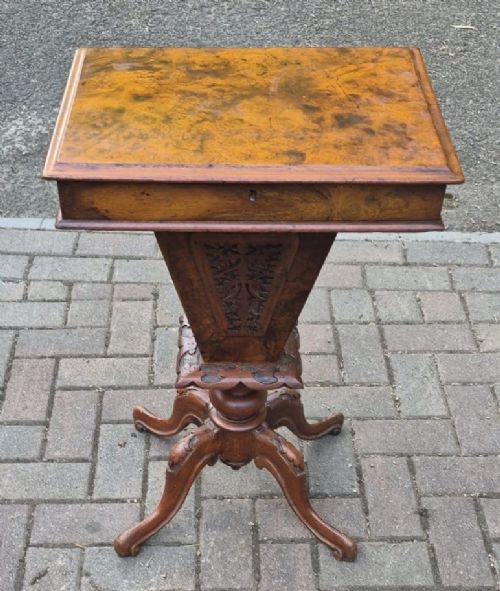

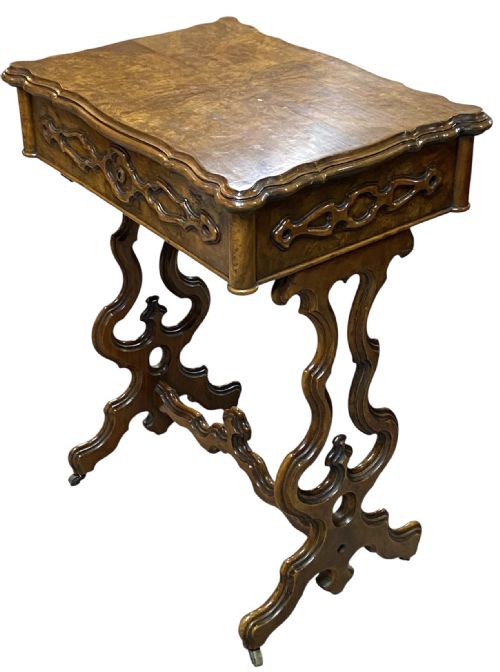


Burr Walnut Needlework Table
Burr walnut needlework tables are Victorian multi-functional sewing pieces combining figured timber veneers with fitted interiors, prized by collectors for domestic utility and surface pattern.
Burr Walnut Needlework Table
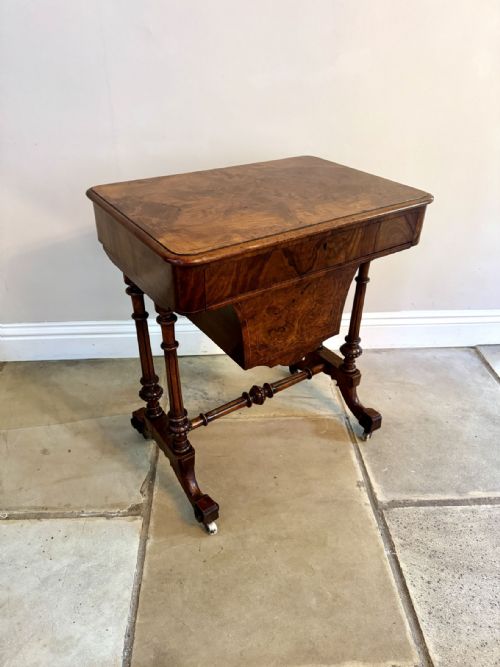
A burr walnut needlework table is primarily a Victorian multi-functional piece designed for domestic sewing, games, and writing tasks. These tables typically date from the mid-to-late nineteenth century, spanning various decades up to the early twentieth century.
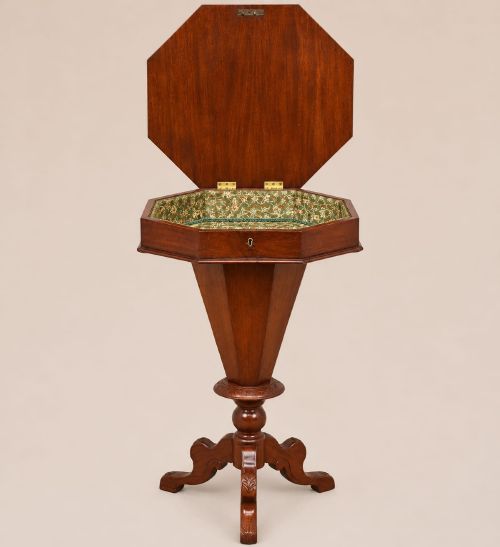
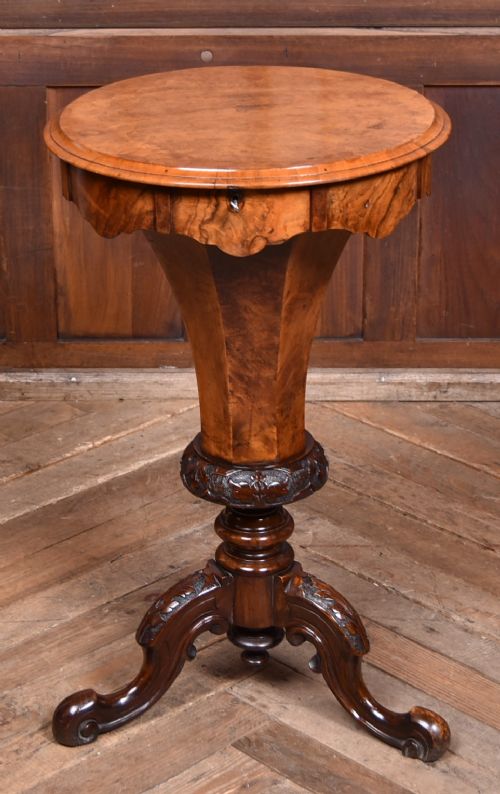
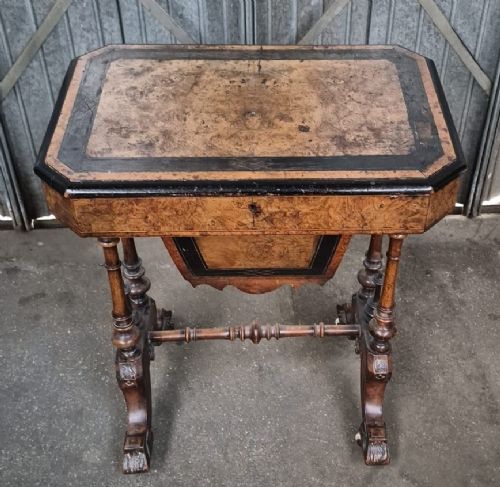
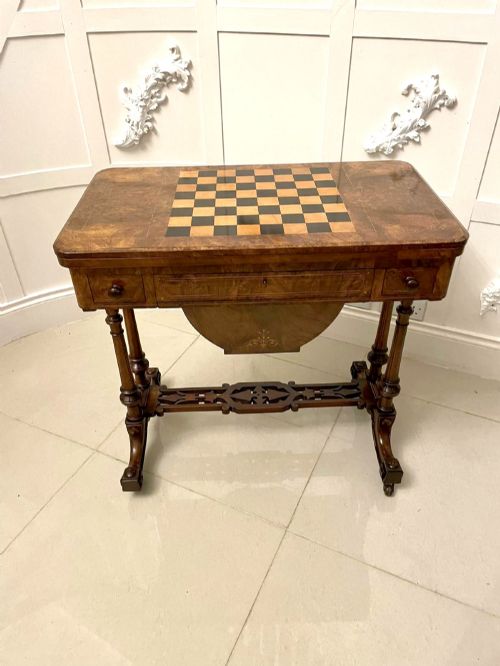
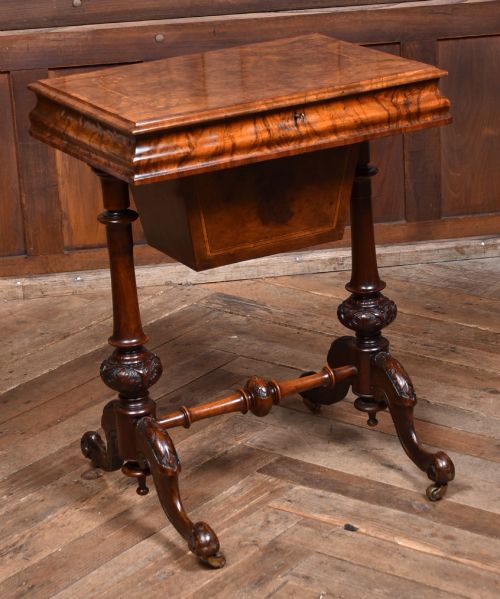
The most common form met on this page is the sewing table or work table, often featuring a trumpet-shaped body or a cradle base. Many examples incorporate fitted interiors for cottons and needles, alongside tops adapted for chess, draughts, or writing.
Makers utilised various formats, including occasional tables, side tables, and workboxes, constructed predominantly from walnut and burr walnut. The overarching design reflects nineteenth-century craftsmanship aimed at refined domestic utility.
What varies in quality
Quality variation rests largely upon the selection and matching of the burr walnut veneer across the top and lid. Superior pieces display harmonious, richly figured grain patterns rather than plain timber surfaces.
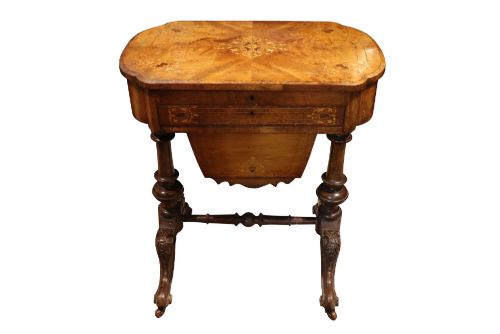
The intricacy of the internal fittings and the precision of the marquetry inlay also distinguish finer examples from standard production. Additionally, the robustness and execution of carved or turned wooden supports dictate the overall standard of the piece.
Burr Walnut Needlework Table Retail Price Guide 2026
Typical asking prices for burr walnut needlework table among the pieces listed under this phrase on Sellingantiques today, from the lower quarter to the upper quarter. They describe what is for sale here now, not the wider market.
Listings demonstrate that these tables span the Victorian era, with dates recorded from eighteen-fifty through to nineteen-ten.
Waring & Gillow
The Burr Walnut Needlework Table Glossary
- Burr walnut
- A wood veneer taken from the warted growths of walnut trees, producing swirling, highly decorative grain patterns. This material defines the aesthetic of high-status Victorian furniture.
- Needlework table
- A specialised piece of furniture containing compartments and storage for sewing equipment, threads, and textiles. These items often double as games tables with chessboard tops.
- Marquetry
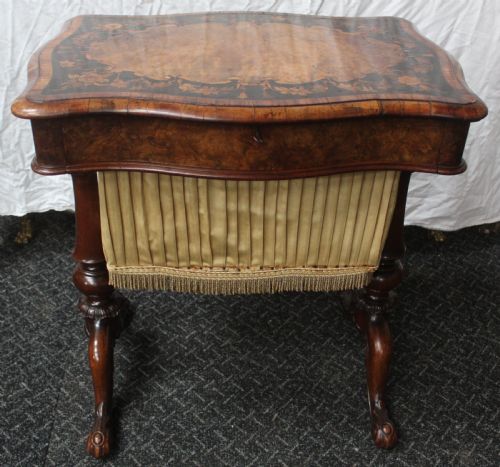
- The art of applying small pieces of veneer to a structure to form decorative patterns or pictures. On these tables, floral or geometric motifs frequently decorate the top.
- Trumpet table
- A sewing table featuring an octagonal or circular body that flares outwards toward the base, resembling the bell of a musical instrument. This form rests on a tripod pedestal support.
- Fitted interior
- An internal compartment system divided into small sections for organising sewing tools, thimbles, and threads. These compartments sit beneath the main hinged lid.
Burr Walnut Needlework Table: Frequently Asked Questions
What is a burr walnut needlework table?
A burr walnut needlework table is a nineteenth-century Victorian furniture piece designed to hold sewing equipment, threads, and small textile projects. These tables combine decorative burr walnut veneers with practical compartments for domestic handwork.
Many examples also incorporate dual-purpose surfaces for playing chess or draughts, or for writing letters. Their versatile design made them central furnishings in Victorian drawing rooms.
How were these tables used originally?
Victorian ladies used these tables to store sewing materials, lace-making tools, and embroidery projects within internal compartments and hanging fabric bags. The fitted interior kept needles and threads organised during daily craft sessions.
When closed, the flat top served as an occasional table for lamps, or unfolded to reveal boards for games. This multi-functionality suited the formal social routines of nineteenth-century households.
How do you date a Victorian needlework table?
Dating relies on identifying stylistic markers, timber types, and structural forms recorded across the mid-to-late nineteenth century. Victorian pieces often feature specific pedestal supports, turned columns, or cradle bases characteristic of the period.
Makers frequently applied marquetry inlay and specific veneer cuts that evolved between eighteen-fifty and nineteen-hundred. Comparing the turning style and interior layout helps narrow the decade of manufacture.
How do you live with a needlework table today?
These tables function well as compact side tables or lamp tables in contemporary living spaces, requiring minimal floor area. The internal compartments provide discreet storage for modern small items while retaining historic character.
Placing the table away from direct sunlight protects the delicate burr walnut veneer from fading. Regular dusting and occasional wax maintenance preserve the polished wooden surfaces.